Person // Action-Object // Location?

Hi all, I am currently developing a PAO system for 0-99 numbers; I have a spreadsheet set up. But I’m encountering some indecisiveness. Maybe it’s just the way my particular brain works, but I’m having trouble with the ‘actions’ associations. I have always been a super-literal person. Unless there are objects/shapes (or sounds, I am quite musical) I often cannot link verbs/concept easily.

What I mean is… let’s take the action/verb ‘to play’. Now for me, the number 8 is closely linked to me being around 8 years old playing an 8-shaped Scalextric (slot car racing in the USA). The sound, smell, feel ad track shape are poignant. And the two ‘8s’ are linked and reinforce eachother.

So if I created a PAO for 08, according to various online instructions it might be something like:

My Name // Playing // Scalextric

But the word playing for me seems troublesome, since the play is linked to a specific type of play i.e. only with the slot cars. And there isn’t a word for “Scalextric-ing”! Or slot-car-ing. In some cases, verbs are very specific, e.g. boxing. Or, say, skateboarding. But that’s usually BECAUSE it invokes an associated object (boxing gloves, skateboard). So what I’m saying is, can I be sneaky and have TWO objects, or an action-object, or will I run into trouble… ?!

Also, it irritates me that I’d use e.g. My Name. Because for other numbers I’ve used a rhyme, like for 11 I have a boxer called Devan. In such case, boxing works well with Devan (boxer), but what is he boxing to/with?! Let’s say I want to use Heaven as object, because it retains the rhyme. So that’s Devan // Boxing // Heaven. But boxing has no immediate relation to me to Heaven! But flip side, Heaven is immediately recognisable as 11 for me by sound for any other character or action.

What about if I use a different system, let’s call it… Person // Action-Object // Location. Would that work? Has it been tried before? Are there pitfalls?

That could translate to: My Name // “Playing” Scalextric // In My Old Playroom

Thoughts? I realise locations could get confused with the Memory Palace locations, perhaps. Am I just chosing bad verbs/actions? Or being too picky?

I realise I could create new actions that are more distinct for whoever does them, but I’m trying to closely link all three aspects of the PAO together (i.e. the character, scene and object), either visually, or in terms of sounds and other personal links, if possible. For example, 01 for me might be (not decided yet):

Steve Wonder // Wondering // At the Sun :sun::smiling_face_with_sunglasses:

Because I am quite responsive with sounds, so Wonder/One, Wondering/One/Wonder, and finally Sun/One (and also as Steve Wonder wears dark glasses, protecting him from the bright Sun), etc etc. I.e. it’s multi-associatative. I also have “Sunshine of My Life” (by Stevie) as a background sound. (Also because I had a dog we called Wonder, who was blind like Stevie – then again, what about if I added Wonder as the object?!).

Tips? Advice? Criticisms? Is it too much? Too structured/complex, or maybe even too chaotic/unstructured in some ways perhaps?! I’m struggling to keep a single “ruleset” here. Maybe that’s the problem. Sometimes I will use visuals (like the 8 shaped Scalextric) but most other times a sound/rhyme, like… Sun/One. Ideally, have it all in one perfect “totem”.

I am still really new to all this. Maybe someone else has gone through similar over-thinking process or struggled with different methods and linking! Anyway, thanks in advance! :heart:

Also: note originally I had Stevie Wonder // Singing // Sun i.e. Stevie was Singing (Sunshine of My Life) at the Sun. I liked the ring of the S-S-S. But I can’t connect Sun with Singing like I can with Stevie (who is a singer/musician). So if I have another character singing, it doesn’t work so well for me unless they’re singing LIKE Stevie i.e. up at the Sun, OR, singing the same song in his voice, OR, has another object i.e. sunglasses or a keyboard or whatever.

I get the impression that you are making things to difficult for yourself, by having very strict rules of how to make this system. Once you have made and learned a person list, you can just simply create a list of actions and a list of objects without being concerned with these lists being appropriate for the numbers or whatever. After that you can decide what actions and objects might be somewhat appropriate for either the numbers or persons connected to those numbers and allocate accordingly.

One thing to consider is that your brain is smarter then you might think. So even if you only directly link an action or object to a person (so no logic connecting it directly to a number) either by logic and/or by repetitive visualisation, soon enough you will be able to translate any number in to actions or objects, without having to think about the person these images were connected to.

For example in my latest 2 digit 3 category system with easy 10 digits per location I have Wonder Woman as number 72 connected to the action of jumping rope for no other reason then that this action is easy to visualise and after one day of training when I see 72 and think of action I see jumping rope without even thinking of Wonder Woman.

Another thing to consider is that, at least in my experience, it it more important for the actions and objects to be easy to visualize, then being appropriate for persons or numbers. For example I had an action for Jacky Chan, namely training with an ab wheel …


… but when I try to combine this action with other persons their face is not so clear anymore, so I changed it to a very easy to visualise and non excisting circel saw that looks the same and can be used in a standing position.

2 Likes

Interesting. So maybe I’m over-doing it, which is my tendancy.

So would you say it’s best to forget action/object until I have the person (for me, characters not just humans/people) written out for each number 0-99?

Are there any other shortcut hacks, like, categorising numbers into tens by, say, colour, type of character (e.g. cartoons, movies, animals, dead/alive, etc). Or again, is it better to just get the characters FIRST, then “arbitrarily” i.e. organically let any other links and associations come later?

Yes. Typically I think of “good” actions as those that can be performed on/to/with an object and involve distinct specific motion or position by the subject.

“Playing” would be much too vague for me.

Something like “Reading” would be very difficult to animate.

Something like “Bowling” would be great, because you could imagine the motion of rolling a bowling ball, without needing the ball. During memorizing, you can substitute whatever object you need in place of the bowling ball, so like if the object was an electric chair, you’d picture your person holding an electric chair and winding up and bowling it away.

Similarly, “sitting on,” "stomping on, “biting,” or “rocking” can be performed with or to any object, and would be great choices.

This is actually great! More about this in a bit…

If you do either if these things you’re making it harder to eliminate extra conversion steps and develop direct associations.

The goal is to develop INDEPENDENT associations between the person and the NUMBER, the action and the NUMBER, and the object and the NUMBER. You should try to AVOID learning 11 as “11 = Devan is Boxing on/in Heaven.” You should learn it as “when 11 is a person it is Devan,” “when 11 is an action it is Boxing,” and "when 11 is an object it is “Heaven.” This way the association is reinforced from each element directly to the number.

If you have to encode 11 in the action place and you have to go through extra steps of first relating it to the person “11 = Devan → Devan’s action is Boxing” then this is way less efficient than being able to go “11 action is Boxing.”

More on this here:

3 Likes

Wow ok, this is a really helpful explanation, thank you!

So, I was thinking, in order to remember the number (for me anyway, being very musical/sound-focused, but also a stickler for rules/logic), I had to relate it to Devan foremost, i.e. so boxing was just a way to “get back to” Devan, which sounds like 11. (I.e. the “hierarchy” I fell into was 11-Devan-Boxing-Heaven.)

But then I’d thought, well that’s silly, why not make all 3 (P/A/O) sound like 11 if I find sounds easiest? Then I don’t have to “translate” back. The issue then is, finding three related rhymes and doing so for every number pair!

So I was then thinking I had to make a “ruleset choice” of EITHER linking to the person/rhyme, or, rhyming the P, A & O, OR, failing that, at least finding a unique thread that near-perfectly links the P, A & O AND then links naturally to a number!. That was where I was tripping up, making it too complex/perfect, which was causing stress.

So what you’re saying is, forget all that. Instead, if I understand right anyway, I need three independent (even completely unlinked) P/A/O’s for each number. As long as the P, A and O each independently link directly to the number (in whatever way, visually, or by sound/memory/feeling – and I can mix all of that presumably).

So for example, ok… if I just let my brain relax and choose anything from scratch without over thinking it… here goes…

Devan :boxing_glove: // Skiing :ski: // Legs :leg:t2:

(Devan bc it just sounds-like; Skiing because the action is unique enough AND it has two “sticks” that look-like; and Legs simply because of the UK bingo term “legs eleven”).

[Side note: interestingly all three imply objects anyway, i.e. I’ve added “skiis”. And Devan always has hig boxing gloves on.]

Is that a more natural approach? There is no “perfect system” I suppose for an OCD-type like me! :rofl: If anything, maybe as you say, trying to perfect everything just interferes with natural pattern-making and neural connections. I suppose I was worried that if I made a “mistake” early on then I’d bump into problems later down the line with cross-references and duplicate objects/concepts for similar things, and so on.

Very, very interesting. Thank you. Any other tips you have would be greatly appreciated.

Shorten this to “there is no perfect system.” :wink:

There are folks who have great success using a “traditional PAO” where the action and object follow logically from the person. Some thrive with a strict system that will inform the construction of all or each element. Some use rhymes, shape similarities, initials, first names, abbreviations, instinctual associations… In the end, the goal of a system is to get you to a point where you can see a number and know what it represents with as few conversion steps as possible. Fewer conversions means faster image recall and less points of failure.

I liked basing my PAO completely on major system phonetics because to my brain it was the easiest way to simply “read” the numbers to trigger image recall and because every word was read the same way. The result was completely unrelated PAO sets per number, but as I said, I see that as a good thing because it eliminated extra conversion steps before they even had a chance to form habits. The tradeoff is more effort needed upfront to learn associations one-to-one, but the system provided the decoder ring to do that easily. Not everyone will thrive with this approach. And thats ok! You really have to just try stuff out and see what clicks with you.

That’e the end goal. With enough practice, a system with extra conversions will get you there and those extra steps will fade in time and you’ll be left with those direct links… I just happen to like skipping that altogether and going with direct associations from the start.

Wellllll… I’d just caution against mixing too many systems or rule exceptions as it will take much more extra effort to remember what to do to encode/decode each element when learning. At the very least, try to be consistent with the system for the image type… Rhyme for person, shape for object, whatever.

As you go, you’ll absolutely find that some things dont work or you come across a better word or a different system seems to make more sense. (You may run into this rather quick looking for unique rhyming People for all 99 numbers…) Thats ok. Don’t be afraid to start over or change it up. The brain is remarkably elastic when it comes to re-training. There may be interference a bit at first, but be disciplined with your reviewing and you’ll be able to adapt!

It can be frustrating to work through all of this stuff, but I liked to view the whole process of building and learning a system as a personal challenge and a good mental exercise. Some people do sudoku or wordle, I liked the puzzle of figuring out what fit the PAO grid. If you take an attitude like that and accept that it’ll be tough and suck at times, but there will be a cool payoff and the journey can be just as fun as the destination, you’ll get it done. Don’t worry too much about how long it takes to get sorted either. And don’t let perfection be the enemy of progress.

I like to tell people that memory techniques and systems are shortcuts to memorizing stuff, but there is really no shortcut to learning those shortcuts, you just have to effort it through! The process of learning the system is usually different than how its applied, its building the groundwork to be able to apply it skillfully down the road.

In case you’re interested, I’ve posted up my complete PAO list HERE (along with Adjectives and Locations, so really a LPAAO list). You dont have to use the same approach or system as me, but sometimes its good to see some other ways of tackling things!

2 Likes

Thanks again everyone. Still mulling over all of this.

Quick question in the meantime. I like the idea of person/action-impression/object.

For example, if Messi is 10, and 20 is Tweety Bird… 2010 could be:

Tweety Bird wearing an Argentina shirt.

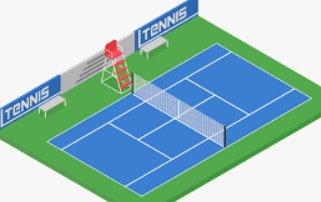
Can impression-actions like that work efficiently, instead of giving 10 another action (e.g. [Messi] lifting a World Cup trophy, or playing TENnis?). It seems to click naturally for me to get one character to do an impersonation/action of another character, rather than, a random/arbitrary action.

I do this fairly often with my 3-digit system and it works pretty well!

I’ve had strings like 625-224-896 which translates to “Johnny Lawrence + Niner + Fubu Shirt” and the image that I created was Johnny Lawrence (karate guy from Cobra Kai, dressed as the San Francisco 49er’s mascot (but you could see his real face, and over top of the costume he was wearing a big baggy Fubu shirt. So these three elements merged into a singular “person” image with no actions or interactions, but it was very easily recallable.

1 Like

I have 2 versions of a linking system with person, action and location.

Basic preparation:

You can start by creating a person and action in a location for every 2 digit number. For example, 23 might be Michael Jordan dribbling a basketball at your high school basketball field. Because the 3 different number translations form a unity, you don’t need to learn them seperately, so learning this takes not much more time then learning a 100 person list.

Linking method 1 (person + action in location):

You start with a location, then you visualize a person in that location based on the 1st 2 digit number, then that person teleports to the location determined by the 2nd 2 digit number and performes the action connected to that location. At that location another person determined by the 3th 2 digit number appears and teleports to yet another location determined by the 4th 2 digit number and performs the action of that location, and so on. So in short it is person + action, but the action is always performed in the most appropriate location.

Linking method 2 (person + location + action):

Here you also start with a location and person based on the 1st 2 digit number and that person also teleports to the location determined by the 2nd 2 digit number. However, instead of performing the action of that location, the action is now determined by the 3th 2 digit number. After this another person appeas determined by the 4th 2 digit number and so on.

What I am going to do:

I have been experimenting with an in hindsight to complicated system called 2 digit 3 category system with easy 10 digits per location and I have taken from this system the person and action combinations and like what I usually do to learn a system, I have put all those combinations in locations in my memory palace. So I have all the basics for the above described linking methods and I just need to improve my translation speed and the quality of my visualisations. So in short, I am going to try out both methods with some serious training.

1 Like

Very interesting Erik!

I was thinking of locations too, however the problem I’ve found is that it interferes with my Memory Palace locations, whereas actions/objects/totems/sounds etc don’t.

How do you get around confusing MP locations with character locations? Or do you just not use a MP at all and just, sa you say, “teleport” between fantasy locations to create a virtual journey?

I love this vision of of the Cobra Kai guy in the 49ers shirt! For some reason, that’s the kind of thing my brain gets drawn to more than an unrelated action. However, I think maybe that’s because I’m still setting it all up and so my brain instead of going from any one of the three objects to the number, still goes back through the sequence of the main character, which usually (not always) has the “quickest” neural link to the number for me.

Although, it gets me thinking… aren’t we talking about objects anyway for the most part? For example, one of my characters, Tupac, does the ‘W’ “West Coast” sign with his fingers. But really, that’s just another object (hand/fingers) or combination of two objects (hand, W image).

The “in motion” part is the bit where we insert concepts, but the actual visualisations seem to always be objects anyway, since that’s what objects are – shapes. No shape, no action can be done.

Sorry a bit pointlessly philosophical I know but… it makes me think maybe it’s OK to have POO and not PAO (or really, technically it’s a OOO!), so long as the second object (formerly Action) is distinct enough to jump out in the imagination and be used dynamically. Also, in a sense, it’s not one or the other. I mean, in PAO, the Person IS already an object. Then using the Action with another Object is normal for many of us anyway, e.g. kicking. You kick a THING (object), not just kick abstractly. Unless we freeze-frame the SHAPE of the actual kick itself, but then… might as well use a “kick shaped” object. Finally, the final object of the PAO, is of course another object anyway.

So I like to think of it as a three object system. The action is, for me, really just about associating ONE object with another, and/or, ultimately (once the system is mastered) associating all three objects with the number.

But the objects always sort of hint at a distinct action anyway. For example, if my three objects for, say, number 10 are… Messi (#10 shirt), TENnnis Ball, Green Bottles ("Ten green bottles…)… then for 02-10 I could have Tupac with a Tennis Ball, or, Tupac swinging AS IF he was playing tennis, but with a third object.

And, what I also note from my brain dump is… Messi already gets connected with another object or set of objects: the blue stripes of the Argentina shirt (and the actual 10 on it). The World Cup Trophy perhaps. Etc.

There are no character locations, only locations connected to 2 digit numbers. However in order to learn the basics of the system it is useful to think of person-location-action unities, like 23 being Michael Jordan dribbling a basketball at your high school basketball field. Once you start either of the 2 linking methods Michael Jordan no longer “owns” the high school basketball field. In the (person + action in location) method any person can dribble a basketball at the basketball field and in the (person + location + action) method any person can go to the basketball field and do the action determined by the 2 digit number for that action.

I don’t use a memory palace in the sense that I have a route connecting the locations in it that is used to store information; I only teleport from location to location. I have only used real locations in the the following memory palaces:

  • supermarket close to home that start a “route” to my house and then inside my house.
  • childhood swimming pool.
  • train station (including locations on and inside the train.
  • shopping mall.
  • a roundabout close to my former work location that starts a “route” to and through my work place (offices, canteen, warehouse, hallways, and so on).

Because you don’t need an actual route, you might also use stand alone locations like:


or

but I have already connected everything to old recycled memory palaces.

1 Like

So fascinating. The reason I DO like using Actions, or Locations, as specific categories of “objects” are because then you can know the sequence/heirarchy right away in the PAO system.

I.e. Person, Location, Object. Which would be a nice clean distinction, but also lends itself naturally to the way we imagine, because there’s ALWAYs a backdrop! There’s never a character or object floating somewhere in white or black space, like a blank canvas. Our minds make us insert a backdrop.

I suppose something interesting with locations, again, if they’re bright and distinct enough in the mind, is that they can be nicely “painted onto/over” the current Memory Palace if need be (like I did with Messi’s shirt on someone else). As long as one doesn’t confuse the scenario by using pre-linked objects or new ones not linked to the location.

E.g. my kitchen could “become” a basketball court. Maybe there are hoops hanging up somewhere, or, the floor is shiny and painted like a court. But then again, why not infer the basketball court location just by having a basketball related object – and so we go full circle. It’s an interesting one! I can see why you “teleport” and don’t mix the MP in.

1 Like

Just for the record, Michael Jordan is not part of my system (my system is based on one syllable readings of 2 digit numbers, like 23 16 14 87 = ne la lek fat). However there is single ball dribbling at the train station info board and double dribbling (2 balls) at the shopping mall escalator. Because many locations are not really suitable for all actions I strongly lean towards the (person + action in location) method.

Curious, how does that become a story in your mind? I’ve never tried this system (still a newbie!).

First some basics.

I have optimised my reading of numbers based on:

  • speed of (imagined) pronounciation/reading
  • memorabilty of the sounds alone (like can I read a 10 digit telephone number that is written on one side of a room and then dial that number on a fixed telephone on the other side of the room by keeping a phonetic loop)
  • how many “words” are easily connected to an actual meaning of some sort

Unlike the major system my pronounciation of 2 digit numbers is completely determined by 1st and 2nd digit (Dutch language based) translations:
0 = D & O (sounds like boat)
1 = L & I (sounds like weak)
2 = N & EN (sounds like gender)
3 = M & E (sounds like okay)
4 = K & EK (sounds like wrecking ball)
5 = S & AS (sounds like last)
6 = B & A (sounds like french la femme)
7 = T & AT (sounds like not funny)
8 = F & OE (sounds like book)
9 = G & Y (sounds like why)

Most connections are to persons and then only indirectly to locations and actions and some are connected to something other that is then connected to a person. For example:
00 = DO → Donald Duck (famous duck)
01 = DI → Dimasj Qudajbergen (singer)
11 = LI → Bruce Lee
32 = MEN sounds like man and only needs super in front of it to get Superman
42 = KEN → the muscled version of Ken (from Barby) is He-man
51 = SI → SIA
69 = BY → sounds like the Dutch word bij that means bee and I imagine Hercules holding a giant bee (that is also the action for 69)
71 = TI sounds like T as in Mr T (from the A-team tv show)
81 = FI is short for fiets and that is the Dutch word for bicycle → Lance Armstrong
92 = GEN is Dutch for gene → Richard dawkins (famous biologist)

After the person selecting I just had to think of suitable actions (only about 50% of them are related to the person, the other half are more based on easy visualisation of the action) and locations.

Back to the 23 16 14 87 = ne la lek fat example using the (person + action in location) method:

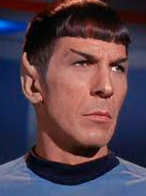
23 = Spock (famous Vulcan); Nee means No as in “No captain, those aliens are not peacefull”


16 = singing with microphone (16 is also Celine Dion); LA LA LA

14 = Monroe (from the fantasy tv show Grimm); lek means leaking and the caracter Monroe is sort of a werewolf who marks his garden by peeing in it

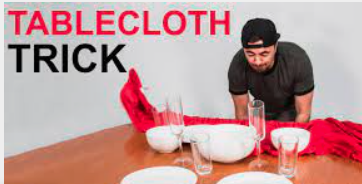
87 = pulling tablecloth from table (87 is also Penn Gilette a famous magician); VAT means barrel and I first had Penn sitting on a barrel and then I changed it.

1 Like

I made a somewhat weird post about Cobra Kai not to long ago: Weird false memory example: song and manga movie.

1 Like

Hi newby here. I am trying to set up my PAO and came across your post (also seen other posts, thanks for your contributions)
After I selected my PAO then I realized that it was easy to tie PA it was sometimes difficult to add the O
I saw your note about selecting a verb that is applied to an object - some of mine are but not all
However I noticed your list and some didnt appear directly applicable to an object like swim, soar, timing, raising. Also curious about how you differentiate things like sucking, eating, chewing, etc
Would you mind elaborating how those connect to you?