Here’s an opinionated video about the use of AI in classrooms. Let me know what you think. 
Birbalsingh points to the recent history of educational technology as proof of its inadequacy. She cites examples from Norway, Sweden, Denmark, and Finland, where initiatives to provide a device for every child consistently led to declines in reading scores and concentration. Many of these countries are now reversing course and reintroducing physical textbooks.
I’ve also posted an AI summary below the video.
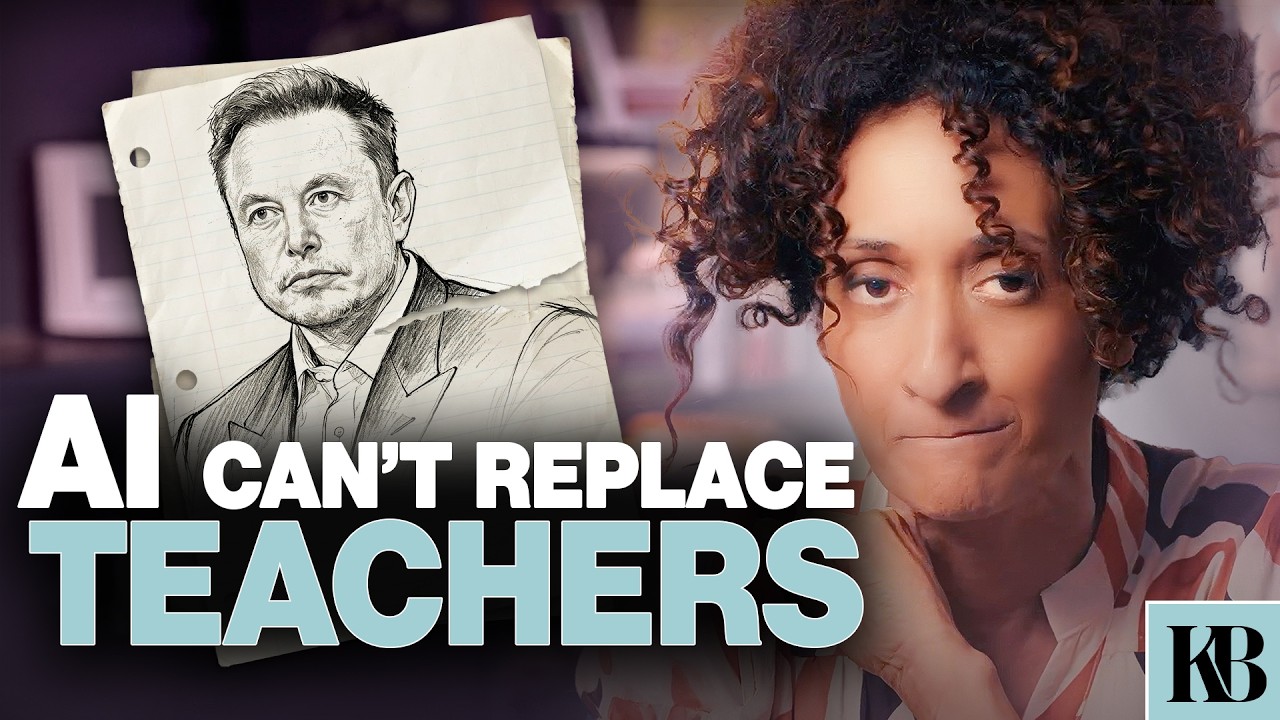
Summary
In this video, Katharine Birbalsingh, known as “Britain’s strictest headmistress,” critiques the recurring belief among tech leaders—specifically citing Elon Musk, Sal Khan, and Sam Altman—that technology and AI can replace or drastically improve upon human teachers.
She argues that while these leaders are correct in observing that children crave responsive, engaging experiences (like those found in video games), their proposed solution—individualized AI tutors and screen-based learning—fundamentally misunderstands human nature and the true purpose of education.
Key Arguments:
The Failures of “EdTech” Are Documented
Birbalsingh points to the recent history of educational technology as proof of its inadequacy. She cites examples from Norway, Sweden, Denmark, and Finland, where initiatives to provide a device for every child consistently led to declines in reading scores and concentration. Many of these countries are now reversing course and reintroducing physical textbooks.
A Cognitive Crisis
She references neuroscientist Dr. Jared Horvath, who argues that the introduction of digital technology in schools coincides with a widespread decline in cognitive development among Gen Z. Horvath notes that increased screen time in educational settings correlates directly with poorer academic performance across dozens of countries.
The Misunderstanding of Motivation
The core flaw in the “tech-utopia” vision, according to Birbalsingh, is the assumption that children simply need information delivered at their personalized level to succeed. She asserts that, realistically, children often prefer entertainment over hard work and will default to distractions (like YouTube) when given a screen. She argues that learning requires self-discipline and working through difficult concepts—things children rarely choose to do on their own without adult guidance.
Education is Character Formation
Birbalsingh strongly rejects the idea that education is merely “downloading data and algorithms,” as suggested by Elon Musk. Instead, she defines education as fundamentally about character formation. It requires holding children accountable, managing their motivation, and addressing their work ethic.
The Irreplaceable Role of the Teacher
Technology lacks the capacity for moral formation. Birbalsingh likens a teacher to a personal trainer or a parent—an adult who not only possesses knowledge but also provides discipline, praise, emotional connection, and accountability. Children work hard, in large part, because of their relationship with their teacher and their desire to make the adults in their lives proud. An interactive screen cannot replicate this essential dynamic.
The Solution
Rather than seeking a “silver bullet” in new technology, Birbalsingh advocates for:
-
Clear Expectations: Telling children exactly what is required of them.
-
Responsiveness: Reacting appropriately to a child’s behavior, offering celebration for success and correction for failure.
-
Better Teachers, Not Better Tech: Acknowledging that the current crisis is one of adult authority, not a lack of technology.
-
Prioritizing Relationships: Recognizing that the relationship between a child and an adult authority figure is the single biggest factor in successful education and transformation.
Related Discussions
- The majority of an ivy league university class cheated with AI
- Digital Minimalism: "Why We'll Look Back at Our Smartphones Like Cigarettes"
- Are social media apps killing productivity?
- "Doomscrolling linked to existential anxiety, distrust, suspicion and despair"
- Study: TikTok, Instagram, and video shorts (SFV) associated with poorer cognition
- "Why IQ Scores Are Dropping" (Barbara Oakley)
- "Taking a Break from Social Media Makes you Happier and Less Anxious"
- Do the Internet and AI use affect memory?
- "How to overcome Phone Addiction"
- Reading on a smartphone affects comprehension
- Are people losing the ability to write by hand? [POLL]
- Are young people losing the ability to read books?
- 40% of Kids Can't Read?
- How to Focus Like It’s 1990
- digital-minimalism