I’ve been thinking about flexibility in word / phrase construction and the use of “modifiers” when trying build out a large system.
Lots of times we see people suggest modifiers in the context of taking a 2-digit system and “easily” converting it into a 3-digit system by taking their two-digit images and adding something to them like a texture, color, physical status, emotion etc. I played around with this idea for a while myself while working on my LPAAO major system idea. I had colors as modifiers, physical states, textures, but ultimately abandoned that approach as it didn’t actually accomplish what I thought it could.
Here’s a couple examples of how modifiers are commonly suggested to be used:
37 is my friend Mike.
Lets say to modify the two-digit Mike 37 into 037, we add “frozen” as our 0xx modifier. 037 would still be Mike, but all frozen and stiff and frosty.
1xx is maybe “dead” or zombified… so 137 is a zombie version of Mike.
3xx is “yellow,” so 337 is Mike but basically completely yellow, like he’s been dipped in paint or something.
The issue I see with this is twofold.
First, you have the dreaded “problem of sameness.” With 10 different versions of Mike in your list, (and 10 Bobs and 10 Tims and 10 ducks and 10 bears) you’re setting yourself up for tons of confusion and frustration when you go to recall your images. It’s all well and good in theory to consider the 10 different versions of the toad as “easy to differentiate,” but in practice it can be very challenging.
The second issue here is one of the number of visual elements needed to encode information. If you have to specifically remember both that the person is Mike and that he is Frozen, that is two elements that you have to actively consider, encode into your image, and decode when you recall. This means you need two elements for three digits. This is less efficient than a basic 2-digit PO where you get 4 digits for 2 elements. The point of expanding from 2 digits to 3 digits is to compress more information into a single element, adding a modifier element is a step backwards in compression ratio per element.
So, is there a way to still use “modifiers” that avoids these problems?
I think so. Sort of.
In building out my 3-digit system there were a bunch of phonetics that I couldn’t find great single words for. I had to use a “modifier.” This happened for some people like 826 “FuNNy Jon” and 825 “Funny Lewis.”
You could consider something like “funny” to be a modifier, but in actuality it’s used to differentiate a person. Lets say I have a friend named JoN and I use him for an image in my system. My “funny jon” is not that same friend Jon just being funny in order to represent an additional number, its this guy:
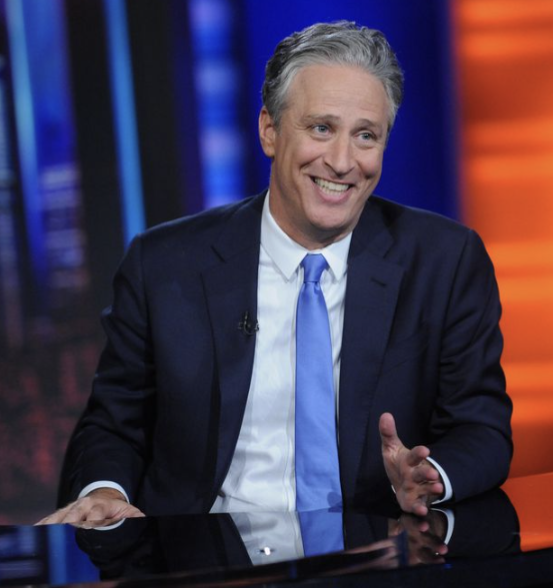
He’s a very specific Jon who is funny who only appears once in my list. He’s not a modification of my previously used friend Jon to make that Jon into “funny jon.”
So lets say you want to use emotional modifiers to turn your 2-digit words into 3-digit ones, and you have “funny,” “angry,” " sad," “scary,” etc as your modifiers. Its fine to modify your WORDS so you get 10 different modified Mikes… “funny mike 037”, “sad mike 137,” “scary mike 237,” etc. But you should try to find specific DIFFERENT Mikes that individually fit each of these modifiers.
(This goes the same for object lists. It’s extremely tough to tell the difference between the same doll that is just modifed, but if you have distinctly different “dolls” for each of your modifiers, they become unique TRUE 3-digit images.)
So modifiers can help you easily fill in your word list, but when it comes to the images those new phrases bring to mind, ideally you would find unique, singular images that fit those modifiers. If you know or know of 10 different people named Mike, you can fit each into one of the modifier categories. Funny Mike is one mike that you know who is always cracking jokes. Or maybe its comedian Mike Myers as Austin Powers. Your “scary” Mike may be Michael Myers from the Halloween movies. So instead of just taking your friend Mike and giving him 10 different modifiers that have to be actively considered, now Funny Mike and Scary Mike are two completely distinct people.
Now you could make “sad mike” just your friend mike being sad, as long as thats the only way you picture him when memorizing and the only time you use him in your system. Because, if you have a sad mike and an angry mike, those are two elements needed per image to distinguish between the two versions of the same Mike. This is slightly different than using the same actor in different roles. I have 476 as RiCKy Gervais, and I have 147 as DeReK (a character played by Ricky Gervais.) These two characters, even though the same actor are two vastly different “people” in terms of look, demeanor, and even voice. I don’t consider this to be a repetition of people within the system. One could argue that 10 different versions of the same Mike could be looked at the same way, but I think its a pretty clear distinction. It could work if the 10 “characters” that the person is representing are VERY different from each other.
So yes, modifiers can be a really easy way to fill in a word list to go from a 2-digit to a 3-digit list, but to make it into a “true” 3-digit system, its crucial to find distinct images for them all. The bottom line is that a true 3-digit system requires 1000 distinct images that are a single element in nature. Modifiers can make the word and phrase building part go quicker, but you’ll still need to spend time determining your single element fits for them.
Note: the modifier system is different than a “category” system where each set is designated by a different attribute or category, like 0xx is Star Wars characters, 1xx is Superheroes, etc. Those systems by nature should generate fully unique single elements per 3-digit number.
Anybody have thoughts on this? Does anybody actually use an “adjective style” modifier system where they just have 10 different versions of the same person or object? If so, how effective is it for you?
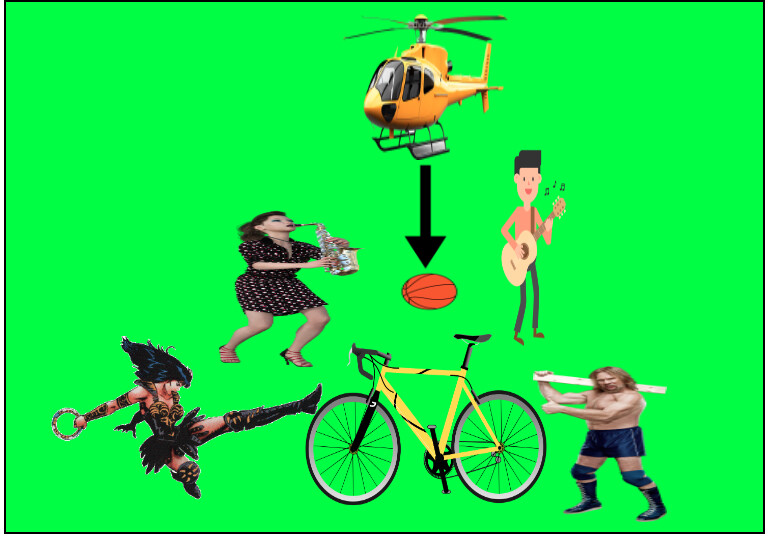
 , you could use different screen plays for different locations, but with the same elements. So for example first location is your attack and rescue play and then we get an attack and revenge play or a the attackers being attacked play.