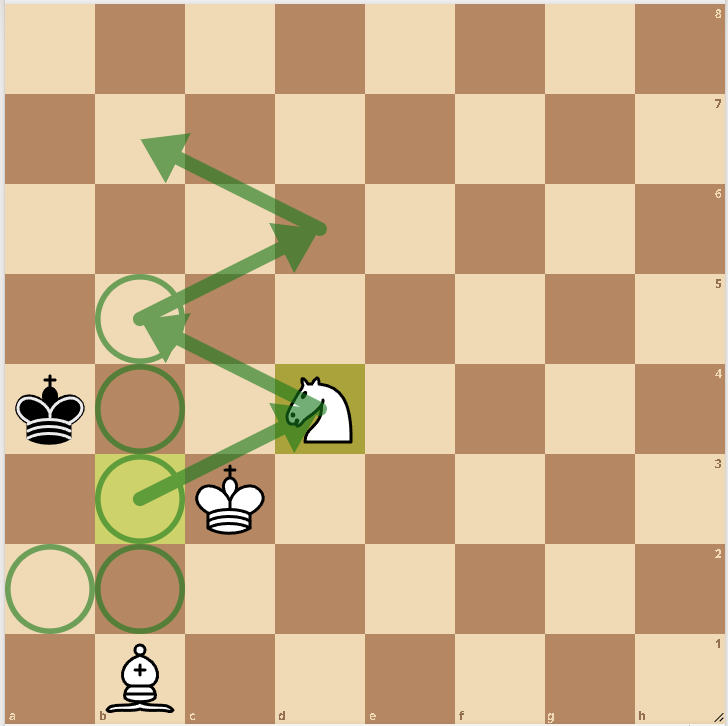
I think with storing half moves, you can decide on a pre-determined convention based upon the orientation of the images. For example. The image at the top comes first and then the image at the bottom. Or you can use left to right orientation etc.
For example, If I wanted to memorize Bg5 h6. Well Bg5 = 975 = piccolo. h6 = 86 =fish. So piccolo riding a huge, slimy, slippery, smelly silver fish.
Picollo is on “top” of the fish and the fish as at the bottom. Something like that
Yes this is the way I remember two half-moves too. In fact I think you should go further: have a double convention. (1) The first half-move (picture word) is above the second, (2) the first half-move (picture word) is doing an action to the second.
Your example of a “piccolo riding a huge, slimy, slippery, smelly silver fish” works perfectly. This makes the image safer for the long run.
Also, I believe that both picture words should interact with the location. The piccolo interacts with the location, the piccolo interacts with the fish, the fish interacts with the location.
This adds a layer of redundancy. You only need to recall 2/3 of the interactions to recover 100% of the information.
If I have mirrored scenarios I am mainly just planning to memorize the plan on one side of the board then recall the mirrored plan at the board and abstract it to the actual moves I need to play at the board.
I like your idea of relabeling the coordinates of the board temporarily in my mind.
Memorized sequences are much more applicable in some endings than others. This one for example has just 2 key positions to understand and just memorizing 2 simple patterns is enough to consistently win the game.
1 hour of practice is enough to learn it cold and I don’t think it is particularly well suited to mnemonics. I know you are just writing samples but someone seriously pursuing endgame memorization should be careful in which they choose to use mnemonics. Queen vs R and a pawn looks like a good example above.
Everyone knows the first W pattern but this 2nd pattern many don’t know. Put the bishop a knight move away from the corner and the knight 2 squares toward the center to create an electric fence to trap the king.
Just these 2 patterns with appropriate related understanding is enough.
I agree. And using mnemonics in this example of BN v K will also rob the player of the valuable understanding and lessons about how these pieces work together to cut off the king, which can arguably be called even more important than learning the exact ending which has a very low chance of occuring at all. (I’ve played 50,000 games and seen it occur naturally only once, none of my students have ever had the ending though I’ve taught it to most of them).
The added benefit of taking some time (no more than an hour as you say + some reviews) to learn the ending without mnemonics is that along with the understanding you will also get instant recall, which mnemonics cannot provide. I can’t think of anything worse than getting a BN v K ending for the once and only time in your career, only to be in time trouble and unable to travel to a memory palace and mentally decipher some mnemonic images to find out what to play. However, learning this ending the proper way would give a player the confidence even to perform the mate in a bullet game if necessary.
I think it probably would happen a bit more if people were as confident as they are in RK v K. I think few enough know it that I would be fairly happy going for it as a last ditch defense especially since I know how to force them to show all the needed patterns not just W.
Even if it never happens in one of my games it is very nice to know it psychologically to just go for that ending with a forcing variation without a thought even if I have good alternatives that are less forcing but maybe gives my opponent some counterplay options.
I think it will eventually happen in one of my games just because I want it to.
In the 1980s I had a compelling image of 753, a giant CLAM. To some degree clam and 753 are one and the same.
This might be a trick question, but what is it you forget and remember. To recall when Rome fell or the melting point of mercury my mneumonic is not for off.
For hundreds of digits of pi the mnemonics stay even when the links fade.
Yeah, I recently changed a lot of my opening repertoire on recommendation of my coach, and I’m looking forward to building new palaces for it.
The only issue is, I think the Chess Memory Palace pairs best with sharp, forcing openings, and I generally prefer less tactical positions. I might build a mix of solid/strategic mainlines with a few sharp sidelines in memory palaces.
Looks great, I checked out the free chapters and you’ve done a great job creating the system. I love how you used the major system too, makes it really easy for me. It looks like the paperback version is only available in US, any plans to put it up on Amazon.co.uk? Thanks
That’s strange, it’s available when I look at it (through a web browser). The paperback is print on demand, so it shouldn’t be possible to go out of stock. I’ll contact Amazon if that doesn’t resolve in a day or two.
It should not be possible for many things to be out of stock. A popular answer is “supply chain”. Four months the new sim card for my phone ten “is in the mail”. Lies so transparent, and the truth burried deep.
I thought europe was less arrogant than corporate USA.
So, my UK copy arrived yesterday. More generally - because I run https://whitewaterwriters.com/ I’ve put about 250 books through the kdp publishing system - random messages of this type do appear and my best guess is that it really means “The machine(s) we use to do print-on-demand are backed up to the point that we cannot guarrentee the delivery date of this and so we make you wait because we know you can’t buy it elsewhere (also we like shifting paper sales to ebooks)” the issue normally clears up in a few days.
Very pleasingly - I went on a tour of the amazon warehouse partly to see if I could see the big print on demand machines - no such look, but when I went to tour schools for my daughter it turned out that Amazon had donated the school the blank (but with all the cool guidelines) books that they use to test the machines are working (I live very close to what I understand is the main print-on-demand centre)
I got a pdf version on Etsy so all is good.
Great book and a great system by the way. I’m excited to see how this can improve my game,
Thanks and fair play to you for writing it and releasing it,
Séa
First great job with the book and the explanations. I saw this while looking for a system to learn chess openings. I was excited at first, but upon reflection, this system is ultimately less effective than a straightforward PAO to learn chess. Though there is marginally less prep time than with a PAO, the image encoding is as taxing in and the decoding (if required,) is slightly more complicated than with a PAO. There are also better ways to encode a chess only system.
To prep the image system one needs to learn and memorize a Major-like system to decode objects into 4 digits and then memorize 64 Objects. To prep a PAO for chess, one needs to understand the PAO system and learn 64 PAOs. The prep time with the image system is noticeably shorter, but prep time is such a small factor when trying to memorize thousands of moves, that it almost doesn’t matter – it’s kind of a mnemonic loss leader.
When it comes to encoding, the image system only requires 4 numbers per location. Yet as it is applied as a PAO (or rather an OAO – object action object) anyway, * the system ostensibly requires you to memorize an action despite not utilizing it- and then requires you to count syllables and visualize the board in order to gain the information that could have been encoded to begin with. This system also completely breaks down with any variation on the board as this would fudge the piece notation.
One could say that having learnt the image system, then there would be no need to memorize the number-person-action-object associations that one might need to recall with a PAO. Yet this advantage is also present within a PAO based on the major system. It’s also much easier to set one’s own much simpler rules for PAO recall. Ei; a theme for each set of ten and a first letter association for single digits.
It’s also worth noting that there are likely easier ways for those that just want to use mnemonics for chess to encode something like N f4 than with consonants. For instance f could be the first letter of the object, and 4 could be the alphabetical placement (D), of the 3rdletter. As for the pieces themselves they could be thematic to the object or something to do with the number of letters in the word etc…
*I do wonder if the Image “action” might have some advantages. In the image system, the choice of action might be more logical than with the PAO’s randomly assigned action, yet the other hand, the PAO’s recurring actions might help encode the system. The fact that the action is not actually required for decoding also helps prevents some issues in the image system. Finally some people might just remember Shark Jester, as opposed to a Shark biting a Jester even though it’s less sticky.
That would be interesting to look at if you’re willing to share it. I’m still trying to decided what the best way forward might be, but it looks like a PAO, or a tweaked PAO might be the best way. If I can add 2 digits and encode 4pairs in a single location?