It is already obvious that converting letters into numbers then into images is not particularly efficient compared to Memoria Rerum and rote memorization. But, have you guys ever tried to take the first and last letters of individual words then convert them into numbers and then images to memorize sentences/paragraphs? I think that memorizing only the first letters instead would be much more efficient, but also memorizing the last letters would make it more memorable, especially when you want to recite something verbatim. I know that this is not a good idea since you would have to memorize 400 numbers just so you can memorize 100 words (basically the entire Invictus poem). What system would you guys recommend for verbatim memorization?
A memory journey (aka memory palace, aka peg list) that includes narrative elements and wordplay to encode order and meaning.
Worked for me for a lead role I played in a live performance last year. I still remember most of it word for word in fact.
6 Likes
@beau2am, could you post a short example of your script and the visual equivalent that you used to memorize it? I like examples. Thanks!
Doug
3 Likes
@thinkaboutthebible
I appreciate you asking. I like examples too.
I played the historical figure of Lutheran pastor/Brigadier General John Peter Gabriel Muhlenberg (1776).
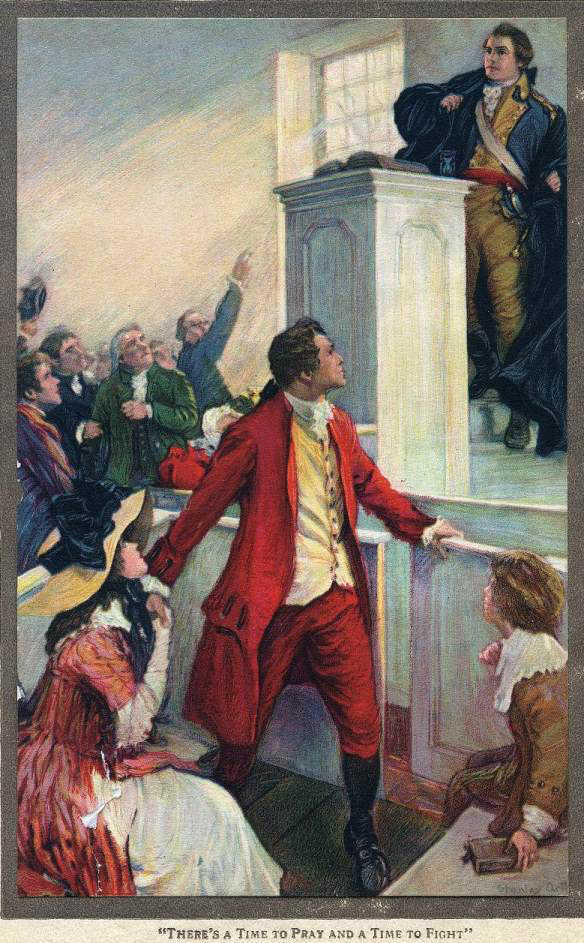
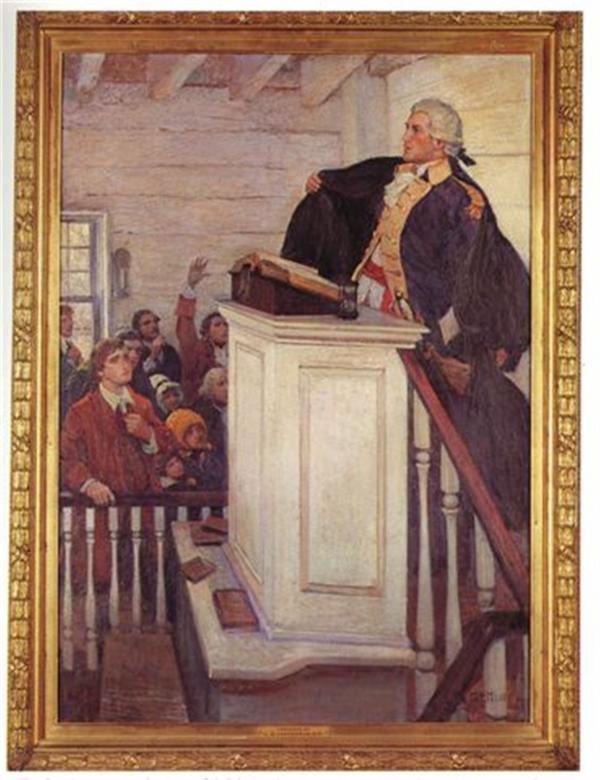
Part of my enjoyment in this project , I’ll geekishly admit, was to deep dive into what an accent from 1776 (and Pennsylvania Dutch, in this case!) might have sounded like. So, although I didnt memorize the IPA (international phonetic alphabet), it definitely got my wheels turning and I probably will one day.
Here is a part of my lines, a monologue given to a small chapel full of some fellow actors and (mostly) audience members.
Everyone has just heard news that the bad blood between the colonies and the imperial forces back at home has come to a dangerous head. War, it seems, has arrived.
You, an audience member, are visiting a small church in Pennsylvania and its congregation praying and seeking answers for what to do.
I, your pastor, welcome you in as the congregation finishes a hymn.
Hello friends.
Difficult circumstances have fallen upon us.
We find ourselves fluctuating in uncertainty
over this perilous situation.However, we must remember
the horse is made ready for the day of battle,
but the victory rests with the Lord.
So, be strong. Be courageous.
Do not be afraid or terrified because of them
for The Lord, your God, goes with you.
He will never leave you nor forsake you.In the language of the holy writ,
there is a time for all things.
A time for everything under the sun.
There is a time for war and a time for peace.
A time to pray and a time to fight.
And now, friends, is the time to fight!Muhlenberg rips off his black robe, revealing a commander’s uniform underneath
Now who will go with me?
Come men, be courageous. Stand firm in the faith.
We must fight against this tyranny.
We cannot let our God-given freedom be stolen.Each man must decide in his own heart what you will choose.
Will you stand with me in this fight?
Will you stand against tyranny?
Your freedom is at stake.
For convenience I used the house I live in as the palace. Starting in my bedroom. I wave to imaginary “friends” in my bedroom closet and say Hello friends.
As I turn to traverse the other areas of my current room, a ball falls and cues me for Difficult circumstances have fallen upon us.
In retrospect, I probably forgot the specific imagery for “Difficult circumstances” because I enjoyed and ended up relying on the way my mouth felt when using the accent I developed.
Something sounding like:
Dihfficult cihrcumstances.
John probably had a pronounced German accent, but I ended up toning it down to go with more of the American “brogue” that was present at the time.
I first learned it the other way (more German sounding colonial English), then decided it might be a bit much… I wasn’t confident the Texas audiences would appreciate (or clearly understand) a “proper” colonial German-infused English Brogue.
I conclude that I ended up replacing some of my original mnemonic cues—with cues related to the phenomenological experience of my mouth (shape, breathing patterns, reverberations on the various palettes provided by my face/body) while saying the lines.
We find ourselves fluctuating
Here again, I’ve forgotten what I used for find.
“Circumstances fallen upon is” is a ball. The ball (cir-cle) bounces (fluctuates).
over this perilous situation
another image ultimately replaced (and forgotten) by the unique way of sounding the words “perilous situation.”
There is a horse in my bedroom, that’s rather noticeable:
However, we must remember
the horse is made ready for the day of battle,
but the victory rests with the Lord.
They didn’t use ‘ee’ sounds for the y in words like victory (not yet, that developed later), at the time it was almost a throw away ‘ih’ sound tacked on at the end.
“victorih”
These chopped down y’s ended up being convenient enough mnemonics for me in some cases, cluing me into the verbatim word being used.
So, be strong. Be courageous.
Do not be afraid or terrified because of them
for The Lord, your God, goes with you.
He will never leave you nor forsake you.
There is some faded floating imagery in my room for the ‘Be strong/courageous/afraid’ part here, but ultimately much of my original imagery (at least in my bedroom) yielded and gave mnemonic right-of-way to the wonderful emotion and unique way of saying words like ‘afreyd’ (sort of a flattened sound to what I’m used to doing).
There is a large cross (in the palace) as I walk through the junction of the bedroom and the hallway. In the hallway in real life I have books, making this next part merge nicely with the last (especially with the big cross mnemonic):
In the language of the holy writ,
there is a time for all things.
A time for everything under the sun.
There is a time for war and a time for peace.
A time to pray and a time to fight.
And now, friends, is the time to fight.
At this point in the script, John rips off his robe to reveal himself in a full commander’s uniform
A lot happens here in the imagery. The cross + books in the hall cue me for ‘holy writ’.
‘all things’ had a cue, but again, I only recall the feeling of saying ‘all’, the long “ah” sound (as in “open wide and say ahh”) was not yet developed in English and instead we had the same ‘a’ sound for all that we used for words like flat.
The sun is in the bathroom across from the books in the hall. War and peace happens at the intersection of the hall and the kitchen. I probably originally used an axe or weapon for the mnemonic, but that faded as well.
It’s a performance, and mnemonics ultimately take a backseat to the experience of being present with your message. Some mnemonics stick around though, just in case I get lost or forget something in a live performance  .
.
A time to pray and a time to fight. And now friends is the time to fight!
As I cross the kitchen, I come upon a priest praying by the bar. He rips his robe off (as the John Muhlenberg of lore did).
The “friends” are in my bathroom nearby, and I become the priest now (in my palace) and speak to them.
side-note: it’s bizarre how dreamlike reviewing a palace feels.
Now who will go with me?
Come men, be courageous. Stand firm in the faith.
We must fight against this tyranny.
We cannot let our God-given freedom be stolen.Each man must decide in his own heart what you will choose.
Will you stand with me in this fight?
Will you stand against tyranny?
Your freedom is at stake.
I move into my son’s bedroom for:
“Now who will go with me?”
I beckon to men, soldiers, etc standing around.
“Come men” is a vulgar (but hard to forget) mnemonic followed by Courage the Cowardly Dog (children’s cartoon from my youth).
be courageous, we must fight against this tyranny.
The men are loading up Courage with weapons and armor (see the helmet falling over his doggy eyes so he can’t see) and pushing him out the secret passage in my son’s room (actual bookcase that rolls open and closed like a secret passage, my son likes it). The men are standing tall and straight (firm) and I’m preaching (in the faith).
Courage (the Cowardly Dog) is going to fight a Tyrannosaurus with tiny arms (tyranny).
We cannot let our God-given freedom be stolen
I have memorized a giant tree in my back hallway being ‘let’ down. Again the shape of the words replaced some imagery.
As I move closer to the back door, I look each man in the eyes to tell him he must decide in his own heart (I’m sure I used some sort of heart imagery at one point, but no longer necessary) what you will choose.
It continues through the back hallway and then out my backdoor into the yard, where the next scene takes place.
–
I’ll sneak in, real quick, that I’ve just started chapter 14 of “Memory Techniques: A systematic analysis of modern mnemonics” and I very much appreciate your writing and research. I’ve been taking notes. 
Regards,
Beau
8 Likes
I’ve been thinking about this sort of thing. My current theory is basically to use an object for every chapter of the Bible (snow globe for Genesis 1), combine that with a character for the verse number (Yeti for 1). My theory is that the letters you’d actually want to use are the consonants. Consider how easy it would be to convert, “n th bgnnng gd crtd th hvns nd th rth,” into “In the beginning, God created the heavens and the earth,” but I’m trying to remember it in Hebrew, being an abjad, this is pre-solved for me.
So, this is in still at the rumination stage, but to remember, “Bereshit bara et hashamayim vaet haerets, ( בְּרֵאשִׁית בָּרָא אֱלֹהִים אֵת הַשָּׁמַיִם וְאֵת הָאָרֶץ)” You’d take your yeti with a snow globe, get assign it bet-resh, aleph-shin, yod-tav, and a blank. So, the yeti, bet-resh is ball, so we’ll have a disco ball on his head, aleph-shin is ash, so we’d have him hold an ashtray, yod-tav doesn’t mean anything as far as I know, but we could have the yeti ride a yeti crab. The yeti crab could be holding the snow globe for Genesis 1, and, to remember the blank, we can have the yeti crab trampling over a blackboard, then we just move the Yeti to the next position in our memory palace, and assign it bet-resh, an aleph, aleph-lamed, heh-yod, and do the whole thing over again.
I think it’s probably fine to remember about as few letters as you like, though, and depending on how serious you are about getting the whole verbatim text in, how fast you want to go, how tolerant you are of minor mistakes, I think even getting just the first letter of every word is fine. The real problem: Why do you want to remember this stuff? The ONLY reason I’d consider really consider memorizing the Bible verbatim is that it is the kind of text that people can and do meditate on down to the individual letters.
4 Likes
A delightful read through your palace, @beau2am! It confirms to me that a story to remember a story works well. You use simple elements but visually tied to your locations and quite a bit of substitute words which is a dynamo combination. It’s good to know not only how to design a project but also to see after it’s done how much you can retain. Actors are especially a good source of mnemonic tales and I hope to hear more of your examples!
I hope you didn’t decide to start at the end of my book just so you could look for all the “hidden secrets of the ancient memory masters” that I revealed there! Feel free to ask or comment about whatever in a message or post.
Doug
3 Likes
Hi Doug!
I started from the beginning, I promise! Haha
I have a lot of notes.
What I really need to do is look more into the visual sentences you describe.
Those are very interesting to me, and I’m curious to see the common ground between those and what Giordano Bruno proposes in his works Song of Circe and On the Composition of Images.
I also am a big fan of your UML breakdowns. I try to bookmark them when I run across them.
I find myself writing a lot of pseudo-code notes in the margins (or on a notepad for digital resources). I think the OOP approach is particularly useful in finding isomorphic-ish models for the different memory systems.
I’m so pleased that you explore the topic of mnemonics through that lens!
4 Likes
Visual sentences are just the outcome of the data analysis I did on the mnemonic images. They were initiated by me seeing many variations on the PAO and with the popularity of the systems, became something that had important underlying principles for me to discover.
I don’t talk much about Bruno. He adds nothing to mnemonic techniques and muddies the waters of many discussions. He may be an excellent writer but bends the facts and contorts language to make his esoteric thoughts seem important. He wrote:
Moses, who at one time, compelled as it were by some necessity, erected a golden calf to gain the favor of Ceres and Jove, likewise offered for worship a bronze serpent to assuage the violence of Mars and Saturn…
I mean, with proclamations like that, it’s no wonder that nobody rushed to defend him before he was a martyr to his own heretical church. He was essentially a philospher who, without the pagan influences of hermeticism, would have been a semiotics or linguistics writer. But his interest was in exploration and not in analysis.
I see some value in his listing of modes by which various figures and intentions are made (Composition of Images: Book One, Part One, Chapter Eight) as they are useful for understanding what possibilities there are for substitute words. I used Aristotle’s philosophical image relationships in my book which I’m sure was an influence for Bruno.
Bruno also came up with a rudimentary PAO system (Book One, Part Two, Chapter Nineteen) but just was interested in the image composition. In fact, most of the book is concerned with descriptive imagery in a well-structured design. But it’s not practical to learn from and therefore, I don’t think he’s an important figure.
Breaking down data and processes into simple UML was what I enjoyed teaching. It’s just that nobody understands the language outside of a few programmers. But if you need a diagram, just ask. OO based analysis was my main style of understanding, but some may call it an Agile style as well. The connecting parts among all of them is a bottom-up approach where you start with the pieces of data and organize into bigger pieces. Non-OO systems took the opposite road of top-down analysis and started with big chunks which were broken down and handled in pieces.
But when it’s all said and done, does the system do a good job? Computer systems are judged by their outcomes and not by the amount of documentation that they’ve produced. So keep doing what you’re doing. And don’t bother with Bruno. I know there are many who think he has something but I haven’t found anything of use in his works that hasn’t been done better and simpler. Just my humble opinion.
Doug
Bruno “adds nothing to mnemonic techniques” in your "humble opinion? Where’s the humility here?
“Nobody rushed to defend him”? Ingrid Rowland’s book says otherwise, amongst other sources.
“And don’t bother with Bruno.”
@thinkaboutthebible, “better and simpler” is as mythical as the statements you’ve made and as dangerous an idea as discouraging people from reading anyone, let alone any mnemonist.
Imagine encouraging people not to read the Bible because there are “better and simpler” books that cut to the core of this or that person’s definition of spirituality…
Then there’s the matter of a “system.”
Although I suppose it’s possible to interpret from Bruno that he’s advising the use of “a system,” I don’t think this conclusion bears out any serious reading of the texts.
I’m not particularly biased towards Bruno and have many criticisms of my own of his various texts. And I would encourage others to read widely and avoid blanket statements because just how valuable Bruno might be for a person cannot be predicted.
Even Philip K. Dick was influenced by him in interesting and unusual ways that none of us could predict, nor “should” any of us attempt to shut down if we want spectacular imaginations to arise in the future.
All the more so as tedious AI-generated books about memory techniques begin to appear, “guides” filled with inaccuracies, void view-points and downright ridiculous suggestions.
@LambertWfunction, the process you mention may not be efficient to some. But far too many worry about efficiency before they’ve mastered effectiveness. And there are times, especially when learning languages where efficiency is not an option.
So, a la Bruno and other mnemonists, it is not about “a system” but a coordination of systems, ideally with some Bruce Lee-esque wiggle so you can be water, my friend.
Perhaps my the verbatim demonstrations I’ve offered won’t be enough to convince some, but more are coming and thank goodness for the good, invaluable and realistic memory teaching of Bruno and his peers who refused to “dumb it down.”
6 Likes
Aah, @metivier it was as I expected, that you would come to defend Bruno, which I knew would be a good balance in the discussion. I know you have a much higher opinion of him than I. I’m thinking as I’m writing, “Will Anthony think this is link bait just for him?”
I do defer to your facts about Bruno because you have put in considerable time in the study of his works and life. But for me, after several readings of On the Composition of Images and doing light research, I still haven’t felt like I’ve gained much. Again it’s just my opinion, humble only because it is a starting point, and if can gain knowledge through an exchange of views, I would love that.
As I understand it, people didn’t understand Bruno well (like me) and used his mysticism to advance the views of their own. In that way, they defended him, but only after his Italian auto-da-fé. Before, when he would not give up his heresy, there weren’t any of his followers that suggested they would die alongside with him from what I’ve read. I’m interested to hear your views, my friend.
(We may have to split this topic off because it’s not about verbatim memorization any more.)
Doug
3 Likes
This is not a defence of Bruno as such.
It’s a call to not dismissing books based on inaccurate statements.
People understood Bruno better than it might seem, so much so that his trial was paused out of concern that wars from neighboring countries might erupt around his treatment.
So the reality is that people understood what Bruno was saying all too well. The historical record supports this in many ways.
The idea that Bruno was a mystic is not settled and largely created by Yeats who many believe did not understand either Bruno or the hermetic “mystical” tradition very well.
I don’t know what counts as “several readings” of On the Composition of Images, but Bruno himself will tell you that reading isn’t enough. If you merely read it and gained little, that’s not on Bruno. That’s on the reader. Alexander Dicsone makes this point in his memory books, which also comment on the weird ways people arrive at a mystical interpretation of Bruno.
It just doesn’t make any sense, except if we consider a general lack of philosophical training, both then and now. But rest assured, those who tried Bruno did indeed understand the philosophical issues. They were threatened by the truth of what he was saying and time, truths that further research and intellectual honesty has demonstrated exactly what Bruno got right. Both about astronomy and memory, though he wasn’t in hot water for anything he had to say about mnemonics.
Let’s take things one step further:
What is right in Bruno is right because it’s right. Not because Bruno said it. He knew that very well, hence his final comment to his executioners that they feared their decision more than he did.
Thus, I would not say we have to split this topic off because verbatim memorization blends with the recounting of statements, ideas and pseudo-facts based on incomplete information. People who want to advise others on how verbatim memorization is done may want to consider this connection between the two types of recall.
I would suggest you and anyone else not be interested in my “views.” Be interested in what is true or can be shown to be accurate through dedicated research. Go in concern of those who shut down or discourage the reading of books rather than lifting them up.
Call them out every time they do it, including if you catch me doing it. You never know – we humans do tend to slip! 
6 Likes
Well this was delightful!
Two of my favorite mnemonically curious folks, @metivier and @thinkaboutthebible , lighting up this thread with thoughts hot off the grill!
Doug, with all (and there’s a lot of it) due respect,
If I ruled out learning from folks who:
- Bend facts and contort language to make their thoughts seem important
- Lack practicality in their explanations
- Have been superseded by others in terms of skill, simplicity, socio-historical importance
and - Believe stuff I think is crazy nonsense
—I’d have no one left to learn from.
But, being an avid checker of my etymology and rhyming dictionaries (See: already has Linguistic interests ), as well as a lover of music theory and also a guy who explains to my kid psychological concepts and applications—but refers to them as “magic”—for extra exciting (See: memorable, inspired by ideas shared in Dr. Lynne Kelly’s work) dramatic effect—
—
—and being that I already own the book (bought it two years ago but hadnt read it through)
And being that I already have strong ideas about what works for me in the mnemonic space (my quest is currently one of finding personal inspiration for organization of all the palaces and knowledge I’ve got so far), like Tom Hanks watching a less skilled actor, or an experienced programmer reviewing the code of a newbie, when a bad idea/performance/structure is delivered I might wonder how I might go about improving it, or if a good idea is done oddly, I might take inspiration and consider where adjustments could be made.
Being that I already know what I’m doing mnemonically speaking, and that I evaluate/measure effective vs ineffective mnemonic output (and mnemonic methodology) regardless of where the techniques come from—
—I think continuing to mark up the margins of Scott Gosnell’s translation with a bunch of O-O pseudo-code will probably be worth “it”.
‘it’ ::= [time, attention, energy, effort, etc etc, some perceived cost]
Even if not a single good idea passes by my eyes, there comes a point at a certain level of ability where even bad ideas will inspire!
-And, worst case scenario, I can add Bruno himself as a mnemonic, now that I’ve gotten to know how his ramblings differ from the ramblings of everyone else I’ve listened to so far.
But so far, just 80ish pages into the text, I’ve already got some notes that intrigue me. And that aint too bad, neither!

(I’m one of those goobers who has a library with a bunch of books in it that I already know I disagree with because I like keeping things spicy!)
4 Likes
@beau2am, glad you enjoyed it. @metivier is one person I have tremendous respect for and enjoy his posts.
Good for you in keeping with your research into Bruno. But most of what I learned came from this forum where there’s lots of interesting people to learn from. Post what you think are Bruno’s intriguing ideas here. I’d enjoy seeing what you find.
Doug
3 Likes
It would be strange for a serious reader of Bruno not to find things to disagree with.
The Eternal Return of the Same will occur @thinkaboutthebible if we post “intriguing ideas.”
There’s little to no use in considering the 20+ mnemonic strategies in On the Composition of Images if they aren’t going to be put into use for a minimum of 90-100 days.
Even without contemporary brain science, Bruno knew this about habit formation, and wasn’t even half as hard as some of his students (like Dicsone) when it comes to insisting that consistent action be the judge, not intrigue.
4 Likes
@metivier I’m more of a free will person as you might think.
1 Like
I don’t know what you mean or how it fits into this context, but if @thinkaboutthebible has evidence that free will exists, I’d love to see it.
1 Like
It was the traditional Christian argument against Nietzsche and others’ Eternal Return using free will to confront the endless repeating cycle of life. Not my cup of tea. So I won’t be picking up the gauntlet, @metivier, on the defense of free will by evidence. But I would suggest reading my favorite gauntlet-picker-upper, C. S. Lewis on the subject. He’s one person I’d like to memorize passages from verbatim.
1 Like
In the language of the holy writ, there is a time for all things.
A time for free will and a time for quarks and chaos.
or is that verbatim straight from my exaggerated imagination? 
2 Likes
Passing the buck is more than ample evidence that free will does not exist, @thinkaboutthebible. If you think I’m wrong, will yourself to pick up this “gauntlet,” whatever it is.
As for C. S. Lewis, his own stories, particularly The Great Divorce and The Screwtape Letters, not to mention all those adventures in Narnia are all confession by projection that good vs. evil binaries are precisely the antithesis of “free,” as is the use of mnemonics.
One of Lewis’ biographers (Alister McGrath) tells us:
“One of Lewis’s abilities must be noted here, for it is of obvious relevance to his gifts as a writer: his formidable memory. Lewis’ mastery of the Renaissance skill of the ars memorativa unquestionably contributed to the success of his Oxford lectures, enabling him to recite quotes from memory.”
All mnemonics rely on the absence of will, as does fiction, and as marvelled at by Galileo, the use of the alphabet.
@beau2am, Leibniz said that “everything possible has an urge to exist.”
But he was wise enough to note the difference between things intension and the limits of things in extension.
Both the concepts of “time” and “all” are again important mnemonic considerations one can read about in Bruno or put into practice.
Let us all allow our “free will” to sort out whether we Yoda 101 ourselves into the do or do not.
As for Nietzsche, let us remember one of his funniest lines:
“I laugh at your free will… and at your unfree will too!”
I think it’s a matter of perspective here. In some ways we obviously have a self; it’s a weak, flabby sort of self, without super clear barriers, but when we see a catch a guy clenching a murder weapon, with blood on his hands, we aren’t confused and think that someone else might need to go to jail.
At the same time, there can’t be a separate self from the universe because what we are is part of the universe. (In the image of God created he them; male and female created he them. Genesis 2:17. Check my memory if you want! :D*)
In the same way, there are certain ways we definitely have free will. That will isn’t separate from causality. In particular, what you seem to be pointing at here:
Is that our will is ordered. Indeed, in order for will to have any value at all, we need to act in an ordered universe, where our actions will (sometimes!) have predictable consequences. This is basic interdependence. Without the ground next to the road, could the road even be a road? Without a well ordered mind, and a well ordered universe, our will would be meaningless. So: our will is the universe’s will. How could it be any other way?
Which doesn’t disprove basic facts about the weakness of said will. (Will yourself to not get old! Will yourself to not forget!)
*EDIT: I did check; it was at Naga (27), where it was supposed to be, but I translated it into 17. Foiled by my tiny will again!
2 Likes