TIM SYSTEM: development and training journal

Oh boy…

This is a toughie.

For pairs that include 6’s, I have:
100 where a 6 gets a “J” sound.
112 where a 6 gets a “CH” sound.
168 where a 6 gets a “SH” sound.

It looks like there really is no consistency for how I read these 6’s. If anything, the classic primary “J” sound from Major is the least popular with me.

I’m not sure what to do about these.

(A kind of interesting aside here… I’ve noticed that VISUALLY, a 6 almost looks like a C and an h or an S and an h overlaid on top of each other. A 6 actually looks the LEAST like a J out of all of the phonetic options. You kinda have to add a shape that isn’t really there to get to a J. Or do a little more creative visual deletion to arrive at a lowercase j. Although, I suppose you could fairly easily see a G in there, with the soft G sound as also a “J” sound like in “GeorGe”…)
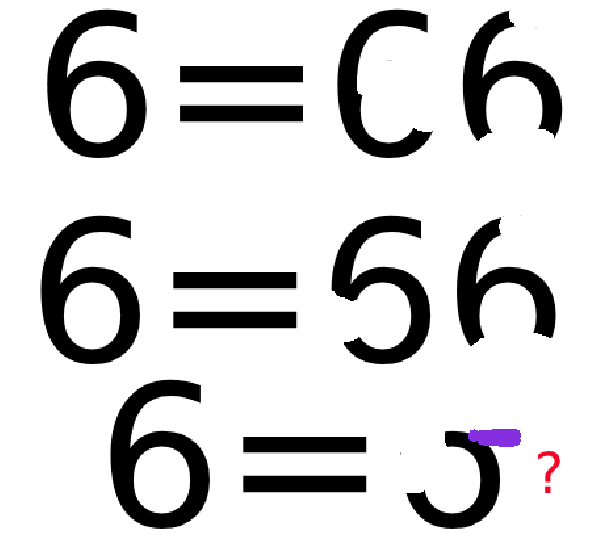
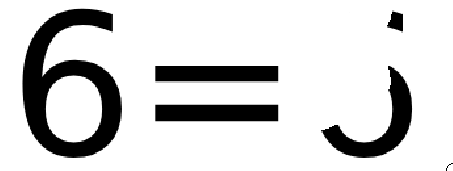
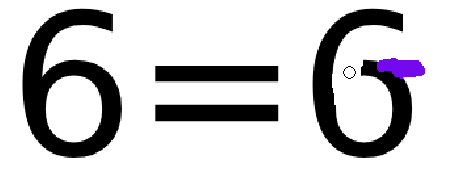
Anyways back to the point… I’m torn here.

I also have the :spades: :clubs: suit combination associated with ONLY the “J” sound. This I think can be considered as independent of the other “6” sounds because the suits aren’t numbers. They’re almost like completely different entities.

BUT…

If I’m using these words to also populate a number system, then the 600’s words all start with J.

SO…

There are potential competing optimizations here. If I decide that 6’s are going to be SH or CH, then I have a discrepancy with the hundreds place digits in the number portion of the system.
666 would be read as J-SH-SH or J-CH-CH. I do NOT like this. It also would probably bother me to have J as a suit sound and a different sound for 6 value cards.

It looks like if I do attempt to re-list the 6’s, it should be so that they all get the J sound, which means that 280 entries would need to be changed. That’s over half of the pairs containing 6’s.

(The final number will probably be higher, since I’m not including pairs from the “vowel first” suit set yet, because I haven’t started learning them. What I have as entries for some of those may change based on my instinctive reading under pressure.)

The completionist part of me REALLY wants to optimize these 6’s. They are always some of the most challenging pairs to learn to read quickly because of the three phonetic options. But the other side of it is that I’ve gotten pretty far into reflexivity for the ones that I’ve been working on, especially some that have carried over all the way through since Shadow.

I dunno…

I’ll probably put a list together and chip away at it as a mental exercise, but I’m not totally sold on rewiring that many of my associations again quite yet.

I think I’ve settled on a name… The “Translated Index Method,” or “TIM” System. Kinda rolls nicely off the tongue, eh?

I’ve created a document in google sheets listing the complete method and instructions, along with a tab that lists every possible card pair along with their phonetic assignments and associated numbers. This can be used to fill in your own list if you wish to use this system. At some point, I’ll upload an Anki deck for this as well, similar to my other projects so that you can use it as a template and fill it in with your entries.

The link to the google folder is here: TIM System - Google Drive

1 Like

Every set in today’s recognition training session was faster, some by a lot! Progress!

The slowest set was the J’s :spades: :clubs:, but that improved to 2.04 SPP.

Fastest was the :clubs: :clubs: at 1.12!

Anki lets you look at stats for individual cards as well and some of the old familiar ones were clocking in at 0.5 to 0.7 SPP. If I can get these new ones to that pacing that would be awesome. Then it would be looking more like a sub 30 second overall pace!

|:spades: :spades: |1.41|
|:spades: :hearts: |1.68|
|:hearts: :spades: |1.72|
|:clubs: :hearts: |1.74|
|:spades: :diamonds: |1.56|
|:hearts: :hearts: |1.5|
|:clubs: :hearts: |1.58|
|:spades: :clubs: |2.04|
|:clubs: :clubs: |1.12|
|:diamonds: :diamonds: |1.45|
|:clubs: :diamonds: |1.31|
|:diamonds: :clubs: |1.58|
|:diamonds: :spades: |1.86|
|:hearts: :clubs: |1.63|
|SPP Average across all sets |1.62|

1 Like

Thanks Tim, that’s interesting to look at.

Can I ask roughly what proportion of card pairs produces a standard English word or phrase, in your system?

Or conversely, for what proportion of them you have to ‘force’ a connection by creating a less natural word or phrase?

1 Like

Basically all of them. There are probably less than a dozen out of 2704 that are kind of questionable with words that are either shortened or slang, but they all are ones that make sense to me with some kind of phrasing that triggers a specific image for me. I don’t think I’ve been forced to use a complete nonsense word or phrase for any entry. I’ve always come up with some combination of actual words and then just used whatever image worked for them.

Couple examples of the questionable ones:

“foo bed” is a kid’s bed with a foo fighters blanket on it. (oddly specific, but it’s clear in my mind haha.)
“fo beef” is a cow being sucked up into a flying saucer. (You could argue this is a nonsense phrase, but I see it as “fo” being short for “UFO”)
“digidude” is the character of max headroom

These are all ones where those phrases are what kept popping out naturally when trying to come up with an entry. I’d be like “what the heck is a foo bed or a digidude?” My brain obviously wanted to use those words, so I just went with it and found that the images fit pretty well and were vivid and unique…

1 Like

So i always tried to go with the most instinctive word/phrase that matched the phonetics first, and then worked to find an image that would fit it well.

It seems to be much easier (for me anyway) to train a reflexive word to trigger a new image than to force the phonetic indicators to trigger an unfamiliar word or phrase in order to make that trigger a familiar image. Does that make sense?

1 Like

Yes, it adds clairity to a complex subject. You are not suggesting that fo beef should not be faux beef for me. Thanks, both. . . for the quetion and the answer.

1 Like

So I think I want to make an adjustment…

The more I think about my vowel-first set, the more it annoys me that it doesn’t have a consistent starting sound like the others.

One of the main pros of this system is the consistency factor and the ease with which pairs can be read due to the restrictiveness of representative sounds.

In light of this, I’m going to try to complete sets for a “G” (guh) sound and a “V” sound. I’m leaning towards replacing the vowel-first set with the G set, and I want to have the V set in reserve in case the experiment with the verb set doesn’t work very well.

I’ve posted a new thread with the missing G-first entries to try to crowdsource some help!

1 Like

Well, with some help, I’ve filled in all of 169 entries in a “Hard G” set! Thanks all! Surprisingly, there was only a conflict with previously used imagery for a couple!

I had D-P [9 :hearts:][K :spades:] as “dip” and had that image as a bowl of guacamole. Well now, “GuaCaMole” is the entry for G-K-M, so I’ll change “DiP” to a bowl of spicy salsa instead. No problem! A couple others like that, but fortunately I was able to find alternate images that work just fine.

So now the question is: how do I make this change?

Here’s one thing that I’ve been fairly consistent on when assigning the suit combo sounds: If I originally had a dual-option suit sound in my previously learned 2-block systems (T/D and P/B), I retained both associations and used them for the primary “black-first” pair and its opposing “red-first” pair match.

I used to have :spades: :hearts: and :hearts: :spades: as linked sets via 2-block, with both getting the T/D sound.

I also had :clubs: :diamonds: and :diamonds: :clubs: linked, both getting P/B.

With this new system and its expansion where every unique suit combo gets its own specific sound, I saw that it would be really simple to just split these phonetics off…

:spades: :hearts: would be restricted to T
:hearts: :spades: would get D

:clubs: :diamonds: would get P
:diamonds: :clubs: would get B

Typically in Major, which I’m basing my phonetics on, the K sound and the hard G sound are both used to represent 7. The linked/opposing suit combination for :clubs: :clubs: in my previous systems was :diamonds: :diamonds: and both shared the K/G sounds in those systems.

In this new system I’ve assigned :clubs: :clubs: to only the K sound and I’ve also restricted 7’s to only using the K. I didn’t initially plan on using the hard G sound for anything.

This meant that the “linked” or “opposite” suit combination to the :clubs: :clubs: set, which is :diamonds: :diamonds:, was open to freely assign a different sound. So I decided to make :diamonds: :diamonds: the F Sound in this new system.

Now that I’m reintroducing the Hard-G starting set, I think it makes sense to map those G-first entries to the :diamonds: :diamonds: pairs. This maintains consistency with my other previously linked suit combos like T/D and P/B. K/G will now also follow this approach.

This means that the “F” entries that I’ve learned to read :diamonds: :diamonds: as in the last few weeks will need to be remapped to another suit combination. This kinda sucks, but I’m willing to make the change as its still early days of learning and developing this system.

What this also means is that now I can do away with either the “vowel first” set or the “first-person action” set. I haven’t started learning any of these entries yet, so it is no problem at all to replace them. At this point. I’ve decided to replace the “vowel first” set. I’m going to make the F set now map to :hearts: :diamonds:, and have the Verb set move to :diamonds: :hearts:.

This accomplishes another thing… If I determine that the “first-person action” approach isn’t working or is too slow, I can replace it with a set that starts with the V sound. This will mean that :diamonds: :hearts: would be the V set and :hearts: :diamonds: would be the F set, a nice mirrored symmetry of split Major sounds.

So farewell to the variable vowel first set, hello G’s! Will start working on mentally overwriting the :diamonds: :diamonds: association, learning the new G entries, and re-associating the F’s with :hearts: :diamonds: today!

At some point today I’ll also post a new thread for the V set and see if we can get those all filled in to have in reserve!

Big post, thanks for sticking with it, hope you all find the process somewhat interesting!

1 Like

Major update…

Found matches for all 169 entries in a “V” starting phonetic set. This is going to replace the “first-person action” set.

Yes, the verb experiment is over before it even began. I’m actually happy with this for a couple reasons.

By adding the V set (and recently the G set), I’ve now assigned a single distinct initial sound to every possible pair. To me, this is huge because there is absolutely no hesitation when reading a pair about how it starts. One big advantage/disadvantage to the Major System is the optional phonetics for several values (T/D/TH, J/SH/CH, K/G, F/V, P/B…). On the one hand, this made finding matches easier because you had more options to make words that fit with one of the options for those digits, but on the other hand, when learning and training to recognize and read it almost offered too many options and I know for me, it was sometimes difficult to narrow my focus down to the correct combinations.

Think about something like 6-8-9… it could be structured as J-F-P, J-F-B, J-V-P, J-V-B, CH-F-P, CH-F-B, CH-V-P, CH-V-B, SH-F-P, SH-F-B, SH-V-P, or SH-V-B. Add to that the possibility of leading vowels, or the “free” sounds like W, H, and Y at the front and there are dozens of ways that the entry for 689 could be read.

With this system, eliminating structural inconsistency is the main goal. So 689 is going to be J-F-P. No debate. Find something that fits and get a unique image to associate with it. For me, it’s JiFFy-Pop (a bulging aluminum foil domed popcorn package.)

Having a suit combo set that indicated Verbs was adding an extra “translation” or “conversion” point to the process of reading a card pair. All pairs were visualized the same way EXCEPT the verbs. By making this one thing different, I was kind of self-defeating the main purpose of consistent structure for this system. It became reminiscent of the 2-block structure that I was trying to get away from. “Here is this one thing in the memorizing and encoding process that you actively make different so that it indicates a specific type of information.” The trouble is, it’s an active thing that costs focus and brainpower, which in turn costs some speed.

If I know that no matter what pair I flip over, I will be visualizing a “noun” element and making it interact somehow with a location and with the other “noun” element in the scene, I can turn that part of my active consideration and attention off and redirect that brainpower to recognition and scene construction. If, when I flip a pair, the first thing I have to consider is “if this is a verb, I need to craft my scene differently in a specific way,” then I’m not actually benefiting from trying to have a consistent phonetic structure.

All that to say… goodbye verbs, hello V nouns!

The google doc and the instructions post above have been updated to reflect the new (and hopefully now final) structural mapping.

SO, in just under 8 weeks, I’ve built and refined this system to a point where I think its just about as optimized as I’m going to get it. I had been holding back a bit on fully starting to learn and use this system while those last details were bouncing around, but now that I’ve settled on the assignments, I’m feeling good about diving into it. Lets see if I can get this to a place where I’m under a minute again for a deck!

1 Like

Started learning the new V (:diamonds::hearts:) set, overwriting (:diamonds::diamonds:) to G, and remapping F’s to (:hearts::diamonds:). So far its going ok!

I think these are the right assignments for how my brain sees these suit combos.

I’m already very used to the :diamonds::diamonds: as K/G from previous systems, so reading it as G is pretty natural.

To differentiate the :diamonds::hearts: from the :hearts::diamonds: I key in on the shape of the first suit in each pair.

I think my subconscious mental flowchart goes something like this:
Recognize the suit combo is double reds →
Recognize the suits are different →
If :diamonds: are first, read the “V” shape in the bottom of the diamond.
If :hearts: are first, read the rounded shape of the heart as a small “f” shape.

I’ve now seen all 2704 pairs in the system and have had a few reps at recognizing each one. Now I can start working on actual deck runs to put it into practice!

1 Like

Now that my word list is more or less final I checked out my Person:Object ratio.

It’s almost exactly a 1/3 person : 2/3 objects split. (917 people, 1787 objects.)

I’m happy with this! I like to have more objects than people, I find it easier to make memorable situations happen by animating objects in interesting ways, whereas in order to remember people, there needs to be a specific distinct thing that stands out to identify them. To that point, I’m also pretty pleased with the variety of people in my list. Almost all of them have a unique personality/look/style, so they should be fairly easy to tell apart when going fast.

3 Likes

Did my first true full deck attempt using this system with physical cards, and it was great!

I was still pretty slow since some pairs were still pretty new to me, but I didn’t blank on any and I did the whole thing in one pass with no re-review to check. I only misread ONE pair, and it wasn’t due to the phonetics, but just due to not being automatic with translation. And I discovered and fixed the mistake during recall before locking it in!

I read V-V-P (K:diamonds: | 9:hearts:) as “ViVa Paris” instead of “ViVa Pinata” and I visualized a beret instead of a pinata. Problem is the beret is my image for “ViVa France.” So when I went to assemble the deck during recall, I saw the beret and put the cards in for ViVa France (K:diamonds: | 8:hearts:) This caused a problem because I needed that 8:hearts: as part of a later pair and when I got there it was missing. When I went back to find it and saw it as part of ViVa France, I realized that the odd card out, the 9:hearts: would make “viva france” into “viva paris” and the 8:hearts: from the misread ViVa France would fix the later pair, so I undid the mistake before revealing the correct deck and confirming my attempt. I got 100% accuracy in the end! Once I get more familiar with the pair associations, those misreadings will be much less likely. Its no surprise that the one misread pair was from the “V” set which I only just started learning two days ago!

I noticed that I had minimal hesitation reading the phonetics for the suit pairs and almost none at all with the value phonetics. This is really great to see in action. I know that those newer suit combo sounds will start to become reflexive soon. The slowest ones were understandably the newer combinations of red-first pairs, but I didn’t screw up any, they were just slow due to deliberately focused translating.

I’m not sure what my time was, probably will start actually keeping track of that next time, but I definitely have plenty of room to improve and I know just where to shave that time from.

Finally feels like I’ve found MY system! Couldn’t be happier with how it turned out. Also think I definitely made the right call getting rid of the vowel and verb sets. Speeding through with nouns was really easy. Just need to hone it now and see what kind of times I can get to!

1 Like

I too am very excited for you.

1 Like

Took about two weeks off from practice due to some family events and the thanksgiving holiday, but getting things back going now. Happily, I’ve solidly retained most associations, just a few need re-sharpening. I replaced a few of my tougher entries with more intuitive phrasings, just have to get those solid.

Hesitated reading 4 or 5 pairs from the newer sets, totally blanked for a bit on a couple of them, and took a second whip around after seeing them all. Should have trusted myself with one look. Would have easily been under 3 mins. Not bad for basically the first official timing run with the full list in play completely from memory. Now I have a baseline to work from and improve on. No doubt this will get faster pretty steadily as I build recognition fluency.

3 Likes

Sidequest Activated…

As is tradition, I’m breaking off the main storyline for a bit to pursue a side mission.

As I’ve been working on building up fluency with all of these new entries, I’ve been consistently annoyed with the variation of the sounds for the “6” value (J… CH… SH.) I have restricted the :spades: :clubs: (6xx digit) sound to be J only, but then the x6x and the xx6 sound can still vary between those three classic Major phonetic options. Pairs that contain 6’s consistently give me my slowest recognition speeds and have most of the highest “again” counts in Anki.

Well, I’m now attempting to fix that and restrict all 6’s to ONLY use the J sound.

This is a bit challenging, as there are 544 entries that have a starting suit pair of :spades: :clubs: and/or contain a 6 value. Good news is that so far I’ve got matches for 405 of them and I’ve only spent a couple hours working on them. Not really that many left to go, just some of the structures are really challenging to make sensible words or phrases out of. But, I do think that I REALLY want to make this happen so that I can be satisfied in the knowledge that all of the digits have a single consistent sound association.

I hope to have this list filled in this week. Then I’ll have to start overwriting (again) some of the current associations. I’m used to this process at this point. But I think I’ll finally be happy with the optimization of the system! (Until I inevitably get really picky about S/Z in the x0x spot!)

2 Likes

I found replacements for all the non-compliant S/Z’s! So now all of the 0’s are represented by S sounds EXCEPT for when the 0 is the last digit. In that case, I’m ok with it representing a plural S which makes the Z sound. Working on the J’s today…

In addition to converting all the entries that used Z for 0 over to S, I’ve so far been able to fill in 467 of the 544 entries needed to convert all of the 6’s to just J’s. Optimistic I’ll be able to make this happen. I’ll post up whatever I have left unfilled at the end of the week to get everyone’s help with them!

Only 24 “J” entries left! All in the sets that start with T, J, or G. Some tricky combos, but it’s looking like this is gonna work!

Even though this will mean relearning probably close to 400 associations, I’m really happy that reading the 6’s will no longer be a stumbling block!

It will take a little bit to really lock in that 6’s will ONLY mean J sounds and purge the CH and SH phonetics from my reflexive system vocabulary, but all the others got there reasonably quickly. Now when I see “7” I only read it as “K.” The hard G sound never even crosses my mind when I look at it. Same with 1 as T, 8 as F, and 9 as P. Singular phonetic mapping is the goal here and I’m pumped that it’s actually working!