The Knowledge Gene by Lynne Kelly

I recently finished reading The Knowledge Gene by Lynne Kelly.

Like Memory Craft and The Memory Code, I think anyone who is into mnemonics is going to find a lot of ideas in the book.

It took me a long time to finish the book, because I kept getting inspiration for some memory projects and would run to an art supply or craft supply store to pick up more materials. :slight_smile:

From the book’s description:

Drawing on a major discovery with tremendous implications, an Australian researcher uncovers the source of human creativity and learning in the functioning of a supergene she calls the knowledge gene.

Over 500,000 years ago, a single gene mutated. It spread over time, becoming critical in the journey that transformed our earliest ancestors into fully modern humans, capable of navigating the entire planet and beyond.

A few thousand years ago, humans started outsourcing knowledge to writing, displacing art and music from the heart of learning.

This is the extraordinary story of a gene that makes us uniquely human. Dr. Lynne Kelly recounts how a widespread congenital disorder was the critical clue she and her collaborators needed to identify this gene as the supergene that has long eluded researchers into human cognition.

The knowledge gene supercharged our ability to learn and share knowledge with others, explaining the prodigious memories of Indigenous people the world over. The knowledge gene unlocks many other puzzles, too. It explains for the first time why humans are the only species to make art, offers new insights into the earliest music and storytelling, and discusses the cognitive strengths of neurodivergent people.

The Knowledge Gene shows that we can all access the full power of our memories, without giving up any of the advantages of writing and technology. The implications for learning and creativity at any age are profound.

There’s a section on neurodiversity (adhd, autism, dyslexia, aphantasia, etc.) and other conditions like myopia, red-green color-blindness, and deafness.

There are interesting ideas in the book on turning schools into memory palaces and using memory techniques in classrooms like memory-boards (lukasas/nkasa):

I am convinced that every school should set up a permanent memory palace. This need not involve any physical changes in the school. All that is needed is a map that numbers locations throughout corridors and the school grounds…

Multiple layers of data can be included at any location, so the same palace can be used by different classes. Poles can be painted and corridors decorated with knowledge. Performances can take place at all the memory sites, which will then take on the feel of being sacred, special and worth protecting. You don’t need a stage. Song, dance, story and art will permeate the school as it becomes a massive knowledge space…

I have witnessed underachieving students thrive when given a memory palace to encode and recall.

Other interesting excerpts:

The implication is that a myth is a fictional account. Western culture divides narratives into fiction and non-fiction, and never the twain shall intersect. But English simply doesn’t have a suitable word for stories that encode knowledge and whose historical veracity is often irrelevant. Many of the stories are clearly historical accounts, while others are obviously metaphorical. Some are neither. All are adapted to the performance nature of the knowledge system and to current political and cultural needs

It is also important to note that a large proportion of Indigenous designs consists of dots, circles, spirals, chevrons, arcs, lines and a huge variety of other abstract forms. Abstract designs allow a multiplicity of meanings to be encoded into the same image. Complexity can be added as knowledge is taught at more and more restricted levels. Information that must be kept accurate is usually restricted, and tends to be encoded with abstract symbols. Abstraction also enables a highly adaptable knowledge system. Meanings can be constantly updated and enhanced in a way that is far more difficult with representational symbols

In Australian Aboriginal cultures, it is common for storytellers to draw on the ground. Symbols are drawn with fingers, while leaves, twigs and various objects are used to embellish the canvas. This ā€˜sand talk’ adds complexity and commentary to the story being related. At times, these images remain during the telling, creating a dynamic canvas stretching over a hundred metres. This scroll of scenes functions very like the narrative scrolls from Asian cultures…

I have yet to find a culture that does not use portable objects to encode knowledge…

The book also mentions the Bradshaw Foundation website that contains a lot of images of rock art and other resources:

I spent a bit of time looking up things that were mentioned in the book, like rongorongo glyphs, which might provide some inspiration.

10 Likes

I’ll have to read this, too.

The idea of making schools a memory palace is quite a worthwhile one, especially in the case of schools for younger children - I have personally had much more success persuading the youngest children I tutor to try memory palace techniques, perhaps because older students already have their own study techniques which they believe are best.

4 Likes

It’s been a while since I’ve read Lynne’s work (though definitely need to pick it up again!), does she explain how this works?

I’ve never tried to use the same palace for multiple ā€œsetsā€ of data. How does one do this without getting confused/mixed up?

3 Likes

I just checked, and I don’t see details about that in the surrounding text, but check the reuse-memory-palaces section of this forum.

You can also search by user and narrow it down to a specific tag:
https://forum.artofmemory.com/search?q=%40LynneKelly%20%23reuse-memory-palaces

You could reply there and ask.

1 Like

Trust your brain. It will not get confused. I have five sets of data in my main memory palace. My brain just selects whatever I want at any given time.

I talk about this more in ā€˜Memory Craft’ than I do in ā€˜The Knowledge Gene’.

I suggest that you just try it and you will be pleasantly surprised. My different sets of data will interact, but still never confuse. For example, I have the Periodic Table and Countries of the World in the main palace. Location 5 is Boron. The countries are in population order, and that was Brazil when I set it up ten years ago. Brazil is now 7, but the general order is the same. I use stories to adjust the order if I feel the need.

So at location 5, a window, I have the Carnival in Rio for Brazil going on in the street below the window. I have a boring man (dressed in a grey suit at the Carnival!) step out to tell me that Rio isn’t the capital. That’s Brazilia. By having him boring, I get Boron.

But I never think that the country is Boron. Nor do I ever think the fifth element is Brazil.

It just works!

Have fun playing with it!

Lynne

4 Likes

This is really intriguing, I will definitely be giving it a read! Only thing that irks me (in complete pedantry) is that humans aren’t the only animals that make art, there’s many species well documented in doing this. But still, the rest is incredibly thought provoking.

I remember growing up for a short while in a small Masai village, and drawing in the dirt as we spoke or explained, or told a story, was such a constant and key thing that every space around you was a living piece of art. Footsteps and activity would erase, or you’d need a bit of space and rub away the markings, but soon those places would be filled again.

As someone who used sign language growing up as well, and still do despite my sight loss, I’ve always learnt more by interacting with the space around me. Throughout my day I will sign away to myself, a running commentary. On top of that, I’m Southern Saame (indigenous peoples of northern Scandinavia and Russia), and joiking is a prominent part of my life.

The systems a lot here use for their memory palaces, with exaggerated imagery representing sounds or themes from the source information, really don’t work well for me. I’ve never found them helpful, PAO and Major Systems might as well be of another planet. They aren’t for me.

But, before sight loss, my son and I would ā€œsand talkā€ with a tray of flour. It encouraged him to interact, learn, take in. I think people tend not to realise how wonderful whiteboards can be for things like this too.

I’m still developing how I best learn now that I’m blind, especially with an auditory processing disorder. This has given a lot of food for thought

2 Likes

Hi Nikolina,

This is exactly the value of art which I talk about in the book. I know about sand talk from the Australian perspective, so it is lovely to hear about it from the Masai context.

I regret that we can’t have sand in every classroom, and see whiteboards and long paper scrolls as potential materials to mimic this. I agree that this is an unrecognised potential.

I am intrigued to know which species you consider well documented as using art. Pufferfish leave marks in the sand as a result of their mating rituals. Bowerbirds add blue to their bowers.

There are species which can be trained to make what we call abstract art, but that is not innate to the species. Give them the art tools and it will not happen in the wild.

To the best of my knowledge, humans (including Neanderthals) are the only species which deliberately create marks to convey information. They are the only species which will take stone or wood and carve it to make representations of themselves. And so on.

In the book, I am relying on academic definitions of art. I am more than happy to adjust what I say there for examples you give. I always want to know more!

Lynne

2 Likes

ā€œBut I never think that the country is Boron. Nor do I ever think the fifth element is Brazilā€

Hi Lynne,

I am very interested in this and will give it a try!

  1. From your comment, is it logical to assume that you thoroughly learned one of the five data sets and then moved onto the second and so on? (I am just thinking that if, say, I started with memorising 100 physicists and also wanted to memorise 100 composers, it might get confusing unless I confidently knew already which ones were composers and which were physicists?)

  2. Out of interest, what are the five datasets - are they all quite different?

  3. Do you always link one dataset to another or is the locus itself sometimes the only link?

  4. Do you number all of your loci in a large palace or just every 5th one?

Thanks

Gavino

I’m slowly getting through it; must set aside more time

2 Likes

I wonder if imaginatively manipulating the scale of space/ subjects in a memory palace could alleviate someone’s preconceived notions of maybe a ā€˜clutter’ of imagery? But that might be adding needless effort :man_shrugging:t2:

I always think of honey bees ā€˜dancing’ to relay directions, and Bowerbirds adorning their woven structures with blue trinkets they find; but maybe a more instinctual behavior.
What really blows my mind is, how dung beetles supposedly use stars to navigate at night

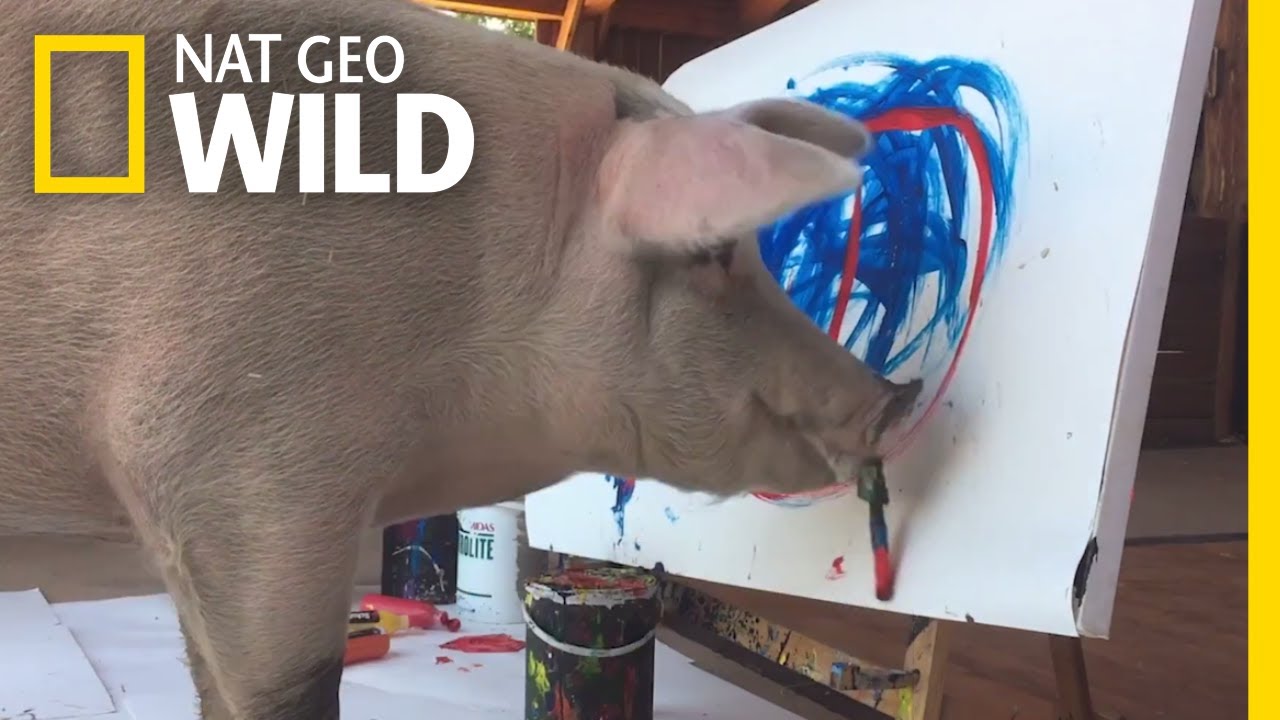
I searched for examples of animals making art, but the only ones I could find so far that didn’t look like abstract art were elephants, and they are guided by humans.

…it is difficult to drag your eyes away from the brushes that are making the lines and spots. However, if you do so, you will notice that, with each mark, the mahout tugs at his elephant’s ear.

He nudges it up and down to get the animal to make a vertical line, or pulls it sideways to get a horizontal one. To encourage spots and blobs he tugs the ear forward, towards the canvas. So, very sadly, the design the elephant is making is not hers but his.

Investigating further, after the show is over, it emerges that each of the socalled artistic animals always produces exactly the same image, time after time, day after day, and week after week.

Here’s video footage of ā€œPigcassoā€ at work:

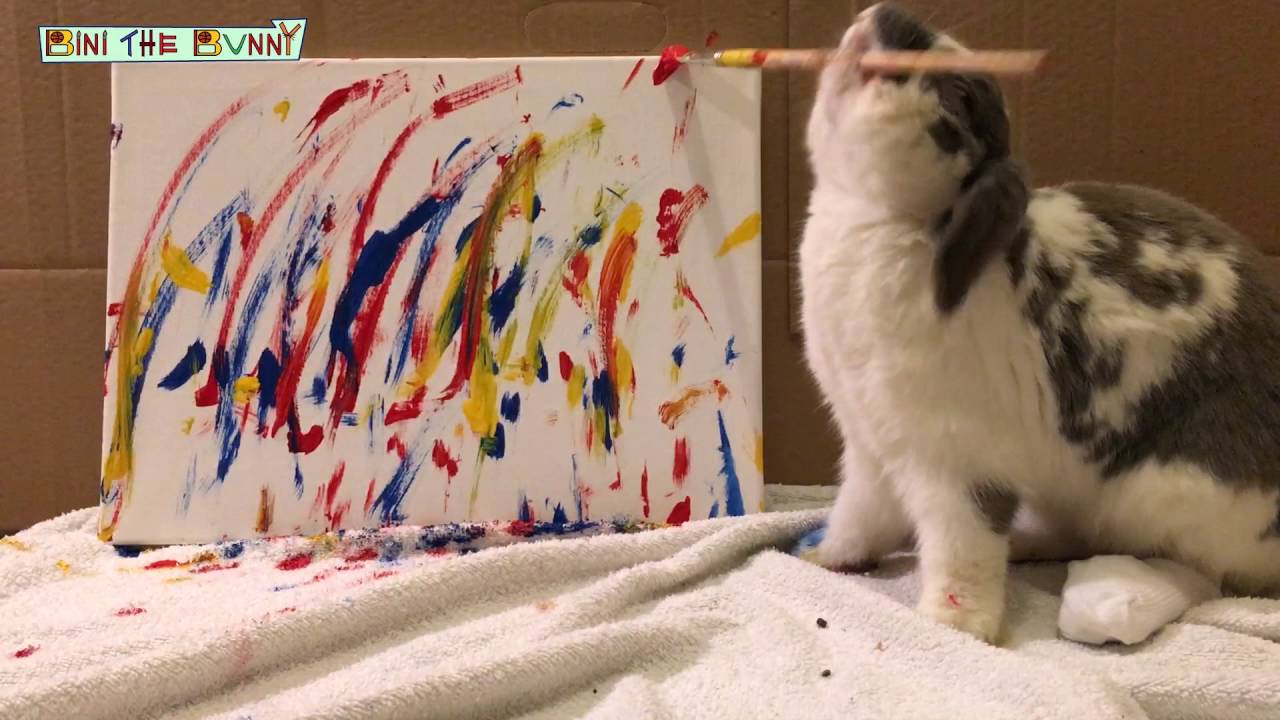
Here’s another famous animal artist:

1 Like

Hi Gavino,

No. I set up the palace and added things as I was memorising whichever was my focus at the time. Or adding to the layers of data at any location. For three of the topics, I layer more and more information indefinitely.

  1. If you don’t know which are physicist and which are musicians, that might get confusing. I’ve never tried closely related sets.

  2. the 5 data sets I link to my main palace:
    a. Countries of the world, constantly layering more data to various locations - some much more than others. All 230 locations in the palace.

b. Periodic Table - 118 of the locations. Layering extra data at some, plus a system for knowing the group of the element and hence some properties.

c. Dominic System people - 00 - 99 locations (00 doesn’t have a country nor element). Nothing gets added to those people. Many have been reduced to a concept (70 is TO for me and is now Tootsie staggering on high heels. I can’t remember who that was originally! 22 is RR and whoever that was has become Roger Rabbit). I have aphantasia and therefore don’t have an image of the people as well as a concept.

d. 20th Century History palace - 1900 - 2025 and continuing. Locations 00 to 125 so far. Can be layered with more data at each location endlessly.

e. I use it for Words in Memory League and when I was doing memory competitions. That is temporary. I often link the word to something already at the location.

So all quite different.

  1. Mostly there isn’t a link between the data sets, but sometimes they naturally happen, like Boron / Brazil. I have learnt to relax and let my brain do what it wants, because if it makes a link like that, then it will stick.

  2. I do number all the locations, with special effect at every fifth and tenth. But once I get past 120 or so, I tend to know the names more than the numbers now, although I still know which was a 5th or a 10th, so I can always work them out. The locations have become the countries, so I know them by name, not number.
    Up to 125, I need the number for the year or element. Past that, the number has no purpose, but until you asked that I hadn’t realised that I have dropped the numbers and would struggle to get them for those past 125 without working it out. Next year, I’ll be OK up to 126 (2026)!

Hope that helps.

Lynne

3 Likes

I am not sure what you mean here, but if you mean use some kind of scale on the items, I am not sure that I could do that. But I don’t use visualisation much because I have aphantasia (no visual imagery). I tend to use stories and associations more.

That may work for those who can visualise well. I’d love to hear from anyone who has tried it.

Lynne

2 Likes

Thank you, Josh. So pleased to have that externally verified.

Lynne

1 Like

I agree. Some people have argued that my claims about art and music means I see humans as vastly superior to animals. But we can’t do what dung beetles and bees do - nor fly, swim underwater for ages or navigate half the world on annual migrations. What we can do is art, music, story telling and storing vast amount of information.

Lynne

3 Likes

Hi Lynne,

Thanks for the detailed response, that is super useful.

Gavin

1 Like