How can i memorize 14 random letters as a single word?
What rulles i must apply?
Lets say the letters are:
AX MH IW XC TD FG LD
…
C.Pit
How can i memorize 14 random letters as a single word?
What rulles i must apply?
Lets say the letters are:
AX MH IW XC TD FG LD
…
C.Pit
As a single word? Not sure thats possible. I don’t think its very probable that you could compress a string of that size into even just two or three words. It would likely have to be a longer form series of images.
Can think of two ways off the top of my head to just memorize the string… One easy but less efficient, the other a lot more work to prep but better efficiency.
Option One:
Visualize a Person/Object scene for each pair and set them in sequential loci in a memory palace.
AX = Antman playing the Xylophone
MH = Medusa turning a Helicopter to stone
IW = Ironman riding a Whale
etc.
If they don’t have to be set as pairs, you could go for actions as well and squeeze three letters in per scene so that less loci would be needed.
AXM - Antman eXercising with a Moose
HIW - Homer simpson Ironing a Whale
etc.
Option Two:
Determine an image for every combination of two letters. This require learning 676 image associations.
AA is maybe an AArdvark
AB is a guy with chiselled ABs
AC is an Air Conditioner
etc.
Then you can visualize any two random letters as a tangible visual item and create a story to where they interact in sequence or create mini scenes along a memory palace route.
This would be ideal for random strings of letters but very time consuming during the upfront learning phase.
Thats about all I know of to do in a case like you’re suggesting.
Thanks for your answer.
Words can be memorable because they have meaning or they can be relatively memorable (relative to the information content of the letter string) because they have a memorable sound pattern. An example of a relatively memorable word that is both meaningless and long is sung in the movie Marry Poppins:
The letter string you gave could be translated in such a word by means of adding a single vowel in places were its makes the string of letters more pronounceable and memorable, so for example adding just the letter O in strategic places gives:
axomohiwoxocotodofogold
Notice the pattern and adjust the pronounciation rythm accordingly:
axomo has the same amount of syllables as hiwoxo and they rhyme, so:
axomo - small pause - hiwoxo,
than cotodofo is 1 syllable longer, so emphasize the 3rd syllable. so:
coto-DO-fo
The word gold is an actual word so just take a small pause and say gold, so the whole:
axomo - small pause - hiwoxo - small pause - coto-DO-fo - small pause - gold
Good idea!!
It’s funny that when I write a small reply (like on this thread), I get an inmediate response and like, but when I make a response like for for example in Most people store memories visually it seems in which I create lot’s of interesting content and even do this in a way that tells an actual story of discovery (that sh… isn’t easy you know) virtually nobody seems to care  .
.
Sometimes its just processing time lag on the reader’s end! When there’s a lot to digest it takes people longer maybe…
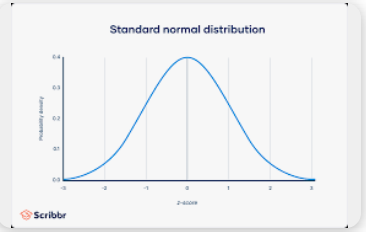
The pattern of people reacting as a fuction of time seems to be predictable by the 2nd half a normal distribution graph, so
One problem with nobody reacting on the 1st day is, that it’s an indication of how interested other people are in the post. So why would you react to a post of let say 10 days old and you are potentially the first responder and thus evidently nobody cares about the topic?
Some people (me included) aren’t always active… There are periods where I reduce my internet use, for different reasons, and when I come back it takes time until I’ve read everything I missed.
That being said if a subject is really old I may not want to “resurrect” it.
Also I mostly come on the forum during “lost time” (commute, waiting for appointment, etc.) and this forum is a bit impractical on mobile so reading long posts has to wait for me to be on the computer… Which I rarely do (I’m working on a computer all day and don’t really want to switch it on again back home).
That is a good point. I have made similar educated guesses about the peculiarities of people replying or not replying and sometimes I post a short reaction in which I promote a long one, so for example:
Another observation I have made is that, as it seems, people want to help other people above everything else and thus play the savior role, like the role played by Jennifer Morrison in Once upon a Time (great fantasy tv show, I don’t own shares or anything).
So when I were to ask for help memorising my shopping list the internet would likely explode, but when I present a theory about what memory actually is or show memory paradoxes and other strange memory related things, things get quiet.
I also suspect that if you post something that suggest you are really smart, it creates a reason for other forum visitors not daring to reply. This also creates a dilemma for when people actually reply and you consider what they have said complete BS and you can barely restrain yourself from attacking all their points. Being honest can easily end the discussion faster than Gene Wilder can draw a gun.
A long well thought out post sure feels more “definite”. I usually will only hit thumbs up rather than just post “how interesting”… I mean if you spend time reflecting on it, it’s unlikely that people will have special insights in the first hour. They need time to reflect on it too.
Also we have to accept that a number of people are only interested in finding how to apply things that are immediately useful rather than debating/reflecting.
I used to take part in a lot of debate in various forums in the past, which ranged from the healthy and enriching to the toxic and emotionally taxing. My default option is rather to refrain from engaging at all. I read a lot more than I participate. Even good debates are time consuming after all.
Thanks very much, Erik
Just what i want .
Until now i used to do associations with NATO alphabet. 2 by 2. ( with manipulation)
Something Like this.
Alfa.Xit. Mike.Hot. Indi.Wis. Xit.Cha
Tan.Del Fox.Gol Lim.Del
OR like this
A.Xit M.Hot. I.Wis. X.Cha
T.Del F.Gol. L.Del
I memorize and remember it but find a bit slow. Go to explore your sugestion.
Thanks again
C.pit
…
…
…
…
…
Playing with words can also be lot’s of fun, see:
Reverse alphabet mnemonic (self promotion  ).
).

I’ve been using this for car plates, airport codes, or any place where a random string appears. It is very efficient for everyday stuff because it requires zero preparation.
There isn’t a need for making tables, just use the first PAOs that comes to mind, and it works!
The only worry would be to confuse similar objects (Flower, Poppy), or actions (Jump, Leap). But that shouldn’t happen in casual use with a bit of practice.
Of course that for serious usage, the 676 (for English) table is a lot better.
That said, slower but more specific “traditional” methods like making sentences or rhyming may better for long term memory of specific things like mathematical formulas. I can still remember the classics PV=nRT and "|udv = uv - |vdu " from highschool after 10+ years without reviews.
May I ask what is Xit? I am both curious and sleepy, my mind can only think XrayXrayXray 
Yes.
It is Xray.
My native language is portuguese and the sound XIT is much more confortable to remind.
X= SH in this case.
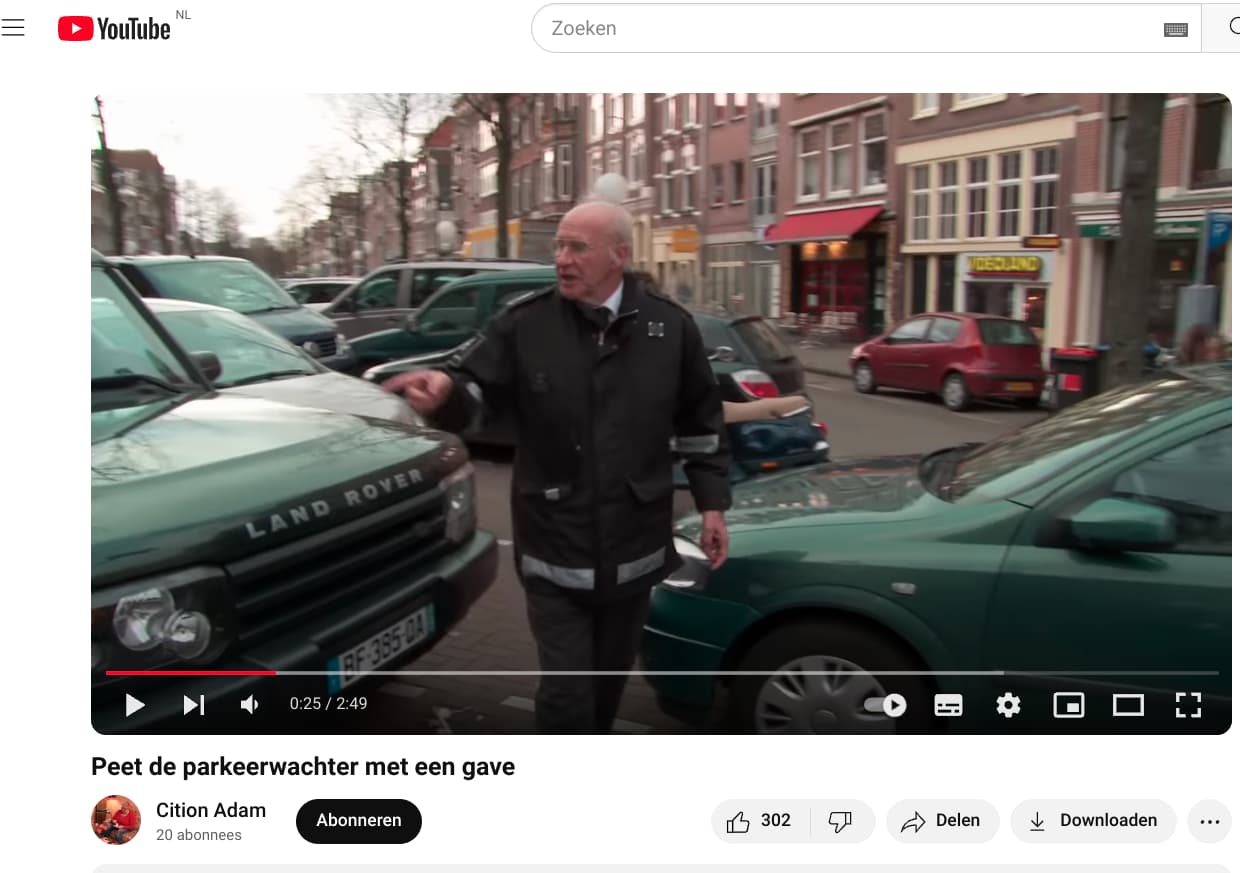
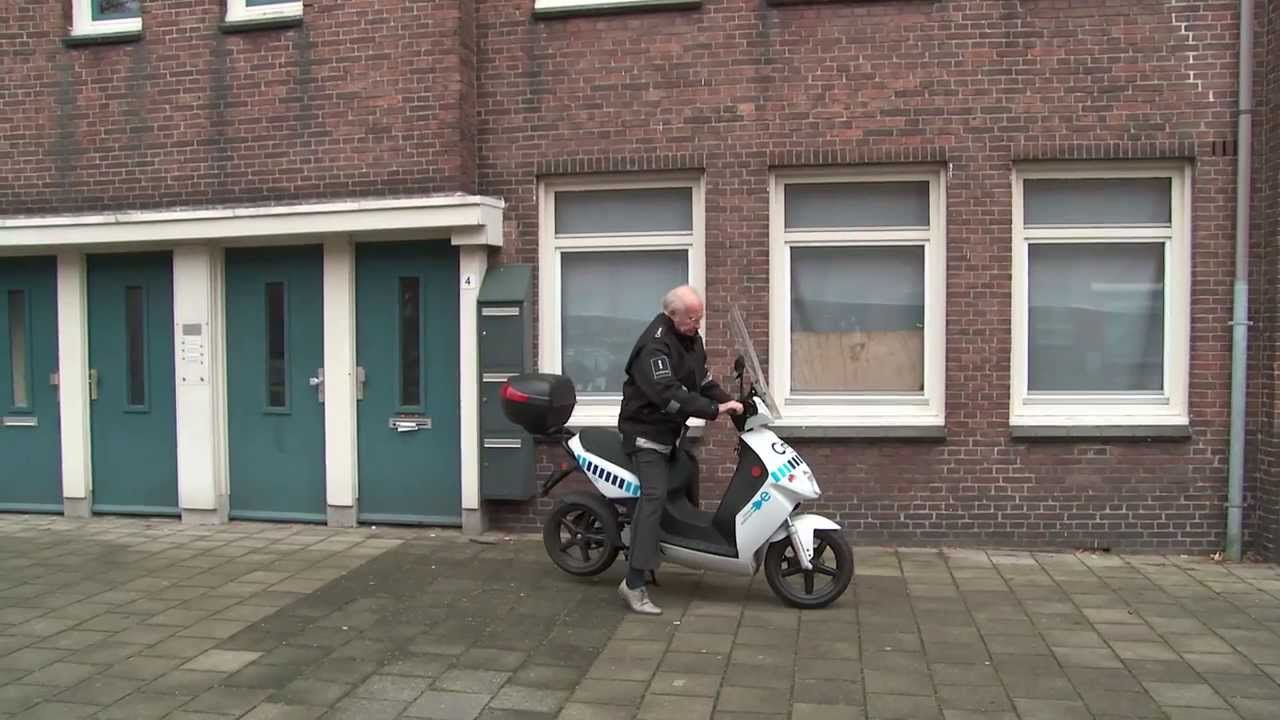
On the Dutch television program “Man bijt hond” (“man bites dog”) they showed a small documentary called “Peet, the parking officer with a gift” in which a parking officer memorises number plates in combination with the excact time the cars are allowed to stay at their spots. He uses the numbers and letters of the plates to create vulgar stories with great ease, hence his “gift”.
In the below pic you see him in action.
The parking officer is played by an actor, but the mini documentary looks so convincing that probably a lot of people thought it was real.
Unfortunately it’s all in Dutch, but it may be fun to watch nevertheless.
link to video:
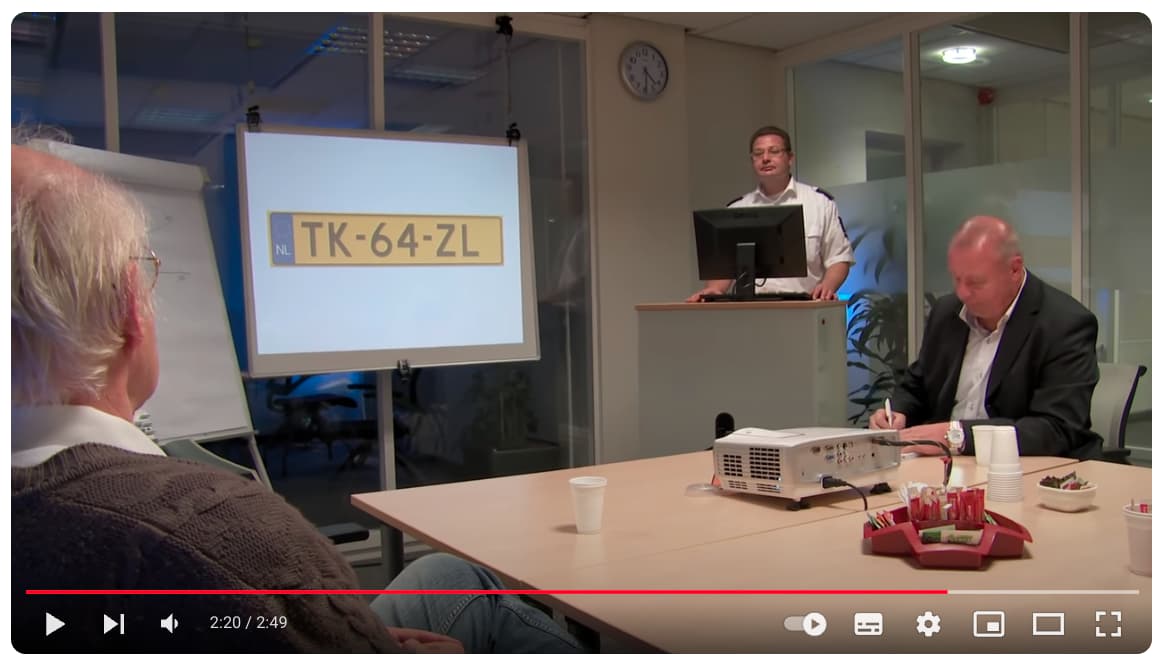
In the video he explains the method:
TK-64-ZL becomes : Te Koop - 64 - Zwangere Lilliputters (for sale: 64 pregnant midgets).
Hello Erik..
Can you give a help on this!!??
Thanks..
Hello,
memory fans.
Good evening!!
I started solving 3bld a few months ago.
I learned relatively easily.
…I use OP/OP, blue on the front, yellow on top. Only One pll, T perm.
1.1 Corners memorisation system
There are 5 possible alternatives. Always use
Theo same kind of story.
(PAOL +LP)
Very easy and solid memorisation.
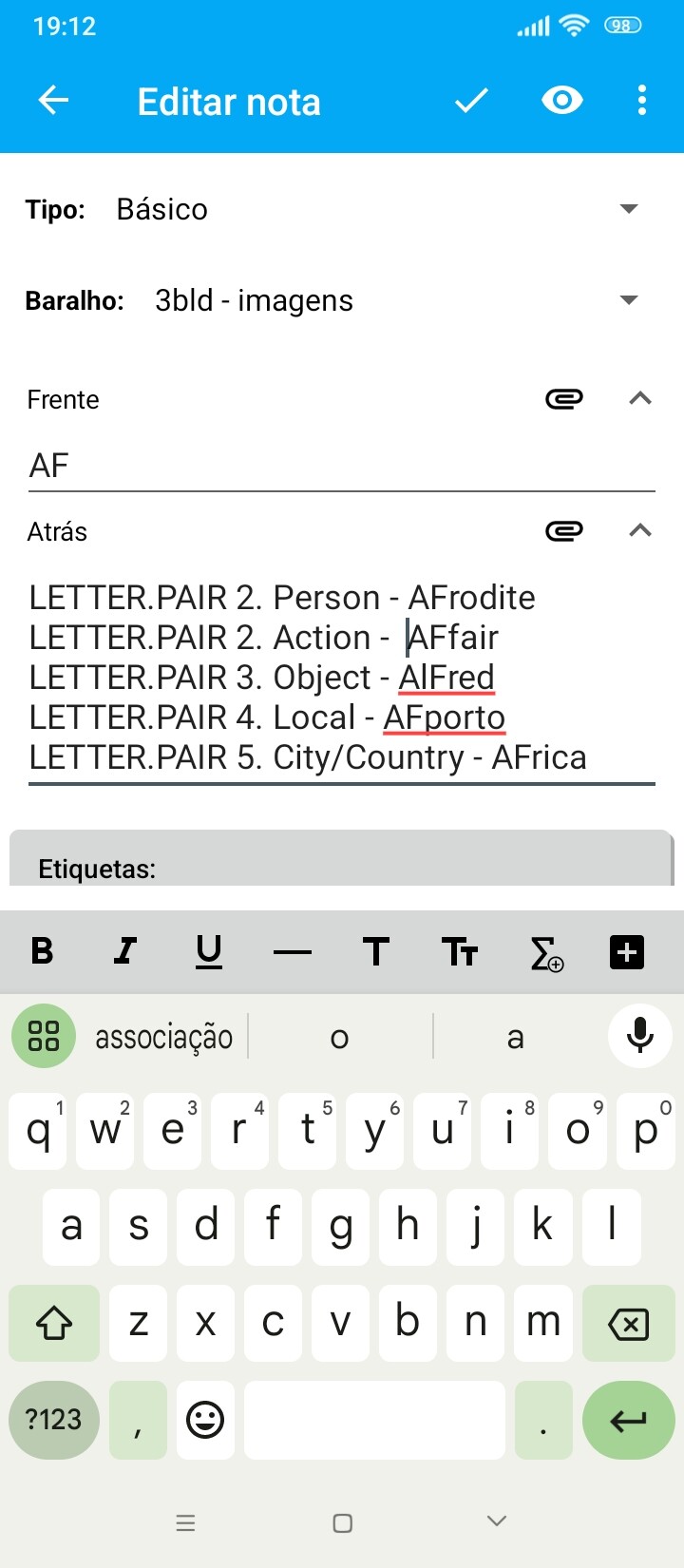
Here is a Ankidroid detail:
Memorization example:
CR PX TA MO QL FD
-Char/Rom
-Pap/Xray
-Tan/Alf
REASON FOR THIS PUBLICATION!!
I have a running time of 3 minutes and I need to start solving edges with Audio.
My native language is Portuguese and the lists I know in English are of no use to me.
I have to make my own list.
So, I have 3 questions for Audio Experts:
I appreciate very much your help.
…
Custodio…
P.S. sorry my English.
CR PX TA MO QL FD
CuRing Pathogen X Takes A Month Of Qualified Labour For Delivery.
I hope this is what you are looking for.
Yes, thats IT! Thanks a lot!
WE dont have a list.?!!
As the letters arrive we make the sentence to memorize. on the moment?
I do it with no list on imagens.
Every two letters, a word, until cycles are finish.
Custódio…