
And to make it even easier, use the (double) chunking method as an additional aid.
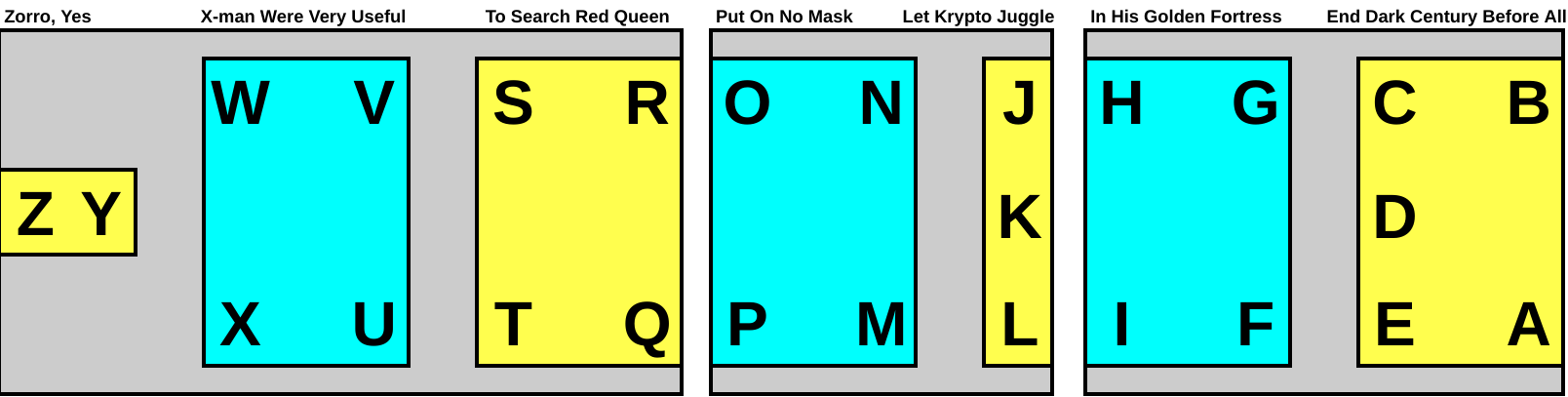
I like the idea of ‘chunking’ but I’m not sure I’m understanding why you have chosen effectively to ‘chunk’ 3 groups (represented by your grey blocks)? First grey block contains 3 further sets of letters shown as Yellow (Z,Y), Blue (X, W, V, U) and Yellow (T, S, R, Q). You then chose to finish off your remaining 2 grey blocks with a 4-3 and 4-5 combination. As there are 26 letters in the alphabet, I personally would have rather chunked things as 2 letters (Z, Y) which would leave the remaining 24 letters to be chunked either as 6 groups of 4 letters each or perhaps even more optimistically 4 groups of 6 letters each. I would think that such ‘symmetry’ would be easier to learn but that’s my particular quirk. Obviously if you changed to a more symmetrical type model then you would have to go back to the drawing board and compose a ‘new story of images’ that would fit the symmetrical patterning. But there again, what works for you, works for you.
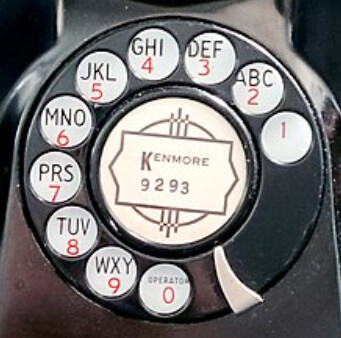
I was also wondering how the alphabet letters were assigned around the number dial of the old type of telephones that we used back in the 1960’s, 1970’s and 1980’s? Perhaps that would be another way to chunk it? But then, I realized the letter ‘Q’ was absent on the dialing face, so that wouldn’t really assist with the ‘chunking’ to recall the alphabet backwards. Now I’m intrigued to know why the ‘Q’ is omitted from the old styled telephone’s dialer face? Also amazed that in many countries ‘999’ was the emergency code to dial for an ambulance etc. If every second counts in an emergency why was ‘111’ not used as the emergency number. As triple-1 gives you a faster dialing response, where you finger stops on that metal ‘thingamebob’ each time you dial a number. But I digress LOL!
3 Likes
But then, I realized the letter ‘Q’ was absent on the dialing face, so that wouldn’t really assist with the ‘chunking’ to recall the alphabet backwards. Now I’m intrigued to know why the ‘Q’ is omitted from the old styled telephone’s dialer face?
I’ve been playing with using the alphabet to generate peg images - I also dropped Q , since it is so infrequent as a first letter.
See here for some stats.
2 Likes
The chunking is a secundary mnemonic in the whole scheme of things. One reason for it is to prevent mistakes in the recall of the whole text. I mean the text sounds (to me) like a encoded message to a super hero (Zorro) and it is easy to make a mistake that would actually be an improvement with regards to the usage of language.
For example:
Zorro, yes the X-man were very useful in the (as opposed to “to”) search for the Red Queen.
The above sentence is obviousely better English and one is inclined to make the mistake to recall the original text in a way similar to this. The chunking prevents this mistake; it is now easy to see that you start with “Zorro, yes” and then 2 chunks of 4: “X-man were very usefull” and “to search Red Queen”.
The colors have no meaning other then making it easier to see the whole pattern. The grey areas are there simply to give you a sense of were you are in the text. Think of it as 3 buildings with 2 or 3 rooms in each building.
There have been multiple discussions in this forum about the optimal balance between symmetry and variation regarding memory palaces (the chunking method is a form of an abstract memory palace in my view) and for what it’s worth, I honestly have not figured out what is optimal in this regard.
Obviously if you changed to a more symmetrical type model then you would have to go back to the drawing board and compose a ‘new story of images’ that would fit the symmetrical patterning.
Like I said above, the chunking is a secundairy mnemonic (to assist with the primary one, namely the hopefully funny and memorable text). You mention “the story of images” and this feels to me like the usage of a memory palace in memorizing a text by representing chunks of the text in encrypted images. I take full responsibility for this, in that obviousely I have used images in my mnemonic reverse alphabet “painting”. However the images are used by me for only two reasons:
- it makes for a cool looking gallery;
- not all forum members may be aware that the Red Queen is actually a “real” thing and that “Krypto” is a super hero dog and not just a random name.
1 Like
I get where you are coming from. Your story is memorable in and of itself on the basis of the further elaborated explanation you’ve given above. You’ve just hit “symmetry” asymmetrically outside of the ball park!
1 Like
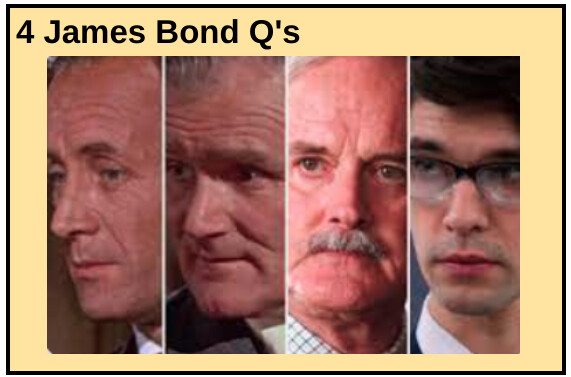
There was ever only one actor that played “Q” in the Bond movies best and it certainly wasn’t John Cleese! Stealing a line from one of the opening Bond movie credits: “The Spy Who Loved Me”, I think: “Nobody Does it Better” than Desmond Llewelyn!!
1 Like
I get your point. However, I feel that the role of Q doesn’t work really that well any more in a modern setting. I mean we already know every gadget that could be thought of and many of those gadgets already excist in reality. So it is very difficult for a new Q to be as epic. It is also my opinion that a new James Bond movie could be more interesting if it was set around 1970 for example.
1 Like
My understanding is that 111 was not used because it may have been too easy to dial by mistake.
However, I think 911 was a more sensible choice than 999.
1 Like