i was reading up in other forums that there were people who asked for refund fro Jim Kwik program. But they were not able to get back the refund. Not only that, after they asked for a refund, their access were removed from them.
This is for your info.
from my perspective, if you purchase Jim Kwik $97 package, it’s quite a steal…very dirt cheap. However, do bear in mind, when it comes to speed reading…its really your personal effort. Whatever effort you put in, that will be whatever results you get out of it.
Simply put, you will need to do the drills continually.
Personally for myself when i learnt speed reading. I was committed to doing 1 hour drill almost everyday. Yes! i did it for about 5 months. Then my reading rate shot up to over 5,000 words a minute…
I started by using the Peter Kump book :Breakthrough Rapid Reading.
Btw you can get in from the internet free…just add the words ‘pdf’ to the title. Haha!
So i went through the book, and i continued my own drills. Going through this book makes you feel like you are going through an actual speed reading course.
I have been through Howard Berg speed reading course…
My take is this: He can read 25,000 words a min. However, he is not able to duplicate his success.
After i went through Peter Kump’s book; i bought Howard Berg program.
My feedback? It’s too much hype. Just way too much hype. He is good in what he does. However, he is not able to dramatically increase your reading rate.
At the end of the day, it’s alot of hardwork…doing the same speed reading drills again and again…everyday…day in, day out.
It can be quite boring and dry doing the same drills everyday…but if you persist, your reading rate can shoot up…But you need to be willing to give yourself time…
Be patient with yourself…
I went through the Highlights of Jim Kwik course. though i have not gone through or bought the course, from the highlights, i can guess the quality of the content…
I am not saying that he is bad…He is able to produce results. However, results commensurate with effort. If you get at $97, it’s a steal.
however, i won’t pay more for it.
(Interestingly, in the world of speedreading, it is common to hit 1000 words a minute. There are also many people who are able to hit 2,000 words a minute. However the real fun comes, when you can hit 3,000 a minute and even higher.)
Incidentally, i bought Jim Kwik memory program at $97. My feedback? i am very disappointed. Way too much hype for his program. This memory program has 12 weeks of lessons. Each week they will release 1 lesson, and a short bonus lesson. then for the rest of the days of the week, you will need to wait for the next week, where they open up the next lesson…until the entire course completes itself.
When it comes to memory programs, it’s really straight forward.
Understand the skills, practice them - then do lots of daily drills.
You have to be willing to discipline yourself daily, come up with your own drills, and do them.
For example, i would come up with daily drills for my daughter. Everyday, she has to memorise 20 objects.
Now she is really good at it.
So there you go, just be disciplined to do the drills.
Hello Adrian! If you wrote five more posts, I would carefully read them all. It is really nice to see such a person in this forum. Just one comment. Do not write two posts in a row. If you want to answer several people at once. Just write a post where quotes to which you reply will be made. I think you’re unlikely to tell me something new. I myself read the best books about memory and speed reading. The whole point of the latter is to change the method of analyzing information. Work out the system: eyes-visual analyzer. When you can perceive text bypassing the phonetic loop, you can perceive paragraph text in one compact way. Ramon Campayo compared all this to a mental video.
I also understand the role of the pointer in this matter, therefore I always use the finger of my left hand when reading.
But now I have focused on memory training and study, so I postpone intensive training in speed reading for the summer. On the Internet I can find many ready-made abstracts on the subjects that I need. Therefore, speed reading is no longer necessary for me to absorb all this information. I need the mastery of memory in order to memorize solid abstracts.
I would like to know. How did you manage to develop such a speed. You had innate abilities for speed reading or you turned this speed, starting with the most ordinary with the help of regular training.
I would like to know. How did you manage to develop such a speed. Did you have an innate ability to read speed, or did you start this speed, starting with the most ordinary with regular training? Do you think anyone can achieve that speed if he wants it?
I’m not convinced that it’s possible to read 25,000 words per minute. 25,000 words per minute is 416.67 words per second.
This is what 416 (random) words looks like:
majority professional article physical because face area animal address against investment fall mean city street already end base likely be rock travel present call section thus art picture admit them worker college indeed card that summer level true friend beautiful hold institution role ok politics not air management director yeah reduce stay leg box heavy check with everybody week despite tend end area fast call respond cup put especially TV toward bad production lay forget record specific quality number goal anything with ability daughter happen fire them check product article best left her per as financial note never few mouth yet possible clearly shake policy mission quality north pattern will down her cell they hair thing herself leader professional fire spring against doctor environmental old visit area bad official reduce mouth there may deep able class different stop hundred campaign rich people pay top child professor firm recent program history health oil player section lose record some within certainly investment different when quite image bed particular use travel evidence card bed media partner husband order might occur behind expect third ability mission radio chair democratic culture scientist production myself really ground high mother environmental onto fill nation stop natural away policy age newspaper page cell while course consider cut son employee big measure picture letter action detail specific require realize music economic citizen participant son as pass five wear fire attention together attack force state his traditional worry music seem say church town police cultural them final both whatever voice anything take either boy religious spend meet spend yet house way tell possible stuff require side seat far seven field world purpose different just spring daughter each hundred on quickly ago condition way record real whose either rich effect value myself first stop ok around ok early series old never tell exist term technology pick live individual small help paper city prepare follow moment maybe single machine better painting sure can gun make beyond discussion interview decade appear indicate situation watch behind finally sport bank usually skin say treat floor international expert teacher might little kid record physical above great six nor sense study heart first must deep phone ever investment deep civil total manager skin market still body happen still over well community election around plant us usually sell present eat save still difference fine reality event child prevent decide coach notice he customer recognize teacher late thank well go arm particular course this seek put father position member goal hour employee wish ask defense
To reach 25,000 words per minute, a person would have to be able to read and understand that many words every second, over and over.
With no disrespect intended to anybody, I am personally skeptical of claims to read over 1000 words per minute. And, for that matter, even claims that approach 1000 words per minute.
I have no doubt that somebody can train their eyes to sweep pages at 1000 words per minute and higher, and may even be able to get a general sense of what was written, especially for simpler material, but I seriously doubt that the level of comprehension and retention at those speed levels is useful for anybody who is trying to study anything even slightly complex, hoping to gain some degree of mastery.
I do think reading speed can be improved and made efficient through focused training, but I suspect the upper limit will settle in around 800 to 900 words per minute for exceptional readers.
This is just my opinion. In all honesty, I would love to be wrong about this. In the meantime, though, I would not encourage anybody to pay more than they are willing to throw away on courses that make extravagant claims.
Howard Berg has been documented by Guinness Book of Record in the year 1990 as the world’s fastest reader. Just for your info. Which means, they checked on his comprehension too.
Then he was beaten by another person.
Dr. Maria Teresa Calderon works as Dean of Graduate School of Education, Arellano University. Calderon reset the record books with her reading speed of 80,000 words per minute with 100 percent comprehension.** Her world record still stands today.
The other thing is this. My wife is able to actually photograph an entire page of a book at one glance. When she closes her eyes, she is able to scroll down to the paragraph where she wants to look for the specific information.
I live with a person who is able to do this. However, she mentioned that she did this once when she was in school. She didn’t understand how she was able to do it.
Now her reading speed is at over 700 words a minute. She has read through the entire book of Proverbs in the Bible in about 6 minutes.
For the record, i am 44 years old. 6 months ago, my reading speed was about 220 words a minute. So for 6 months, i grilled myself. So it’s a matter of hard work and strategy.
By the way, those who attend live speed reading courses will tell you that it is common to read at 1,000 words a minute after a day’s training. So, this is matter of training.
Again, its up to you to believe. I am not selling any course.
I am not a speed reading instructor…
AS for going for reading courses, i have never attended a live speed reading course.
However, i have always observe that there are positive reviews.
Again the choice is yours. It’s true that we should not throw money away into courses. That i can agree.
@AtiLa-24,
Thanks for your advise. I will do my best to keep everything in one post.
To answer your question - it simply takes discipline and effort. Anyone can do it.
The Problem is, alot of people give up half way and they don’t have a strategy.
Here are the steps to increase your speed.
Step 1: complete Peter Kump’s book :Breakthrough Rapid Reading.
Read it with a highlighter or a pencil. If you are reading in PDF, you can highlight it in PDF. Do your best to follow his instruction. Remind yourself that you are a little child following the instructions of a teacher.
Do all the drills obediently, without coming up with your own ideas. Do the drills from this book everyday. I set aside 1 hour to do the drills. Even when I did not feel like it, I would do it. The key to speed reading, is in doing the drills religiously, everyday, without giving up. Do the drills until you get the results.
Do the drills without encouragement.
When you do the drills, imagine and visualize that you are already reading thousands of words a minute…soon…after a few months, this will be your reality.
Step 2: Everyday, I would make certain statements continually with my mouth. I would actually say it out.
I would say continually with my mouth :”I can read 25,000 words a minute with comprehension and retention”. I would set aside about 30minutes to say this statement everyday.
Yes, it sounds crazy. But I do it.
The other thing I say continually with my mouth is this: “Mind, stop vocalizing. “
Now why do I do that? That’s because the part of your brain that controls your speech, is connected to every nerve of your body. Which means, what you say, will affect your brain and your body. So this is a scientific process. Your words will affect your biology. This is neuro science.
So I say these words almost everyday. The first time I instructed my mind to stop vocalizing, my mind drastically reduce the sub vocalizing. Everytime I begin to subvocalize in my reading time, I would simply say these words. And almost immediate, my mind would begin to quiet itself down drastically.
If the results are not so forthcoming, you simply need to say it over and over again everyday…You are using your speech to educate your nervous system. Your nervous system will in turn educate your brain. This is simply science.
When I first begin to practice reading, I also did something else. I would use my fingers as a pacer and go over each line really fast. When I do that, I would say with my mouth continually: “Just look…just look…just look”
What I am doing is to tell my mind to just look at the words without subvocalizing. When I say that with my mouth, my mind doesn’t have a chance to subvocalize because my mouth saying out these words will not give my mind any opportunity to read those words in my mind.
Step 3: Increase your peripheral vision.
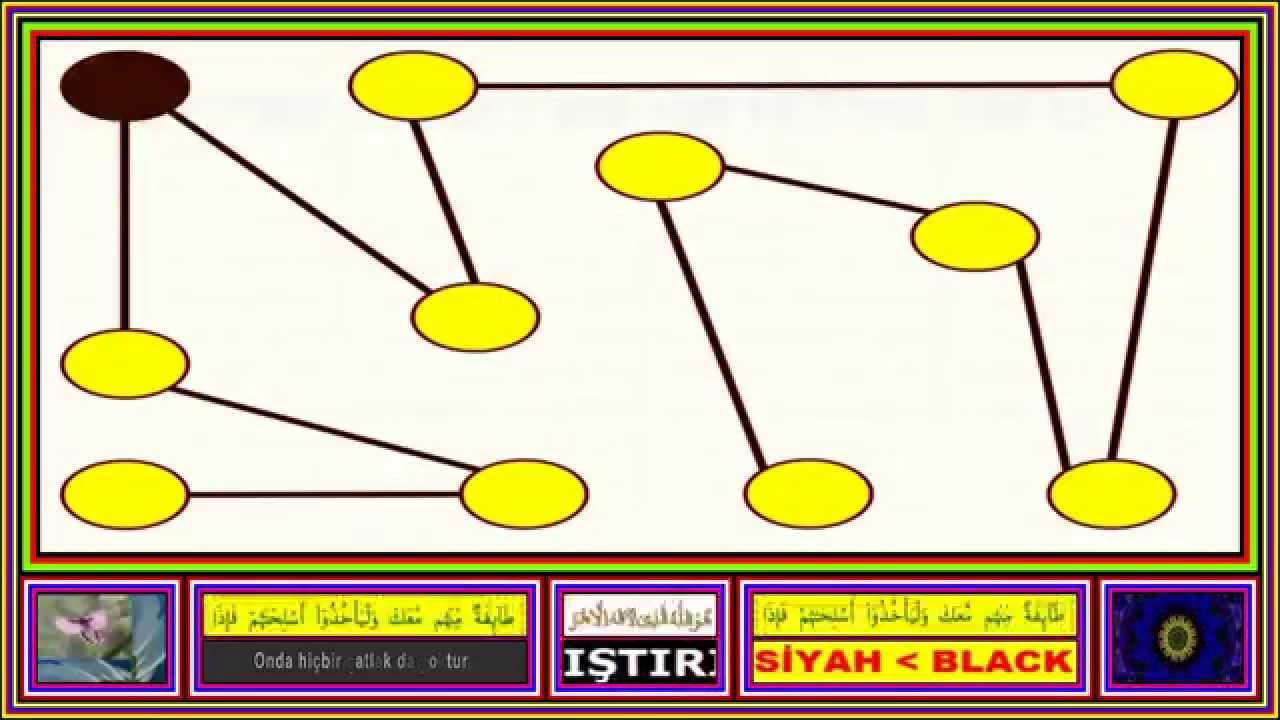
I would watch these videos on youtube almost everyday, to increase my peripheral vision. Bear in mind, these video has some kind of religious muslim chant in the background. This video is not uploaded by me but by someone else.
So what I do is, I shut down the volume completely, and I play some instrumental music background in another youtube channel.
I would double the speed of the video, so I can complete watching the video in less time.
The key to watching this video is: allow your eyeballs to follow the shapes. It can get tiring in the beginning. Simply look side ways and blink your eyes. Then look back at the screen.
These are simple eye exercises to increase your peripheral vision.
Step 4: Get into the right mental state.
This is important. I noticed when I first began to learn speed reading, that I was tensed at times. When I was tense in my emotions, I had a hard time speeding up. So I struggled for sometime.
Then I also discovered when I am relaxed, my speed would go up tremendously. So the key is to get into a relaxed alpha state or a simply stress free state.
You can do the following the get into this state.
Go to youtube and look for music that help you.
Here is an example
Step 5: Another method to get into right state and increase your peripheral vision:
Tangerine Technique
Prepare: (30s)
Overall Aim: Laid the foundation for the system and to read with power
A clear sense of purpose
Aim: To make your body strong, alert and increase conscious-subconscious connection
Place reading materials in front of you
Relax by closing your eyes, aware yourself from head to toe, spine is erect, posture is
comfortable and breathing is relaxed
What is my ultimate application of the material?
How important is the material?
What level of detail do I want?
How much time am I willing to commit right now?
Enter the ideal state for reading
Aim: Increase comprehension, retention and recall / increase visual intake
Use the tangerine technique to fix one unit of attention on a single point
Hold an imaginary tangerine in your hand
Experience its weight, colour, texture and smell
Toss it into other hand and catch it
Toss the tangerine back and forth between hands
Catch it in your dominant hand and bring to top back part of your head
Touch that area gently with your hand
Imagine it resting there while you bring your arm down and relax your shoulders
Close your eyes and let it balance on the back of your head
With your eyes closed, imagine your visual field opening up
Maintain the relax feeling of alertness as you open your eyes and begin reading at
a rate comfortable for you
OR
Snap your fingers behind your head
OR
Imagine a bird sitting on top of your head
OR
Imagine standing outside of your body and looking over the top of your head
After that, you can start to read.
Step 6: Another method to get into right state and increase your peripheral vision
Another method to increase your peripheral vision is to soften your gaze.
Do you recall there was a period where the world was crazy about “Magic eye”? we would look into some pattern on screen or on paper and soften our gaze, or look into the screen in a relaxed manner, and we would be able to see a 3D object on screen?
Well, that is the way I look at the words in the book, this enables me to sweep the book really fast.
Here is an example of Magic Eye:
Step: 7
I would read a book in 30min without writing notes. Then I would read it a 2nd round, this time, I would underline or make little Asterix to take note of anything I want to remember. Then I would write down the relevant page no. on the blank page cover inside the book.
Some of us would do a mindmap…which really helps
So there you have it…all the steps
All these steps are actions which you can take, to condition yourself daily…
Here are the entire steps to photoreading: a detailed summary for you. these are the action steps:
So, I was curious and did a bit of browsing online and came across a competition called the Memoriad.
[Then, of course, I searched for the term ‘Memoriad’ on this website and discovered that there have been many discussions on the topic. Go figure. I am sooo out of touch. In my own defense, I have not really been very interested in competitions. ]
Anyway, I read the rules for the Memoriad speed reading competitions. Based on what I read, it sounds like a fairly objective test where the rules should weed out a lot of false accomplishments.
One rule I liked was about how the literature provided for the competition is not supposed to have been previously published. Additionally, they have rules to help avoid situations where somebody gets an unfair advantage because they have acquired encyclopedic knowledge or happen to be an expert in the subject area. Finally, they test comprehension and effectively disqualify any contestants who cannot demonstrated at least a 60% comprehension rate.
Anyway, I browsed the competitions over the years and, as far as I could see, there were really only 3 cases of competitors exceeding 1000 wpm with a comprehension of 60% or greater. And, coincidentally, they were all in the same year–2013. [Not sure why they would all happen in one year.] The best performance was from Mehmet Altunpinar, who reached 1104 wpm with a comprehension rate of 75%.
I was browsing through the competitions rather quickly, so I may have missed some. But if I got my checks were at least somewhat accurate, then it seems only a very small number of people can break 1000 wpm with a comprehension rate above 60%. We don’t see people hitting 2000 or 20,000 wpm.
I have to adfmit that the Memoriad seems to show that I was wrong in my earlier opinion. Somebody does at least appear to have achieved a bit more than 1000 wpm with a 75% comprehension rate, which is significant. And if one person can do it, it seems likely others will follow and surpass them.
That said, I remain skeptical about claims to achieve much higher reading speeds. For sure, it is possible to ‘read’ at higher speeds, but I believe it is incumbent on anybody making such a claim to provide objective evidence that they are achieving comprehension levels above 60%.
Wikipedia points out that, “The Guinness Speed Reading World Record Standards are not known and they have terminated”. Without knowing the standards of the testing, I don’t think it’s possible to use the measurement from 1990 as a fact. I haven’t been able to find any evidence of testing under strict conditions in the 30 years since that one unknown test.
I’m pretty sure that I could read 25,000 words per minute if I printed a single word (like “a”) 25,000 times on some paper, and then flipped through all the pages in one minute. I think more information about the test is needed before coming to any conclusions about it.
There are known cases of people fooling experts with memory techniques, mentalism, or magic tricks, so I think it’s more likely that some kind of trick or technicality was used.
Photoreading also makes similar claims, but there was a NASA study on Photoreading that concluded that it didn’t work.
80,000 words per minute is 1,333.34 words per second. I don’t think that it’s possible. Even if someone’s eyes could pick up the words that quickly, I doubt that a brain could process the information.
Does “100% comprehension” mean that all 80,000 words could be repeated back perfectly without errors, or that five basic questions were asked about the content and all five (100%) were answered correctly? More details are needed.
I’m ready to believe it, but I’d have to see very solid evidence. It’s too easy for clever mentalists to manipulate people.
I highly recommend this video, because it goes into some of the ways that people can trick other people into believing extraordinary claims.
Edit: I’m not saying that speedreading doesn’t work. I do think that it’s possible to improve reading speed — but I don’t think it’s possible to read 25,000+ words per minute.
Am very happy to have this discussion with you.
At least we can come to an agreement that we can increase reading speed.
And you are open to this idea. That’s what this forum is about.
Samel, all the drill instructions are inside. Just follow instructions. Remember: just stick to the instructions.
When u read this book, you will feel as tho a person is actually conducting a speed reading course, bec this book is actually very detailed.
Read the book with a highlighter or a pencil if u print it out.
If u read in pdf, u can also highlight.
u can always use a notebook and make notes.
By the way, when i was reading the end of the book, i had hit about 1,500 words and beyond…
If u complete this book - its just as good as completing a speedreadingcourse.
The only diff between this book and those that u buy from online(where the instructor explains to u through a recording) is this…this book is way more detailed.
In speed reading is about changing the habit of reading . It’s like reading reading 2-3 words a time instead of one word at a time . If u really doubt u r habit u can check by reading a small text and large text . When u read the large text u see the whole word and when u read the small text instead of see 2-3 word (area of one large text) u will again see one word at a time. With practice we can change it read multiple words at a time and improve our reading speed . I haven’t tried this yet but I think it will work .
Wow, thats a long topic with lots of posts. Well. I came here to recommend David Butler’s book Speed reading with the right brain. even though he doesn’t have the right idea about the right brain, the book is about the idea that speed reading nowadays = reading visually blocks of words that encompass a single idea. However, new form of reading requires doing some exercise, just as memory games do.
I am Nodas, a minds sports competitor, from Greece.
Since I actually competed in the Speedreading contest of the International Memoriad in Las Vegas, USA in 2016, I can provide you with some factual information.
All we the competitors had about 40 pages to read, in printed material. It was not an extremely technical text, but something about environmental science with occasional difficult vocabulary. I think we were around 20 competitors, not sure about that. You can check all the scores in memoriad.com under the "Competitions/Memoriad 2016 sections’
All these pages contained about 6000 words, so the winner had to read all those in around 5 minutes, just to get over the 1K words per minute mark. The time limit to read the whole text, was 15 minutes, if I am not mistaken (mind you, this happened 4 years ago)
IMPORTANT: To estimate our comprehension rate in reading and eventually rank the competitors, we were given 20 multiple choice questions after our read. Each question had 4 choices, A, B, C, or D. There was a time limit on those questions also, probably around 10 minutes for all of them, therefore around 30 seconds for each answer. We had to digitally input them in a special program, a variation of the Memoriad software.
As it was correctly mentioned, every competitor should answer at least 60% of the questions correctly, in order to register a proper score. That was just to weed out people who just skimmed and didn’t make the effort to comprehend better.
Therefore, the 1st goal was to read as fast as possible. The 2nd goal was to get at least 12 out of 20 questions. (since 12/20 = 60%). And if both these conditions were met, then one could register a score.
There were prizes of 2250 dollars for the winners just for this speedreading task alone. In particular 1500 dollars for the 1st place (Gold), then $750 for the 2nd place (Silver) and $500 for the 3rd place ( Bronze) respectively.
But in order to get these one should register a score (60%+) and have true reading speed of at least of around 450 WPM. The winner in 2016 in Vegas, was a Turkish 17yo high school student who was about to start Medicine school next year. He told me afterwards, that he had already competed and also won the speedreading contest in the national Turkish Memoriad of 2015. His language preference was Turkish, and mine was English. But I did not find the text to be badly translated. The word flow was smooth, and probably taken from some decent journal.
Note on the competition rules, according to the Memoriad website.
The formula is : ‘Real reading speed’ = ‘Comprehension rate’ x ΄True raw reading speed’.
Example:
For a Τrue raw reading speed of 1000 WPM, with a Comprehension rate of 60% ,
yields : Real reading speed = 1000 x 60% = 600 WPM
For the record, my own performance was over 1000 WPM raw speed but unfortunately my rate was just 50% (I answered 10 out 20 questions correctly apparently ) and since it is below 60% so I could not register a score. Everyone below 60% ( i.e. 55% and less) gets a score 0 zero. I did not really skim the text, but I guess that’s the rules and we all competed under these rules.
English is not my native tongue, and all the papers could be either be read in English or Turkish. But this is not the reason, why I did not get a decent comprehension score. Since it was my first speed-reading competition I probably went off a bit too fast, for own good. Retrospectively, if I went for 800 WPM (True raw speed) , I am positive that I could probably acquire at least 60% Comprehension rate, therefore get 800 x 60% = 480 WPM final real reading speed.
For the record , the 3rd place (Bronze) went to a guy whom most of you in the memory community know about. His name is Nelson Dellis, an ex-US memory champion. His score was 288 WPM. Because he read raw 461 WPM with 65% therefore he got 461 x 65% = around 290 WPM. And he got 500 dollars for this.
My own real reading rate was double of this, but unfortunately, I got 50% instead of his 65% (just 3 multiple choice questions more), so I really believe I had a chance , because the overall scores were not extremely impressive.
If you think this score is low, that is what happens when you enter the pressure of the competition and leave the pressure of your own leisure reading way in your home/hub/crib. People can debate all they want, but these were the actual results.
Overall, it was a nice experience. But certainly I would say there is a luck element as well, because these multiple choices had only 4 answers to choose from. So in example , for that winning guy who got 1246 WPM with 65%, (=13 questions out of 20), then I could argue, than a couple of those answers could be correct guesstimations, after having to choose only from 2 possible answers, while eliminated in your head the other 2. These numbers like 60% or 75% are not certain, it just happened to answer the right questions.
The same happens in the English language exam text which I have taken back in the day ( when I passed the B2 level in 1998 and the C2 level in 2003, just after finishing my high school). In the reading section of these English language exams, there are such multiple choice questions as well, but even so, it’s not 100% certain that you understand everything correctly, even if you get them all right. I hope you get what I mean.
Maybe you can find analogies with S.A.T. or other tests based on such multiple-choice questions, who examine the comprehension level of student or a competitor. And even if one scores perfectly on S.A.T. or in other multiple-choice tests, that does not mean that he knows everything verbatim. Usually, perfect scores are 95-99% pure skill and knowledge, but the rest 1-5% can also entail a luck factor (such as getting asked your favorite topics / favorite questions etc.)
Finally, about these claims, of 2K+ WPM, I CERTAINLY believe they are a marketing scam, and no human can read so fast under peer-reviewing circumstances. such as these which happen in competitions.
Like I wrote (and you can double check), even the ex-US memory champ read less than 500 WPM in an actual speedreading competition and even that was considered a decent Top-3 performance. You can ask Nelson in his social media, to confirm what I wrote. That for a 3rd place, 500 WPM was just enough.
But of course, everyone has to make a living and they can claim all absurdities want, (I don’t wanna put names, but you probably know who claims the ability to read these thousands words per minutes.) Probably similar to folks who claim that photographic memory exists, without even ever stepping foot in the World Memory Championships.
I just had to note down my 0.02 $, with a standpoint of my competition experience, whilst placing emphasis on the facts. I am sure many people were interested to read about this, because our time is limited and everyone wants to be able to read faster with all this information.
Hopefully, you probably took less then 1 minute to read all these words of mine.
And hopefully you had a valuable insight on what is humanly possible (and what is not) regarding reading, which probably the most quintessential human skill in the Anthropocene era.
Hi Adrian! Thanks for all your tips… I have been reading your posts and found them to be very useful… In fact, I have started on Kump’s “Breakthrough Rapid Reading” myself! However, I took another course “Superlearner 2.0” by Jon Levi which seems to contradict Kump, because Jon discourages the use of visual pacers to read word for word to reduce the amount of eye movement, and instead recommends fixing eyes in the middle of the passage to absorb a few words at once… Another key difference is that Jon’s drills forces the reader to hit a certain wpm limit and keep rereading until comprehension catches up, while Kump’s drills allow the reader to set his own wpm and read at a comfortable pace at first… which is more effective? I am a little lost as to which drills/techniques to do… do you have any thoughts on this? Your reply would be much appreciated!
EyeQ advantage uses software to help you increase your reading speed.
They have alot of exercises to push up your reading speed.
However, they do not teach readers to use their hands or fingers to read. So after i went through their program, i tried to read without my hands or fingers.
( i had a hard time getting past even 1000 words a minute. This was after i have completed Peter Kump’s book on Breakthrough Rapid Reading).
It has been my experience, that without using fingers or hands to direct my eyes…my reading speed is not able to speed up as much as i want to.
Now what are those exercises that are found in EyeQ advantage?
I am attaching a sample of it here…it is something like this…
Here is my take (btw…you or anyone can choose to disagree)
Alot of reading experts nowadays encourage the use of hand or fingers, so that your eyes will simply follow the movement of the hand. This will inevitably condition your eyes to sweep across the page and cover more words.
You can reach your goal of being a speed reader at a much faster pace.
If you will go through Jon Levi’s Super Learner 2.0 program, you will notice something interesting.
Jon teaches you skills…however he does not appear to daily drills.
(please correct me if i am wrong).
For Peter Kump, you simply need to read through the book from the first page to the last…it is as good as a ‘live’ training session…
U simply need to imagine the instructor speaking these words to you face to face…
Btw…my reading speed is still going up…
I am now able to complete reading a book, and mindmap the same book…in 1hr 30min or less.
However, if i were to only read the book, i would finish it in 30min or less.
Recently, i bought Howard Berg’s Reading Genius. I have also Bought Dr. Paul Sheele’s Photoreading.
Then i also bought (at a discounted rate) Jim Kwik’s Speed reading program…
Now this is just my take…PhotoReading works.
What do i mean? Photoreading is a system. not simple a skill or a technique.
PhotoReading costs USD $530. yes, it is expensive. However, once you complete their program, you will not need any other reading program.
(I have been crazy enough to purchase different reading programs…so pleaase don’t spend the money anymore).
However, is there a program that is better than Howard Berg, Jim Kwik and even John Levi, which is offered at a discounted rate?
Yes.
Answer: Breakthrough Rapid reading by Peter Kump.
If you will complete the exercises in this book, then go back to Jon Levi’s course…you will discover how lacking Jon Levi’s course is.
Not only that…i challenge you (if you are that crazy…), to actually buy Howard Berg and Jim Kwik’s program… and compare them side by side…
So go ahead…read through the Peter Kump book carefully.
I think i am now at over 3500 words a minute.
(Currently, I am able to read through the entire New Testament of the Christian Bible
in 1.5 hr estimated, within the same day.)
There are times when i can cover 3-4 seconds a page…
I have Peter Kump to thank…gosh…its so cheap! This book i bought it at about $14USD!
From the way you describe…i suspect you are still going through Peter Kump’s book. So do your best to complete it. U will be glad u did!
Btw below is a table i created…to compare reading programs alongside each other.
I am almost complete with Dr Paul Sheele’s Photoreading.
s/n
Area of compared
Howard Berg Speed Reading Genius
Jim Kwik Speed Reading
PhotoReading
01.
Relevance
Too much theory that is hard to apply. A no. of lessons appear to have little practical application.
Instructor doesn’t appear to have a script. So what he says appears to go around in circles without landing.
Can sense that Dr Paul has a training strategy and outcome in place
02.
Systematic
Skills are shared. But a system not present. Lessons appear to be disjointed from each other
Different skills are introduced. with a 5min track.
5 steps of photoreading are explained & revised again & again.
03.
Opportunity to practice
A no. of lessons at the start of the course doesn’t have many practice opportunity.
Superficial quick instructions. Can get theoretical & long winded.
A lot of practice opportunity
04.
Ability to instruct
There were audio tracks that focused on exercises.
However, I felt bored for a no. of teaching lessons because I failed to see how it was helpful. Teaching was not focused on taking actions|Instructions to speed reading are simply at a superficial level.|Lots of detailed instructions which can be easily applied. I actually needed to make my own notes as Paul was talking. I also had to listen to some tracks a few times.|
|05.|No. of hours|Much less time than Photoreading because instructions are usually in 5-10min tracks|Much less time than Photo reading. Instructions in 5min tracks|Many hours of instructions.
Instructions betwen 3min to over 15min tracks|
If you are a student…and u r preparing for university…u should consider investing in this program…just save up money…
I am so glad i bought this program…
I know of Law students and medical students who have used PhotoReading to pass their exams…
In the past one week, i have read through 5 books.
( nowadays i usually read and make notes via mindmaps)
(Ok, there are people that don’t believe PhotoReading works. I can live with that. To each his own.)
For the time being…just complete Peter Kump’s book…u got any questions…just feel free to ask…hopefully i can answer your question.
Beside’s PhotoReading, the next best reading program i have come across is Peter Kump’s book. Read it with a highlighter & pencil to underline.
Again, this is my personal opinion.
However, i know that all of us want to save money…so we want to make best use of our hard earned money.
For some of us $197 or $350 for a course is not a big deal.
For others…it is alot of money…U want to get your money’s worth.
Anyone in this forum is entitled to disagree with me.
I am not at any time against these course providers.
If you are the actual course provider, ie the one who created the speed reading course, then please take this as feedback, and improve. There’s always something positive…a silver lining over everything.
If anyone chooses to prove me wrong over the courses comparison, i am fine.
I won’t get upset.
How can we confirm that?
Ans: there’s is no one to confirm. You only have my word for it. So u are free to disagree with me.
I do a simple word count per page.
Let’s say a page is made up of 32 lines, each line with 11 words.
32X11 = 352 words a page.
So i would have to read 10 pages a minute. I would also have to read one page in 5-6 seconds.
What does it mean to be able to read at 3500 wpm?
It means the following
i understand the author’s train of thought.
i can have a decent discussion about the book that lasts over 5 minutes.
i can state certain facts about the book. Eg: names, places, events.
However, when my focus is on reading only, the facts which i have read regarding the book, will not stay long in my memory. It will fade gradually in a day or 2.
The book is only in my short term memory.
So if i were to have a discussion with a friend on the book and my friend tests me on certain facts…but i will not always remember the book in extreme detail.
Reading is a skill. Remembering in detail is another skills.
But at least i can have a decent conversation, and make the right decision as it relates to the facts of the book.
The important thing is: i define my purpose… what do i want to get out of the book?
My purpose decides what my mind focus on. Whatever i focus on, i can remember more easily.
So to prevent myself from wasting time, i would read, and do a mindmap at the same time.
If i simply read a book, i can finish it in 30-45min.
If i were to include a mindmap as i read, then i will finish the book in about 1hr 30min
(this 1 hr 30min includes reading of the book, and mindmap or note taking. So i will have to write very fast).
Bear in mind the following:
I can read 3500 words a min or even higher… if the book i am reading is a subject that i a familiar with. Eg: My job is related to business training. So if the book has to do with teaching methodology and classroom control…then i can read at 3500 or higher.
If it is a book which is related to management theory, i can go fast.
I am a Christian…since i have read the bible a no. of times…
if i were to read the Bible again… or any Christian books…i can read at 3500 words a min or higher.
However, if i were to read a book on let’s say: Top 10 financial crashes in history, or Artificial intelligence updates in business…(because i am new to these subjects),
My reading speed will go down to 1000 words a minutes or even lower.
Though i can see the words, i cannot comprehend the meaning. i need to allow my eyes to slow down, so i can understand…else i would just be looking at chunks of words…
Subjects like mathematics that require analysis… i would read at turtle speed.
So it’s not just going through the book for the sake of going through.
I need to at least understand.



 ]
]