Problem with temporary lists full of repetitive content.

Hi, I am physiotherapist who is trying to optimize the treatment process.
I tried to figure it out myself, but I’m a bit stuck, so I’d really appreciate your help.

To not go into unnecessary details, during a single procedure, I have to check many many points on patient’s body:

  • There is 172 unique points on each side - left and right (so 344 in total)

  • Points are grouped within separate body parts (10-28 on one body part per side)

  • Each point belongs to one of 10 categories (I will call them lines).

  • Usually during treatment, I am checking 50-100 points on each side

  • All points that I check, receive a label - Nothing/Mild/Painful/Severe

  • And at the end, based on results, I am massaging 7-21 points in total within two lines.

(During one work day I have up to 4 patients signed up for this procedure)

So to sum up, each point has “ID” based on line, location and side :

Line - AN, RE, LA, ME (and more)
Location - CL, TH, LU, PV (and more)
Side - Left or right (or bottom/up)

And received grade - 0, 1, 2, or 3

So at the end of diagnosis it looks like this:

AN-CL-R-1
AN-TH-L-3
RE-TH-R-0
LA-LU-R-3
(etc)

For now I’ve tried several approaches practicing them on small samples - two lines, all body parts, left right.

  1. I made a palace with rooms (lines) containing objects (body parts) that received action (grade). But I had two problems:
  • adding sides Left/Right, I was not able to make it vivid enough and they were blending with each other.
  • It was taking a lot of effort to “jump” between lines to check grades on one body part.
  1. I made characters for each point on a line
    For example, Star Trek characters for each body part in AN line and Lord of the Rings for RE line. They received a common action
    (0 nothing /1 using something pointy /2 dancing or moving weirdly /3 doing something related to water)
    And location based on side Left/Right - on the beach or in the snowy mountains.
  • It was way easier to jump between lines and body parts and stories were so vivid that I still remember some of them.
  • But again left/right side was a problem (maybe I was not practicing enough)
  • It was taking too much time to make up stories connecting characters + actions with each other.
  1. I also tried creating separate characters sets for LeftLine and RightLine, giving them related action and 3 objects (grades)

But I realized it’s so much content to create and memorize (344 characters with action and three times more objects), that I want to try something smaller before I invest my time into testing this idea.

  1. Currently Im trying to make objects that look like point’s ID name:
    RE-TA-R is Restaurateur
    RE-TA-L is Round Table
    And give then one of three pre-defined actions (grade) but I’m not sure if, for example, grade 1 should be a common for all points in general or specific to each of the items.

Im sorry for long post, and I hope I wrote everything as clear as possible.

I’d be very grateful for any thoughts, comments and shared experience.

Cheers!

2 Likes

@CinBu, could you clarify your end goals?
Remembering:

  • the points?
  • the measurements/grades?
  • other data?
    or
  • developing a therapy?
  • for short- or long-term recall?

Thanks.

1 Like

I suppose I’m a bit confused as to why you need to remember both sides.

If the points, lines, are semetrical and are reflected along the midline then don’t you only have to remember one side? Then do the same for the other side?

1 Like

List the body parts and/or the categories.
Be joyful for sharing long and worthy post.

However, you can learn to break tasks down into smaller steps and follow a systematic approach to organization.

Location - CL, TH, LU, PV (and more)
Are these clavical, thorasic, lumbar?
Memorize the code for each area.
Follow the same order every time.
Like CL then TH then LU then PV
Talk with the patient about each.

A digit can code pain level and L/R.
Whichever side you start use 1 2 3 4.
The other side use 5 6 7 8.

edit
Thank you for your generous reply.
This is a fantastic community.

2 Likes

Not sure if I really understand, but maybe it would reduce your cognitive load to focus on just 3 things:

A) 172 unique points
B) 5 Labels or Grades
C) Side of body

For the 172 points, you could create 172 main characters: these can be the doers of some action. These main characters are fixed, they wouldn’t change.

You could choose the 172 main characters however you like. Personally, I might use characters who remind me of the body part. E.g.: Heel => Achilles, but many other ways could work as well.

For the 4 grades, I might assign actions, activities, etc, as follows:

  • Nothing = Actions or activities starting with letter A (Arrest, Artistry, Aching…)
  • Mild = Actions or activities starting with letter E (Eat, Execute, Exercise…)
  • Painful = Actions or activities starting with letter I (Itch, Immolate, illness…)
  • Severe = Actions or activities starting with letter O (Ovulate, Orate, Operate…)

For the 2 sides, I might introduce secondary characters, the only requirement would be that they are either:

  1. Left => A character who is extremely positive, good, nice, friendly, helpful, honest
  2. Right => A character who is extremely negative, bad, evil, unfriendly, loathsome, dishonest

The secondary characters are not fixed. That is, they are completely changeable each time. All that matters is that they are either extremely positive or extremely negative, in your mind. Of course, they should not overlap with the 172 main characters.

Example:
So, then, *if I worked on the patient’s left heel and it was painful, I might imagine Achilles throwing itching powder on Cyclops

How I encoded it:

  • Heel => Achilles
  • Painful => Itching because it is 3rd of 4 options, therefore an action or activity starting with letter I (A, E, I, O)
  • Left Side => Cyclops because the left side corresponds to a negative second character (which can be anybody or any character you imagine to be bad)

The only fixed elements would be the 172 main characters that you have to figure out beforehand. My recommendation is don’t try to figure out all of them at once. Create subsets to begin with and get used to them before you move on to creating and mastering new ones.

The Action-Activities can be constantly changed. You only need a rule to ensure that they clearly represent one of the 4 labels you mentioned. Otherwise, they can be decided on the fly.

The Secondary characters are also totally mutable: you can change them constantly. Just make sure they are either extremely good or extremely bad (according to how they seem in your mind)…and of course make sure they are different from the 172 main characters.

BTW, This approach deliberately ignores the parts and categories that you mentioned. It’s not that they are not important, but it sounds to me like they are implied by the 172 points: since you know the point, you know which body part it must be associated with (my heel is always on my foot) and (I think) you would know which category it is. So, they may be important to what you are doing, but they are probably not important for memorization.

In closing, I will say again that I am not sure if this is the kind of thing you are looking for. I hope so, but if not, I had a bit of fun thinking of this.

Best of luck,

Darn

2 Likes

@thinkaboutthebible Ah, good questions, thank you.

My goal is to memorize the following aspects only until the end of the appointment (which usually takes 1-1.5h)

  1. Problematic (grade 1-3) points, their grade, location and line, without noting everything on paper during examination.
  2. Then, to be able to judge grades, and density within lines and locations, so that I can choose either to examine additional locations to gather more reliable data, or pick lines/points to treat.
  3. At the end, to write points, treatment, results and such, into patient’s history file. So past this moment, I can take everything out of my mind :slight_smile:

@Celtic , treating sides separately would be so much easier :slight_smile: Especially that I am dealing with not very cooperative patients :slight_smile:
This method is based on the knowledge about anatomical connections within body, so having a full “map” of patient’s musculoskeletal issues is necessary to plan a successful treatment.

That’s interesting idea. The only issue I see is that I can’t follow the same order every time, because it’s uncommon to examin the whole body during a single session. Also I am palpating points randomly. Do you think I could use Major System or alike, to create stories on the go? (I am not familiar with it’s possibilities and limitations yet)

@tarnation Thank you so much, for such huge input! I love your idea with actions as grades and opposing characters to mark sides. Not having actions and secondary characters fixed, may actually limit the issue of mixing/overlapping with results from previous patients.
I will definetely try your ideas on a small sample.

My only concern is that I’m not sure if I will be able to “see a big picture” at the end of examination. But I guess I will get an answer by practicing a lot on a small batch of points.

Cheers!

1 Like

@CinBu, do you have any peg lists memorized already? Major system pegwords, alphabet animals, body parts from top to bottom, people ordered somehow, locations on a journey somewhere? The more the better.

Yes, but not a lot. I have a several places with prepared locations for learning, lists of characters (that I was using to test different approaches) as points, from specific books/series marking lines.

@CinBu, are these the traditional acupressure points that have Chinese names associated with them?


These images, although vague, allow you to create a story along the points with a vivid image. They would need elaborations and introductions of other images to create a good permanent set of images. Just like memorizing playing cards for temporary recall, then, the images you develop would be strung together in random order.

I still think there’s many issues to work out for a good system for you. @tarnation and others have good suggestions to combine. But for now, the more we understand the context, the better the resulting system will be.

1 Like

@thinkaboutthebible You might be right about the context.

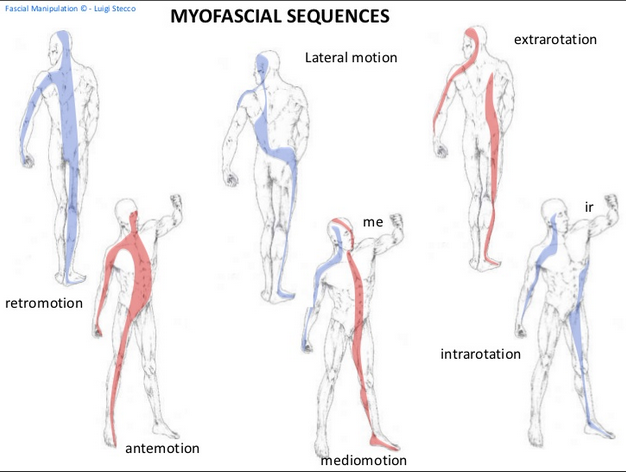
This method looks similar to traditional acupressure, only it’s strictly evidence-based. Instead of meridans and energy flow, there are locations (points), where calculated sum of the vectoral forces generated by muscles, is the highest while performing specific movement.

I’m posting a few examples from human medicine (I am working with veterinary patients, but its difficult to find good visual reference)

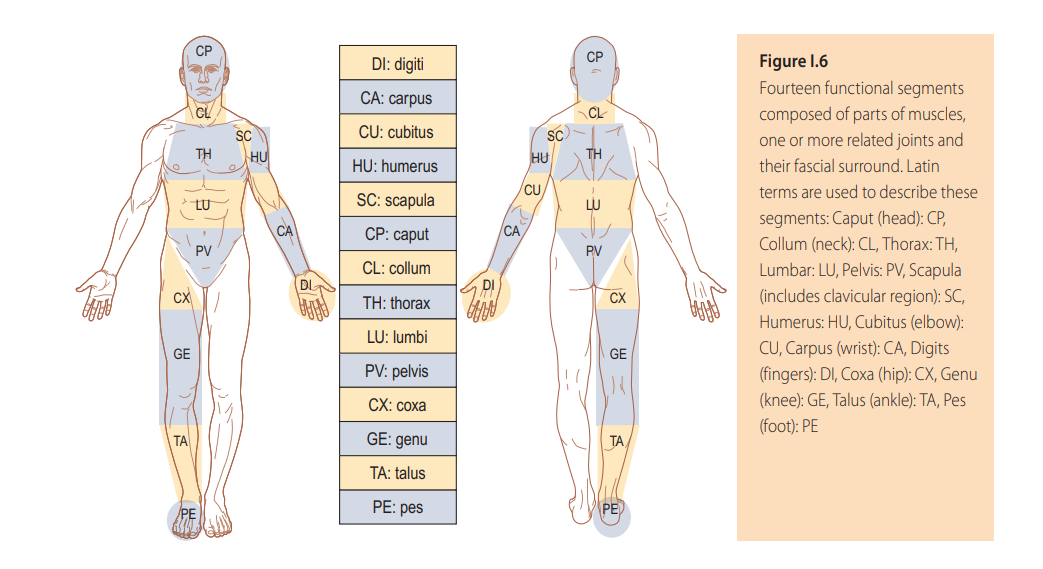
This is how body is divided by segments

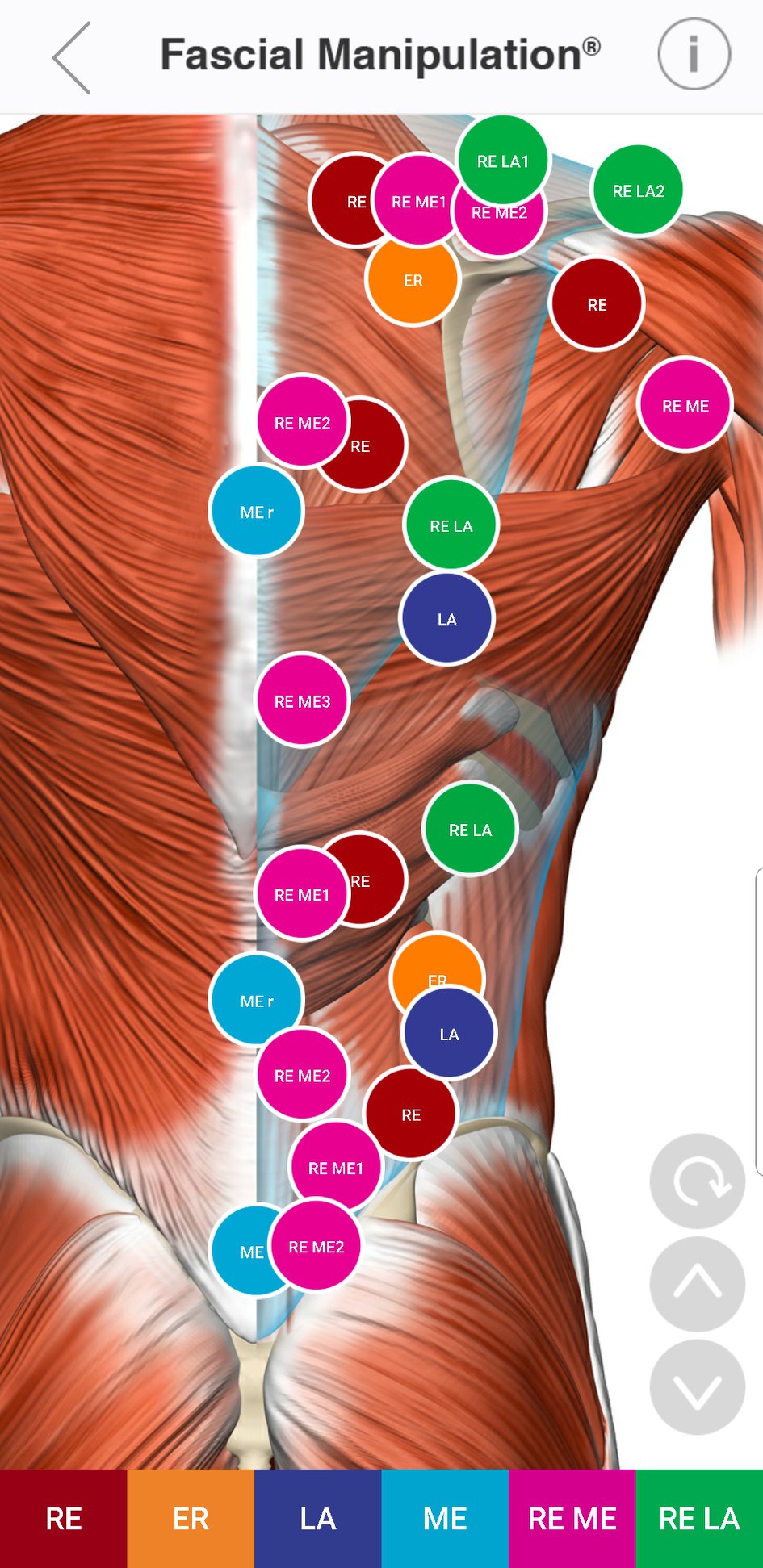
This is how points placement looks like

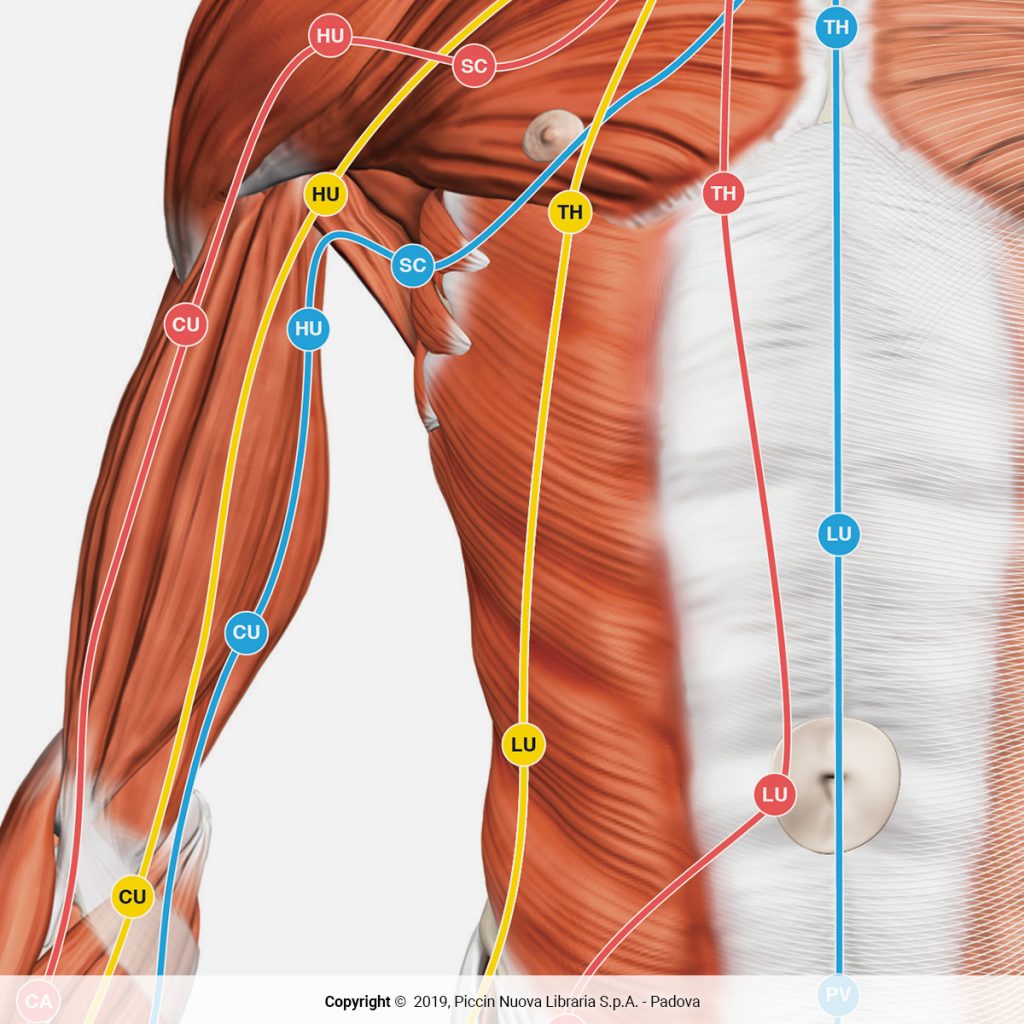
And how movement lines look like - they are “connecting” points located in places that generate the same type of motion. For example left side internal rotation of chest area is conncected with left side internal rotation of neck area. It serves both as visual aid and treatment guidelines.


This is how examination file looks like:
You can see directions (what I call lines)
And segments (body parts)
With asterisks as grades.

I hope it will put more light on potential issues. :slight_smile:

1 Like

@CinBu, this clarifies all the details I need to put together a system, I think. I’ll work on it for a few days and see how well it comes together and get back to you. I want the system to be both relevant and able to retain important information by seeing the whole system in a fast walk-through. It’s a challenge but I enjoy them.

1 Like

I thought i would be able to so what you
are offering.

I can only offer my ecouragement, and enjoy your progress.

2 Likes

@thinkaboutthebible Thank you, I really appreciate that!
I’m happy to see that my personal challenge turned out to be interesting for others as well.

@CinBu, I’m having a little trouble with the visualization of mediomotion. Could you provide me with some examples? Thanks.

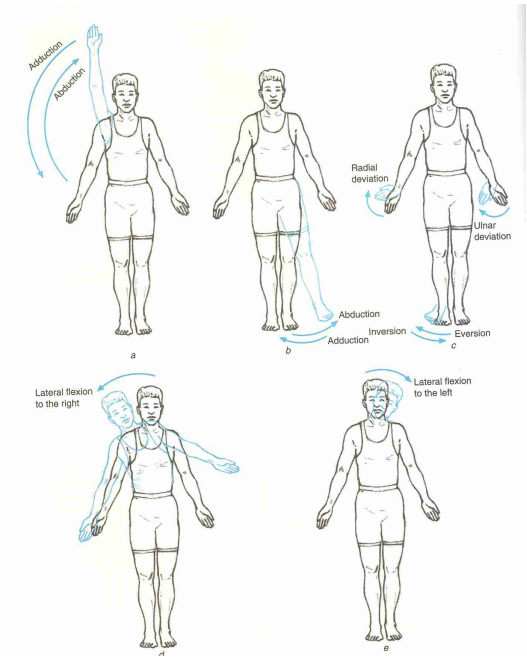
Movement accuring in frontal plane, from periphery to center, like adduction. Its the opposite to lateral motion. Here are some visual examples.

1 Like

@CinBu, I’ve given you a framework that shows my consistent transformation from body area to terrain, from body motion to objects in motion, body sides to elaborations on the terrain, and severity of symptoms to subjects. These datatypes seem to work the best to combine and create a single image while allowing the ability to skim through the images to find those areas that need attention. It took a few days to let the images confirm that they were happy!

Because of the complexity of the design that you have challenged me with, you may find that other head images are more appropriate to remember for you. If you have any questions about the design, please ask or let me see your ideas for images and I’ll be happy to give my feedback. I’m not trained in any of this so my interpretation may not be accurate and I’d be happy to modify it to make it more relevant. You want to keep your images relevant for long-term recall according to psychology.

terrains
CP caput head - cap, hat and suit shop
CL collum neck - column, Greek / Roman temple
TH thorax chest - Thor, superhero fight scene, flexing pecs
LU lumbi midriff - lumber, sawmill, sixpack abs
PV pelvis lower abdomen - Elvis, rock concert
SC scapula shoulders - scalpel, hospital
HU humerus upper arms - waving, cheering, comedy club
CU cubitus elbow & lower arms - cutting food in cubes, cooking
CA carpus hands - carp fishing
DI digiti fingers - digitizing computer keyboard, office
CX coxa hip and upper thigh, Coke, dance/night club, ordering drinks
GE genu knee, genuflecting workshiper in church
TA talus ankle, Dallas Cowboys football, cheerleaders in ankle high boots
PE pes foot, gumshoe, pacing in jail, crime investigation, search party
locations Antemotion – AN forward Retromotion – RE backwards Lateral motion – LA center to outside Mediomotion – ME – outside to center Extrarotation – ER outside Intrarotation – IR inside AN-LA RE-LA AN-ME RE-ME right / left
moving objects → things that move forward things that move backwards things that explode, spread, build things that implode, drain, collapse things in sky, outer space, universe things in packages, rooms tunnels, cabinets, forward explode backwards explode forward implode backward implode
CP caput head - cap, hat and suit shop smiling salesman coming to greet you as you want a suit customer backing up from the mirror because you don’t want a suit / smiling salesman tailor laying out fabric to cut a suit with his teeth wadding up and eating old suit opening up a large umbrella placing watch in small pocket, folding umbrella to small size person rolling out carpet runway photographer backing up to use flash, suit being inflated person rolling up carpet runway person wadding up plastic suit and breaking air bubbles inside daytime, outside, well-lit / nighttime, candlelight / spotlights
1, 2, 3 midget, giant, giant with flaming hair midget, giant, giant with flaming hair midget, giant, giant with flaming hair midget, giant, giant with flaming hair midget, giant, giant with flaming hair and umbrella midget, giant, giant with flaming hair and umbrella midget, giant, giant with flaming hair and carpet midget, giant, giant with flaming hair and camera midget, giant, giant with flaming hair and carpet midget, giant, giant with flaming hair
1 Like

@thinkaboutthebible , the design looks very interesting and intuitive to use. I like the approach of creating content based on it’s function - CL: neck, column, AN: moving forward. I memorised immidiately most of the images that you’ve proposed because of how natually they fit. The few I didn’t, I changed following the same general idea. I will test it for a couple of days and share my thoughts.

Thank you for your input, it will really help me.

1 Like

@CinBu, I might have overlooked a portion of the system for you. The locations on the body of the specific points are all numbered. You might have to create a story to follow one point to the next. For instance, the scapula uses a hospital terrain. The major system converts the numbers 1 through 5 to sounds that I select keywords that work for that terrain. So I would use

  • the entrance of the hospital for 1 because I like that idea of the first item being an entrance
  • next would be a pregnant woman entering the revolving door and pushing it with her knee (2)
  • the pregnant woman delivers a baby from her womb (3)
  • the doctors find cancer that should be given radiation (4) treatment
  • the woman treats her radiation skin problems with aloe (5)
    and so on,

I’d love to hear how you have applied all these ideas to your diagnosis with a few examples to see if they are working for you. Good luck!

1 Like

@thinkaboutthebible, I was testing the design for a couple of days now, on a small number of randomly generated results (using a simple google spreadsheet function). And the outcome is quite interesting.

I can recall points with 70-100% accuracy, but I’m sure it’s a matter of practice and getting used to following the scheme: - side - segment - direction - grade.

At the beginning I had a problem recalling the very first point, but my solution was to put a patient’s character interacting with the first point. The number of points varies per patient, so I’m not yet sure how to mark the total amount I’ve found.

As to seeing the whole picture, I’m not sure whether the system could be improved, or if I have to practice more with strong images…
After the examination, I am checking the results in order to make a decision which lines to treat or to expand my examination. Using simple objects - umbrella opening and closing (LA and ME ) was more practical, than incorporating actual movement of different objects into the scene (eg. AN - salesman coming to greet me) - Looking for umbrellas appearing in the story was easier than finding movement.

Since I am palpating points in a random order, grouping results by segment (places) is very useful. The only problem I have is to find the correct binding spot.

I will use following points as an example:

Chronologically L-SC-AN-* L-CL-LA-* R-TH-RE-** L-SC-ANME-* L-SC-REME-*** R-SC-AN-*** R-CX-LA-*** R-GE-IR-*** L-GE-IR-* R-TH-ME-*
  • at first, I was creating one movie-like story with places reappearing chronologically, as I was adding points, but in order to see “what was happening in the hospital” or “how many times umbrella is used” I had to rewatch the whole story. (However it worked great when I only wanted to write down results, without analyzing points’ location, quantity and quality)

  • then I tried combining chronological appearance with adding content to already existing segments:

L-SC-AN-* L-SC-ANME-* L-SC-REME-*** R-SC-AN-***
L-CL-LA-* R-CX-LA-***
R-TH-RE-** R-TH-ME-* R-GE-IR-*** L-GE-IR-*

This way is somehow easier, but still the binding happens between two points. I think that ideally the whole segment (with points) would be interacting with the neighboring one, but I’m not sure if it’d be optimal.

I think this might be a solution to my problem with remembering the total number of points that I’ve found! Maybe I could somehow use objects from the Major System as themes to connect segments with each other?

1 Like

@CinBu, any new insights/revisions on the system?

2 Likes