Number (shape) + direction (task)

I reacted to the What is the fastest, lowest effort mnemonic you know? question by creating a mnemonic system that is funny; I had a couple of funny comedy scenes in my head from a dutch TV show and created the system to match those scenes (see the link to see for yourself).

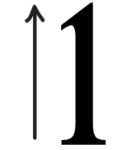
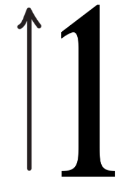
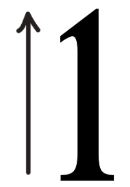
The basic idea in this system is that you translate the first digit as a direction …
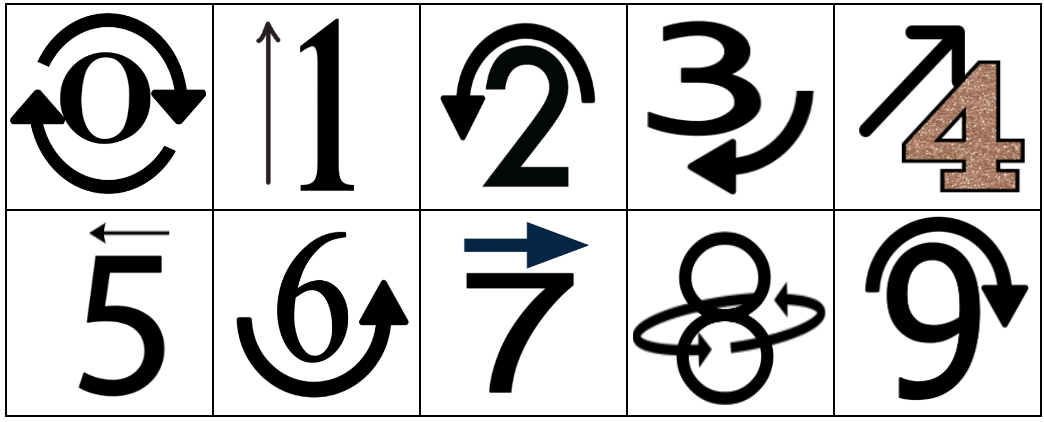

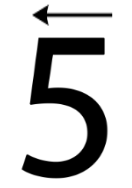
… and the second digit shape acts out that direction.

One example of this meant to be funny system:
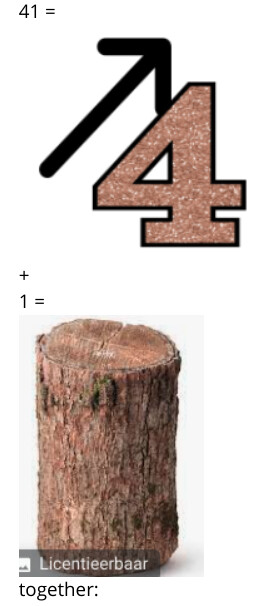

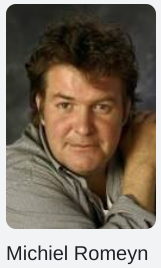
Not everyone gets dutch humour and not a lot of dutch people get this particular kind of humor. So just for the sake of clarification: Bruce Waddle who performs the log throw (acting out number 41) is played by a dutch comedian.
image

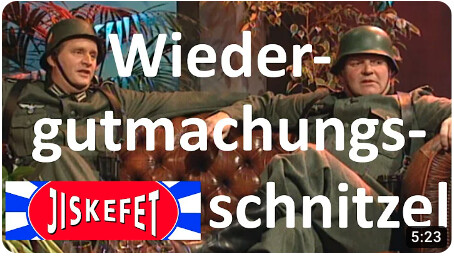
I imagine that forum members from Germany will not be able to keep a straight face when they see his performance in the below act.
image

Less funny but more practical

After some trial and error I have come to the conclusion that reversing the order of translation methods, so shape + direction is faster but also allows for two instead of 1 kind of direction translation.

Example of shape + direction

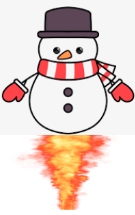
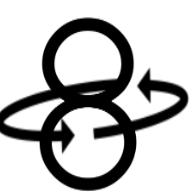
81 = snowman + upwards direction, so:

image
+
image

=
image

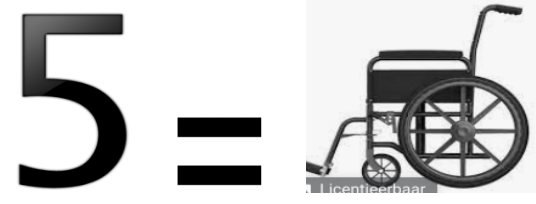
Example of shape interacting with direction task number

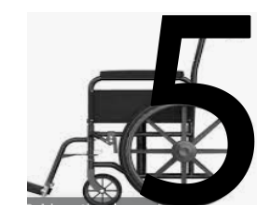
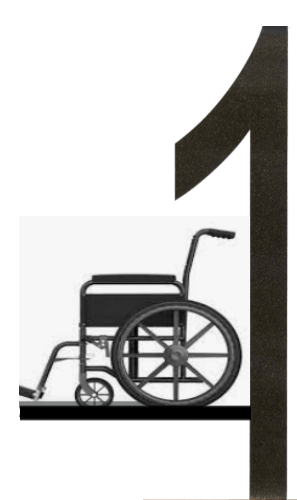
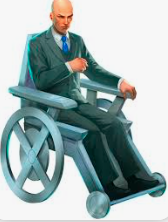
51 = wheelchair + direction upwards, so:
image
image
+
image

= Wheelchair lift

image

Another possibility, who does the action?

You can also read the numbers in a more abstract way and just focus on the question, who does the action and the answer is the image connected to the 2 digit number.

So for example 54 may be a wheelchair that has to be pushed uphill by an American football player, and 59 may be a wheelchair thrown over number 9 by the incredible Hulk.
5 Likes

To me this is extremely original. Very nice.

1 Like

Creating original (memory methods) ideas has never been a problem for me. The real challenge is making the ideas work.

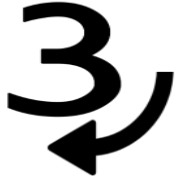
Often times in order to make the ideas work one is obligated to let go of the strict interpretation of the original idea. For example, the number 3 …
image
… can be interpreted as meaning sending something in to (/going into) an underground tunnel for whatever reason, so it’s not really about a direction any more. So 53 could be Professor X going into a tunnel for whatever reason. In this case you don’t even have to visualise anyone going into a tunnel, but you automatically know that wheelchair + tunnel = Professor X.
image

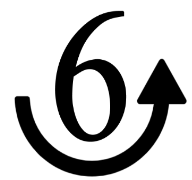
Likewise number 6 …
image
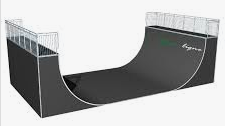
… could be interpreted as a skate board halfpipe.
image
So 76 could be a small person with an axe (shape like number 7) going down the halfpipe, but once you can read 76 as such you only have to imagine the small person with an axe as the image.
image

Likewise 71 could be:
image
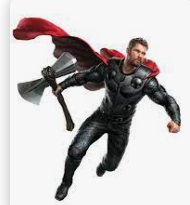
Thor with a hammer or with an axe, it’s all close enough to be an interpretation of number 7 going up.

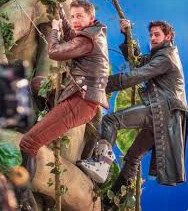
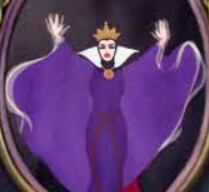
In the below picture from the TV show Once upon a time …
image

… you see Prince Charming and Captain Hook climbing a bean stake, so going up as in …
image
… and now we have 2 numbers we can translate:
01 = Prince Charming (his ring was stolen by Snow White and thus plays an important role in the story as something that is conected to him);
21 = Captain hook (number 2 looks like his hook).

I like this system of yours in tacking on directional numbers to existing things that represent a number. The example you have given for #51 being a wheelchair lift going upwards is a very good example. But then again a #51 could also translate into the image of someone pushing a wheelchair from right to left. Irrespective thereof, I think you’ve unraveled another value tool we can use to tack on numbers using your ‘directional system’. Time to experiment a little more with it!

If I understand your system of directional tack-ons the number 88 could be a Woman 8 hammer-throwing +8 (tack-on)?

I don’t follow you here; 55 would be a wheelchair (being pushed) from right to left.
image

If I understand your system of directional tack-ons the number 88 could be a Woman 8 hammer-throwing +8 (tack-on)?

Yes or a female ice skater performing a piroutte.

Time to experiment a little more with it!

I have done a little bit of that and I have come to some provisional conclusions or wisdoms:

The "if you only have a hammer everythings starts to look like a nail " fallacy is one that you need to be aware of. There are 3 versions of this fallacy that may be of interest,

  1. First digit always needs to be representing a similar shaped object. In the example you gave, 88 being a female hamer thrower, one could also simply use the image of a spinning number 8, so just:
    image
    A variation of this might be a magician making the number 8 spin as part of a magic demonstration.
    image
    There is room so to speak for a limited amount of first digit numbers in this systems simply being effectively visualised as just numbers moving a certain way.

  2. Second digit always needs to be a direction. As I have shown in another reply, 3 for example …
    image
    … can also mean going in to an underground tunnel.

  3. You can’t use any other systems together with this one. Some 2 digit numbers can be translated to easily in (shape based) images that it would be a shame not to take advantage of that simply for the sake of staying respectful of one’s method. So if 22 makes you think of 2 horses, what is stopping you from using that in addition to this system (I think that all twin numbers, so 00, 11, 22 and so on can more easily be translated as purely shape based objects). Put in another way, anything that is really good from another method like Erol’s shaper system can and very likely should be used aswell.

1 Like

The #51 I was referring to was the #51 from the Errol Shaper System. I totally get it that someone pushing a wheelchair in your number (shape) + directional tack-on would be #55.

Have you developed a full 100 pegs as two-digit numbers yet from 00 - 99 or are you still some way away from achieving that milestone?

I got it. Your example is actually a good demonstration of the potential problems of the shaper system; many 2 digit numbers can potentially represent the same thing, like 58 and 59 could also be a person pushing a wheelchair.

No, I have not, but I don’t think it would be very difficult. The thing is that I don’t really care about doing this (see my 3 fallacies comments in my above reply). What I care about is taking the value from this system (so the parts that really work well) and combining it with other systems such as the shaper system.

1 Like

A part of the reason for my perspective on how to use this system comes from my experience memorising article numbers in the warehouse I used to work. I was somewhat famous in this warehouse for being able to memorise hundreds of article numbers, so that when I heard someone say for example 09002311 (most articles were 8 digit numbers) I could inmediately describe what the article looks like and how many pieces there are on a full pallet. Despite knowing many memory methods, I didn’t actually use many of them for this feat, I just focussed on the flow of the numbers and connected that flow to the features of the article. And often I would associate numbers or number sequences with concepts in a way that is hard to explain to someone else. So to relate this to my new method I could give the example of 14 as simply pushing number 1 up hill. Once I have established 14 as such, I can associate it with anything or any person. So if I decide that a ninja is 14 I simply think of a ninja pushing the number 1 up hill or even simpler imagining a ninja thinking of or looking at number 1 being pushed up hill.

Ninja pointing at number 1 going uphill:
image

So my main focus is to read any 2 digit number as easy or as fast as possible as something that has a distinguishable meaning (that can be in turn connected to something that is easy to visualise).

I have thought about different possibilities for this idea (I actually do use objects but they are based on the directions in a way) in the past, for example:

  1. Imagine a route through a memory palace with a 110 loci, that starts with 0, 00, 01, 02 and than after 09 comes 1, 10, 11, 12. The single digit locations can be used to create 3 digit number representations by linking them to 2 digit locations. So imagine that 2 is the bath in your bathroom and 33 is your office desk (I often use my home and many other places to get a large memory palace route), than you can represent 233 by imagining a glass that you fill with water from the bath and bring it to your office desk, so the glass with water is representing 233. For the sake of consistency every 3 digit number that starts with 2 will have to be some kind of water based image that is brought to any of the 100 2 digit locations.
  2. Another similar way of doing this by having a person in every single digit location and they bring a different object to each of the 100 2 digit locations, so again 233 could be Aquaman (from location 2 = bath in bathroom) placing a glass of beer (so glass of beer = 233) on your office desk.
    image
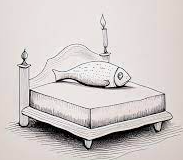
    And 246 could be Aquaman placing a fish in you bed (so fish = 246).
    image
    In the second method you don’t have to be all that consistent regarding the choice of objects, I mean if Aquaman places an electric guitar on your bed that might work just as well.

Even traversing a memory palace, you can traverse in a certain directional scheme to encode numbers without having to use any objects.

When you use both objects and directions to represent numbers you can use the same memory palace for many phone numbers for example. You just have to make sure that you connect the beginning of the object-directions story to who or whatever the phone number is connected to.

This method is more or less used also by champion checkers players who play against multiple opponants blind (so not being able to see the boards). I remember a Dutch world champion (for some reason Dutch people are really good at this, especially the Dutch people from the northern part of Holland) explaining that he connects something to each game/board and he than connects that something to the story of the checkers game. For this to work he has to be sure that the different game stories are indeed different from oneanother. I don’t play checkers at any level worth mentioning but I can imagine that for example a matchstick as an image can be connected to a very exciting game, like this game is on fire; so he will play an unusual opening for that game. Or he can connect some games to past opponants and he will play in the style of those opponants.

1 Like