Hey guys, hope everything is fine here among memory enthusiasts.
Have not been here for some time, sorry for that.
I have started attending evening classes for English and Math, to advance my education.
In general, I have to admit it is very unusual to be in such a position, but it feels like I am doing the right thing.
I try to find an application for mnemonic skills in my studies; one has to be creative indeed. Here are some examples and challenges:
Math:
Timetables: Forming pictures from the number system was useful (for example, 7*7= 49 ; two swords cutting small chunks from someone’s nose) but I ended up using the classic flashcards drilling method.
Does anyone have any better idea about how to commit timetables to memory?
Concepts: To grasp any concepts or ideas I used metaphors, it works pretty well. Explaining the main ideas to someone, even if it is an imaginary friend, works equally well.
English:
Synonyms: I have not found any method yet on how to remember close related words with the same meaning (I tried, and ended up with a complete mish-mash of images).
Punctuation: I used metaphors to grasp the main ideas, but there is still a massive struggle in the usage of commas and semicolons. Any ideas or suggestions?
Last but not least, I found a very good memory show on channel 4 which is called “Can I improve my memory?” with Ed Cooke.
I feel that many of you might enjoy this show; all the memory technics are explained thoroughly with examples.
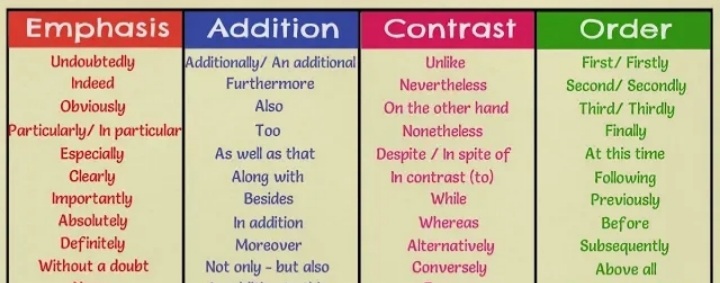
I used a simple number-peg system from 1-40. Meaning 1-10 (emphasis words) 11-20 (contrasting word), etc.
The process looked like this:
I remind myself what does nr 1 represents for me. ( nr 1 looks like a stick)
I am saying the word to myself which I would hang on to the number 1, let’s say it’s “Definitely”.
Trying to find some kind of association with it. (Definetely looks like someone is deaf and cannot find his hearing aid)
The last step would be just to associate 1 to Definitely ( a guy balances on the mop stick, trying to reach his hearing aid from a hearing aid tree)
Surprisingly enough, I was able to commit those 40 objects to my memory. Even though I was ramming the sand in the foundry while wearing a massive dust mask and sweating like a mad man.
But there is an issue for me.
Okay, I am remembering those words with the association to the numbers, if I need to recall them in order.
But it has no use when I am trying to write an article or email.
Hope I might find a better way how to widen my writing vocabulary.
Thanks for your attention,
May won’t memory serve you well!
Hey comrades, hope you remember me! (You get it? get it? oh, I know my jokes are bad)
In my humble practice, I found a couple of tricks that help me a lot. (Apart from basic ideas of visualisation and location)
Idea 1:
Timing everything.
The main goal is to force me to focus and try to do it faster. Usually, I do a lot of mistakes and fail. That’s the point because then there is something to improve or discard in the memorisation process. Otherwise, if I am not challenging myself then I found myself in sort of autopilot mode where my attention is divided and lame.
For example, I exercise concepts from an accountancy course. Let’s say there are 10 definitions on flashcards. One may try to go through them as fast as he can., to see where the associations are not strong enough (and improve that)
Idea 2:
I keep a flashcard in front of me with a checklist of a key moments of creating a fake memory, here are different criteria:
Space
Picture (not abstract)
Multisences :
Smell it
Hear it
Touch it
Feel it (emotion)
Have a fascinating concern regarding the retention of learned poetry.
I memorized IF, a poem by Rudyard Kipling, three years ago. Here it is.
My approach was straightforward: I would read a line and then make a visual note to emphasize important points in my loci. Keep in mind that the memory location was merely a tool to help me recite, not the primary point from which I would recite.
I eventually memorized this poetry by heart without using any visual cues. Did my spatial repetition (the next day, seven days, two weeks, one month, three months, and six months).
However, after a year, I tried to recite the poetry, but sadly, I was unsuccessful.
I would remember, say, six lines, but I wouldn’t be able to recall the next six lines. I’d call it rather frustrating.
To cure this, I created a second journey using visual notes, where I could locate a hint for reciting. Back then, it worked well.
Now, after one year of creating the second journey, I realized that other parts of the poetry had become weaker, so I needed to write a third journey. (looks like an endless loop)
Trying to find a better way to retain information that has been memorized without having to rely heavily on crutches.
I find this example fascinating, thanks for sharing it. I’m sure you would have said, but is this an exception, or the first (and longest) time you tracked how long you remembered something without review? Surely you have had other situations where you have forgotten something sooner?
This is just kicking around ideas: Maybe this is a sign that you have an upper limit for memory somewhere between 6 months and a year? Maybe it means use it or lose it? Potentially any memory can fade if not reviewed and brought back alive. Or maybe each case is different? Or maybe your current upper limit is 6 months, and with more practice it will go higher?
It depends; as a Buddhist monk, I was once required to memorize some ceremonial chant. And I did it for 14 days, three times a day, using rote memory (basically by drilling the lines in my brain) And I hadn’t looked over it, but even after two years, this particular chant is still in my head without any mnemonics.
Or, another example: is my phone number. I memorised it countless times (about 5 times in three years) by using the Major system, and alas. I have no idea what is my phone number. (I mean I can make an installation in my memory place, but you get the point)
I’m not sure. My theory is that there isn’t much structure to keep knowledge in the memory if it wasn’t used in many different contexts and wasn’t very useful. It’s just a guess, though.
With this particular poem I memorised it in the mornings for 15 minutes, for about a week.
Let’s say the information to remember is as follows:
If you can keep your head when all about you
Are losing theirs and blaming it on you,
If you can trust yourself when all men doubt you,
But make allowance for their doubting too;
The procedure would look like this:
I’d read the first line as follows:
If you can keep your head when all about you
I would then observe someone searching for his head in my mental space.
Since I am too far away to speak English with confidence, I would also make a mental note of “all about you.”
I would plant each line in this way, with the main idea and a mental note of unusual word use.
Then, by going through the mental journey, I would try to read the line from my head. After a few attempts, I try to do it without using any mental images, and if I need a hint, I will look in my memory.
It’s been a while since I last checked in. Exciting news—I’ve achieved my first Accountancy diploma (AAT Level 2).
In a recent experiment, I decided to take my memorization skills to the next level by attempting to absorb an entire book on business environments for an upcoming exam. My unique approach involved utilizing Leicester’s High Street as a mental storage space. I transformed key points into characters and let them play out in vivid mental images. The process was both enjoyable and challenging, requiring significant mental effort.
I discovered the effectiveness of translating complex concepts into scenes and characters to enhance understanding. Not only did this method make reviewing a breeze during moments stuck in traffic, but it also allowed me to mentally compare different ideas. However, I must admit, I may have gone a bit overboard with the memorization technique during the exam—opting not to use it.
Reflecting on this experience, I realize the need to strike a balance. Perhaps in the future, I’ll focus more on exercising my reasoning skills and establishing connections between concepts rather than relying solely on memory techniques.
On a different note, I’ve successfully completed the two-digit PAO system. Looking back, I can’t help but regret not adopting this approach earlier. It’s surprisingly enjoyable and adds a whole new dimension to the memorization process.
Here’s to continuous learning and finding the right balance in our memorization journeys!
In my spare time, I have created a PAO system for digits, which was a lot of fun. However here I have some problems:
Given that I am using a major system to recall the meaning of numbers it wastes my time trying to verbalise it. Any ideas on what to do about that, is it normal?
Even though I have created actions for each of the characters sometimes it is difficult to make that action memorable or remember which number is represented by that action. I could do some drills for example: Number-Action, what do you think?
Finally given my holidays, I have time to make a PAO card system, and it is ridiculous. I find it easier to remember characters without any Major system. So it is already faster than the number system.
I have created categories for Aces, Kings, Queens, Jacks etc and categories for symbols. Example:
Aces=Riches
Kings= Politics
Queen=Religion
Jack=Military
= my favourite
= Evil
Therefore for example King would be Hitler, doing his evil things.
Have tried to work on my number system by performing some drills.
Like random flashing numbers- set up 2 sec per number, and try to recall the associated image without placing it in at loci It is kinda stressful. What is interesting is that sometimes random images would come over even though they are not in the system. Like 23 is M. Jordan but also sometimes it is Nemo. Or for example, 44 is a character from a cartoon Life with Loiue, but sometimes it is just a picture of LOL. Do not know if I should address this.
Also, have tried to get 30 digits in 60 seconds, without any success.
The main issue seems that it is very difficult to make a proper Person-Action-Object in a very short time. I am not impressed by myself.
Maybe I could try to do two images per loci, but then it will not be PAO anymore.
Need to meditate more, to get more wisdom and speed in numbers. (joking)
Today I designed some drills for myself for numbers.
The key idea for myself was to speed up association from numbers to characters/actions/objects.
I needed a randomised shuffled deck of digits, so I used the Quizlet (I wouldn’t say I like it, but I will do it for now)
So I would do drills like:
When you see a number recall as fast as you can a Person associated.
2)When you see a number recall as fast as you can an Action associated.
3)When you see a number recall as fast as you can an Object associated.
I also had to change some characters and actions within the system, for something memorable. I hope nobody will know how much violence and sexual weirdness is happening when the numbers are memorised. However, I feel guilty that exactly those things are sticking out without much of the effort.
Another boring observation from myself.
So I was trying to improve my skill in remembering names.
My usual protocol would be :
Facial feature
2)An image for the name
A story between those two.
Well, it did work for me so well.
I added another step to it- 4) Loci
So,
Facial feature
2)An image for the name
A story between those two.
Loki
Essentially instead of being just a story within the face or something like that, those people become heroes/ villans at my workplace, or the library where I study. I have even used a picture below to memorise like 10 names there.So yeah, looks like adding some context is working for me.
Trying to improve my spelling and memorisation of car plates.
Come up with three lists for letters:
1)Animals
2)Action
3)Object
All based on a first letter
So for example SJP would be Snake Juggling a Palm-tree
For example, when memorising weird names, I could place an image there where spelling is difficult.
Also, now when memorising names after the session is complete, I would try to come up with better images for names like Roland would be Rolling Underwear.
So hopefully it would create some sort of key image bank.
Trained associations with my cards, so the drill was card-recall the character. Was able to do it in 3:31 min, which is not bad for me.
Finally, I have created images for my number PAO, and would do a drill for converting from images onto numbers, to speed up recall time?
I had to stop memorising for a couple of days because it would disturb my sleep. I mean it was weird, I would just have weird images in front of my mind and I had no idea how to stop it. Plus, my attention will try to recall everything that happened today/yesterday or any YouTube video I have watched. It sounds like a minor thing, but it was exhausting. So yeah, I needed a break.
In terms of learning my PAO card system (try to see a card and the character behind it. ).
I was able to go through the deck of all cards in about 3:30min which is 2 minutes faster than two weeks ago.
In terms of my accoutancy studies, I would use concepts that I study and place them in improvised loci, to think about them more later. It somehow becomes easier. Have no idea to what attribute it.
My major project now is to make a proper training loci, where I will not need to improvise or think about where to put the next image.
My general idea is to divide the journey into zones, and each zone would have 5 locations.
I do hope it will help me to memorise faster.
I found a lot of interesting information about loci from here.
No impressive feats here yet. But I still enjoy it.
I used
2 digit PAO, 4 digits per loci, mainly PA . Meaning Person acts upon a loci.
What helped me do to it:
Having pre-set loci. I would walk my locations before attempting to memorise it.
To speed up my conversion of numbers into characters, flashing numbers have helped a lot. I would do focus on different aspects of PAO, like focus on character only/or action/or object.
I guess there are some other factors too, but seems like those were the major ones.
I hope my grandmother will be proud of me, finally!
As part of my procrastination, I play with sentences as structures that can help me record the information I need. Also, I would twist words to encode new information.
For example, trying to remember the name of one famous mathematical prodigy, Terrence Tao, I found meaning and extra words within his name and used the sentence as a formula. Without visulasing anything.
Like a mathematical genius TEARS RENT contract for the sake of DAO philosophy. It is a very rough idea, but it would be enough to trigger recall afterwards when I quiz myself.
An example of trying to have a trigger word twisted to fit the information needed.
Like I want to know when the Elfel tower was built, it was in 1887.
I have general knowledge that it was built before the 20th century, so the first two digits are skipped. So only the last two left (87) in my system, they mean sounds VK.
So I would make the Elfel tower into the ElfelViK tower.
I experimented with that, but eventually I do not need this mnemonic because I would remember the date without any prompts.
So yeah, these are ideas I am playing around with.
 = my favourite
 = Evil