As it turns out, I’m quite a bit terrible at memorizing real-life locations. At least for now. I might try again soon.
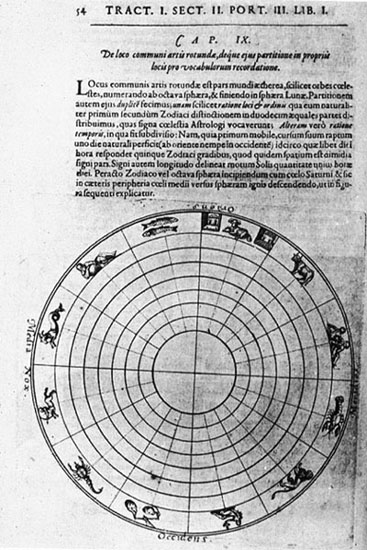
What I have realized is that I’m good with visualizing angles on a circle. I can easily divide a circle into 12 spaces and place an item on each hour for example, or even 24. All of these are distinct locations on the circle for me. I’m not sure how or why. I think it’s because in my mind, a day of 24 hours is visualized as a circle, and I see each hour in its correct location for me. If I imagine a hypothetical globe for example, I could place even more locations on this imaginary circle, each with a different longitude.
It’s weird how I can recall the difference between something like 10 degrees on a circle very accurately, (resulting in potentially 30 different spots easily) but I’m unable to recall the spatial geometry of a room. I think my brain prefers circles over cubes for some reason.
This is weird. I don’t think this has ever been reported before.
In that case, this Mnemonic Clock may be some interest to you
How much practice have you put into memorising rooms, or outdoors as part of your memory palace? Practising those on a daily basis should improve your vision of the spatial geometry of a room also.
If this doesn’t work you, you might want to focus on what works best for you instead with this weirdness. You may be able to convert this Weirdness into Geniusness by creating a new method for a memory palace
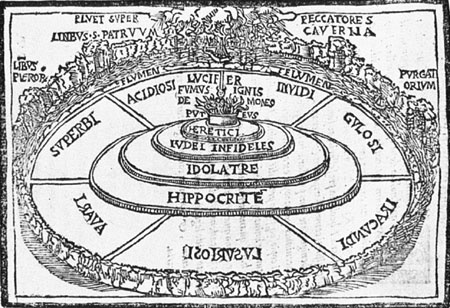
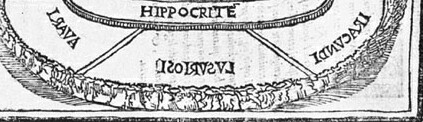
I seem to recall reading somewhere (might have been in Yates or Carruthers) that Dante’s “Inferno” was based on the same kind of thing. No idea why the script should be mirrored …beyond my pay grade that is
I feel the same way. I prefer sequences, rings or trees of chambers.
My personal speculation is that square structures and 2D grids are not native to the brain and while, like any shape, they can be learned, it’s extra effort.
Imagine these letters are in 3D space floating in the air and imagine yourself laying down under them, we see the text as if it were written the right way. We are then in a 3d world just like when we are in our loci. Just real-life space in 3D, no mirrors necessary.
Perhaps to remind the reader to mentally visualize in 3D in order to understand some of the proposed Concepts.
AnD also can use as a great exercise (picking anything, like a word, place it in a 3dimensional space, like a palace, and see how it changes as you move around it) It is also a good exercise for drawing sculpting imagining inventing, and… loci !
That makes a lot of sense to me- not that I would claim to know anything about neuro-sciencey stuff. But i recall being taught at school in the art class that there are “no straight lines in nature” and perhaps this all ties in with what Lynne Kelly writes?
Thank you, i shall keep that in mind…and i think your explanation for the mirror writing sounds logical too. Although possibly the apprentice type setter…
In our daily experience there is one straight line that is fundamental, that of gravity: objects falling, we standing or laying, and some perpendicular to that: our two eyes, the surface of calm water, etc.