Learning mathematical knowledge

Hi

I wonder if i could use some mnemonic techniques for learning mathematical knowledge.
→ Some facts in mathematics are commonly abstract and not really simple to visualize or put in locis and so on.

Learning formulas with a list of symbols and images for them, this could be a possibility. Or numbers naturally.

But would it be possible to really learn bigger amounts of material like some linalg1 + linalg2/3 courses and get done with such types of knowledge?

thanks for help

1 Like

Convert everything into text, this include formulas. If it is an step by step on how to solve an exercise or even the evaluation of a problem, memorize that. Steps matter.

Yes.
Feel free to share the specifics you aim to memorize to give you suggestions.

1 Like

I used to memorize proofs by heart for ana1 like some proofs for algebraic structures or memorized certain formulas through understanding and visualizing them accordingly. In more precise terms, the mathematical explanation or learning simpler explanations for them in order to understand them.

Yes, this might isn’t the best ‘memory technique’ but it creates an important depth of understanding through which you become able to deduce the needed formula like the polar form for complex numbers. You need to understand the unit circle and angles (memorizing those is fairly easy) in the complex plain which leads to understanding. These details can just be retained through active recall while using visual explanations.

But all this can be done through the seemingly slow ‘active recall’ technique. Yes, it seems to be extremely slow, but again, you aren’t really able to learn mathematics to that superficial degree like medicine. Medicine is knowing a lot, but mathematics is pretty much all about understanding. Through active recall you actively improve not only your recall on those formulas and things, etc. but also your understanding, because you explain it - at least to yourself.

For mathematics, I later on used active recall and the Feynman technique (you can look them up if something isn’t clear). Those are the best techniques for learning subjects which require understanding - and are subjects whose topics or details can be learned easier through understanding. In medicine or law you face the problem of not needing much of understanding in order to memorize those things. (Yes, for law that’s not entirely correct, but it applies to a non-insignificant degree).

2 Likes

@mercy → active recall and some kind of feynman method is like what i’m doing, but often, i forget the things as times flies

@InMyMemoryWorld
For Example:

Formulas:

  • Rules of derivation: product rule, quotient rule, chain rule, etc.
  • concrete derivatives and integrals

Algebraic Structures or Theories:

  • Axiomatic definition of a Group or Field or Vectorspace
  • Theories like Hilberts Geometry (with it’s variations) and such things
  • Logical formal systems, small theories from mathematical logic and things like logical calculusses

Proofs:

  • Fundamental theorem of Algebra
  • and so on, don’t have to be very complex proofs.

Numbers like pi / e / phi → would just use a number-system and Routes oder Palace

→ You really don’t need to cover all this. those are just examples

2 Likes

Hey Godelgoes,

Nice name btw! (my favourite Mathematician/Logician!)

How have you progressed with this? I am currently in the exact same situation you have described

Hi Connor

I’ve not made so much progress because I did non invest so much time in memorizing facts about math.
I also talked to a mathematician about this stuff. He told me there would be even a (for example) System to learn trigonometric stuff. but he told me that his professors back then didn’t like it when students memorized too much. Most people working with / in math say that mathematics is more about understandig concepts and connections and so on. not so much about facts. and about practice…

For me, it worked pretty well (in school) to just learn the knowledge with reading and thinking and some kind of feynman teqnique or just explaining stuff to my self in my head.
And when i need formulas i kind of know them when i use them often: Example: When i solve a lot of calculus tasks and use derivatives very often, i just get the simple ones by heart. And if i then don’t use it for a period of time, it fades.

And: Somebody said someday: Mathematics is like playing the piano. You learn it by practice.

kind regards

1 Like

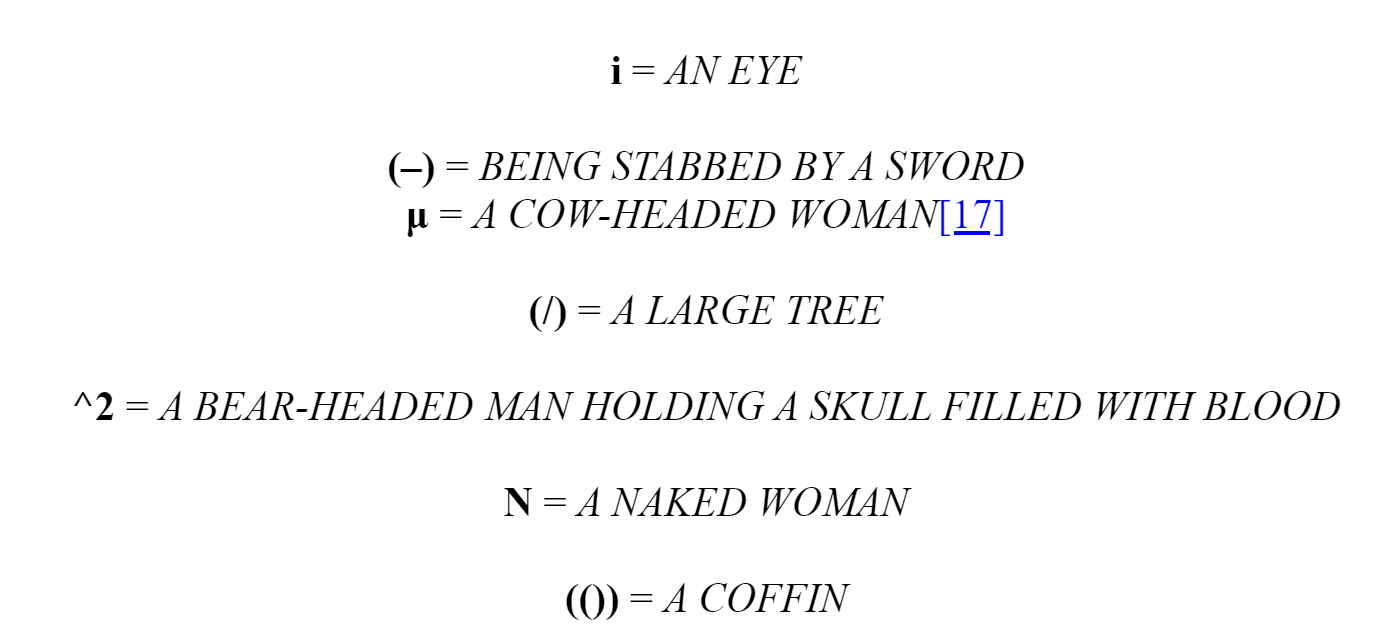
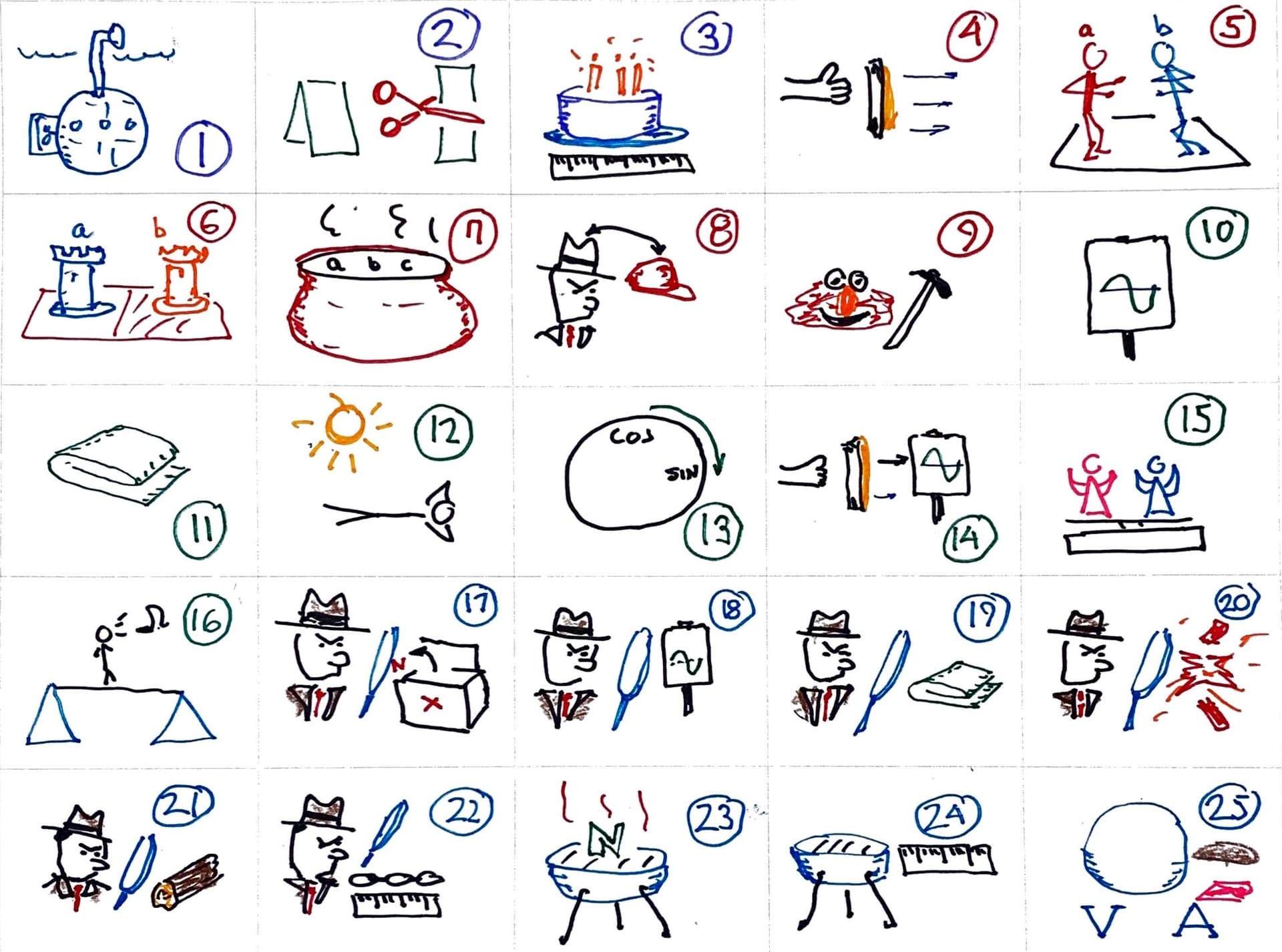
I wrote out the 25 facts about math. A few arithmetic tricks, some algebra, trig, and calculus. Then I made mnemonic sketches for each on a grid. And a story to get from each mnemonic to the next. This has served me well and I remember the 25 facts. Each then serves as an anchor port to help me remember other math knowledge. Here is my sketch:

6 Likes

That’s awesome man, thanks for sharing that!

I’d love to see an explanation of one or two of the mnemonics!

Cheers
Connor

2 Likes

Sure!
The whole thing is a storyboard, so I can recall it without looking at it.

Say we start at cell 4: throwing a pie.
This is the Pythagorean theorem. (The pie throwing theorem!) a2+b2=c2
But the pie hits a boxer at cell 5.

  1. The boxers squaring off represent squaring two terms: (a+b)2=a2+2ab+b2
    The boxers, instead hitting each other play chess.

  2. The difference of two squares. So, a2-b2= (a+b)(a-b)

You can view the whole thing in detail here: Math Memory Palace as Table - Google Docs

You’ll see a bunch of references to a photo that for me functions as a memory palace for this.

I now know this backwards and forwards, and it helps me to recall ALL of my math knowledge, far beyond the 25 facts of the table.

2 Likes

Sorry. I forgot to write an answer. I was away from the forum for a time.

I already made post, teaching two methods (which are more practical).

However, here it is a more complex method, making rules on your own for each symbol. The assumption is that you want to memorize a lot of it.

Some things are taught in ways that inspire mnemonics, for instance when teachers or books make use of “u” and “v”, for integrals and differentiation. I usually associated “u” with Ultron and “v” with Vision, and then I would make a story with the corresponding formula.

Let’s start with:

  • I would use mnemonics as components.
  • I would memorize concepts and shortcuts (formulas) separately.
  • I would dedicate mental rooms for related ideas (ALL trigonometric derivation rules for instance)

How to memorize formulas? (not really, but…)

As for any memorization, you can always tailor the idea to be memorized according to your liking as long as it holds all the target information. (I advise you to do so, to trigger some memory biases that in turn will aid in your consolidation process: “make it meaningful for you”, even before memorizing anything or creating images)

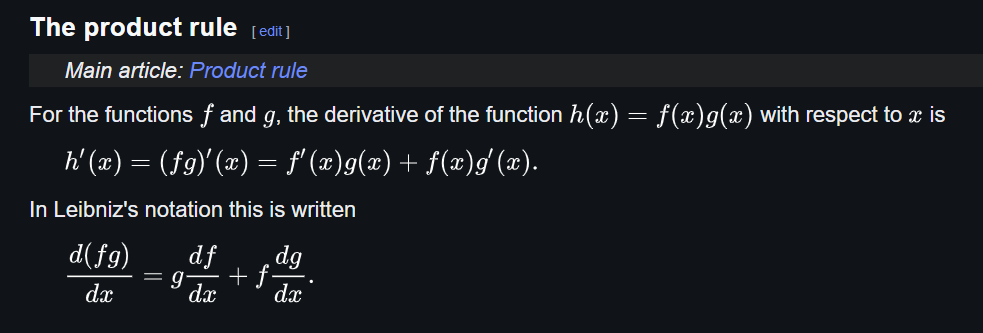
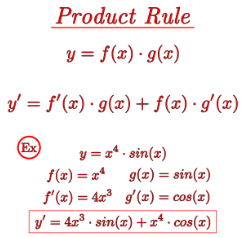
Consider the following two images teaching the same, using different letters and symbols. Yet, all you need is to memorize a formula, right? Assuming you understand either or both of the teaching methods used in the images.

Let’s focus on this one:

You can understand:

For the expression y which signifies the product of two functions f(x) and g(x): y = f (x) * g (x)

The derivative of y (the expressed resulting function) is
the derivative the first function f(x) times the second function g(x) plus the first function f(x) times the derivative of the second function g (x).

You could even memorize the previous two paragraphs (as you memorize any text, if you don’t know how to memorize text: chunk the sentences by any and how many mental rules of your liking, like by meaningful sections, then associate an image with the chunk and place the images in a mental location… it’s the same process as for everything using the principles of the art of memory) and that would be the memorization of the formula.

HOWEVER:

You would be missing a lot this way, so consider this: I could have tailored the formula to anything meaningful to me as follows, and remember this process could be in itself the mnemonic:

Tailored information to be memorized:

fg (I only show this for example’s sake, attach the location with the concept to be memorized instead)
f’g+g’f

While the mnemonic could be a reuse of other of my mnemonics:

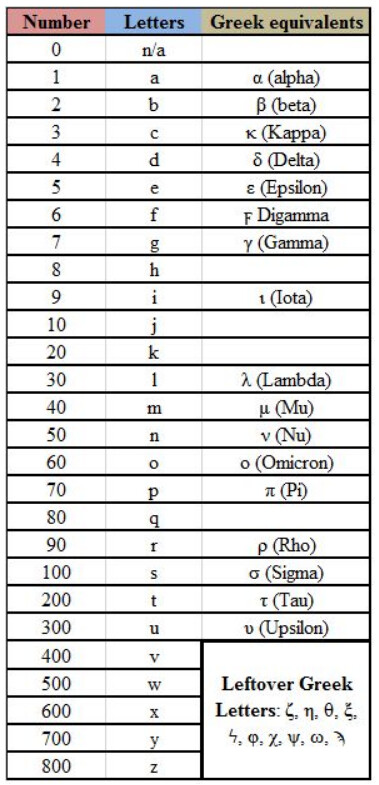
Here my number code:
0-S,Z,O
1-A, T
2-B,N
3-C,M,W
4-D,R
5-E,L,U
6-F,J,Y
7-G,K
8-H,V,X
9-I,Q,P

So, for me, applying my code:

f’g+g’f = 6’7+7’6

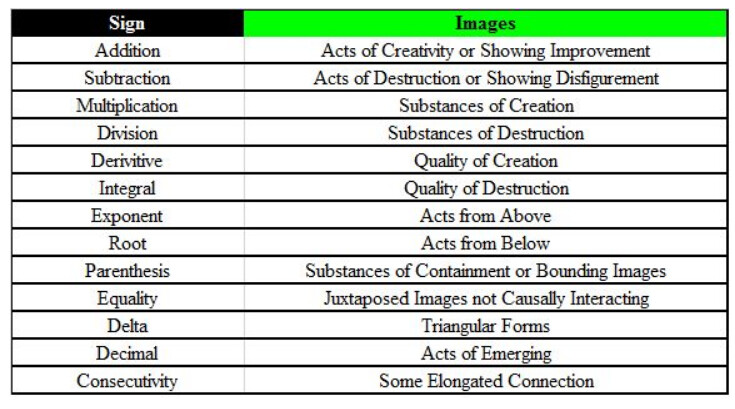
for *, +, and ’ these mnemonics (for the sake of this tutorial):

‘*’= hug
‘+’= fist punch
" ’ " = using a hat (usually letters will be used to symbolize “derivative of”, and you can either use your alphQabet system or number system as in this tutorial)

SO using my person lists or my alphabet lists:

6’7+7’6 = 67 person wears a hat and punches 76 person who also wears a hat. (this may seem lacking any tangent for memory, but if you have a 00-99 person list and you memorize your operation symbols code, then it would be as second nature as memorizing numbers).

I used this example, as a way for you to combine all your already or to be ready lists and mnemonic practice.

Say you’re good at number memorization… and what if you just learn some operations and structurization symbols, then you combine as a PA or PAO your numbers lists and math symbolization? Well, simplification. Of course, there are alternatives and in some scenarios this method is counter productive (taking a text and converting it into numbers to memorize it for example… ridiculous).

Regarding the rest

Obviously, when you refer to the Fundamental Theorem of Algebra you don’t mean: “every polynomial equation of degree n where n ≥ 1 with complex number coefficients has at least one root.” If so, this is just text memorization, if there is more to this concept (there is), just go ahead and transform every concept into a text.

Text memorization:

Tips on making text memorable
Tips on methods for text memorization

  1. Transform the target ideas to be memorized into a better expression, your own understanding of the text.
  2. Chunk the text you generated.
  3. Attach the chunks to images. Review each attachment. Per chunk-image attachment or association then move to the next step and head back to this step to the rest of the chunks.
  4. Place those images in mental locations you previously created (or the imagined/visualized version of the room you’re at).
  5. Finally, review the whole thing. That is navigate in your mind, each image at the mental location and recall. Recall again, the next day.
2 Likes