Layering palace data for each loci in a strategic way

This is something I keep running into, as the data I want to memorise becomes more in-depth with more layers/strands, so I’m wondering how other folk here approach this in a methodical way.

Take this an example: Native/Naturalised UK tree species and their basic taxonomy and attributes. Each has a common name, latin name and could include a number of related species within the genus. An example would be Birch, 5th in my palace after Alder, Apple, Ash and Beech (I used common names of the genus in alphabetical order as this was logical to me when I first encoded it). So Scots Pine is filed under Pine, and the 6 species Willows under just Willow.


Main Loci: Birch
Genus: Betula
Deciduous

Species:


  • Common Name: Silver Birch
  • Latin Name: Betula Pendula
  • & other information about soil type, leaf shape, bark characteristics and buds (this is where I find the data harder and harder to layer into a given loci).

  • Common Name: Downy Birch
  • Latin Name: Betula pubescens
  • & other information…

So how do you approach layering repetitive sub strands of data onto each loci?

I almost want to use a secondary palace for each tree species but that seems very labour intensive. Perhaps those who have database-like structures they’re trying to memorise have ideal systems here?

Another example would be a friends list; their full name, date of birth, other important dates/anniversaries, their address, their partners, kids names, kids birthdays, pets names etc etc. I have a palace for this but as it gets fuller and deeper it’s become harder to encode and keep a clear ‘gangway’ for the route I’m walking. Same for family. And Acquaintances…

Any thoughts would be hugely appreciated as I undertake more and more complex data encoding (I’ve started Portuguese vocabulary and want to expand on memorising more complex Javascript functions/concepts)

(Apologies if this has been asked often - but searching didn’t really turn up the ideals/methods I’d hoped for).

1 Like

Have you considered using a nested palace? You mentioning a ‘secondary palace’ makes me guess you did, but here’s the link anyway.

If you’re worried about your starting palace not having enough loci, perhaps you could use a linked list to remember the nested palaces? Linked lists are, at least in theory, infinitely extendable. Maybe also consider memorizing every fifth (or so) link in a memory palace as a sort of ‘backup’ so you don’t lose the entire chain if you forget one link. For example, your friends list could look like this:

Tom throws a basketball (his palace is a basketball court in your neighborhood).

The ball is caught by Jerry, who puts it between two burger buns and starts to eat it (his palace is a burger joint in your neighborhood).

Some of the sauce spills on… etc. etc.

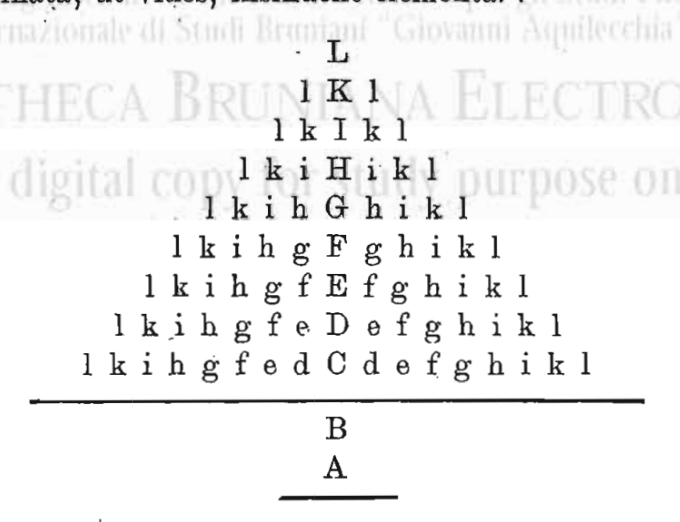
Giordano Bruno also uses a linked list containing linked lists within themselves in ‘Thirty Seals’ (ie each link is the start of another list). He calls this ‘The Tree’. So you can link up the species, then add any number of species and subspecies afterward. He also goes one level deeper with linked lists of ‘Trees’ (fittingly called ‘The Forest’). Kind of feels appropriate to memorise tree species in a ‘forest’, don’t you think? :wink:

2 Likes

For me if the data I’m memorizing has a lot of data, but I want to keep it related I use 1 room per main data point. The second way is when the data is well established I add to the image as a linked list.
For plant I would create one palace or a set of multiple locie for each to have space. Palace cost nothing use it :slight_smile:

1 Like

@turduken

That link lead to more examples — and this has some gold in it. Thank you.

But still, let us select another method here. Do you have some movies you have watched numerous times (ideally). What you now need are 10 scenes from that movie. This is easy, because you should find that you can remember 10-20 scenes without any prompting from a movie you love (hint: think of the story from the perspective of what happens to each major character), but if you need help, then go to imdb and read a detailed synopsis. That will remind you enough for sure. Pick 10 scenes where you can imagine yourself walking around, interacting a little with what is there. Quickly pull together a 10 step journey in each location.

That’s intuitive. The movie scene at each loci is a perfect anchor for me (movie and TV series lover and serial re-watcher). I can pick movies/TV that are both v. familiar AND suit the subject matter too.

For my examples (trees and friends) using Lord of the Rings (Ents sprung to mind) and Caddyshack (many of my friends play golf) would be ideal. Both movies are super familiar and have many memorable scenes/locations too.

Thanks

2 Likes

Thanks. In this case of trees. It was one of hte first palaces I memorised and doesn’t have rooms (a walk at a country house I did often with my dog) — but i think the trick is to have a consistent method of expanding each location within each palace so none are forgotten - so can quickly access the information.

The stamp for making sequences of places described by bruno in 30 stamps is called the bookbinder.

The seal of the forest is like a hyperlink to similar concepts and the tree is to perform an in-depth analysis of a topic or concept.

The tree and the forest are used to deepen and expand knowledge and are two of the best seals for this purpose, which Bruno always proposes, not only to memorize, but also to know the truth of the thing studied.

1 Like

While it is true that Bruno uses the shape of a tree as a guideline for analytic processes (ie starting with the roots, which are senses, imagination, persuation, etc, that is, sources of information to begin analyzing, and ending with the fruit) and inventive processes (using the different parts of the tree to denote different aspects such as causes, elements, potentials, etc.) in the likeness of Lull’s Arboris Scientiae, he also uses it as a means of memorization. Quoting from the Scott Gosnell translation:

The tree also facilitates the retention, memorization and ordering of species. Down the back of the tree, we have the Chain, which ascends in the schema form proposition A to L, which connects the chief points of the matter succesively and continuously. The branches of this very tree are its collateral assumptions, which are connected on both sides to a single link of the principal chain, howsoever many may suffice to fulfill the consideration of the matter.

The Seal is accompanied by this graphic:

The chain being, of course, a linked list, and placed in ‘Thirty Seals’ as the seal right before the ‘Tree’. The ‘Forest’, the seal right after, is of course composed of multiple trees, once again echoing the ‘Arboris Scientiae’. Of course, thought and memorization would have been, as you said and as can be inferred from the quote, two sides of the same coin for Bruno.

3 Likes

Thank you. These are interesting ideas.

The layering of content - (inception of loci) - is clearly something discussed often but not so much written about in memory training books (that I’ve read so far).

I tried the scenes of a movie idea yesterday and while it was successful (as any palace would be) I still found it as slow as creating any other palace - relatively speaking.

I guess I’m looking for something more like secondary (and consistent) peg system. Which will work for say, up to 10 tertiary threads of data.

Obviously trees lend themselves to roots, trunk, branches, twigs, leaves, fruit/nut, cap height etc - so using a vivid picture of each tree to memorise information about it seems logical (rather than trying to encode a scene from a movie for example). And it also appears more reliable. But I wonder if using a peg system like this will lead to more confusion eventually

For the friends and family example I’ve settled on using their family homes (real, or imagined in some cases) as the secondary loci, and a well trodden set of walks in the Peak District to link them all. This data doesn’t really need linking as I can just think friend => house => room for each of their secondary threads. But with ADHD it’s easy for me to forget people (object impermanence) for months on end (I hate this) - so this walk helps me ‘return’ to them.

Thank you all for the ideas. I’m still relatively new to this all but after some good exercises/progression over the past 18 months (incl PAO) I’m looking formalise the systems for deeper learning/recall.

I’m going to leave the advice to those with some actual experience. I just wanted to let you know how very much I appreciated you asking this question. The kind of information you’re memorizing—and the details you’re incorporating—resonates with me and doesn’t come up often here.

Thanks!

Bob

5 Likes

I’ll share a post I wrote on memorizing database type structures.

You may have seen it already:
https://forum.artofmemory.com/t/mnemonic-for-botany-needing-help/97496/9?u=beau2am

My approach is somewhat of a mnemonic mix between relational databases and old school card catalogs (at libraries).

There are a lot of reasons I use the relational database model, and I hope to write about it at some point, but all those reasons come out of experimenting with what does and doesnt work (for me). After much trial and error, the most efficient method I have for effectively memorizing and recalling database like structures of information ends up revolving around me creating multiple indexes which I use to cross reference (in my mind obviously​:smiling_face_with_tear:) and confirm I’m remembering the correct information.

1 Like

No problem. I’ll keep this thread alive as I find the most comfortable method that works as quickly as possible.

1 Like

Relational databases is exactly how I was viewing this problem. With an array of data for each given node/loci usually in the form of a single scene.

Something like:

  1. My entire set of palaces (indexed in my father’s village - to index/count progression to myself).
  2. Main topic (Uk Native/Naturalised tree species)
  3. Tree common, genus
  4. Tree species common name
  5. Tree latin name

This much can be done easily with two palaces.

So the card index/array (associative) at this point seems the best method going fwd. it’s logical to add this to a peg so I’m going to split my attempts at this deeper threading into three branches (no pun intended).

  1. The movie scene approach
  2. Recurring peg (ordered array)
  3. And recurring peg with added association.

This palace serves no purpose than personal knowledge (no application for work and one of the first I created), so I think it’ll be ideal for some experimentation.

1 Like

Absolutely. I’m very interested to see what comes of your experiments.

Card catalogs (for folks who’ve used them) have a lot of analogous functionality to memory palaces, imo.

There’s the concept of Querying (ie, retrieval by way of a specific term), and the concept of Browsing (ie, retrieval by way of meandering through adjacent resources).

Card catalogs typically have what they call “primary” access points. Terms. One specific term chosen to rule all the synonymous terms. The synonymous terms are (were?) usually included on cards in case someone needed to know the official term where they could find other topical entries under.

  • And, very similar to memory palaces, you run through a card catalog “one by one”. Either using your mind—or your fingers.
    This “manual slowness” (as opposed to the “automatic instantaneousness” of digital retrieval) is why I think mnemonists looking for really good info-organizing ideas should study the design of card catalogs.

The primary terms and chosen terms for categorizing are deemed, “controlled vocabularies”.

This is what inspired my “indexing” approach.

When I memorize a new concept (or whatever), I choose a “primary” access point for the information.

The one mnemonic to rule them all.

It’s my usual “first” go-to mnemonic.

From there, I can branch off to the “synonymous” mnemonics. I find that very important, because sometimes I have to come up with new mnemonics for the same concept…

…only because if I memorize “a boiling cauldron with x inside it”

  • ie, my mnemonic for functions: some_function( x )

…if I memorize that 10, 20, 50 times (not impossible in programming if you don’t get creative considering the frequency of references to ‘functions’…) that means, if that’s my only clue to access (ie, recall) something that I know is related to ‘a function’ then I’ll have to do a linear search through boiling_cauldron_mnemonics * n possibilities.

So, having a primary mnemonic gives an easy starting recall point.

Having synonymous mnemonics lets the tired and wayward mnemonista avoid having to do a linear scan through the same mnemonic N times.

Although the cauldron is my primary.
I’ve also used Hula Hoops, hot tubs, and even rubber bands.

Now my search resembles… I don’t know, more of a Trie / prefix-tree?

Librarians and programmers are welcome to correct me if I’ve made a. mistake.

When it comes to retrieving a lot of information, in relational databases, they have “primary” keys and similar concepts.

Once you get the hang of creating these database-like mnemonics, I think reference materials become the most entertaining resources to memorize, because everything is so carefully and logically placed (in context to related details) that “understanding” the material can actually come after memorizing (rather than the apt advice of “understand before” memorize “after”).

This is handy. It’s having a professional’s toxonomy sitting in your memory, and over time you understand why it’s organized this way.

Gosh. That was more than I intended to write. Hopefully something in this missive is useful. :grinning:

1 Like

I recently watched Nelson Dellis’s YouTube video of him winning his sixth US Memory Championship. I was particularly struck by his description of the competition’s long-term memory and “tea party” events, which seem to depend largely on one’s ability to memorize multiple layers of associated information (or, alternatively, link multiple branches of information from one main subject). I haven’t tried searching here for the strategies of those who may have participated in these or similar events, but I feel like their techniques would be particularly relevant.

For those interested, here’s Dellis’s video:

The relevant bits I’m talking about are at 5:40 (long-term memory) and 7:00 (tea party).

Bob

2 Likes

That’s a good video. Thanks for sharing.

I dug in a bit deeper and found a video where Nelson shows his process for memorizing the long term information (in this case using the Mario Odyssey video game):

This seems very similar to what I do… except I actually thought this “database” seemed too easy.

So, that’s heartening.

By too easy I mean that multiple indexes probably aren’t “required” for quick recall. But I think they could help with recall speed and accuracy pretty substantially.

I agree 10,000% with Nelson Dellis on the importance of “review”:

Really good stuff.

Edit:
@Josh, how far away are we from having a databases category tag? :stuck_out_tongue:

3 Likes

Thanks for the added info folks. I’ll have a watch and see if I can weave it into my experiments.

1 Like

It exists now.

1 Like

Order the places as you prefer here are some examples:


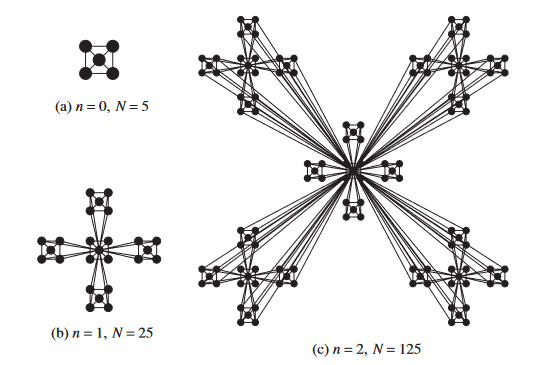
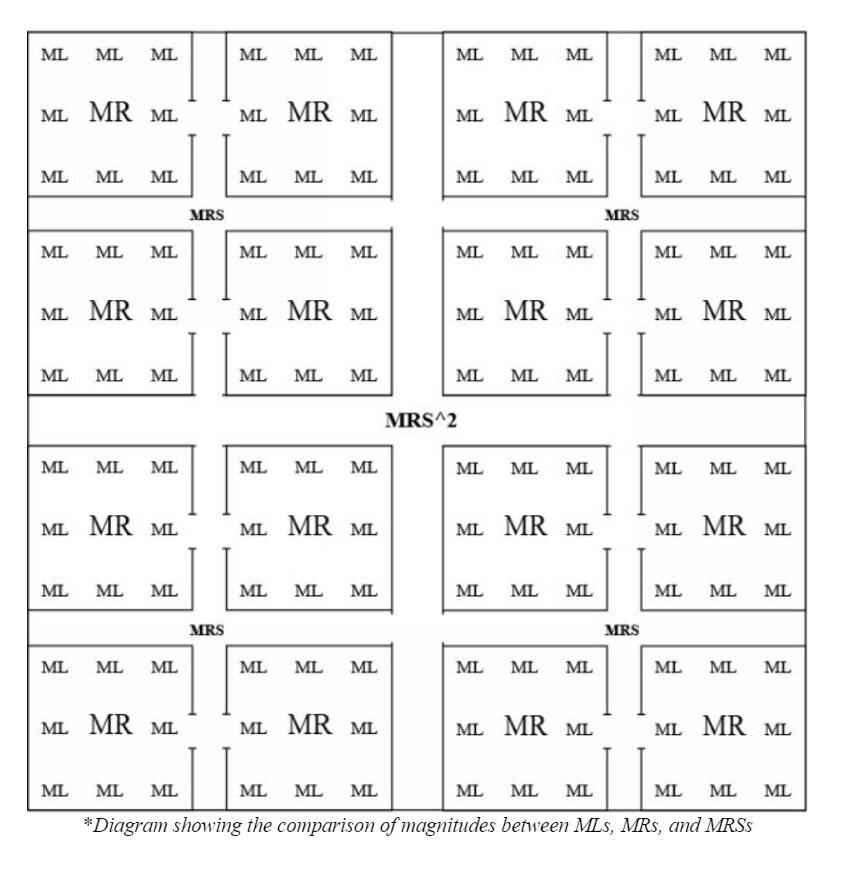
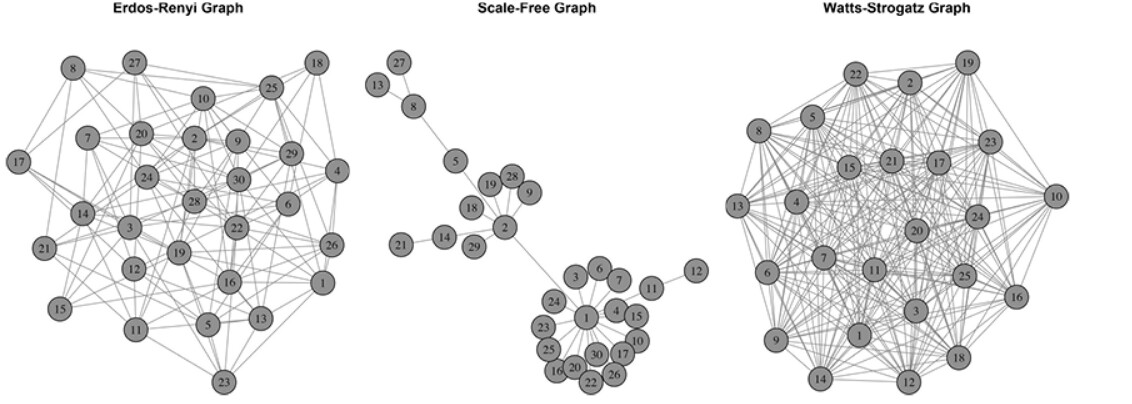
Place index images in the middle of each place and plant seeds in these fields, that is to say in each one place your images or more than one image, use the cardinal points to place more than one image in a specific angle depending on the depth of the information to memorize, remember to interconnect places to have a better access to the information, the interconnection facilitates a faster access and a much stronger reinforcement because the association (for this use your images generated by yourself) is of the most important.

Another point I also memorize large lists of names and faces to use them in my palaces and create multiple connections in my palaces with multiple Roman rooms so you can create human forms with your images or a mannequin that has them or make a similar artifice (organize the information in a spatial way (spatial synesthesia sequencia espacial)) to order, so in the head the first image, neck second, and so on up to the feet.

If you do not have much practice with visualization you will have to practice and also with associations of all kinds, there are so many methods that you can paralyze yourself researching, so the main thing is visualization with all senses and the use of spatial sequence order and association i.e. associate everything with everything if you want a long term and strong memory.

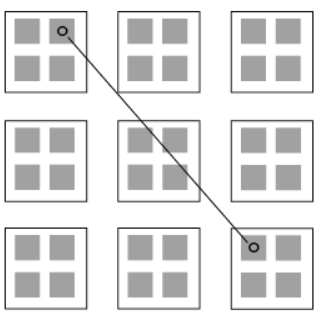
This is how interconnected palaces would look like, use objects that function as hyperlinks to skip easier navigation or better access:


1 Like

Those visuals are great.

I think, @Magno, there’s a lot of possibilities yet unexplored that underpin what you’ve shared there.

If we ask:
“What can different shapes or patterns represent?”
—I think we can even use different patterns as means of separating and organizing information to make recall of particular subject matter even more memorable.

I’ve been using physical arrangements of mnemonics (within a palace) as a sort of informational #tag in its own right.

Examples:
“This shape means this data has X properties.”
“This pattern/arrangement of mnemonic images exclusively indicates Y.”

1 Like

Yes, there are many ways to order information and make it much more memorable. I’m currently memorizing an English dictionary, and while it’s a bit boring right now, I hope to adapt over time. At the moment, I’m memorizing about 100 to 200 words (which isn’t much yet) using these types of structures and virtual palaces—primarily YouTube in this case.

I also have a large list of names and faces in Excel because I enjoy memorizing characters of all kinds. I particularly love analyzing facial expressions, movements, clothing, etc. Yes, I know—it’s a bit obsessive, but I get very curious about specific things. Now, I’m trying to make these characters more useful by integrating them into this system. Using an alphabetical order for the dictionary, I’ve created the following series of pegs:

  1. Set of 5 pegs (130 images + 10 wildcards): Categories include Man, Woman, Animal, Object, and Place (or place-object combinations, e.g., an object that fits within a particular location).
  2. Double consonant pegs (676 images): These are central and based on combinations like AB, AC, AD, etc. Although the total number of images is smaller, I still use double letters as wildcards when needed.
  3. Syllable pegs (130 images + 5 wildcards): Examples include AA, AE, AI, AO, AU.
  4. **Combination of other systems:**Substitute words are mixed with pegs from sets 1 and 3 to increase flexibility.
  5. Memory palaces in alphabetical order: I only place the images in a specific place, i.e. a complete place for the letter ‘A’ which could be a mansion.

Example:

For the double consonant AB (e.g., Adam Brody):

  • Center: AB (Adam Brody)
    • Word 1: ability
    • Word 2: able (5)
    • Word 3: aboard
    • Word 4: about
    • Word 5: above (2)

I also use hyperlinks for certain words to connect images across related scenes. For example, in scenes 2 and 5, Vera Farmiga steps on the trunk of the elephant Lili Reinhart is riding. The location gives all the context I need. By quickly reviewing the scene, I can recall the connections. I don’t even need to look at the images directly—just knowing the location allows me to identify the words.

On Speed of Recall:

For those who believe retrieving memorized words is slow, that’s not entirely true. With proper ordering and a systematic approach, retrieval can be quite fast. The sequence of images, angles, and connections helps me jump between words quickly while also keeping the sequence intact.

Indexes are especially helpful when the volume of information is extensive, allowing for much faster navigation to specific pieces of data.

On Hyperlinks:

Each room in a memory palace can act as a hyperlink. For instance:

  • Room 1: A sharp dagger.
  • Room 2: A dull knife that doesn’t cut a chair.
  • Room 3: A broken chair.
  • Objects within rooms can be generated through numerical or alphabetical lists, or they can represent contextual environments (e.g., an airport for ‘A,’ with pilots, stewardesses, luggage, etc.). This is similar to how I define places in the first set of pegs.

On Layering Information:

Adding too many layers (more than 7 items per scene) can slow down retrieval. To counter this, reinforcing the scene and reviewing connections is key. Retrieving one image that links to another strengthens recall. Additionally, grouping every 5–7 rooms with a unifying “hyperlink” (e.g., magic doors, objects, characters) can be immensely helpful.

By using this system, I’ve created a structured and interconnected way to memorize words, scenes, and contexts efficiently, while keeping the process engaging.

I am not very good at explaining as I jump to several topics, so I used chatgpt to organize my ideas and save energy.

1 Like