Japanese Vocab PAO System

Hey beautiful nerds!

I posted a thing to r/LearningJapanese and got a pretty tepid response to a mnemonic system I made. Lots of “mnemomics don’t work for language learning” responses. Hopefully it helps someone here. I would love meaningful feedback on it, and what other kinds of things have worked for you. I has really helped me! Here is a link to the GSheet if you want a copy: https://docs.google.com/spreadsheets/d/1Qb2wbAaMpuxEGtzqqLmrZW8R76ostqHLV_jLGeikuGc/edit?usp=sharing

Reddit link: https://www.reddit.com/r/LearnJapanese/s/YbnNU3h1UL

Reddit post text:

I’ve been doing Duolingo for <80 days and, impatient to build vocab, started aggressively working on jpdb.io over the last month. One thing I noticed right away was the power of a good mnemonic. If I can link a Japanese pronunciation to similar-sounding English words, my retention increases immensely over rote memorization. This isn’t a surprise to anyone. RTK, Wanikani, etc. are all built on strong mnemonics for Kanji.

However, not every word pronunciation is easy to make associations for. I found myself racking by brain for some similar-sounding word or set of words to create a strong mnemonic image, and just didn’t have what I needed in my palette. If I couldn’t make a mnemonic, I would default to rote SRS repetition, which meant that abstract words like ように and ような have been clogging up my review deck.

I kept thinking, if I could just make images for each kana, then I could apply them to difficult words. I’ve never used a PAO (Person-Action-Object) system before, but I’m familiar with how they are used for number memorization, and I’m happy to jury-rig it for this purpose. Many Japanese words are three syllables or less, so an Person, Action, or Object image for each one would give enough material to encode each letter, and their position in the word.

My final product is a table showing each kana and a relate PAO image.
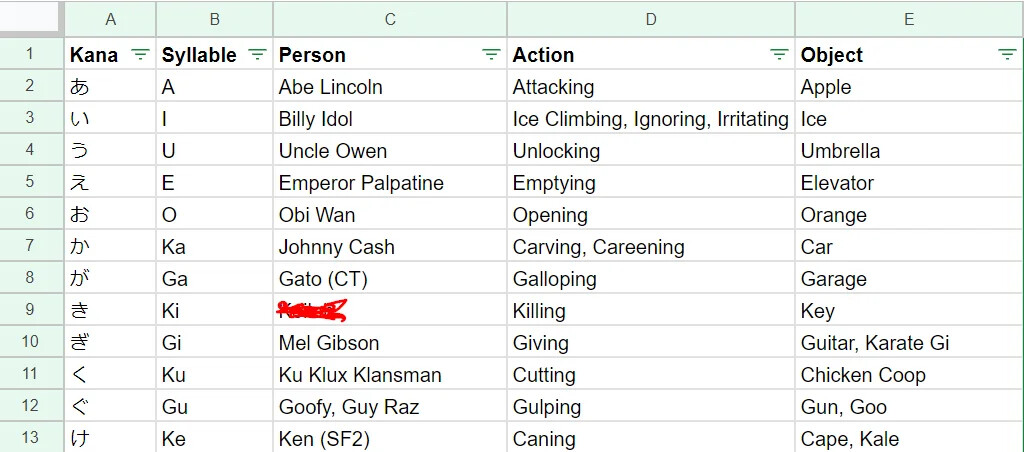
I just finished populating everything except for some really hard sounds to find good English pegs for (じ. ず, つ, ゆ, and を have some stragglers! ideas welcome!), but earlier I took my half-filled sheet out for a test drive, and was pretty happy with the results.

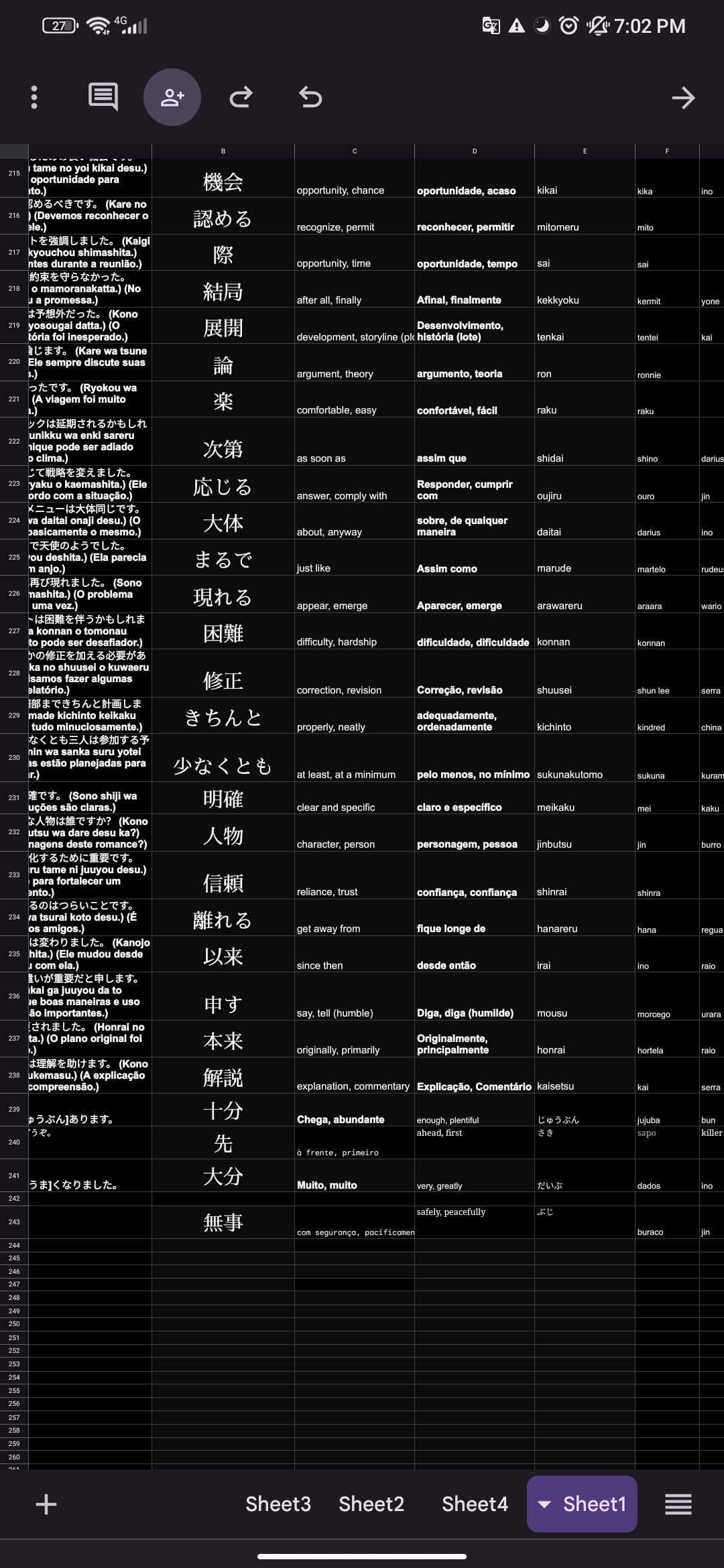
I was struggling to find a link to ひつよう (needed, essential, necessary), but the image of Hillary Clinton standing at court, suing to get her essential yo yo helped me construct the word. I say “construct” because I don’t mean it automatically gave me full fluency, but instead of drawing a total blank and having to hit “Nothing” or “Something” in jpdb, I was able to recall it from memory, and hit “Hard” to make sure it queued back up. The fact that the next day, without any intermediate review, I was able to recall the kana and definition using that image demonstrates its value. The goal, of course, it to move beyond that kind of construction (externalized knowledge) into intuitive understanding (internalized knowledge). So far, the words I’ve applied this to have cut the SRS review quantity at least in half, if not more, and decreased the time to assimilate it into my natural understanding.

A few thoughts on building one of these, and next steps for the project:

  • Use images that you already know and are easy to visualize. People and objects you can’t picture clearly in your mind, and actions that have nuanced definitions or could be confused with other verbs, should be avoided. I know about Tolstoy, but would need to memorize his appearance to use him in an image. If I use “go”, will I confuse it with “walking” or “moving” and mix up the kana?
  • Each image should have:
    • PAO Images
    • Definition Image
    • Kanji Component Images (if applicable, and possible, since piling 8 images into one scene can get confusing. Only you know your capacity!)
  • If I use something other than the initial sound for the kana peg, will I confuse it with another sound? Will I confuse Mel Gibson for both め and ぎ? Or George Washington for ぎand わ? I had to use both first and last names to populate my list, and recognize that I might get confused. It seems best either to use only first or last names, or stick to names where the one not being used would be difficult in Japanese, like ones with double consonants. We’ll see how much this ambiguity drags the system in practice.
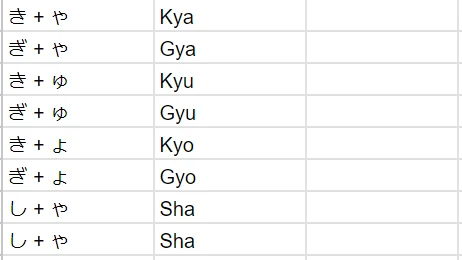
  • I made characters for all kana, but not for syllables made with modifiers like しょ or じゃ or っ. At this point, to make the image table smaller, I am planning on just using smaller versions of those images to keep track of that, and potentially mix images for longer words. I think making a syllabary table rather than kana table is the way to go, but it took me hours to populate the image palette, and I’m not ready to do another hundred images.
image

I would love to see if anyone else has tried something like this, is inspired by this, or has any ideas for my missing entries. (My ず person is “Zwingli”, which, honestly I’ll have to review what he looks like, and all of my ん’s are weird ones like “gnome”, “mnemonic-making”, and “gnomon”, to try and emphasize the “n”-ness of it all. I’m not really confident in all of these!) Let me know what you think!

(EDIT [Ed: From Reddit, not this forum]: I’m honestly surprised so many people think that mnemonics are not helpful for language learning, or seem to think I’m advocating for this as a total package. Of course, immersion in all different modes of language is great. However, after taking several years of classes in Spanish, French, Koine Greek, and Hebrew, my biggest hang up after learning the basics of grammar is just not having enough material to work with. My workflow now is to add the easiest Tadoku stories to a jpdb deck, learn the vocab, read the story. Right now, that means the decks have a lot of words. As I progress, I expect the decks to get smaller so I can prep with new vocab and get to the book. Tandem for writing, speaking and active listening practice. Videos and podcasts for passive listening. But, vocab is key to all of it. I’m going to hit 20 words per day for the next 100 days at least to get all of the most common words. I think mnemonics will help me get there, and have more fun doing it than beating my head against a flash card deck over and over again.)

5 Likes

I also have a PAO for Japanese. Well, like my “normal” PAO it’s actually only PO (because I dislike fixed actions).

Only I chose to use (if possible) only japanese words (from anime, books, etc.) because I figure the sounds will be more true to the japanese language. Also that way it’s much easier to find sounds for the Youon (じゅ is Jun from Rozen Maiden, きょ is Kyou Souma from fruits basket, etc.)

I use it to give me the start of words (person=1st syllable, if necessary object=2nd syllable). Most of the time it’s enough for me to remember the rest. Also I don’t use it systematically, only for the words I have trouble memorizing. Putting the words into a disseminated memory palace helps too. (And potentially gives you one more syllable).

It’s not complete (like my 0-999 PAO I fill it on an as needed basis), but here are the ones I use that seem to be missing from your document (maybe it’ll help):
き : Kiki from Kiki’s delivery service (Miyazaki film)
こ : Koshi (robot from Yoko Tsuno)
す : Suigintou (from Rozen maiden) or the Susuwatari (little soots balls from Spirited Away and My neighbor totoro)
ず: I don’t actually have anybody for this, but I use ズーム (Zoom, like the app): a business man appearing randomly on a floating screen to yell at his subordinates.
や: Yakari (from the comic of the same name, little boy who can speak to animals), or Yasako (from Dennou Coil)
ゆ: Yuki Souma (from fruits basket), Yubaba (from Spirited away)
を: Wonka (willy wonka from Charlie and the chocolate factory)

edit: as for the ん I don’t think it’s a syllable in itself… it feels more logical to have Hauru for HA and Han Solo for HAN, Naushika for NA and Nani (Lilo’s sister) for NAN, etc.

2 Likes

This is a really smart way to use a PAO. Generally, people (myself included) will think of PAO as a numbers only technique, but this is a really cool idea to use it in a way that I hadn’t really explored before.

1 Like

Thanks for sharing your system and filling in some of the holes in mine! (Some of those, especially near the top, were because the images were people in my personal life, but the Y’s are just a mess.) I like the idea of using Japanese words, once I have enough of them, and they are internalized enough for easy recall.

Just as a quick update, normally it’s a struggle to get through 20 new cards, because the failed cards keep coming up and blocking new cards (as they should!) I took a walk yesterday and burned through 46 new cards, along with countless reviews. It was fun and felt effortless compared to rote repetition. When I was done, I felt like I could keep going if I had time, rather than drained and discouraged.

I totally agree that if I can use a less intensive mnemonic, I don’t pull out the PAO. For example, I was struggling with あと (ato, after) and then realized I could just say it in a sentence with a Homestar Runner voice like, “Hey, you guys, why you coming ato me like that?” and it stuck.

But, man, if I can hit 46 new cards per day along with the normal review, I’d hit 2000 words in the next month, which will make immersion and targeted vocab building much easier.

1 Like

Generally, people (myself included) will think of PAO as a numbers only technique

That’s interesting because I understood PAO as “personifiying that thing that is hard to learn” (the numbers component is more the major system, or the ben system, etc.)

Although, given how much I bastardized the original system, maybe I shouldn’t use the term “PAO” anymore. But “I use a PrPlHs for Hebrew” doesn’t have the same ring to it

I like the idea of using Japanese words, once I have enough of them, and they are internalized enough for easy recall.

Well people are easy because you don’t need to have looked at the films in japanese to use the characters’ names. But the Objects part is filling out really slowly because of that. Still I think it’s worth it because it doubles quite handily with Locations (yeah it’s more a PLO, than PAO) : you can have Megane (object) and Megane-ya (Location) for め , etc. If I need to learn some basic vocab for this, why not? The words are useful anyway.

But, man, if I can hit 46 new cards per day along with the normal review, I’d hit 2000 words in the next month

Just don’t forget that the number of reviews is going to grow in consequence too :wink:
I always get passionate, learn tons of new cards, and then uh uh…

1 Like

GONNA NEED MORE SPAAAAACE IN MY SRS Y’ALL :joy: GOT A 1000 PROBLEMS BUT NEW CARDS AIN’T ONE

1 Like

Well, if you need more anki cards, jlab’s decks are excellent :grin:

Glad to exchange resources and ideas with somebody else learning japanese - especially with people experimenting to learn in unconventional ways

1 Like

Super cool! Thanks for sharing.

Honestly jpdb.io is so stinking powerful. You can paste text in to make a custom deck for a book or audio transcript, and it keeps track of vocab you know so you only learn the new vocab from new decks for the specific material you want to read. (Why isn’t this a thing for every language??)

My current self-study battery includes:
-Duolingo and Genki for grammar and general practice
-jpdb and Tadoku graded readers for targeted (and general) vocab building and reading practice

Eventually, I’ll add beginner Japanese podcasts for listening, and more Tandem for conversation practice, but right now it’s just not super productive. I know the immersion people are out there ready to say, “Just do it even if you don’t understand,” but a little comprehension goes a long way! :joy:

1 Like

Hey! Im learning Japanese this one month and half and find your idea very interesting. Will use my PAO cards for this and try to use it for vocab and will see how it goes :wink:

Feel free to steal from my spreadsheet if you need to build a palette of images! I’d love to hear how it goes. :slight_smile:

1 Like

Thanks for mentioning tadoku and jpdb, anything that helps reading early is a very good thing.

As for podcasts, I find that the one where the transcript is available are the most useful. I especially like Learn Japanese Pod, because you can listen to the episode with the explanations (grammar, vocab, culture), read and study the transcript, and then listen to the short version (dialog only) as many times as you want.

Oh, that’s fantastic, I’ll look into it. If I can make a jpdb deck from the transcript to get primed, I could get a lot out of that!

The system looks really interesting! At the moment I’m using mnemonics to try and retain kanji and their meanings - I think that was mentioned in the reddit thread, as a comment to suggest that it might be a better function for mnemonics than vocabulary necessarily, but I dispute some of the notions on said thread that this isn’t helpful necessarily in learning the vocabulary; more so it’s a system that works for you and is helping you best learn words you otherwise struggle with.

I’ll be fascinated to try something like this once I’ve finished Remembering the Kanji, as a tool to work on making sure I keep some of the readings/certain vocabulary in my brain that may continue to trip me up.

I couldn’t recommend jpdb.io more. It’s the tool I’ve been wanting for every language I’ve worked on. When you learn any new kanji, it automatically builds up from any nested kanji you don’t know, and has great mnemonic paragraphs. And it’s SRS. It’s made a daunting task feel effortless. I still have to do reps, but way, way fewer for any kanji that has a mnemonic story.

But, as you said, kanji is visual only. I was really suffering without a phonetic mnemonic. This system is my attempt to make one. When I can, I incorporate images for the kanji and phonemes in the same peg, so I can cross reference. So far, I’m very happy with the results.

1 Like

Interesting, I created a system just for the “ABC” alphabet. I use any image except for single letters. When I started, I tried to remember everything without looking, reviewing by saying the word and its translation. Now, I prefer recalling just the translation when I see the word, allowing me to review all the words quickly. I watch a lot of series and videos to pick up new words, then I make sentences with each word.
I try to listen and read as much as I can

Neat! What did you use it for and how did you like it?

Sometimes when isolated letters appear, I use them, like
“gyaku 逆”
sometimes I don’t even use the sound, like the sound is one but the syllables are different hehe but it works.

That’s a lot to talk about, but I just want to remind you to don’t forget the importance of link whatever image you come up with the meaning of the word. Other wise, in the long run, you might very well remembering a bunch of scenes wondering what word does that supposed represent.
Could the place where the characters are. If the word is object like a pencil :pencil2:, imagine the Your respective peg person on a giant :pencil2:.
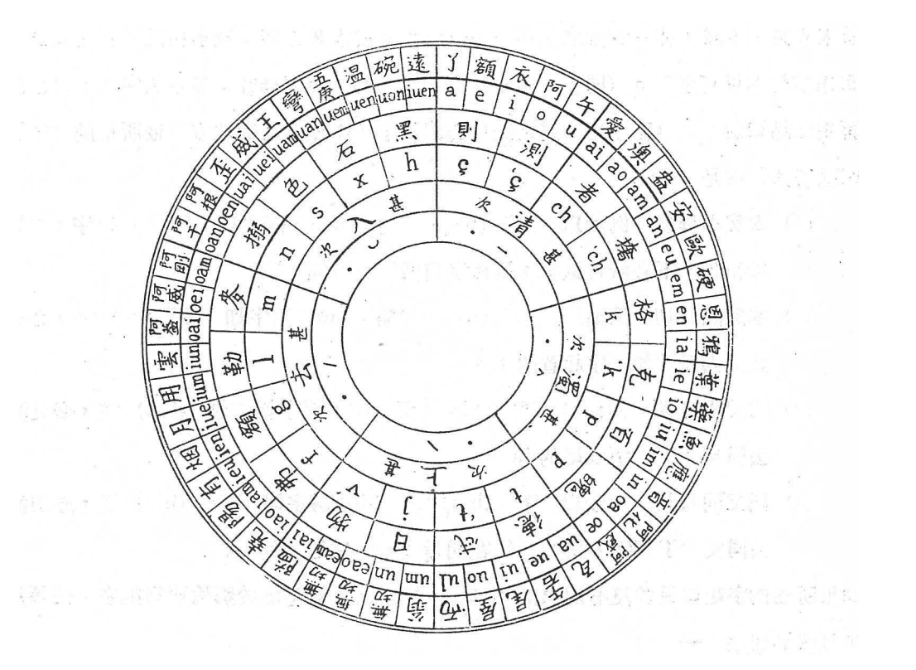
Although this example is for much older Chinese phonology, you might enjoy at least experimenting with a Nicolas Trigault-style memory wheel for Japanese.

1 Like