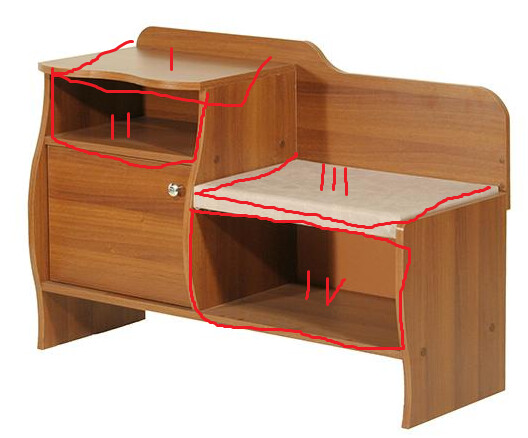
2 Attach the images to the shelves of the nightstand
3 Think of 5 objects for each shelf (weight, battery, shorts, comb, suitcase)
The end of the dumbbell bar has a battery in it, the battery is caught in the shorts, etc.
Now you are thinking, where are the 1000 locations to memorise?
6 Remembering the information you need.
Take any one of the 20 images and memorise on it
On the gyre we have allocated 5 places, for example. Each place has 10 parts. Attach the desired information to them in the form of images.
In the end, we can memorize 50 pieces of information on one gyre alone.
[A bit of maths]
5 x 4=20 locations
1 location = 50 or 100 memorization units
20 x 50 = 1000 (if you have 5 parts per image)
20 x 100 = 2000 (if you allocate 10 pieces per image)
Thank you for reading. The method is quite old, but few people remember or talk about it.
@NekroFernus , I follow the process up to this point. Then it seems like magic happens. What’s a gyre? How is it divided into five places? What are the 10 parts? I know you have something useful here.
What you are describing is a tree structure or hierarchy. Any time you have containers within containers you create this structure.
Trees pack information very densely and can be very effective for certain kinds of data, data that is inherently hierarchical. The human brain naturally uses trees so they are not difficult to acquire.
But there are disadvantages too.
If you know where the item is, recall is fast but searching for some random item can be a lot of work.
In pure form, tree branches divide and never reconnect. This isolates the items and deters the formation of cross links.
As with all densely packed structures, they are not robust. Losing one node will drop an entire subtree. This is where cross connections would have given more support.
IMO, for general use, it is best to build “flat trees” without deep subdivisions. Most memory palaces turn out to have this kind of form. If you’ve ever over organized your files into deeply divided categories you will know that it can be difficult to remember how you categorized a particular file.
“’Twas brillig, and the slithy toves
Did gyre and gimble in the wabe:”
Jabberwocky/Lewis Carroll
It’s a fun word. As a noun it means a circular motion, usually a reference to an ocean current (I had to look that up). Not sure what the OP is referring to.
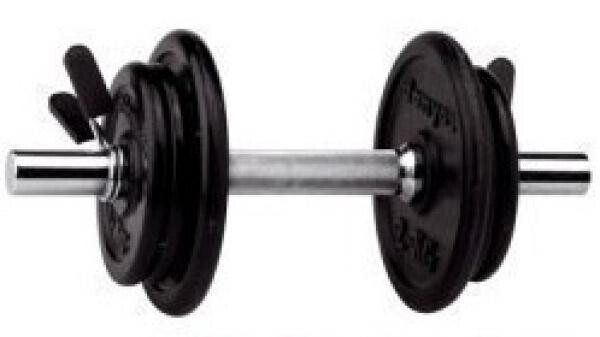
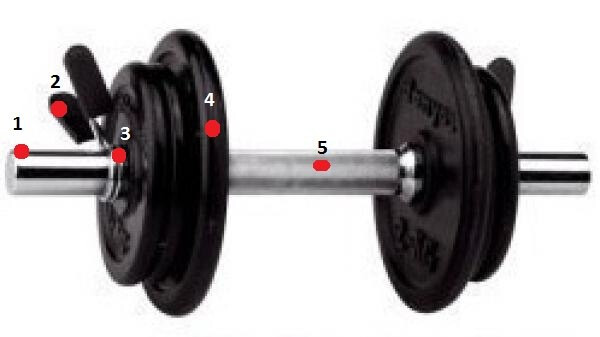
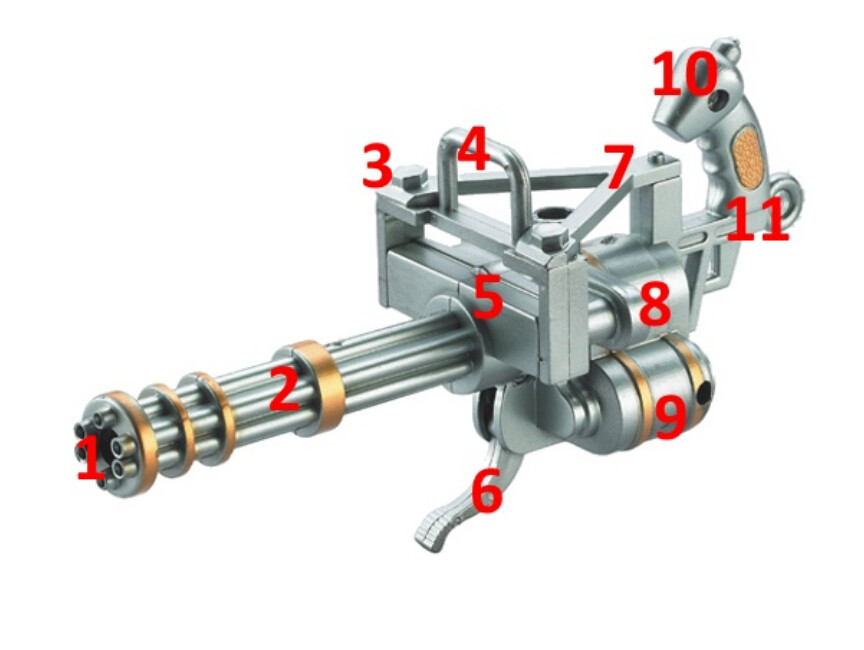
You have a weight (look at the picture). Mark 10 places on it in your mind. As you have already highlighted 5. A detail that may be different in the background. When you have 10 places like this, you can memorise 10+ units of information on each of them.
I have allocated 11 parts, for 1 part you can memorise from 1 to 10+ pieces of information.
I used this minigun to memorise a presentation speech. 11 stories that could be told during a conversation, so people would listen and learn something new about me and my qualities.
Thank you for your reply, I will try to answer in volume.
If you know where an item is, memorisation is quick, but finding some random item can take a lot of effort.
Because the neural connection is weak, it needs to be strengthened. To do this, after creating this structure, all the images are worked through, checking for gaps. This is how a high and automatic level of recall is achieved. As with the Cicero method.
I’m not quite sure what kind of separation we’re talking about. Each of the ‘branches’ is isolated. They are easy to remember. I wrote about the reliability of the connections above.
What do “flat trees” look like? Give an example, please.
The system described is used to remember useful and important information for the long term. The cicerone/palms method is used for short-term remembering of information (mnemosport).
I understand about the files, but the comparison is not quite correct. In memory, you will remember this system reliably if you make an effort (with skill, one hour is enough). Also, if you need to memorize biology and chemistry and also foreign words, you can do these 3 systems. There will be no confusion and no strain on your brain either.
This is basically what pmemory uses.
The difference is that pmemory in their course, lowered the connections to 5 in the chain part.
Олег knowing Russian I supposed, you must have read the book by Vlamidir Kozarenko: МНЕМОТЕХНИКА Запоминание на основе визуального мышления from which pmemory is derived.
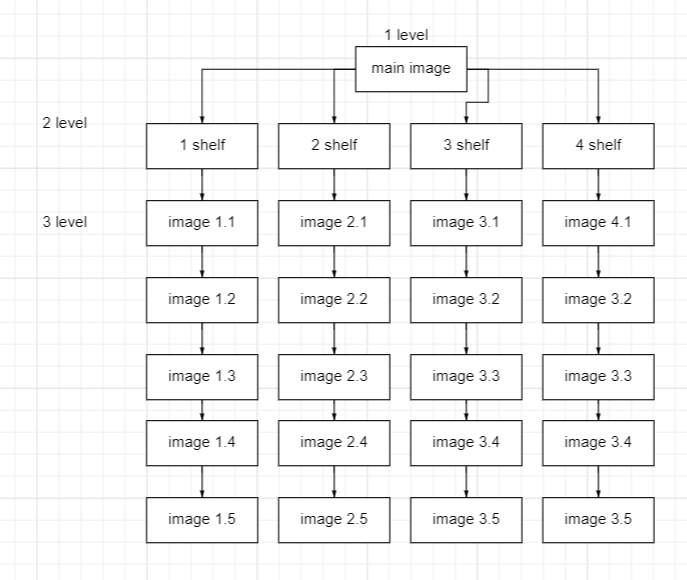
Edit: Ah my bad, I see 5 connections also in your diagram, linked from each item at the 2nd level, in what you’re exaggerating a little I think is choosing 10 parts in each linked item, but if you can handle it, it’s up to you
Hi! About what Alex is using in his course (PW) I don’t know. The system has existed for a long time, maybe earlier than Kozarenko’s books (he didn’t invent much) and you can improve and modify it any way you want - the main thing is to get results. This option works and has been tested by me in practice.
What I don’t understand is how it works to put ten images on one locus. I only ever put one image/locus. I can imagine putting two or three, but ten… Maybe I will have to try it.
Above were illustrations that might help you understand. For example, there is a minigun. On the minigun you highlight the details. Then, if you want to remember something, take one part of the minigun and present it separately + another image (information) - connect them. Then you go to the next part and do the same operation. You can test yourself by imagining the whole minigun separately, and then try to reproduce the order of those parts. The connections will be remembered in your mind.
I use this sometimes to expand a memory palace and it is a very cool technique. For example, in my Spanish Adjective’s memory palace that was running out of loci I wanted to keep everything in one palace and turned one locus (motorcycle) into 90 loci by using this. I placed three different racing bikes, three different animals, a painting, a Luke Skywalker toy and a picture of a cartoon with each 10 loci on the locus (a motorcycle) in my memory Palace (a walk through the city of Madrid).
I have to say that it is a little bit harder to retrieve the adjectives that I have in this part of my MP but, overall, it is a super useful memory palace technique. This way you can keep stacking a locus on another locus and get easily a memory palace with hundreds of loci. Most of the time I opt for a new memory palace when I reach the last locus, but this is a very neat option if you don’t mind having a huge Memory Palace. Of course, you need to review regularly, but it is a technique that works very well.
The idea behind using the same objects is that you know what the loci are per object. With the racing bikes I use the same parts so if I know one I know them all three. Therefore, the bikes need to be very different in material. Chocolate, glass, and a very modern one were my options. Because you zoom in onto the parts this is super important. You can’t have two parts that look the same with this technique. So when I zoom in on the gearwheel, the chocolate one is not the same as the glass one or the metal one. This is why it can be a bit harder to remember if you use the same object over and over again. This was the reason why I only use three bikes and then switched to animals etc… After seeing three different gear wheels, it is easy for me to get confused. One thing I do is I review not only from loci 1 to 10 on one bike, but also I review the same parts made from different material at once. Like chocolate pedals, glass paddles and then the metal paddles. This way I know for sure I have it memorized. I also review the whole MP sometime backwards, this helps me to get a good grip on all the loci in the MP.
The question is how you visualize in those very small points, I guess you use an ant spatial consciousness, that is, it moves you there and you see it giant and so you see the image, correct?
Hello, I just read you. Where did you get that image? From which web page, which mnemonic book or site or source. I’m interested. I’m researching everything related to the loci method from versions, mnemmonists and even some criticisms.
But this method really catches my attention I would like to know that mnemonist book or website talks about this variant of loci. Gracias
As I said in that thread “I capped from the free manual they have in their site” (that no longer exists: although I did a search and looks like “they” are trying again in another “format” with the TLD “ai”? This manual was downloadable from the old site but I don’t see it on the new one)

 is choosing 10 parts in each linked item, but if you can handle it, it’s up to you