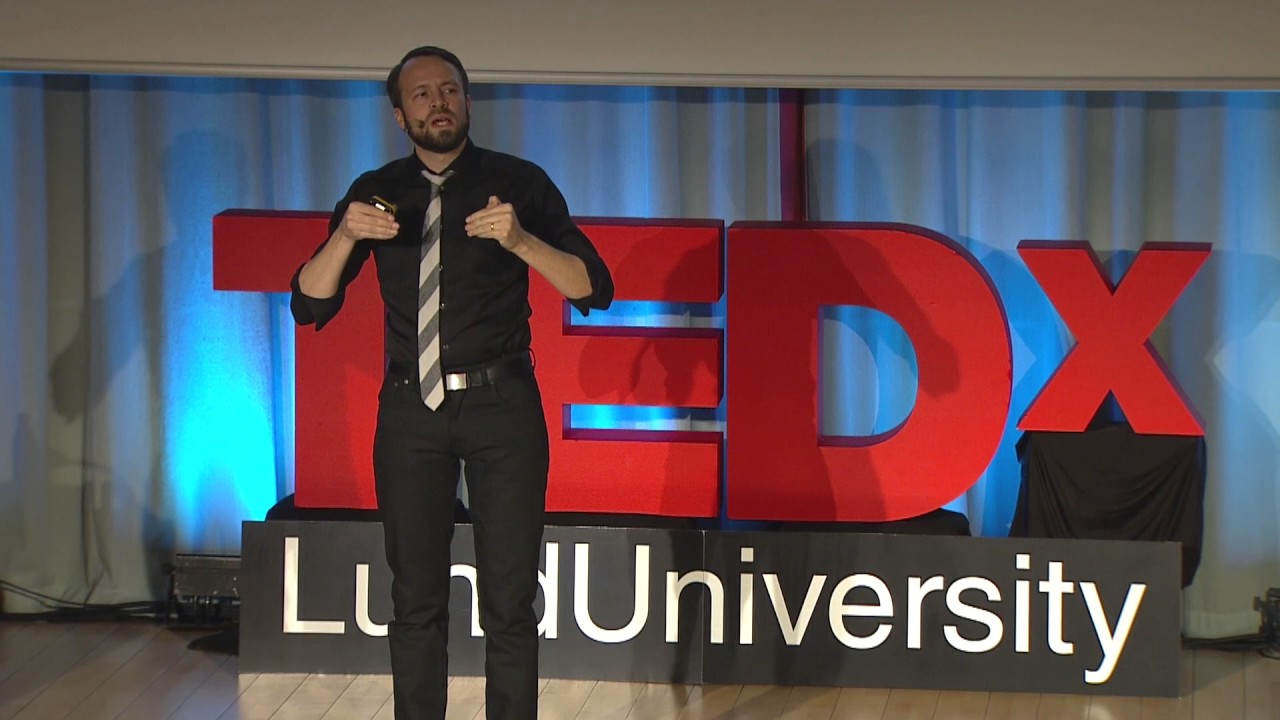
Has anyone ever heard of Mattias Ribbing and his great learning idea?
I remember listening to his talk a long time ago (about 3 years). I tried his technique once, and I can still recall some of the information. The images are still there. The information also seems a lot more meaningful than encoding it via pegs or palaces.
It’s kind of like a mentally constructed type of mind map.
I wonder if anyone tried it or would like to experiment with it and test it for efficacy. I would be interested in how well it works for other people.
There was a 47-minute interview that he did where he shows his technique can be used to memorise information from a newspaper. For some reason I can no longer find it on YouTube but have the audio version on my cellphone.
That’s unfortunate. If memory serves, many of his books are not in English. I really wish I could order them.
But I’m sure that if one peruses his many other interviews, they will come across a practical demonstration of his idea. I intend to find an instance of his technique in action. Just been a bit busy.
The technique Matthias ribbing demonstrated to memorise the newspaper is good for people who perform well using mnemonics. If you can memorise 1000 numbers in under an hour like the memory grandmasters that’s the equivalent to like 1000 paragraphs in theory
Mattias makes a lot of sense. The kind of mnemonic techniques used for online Memory Sports doesn’t offer a tremendous amount of practicality outside of what the designers of such mnemonics intended, i.e. PAO is a good tool to remember a deck of playing cards in order but cutting things in the real world necessitates other types of intelligences as I see things?
Thank you for bringing up this interview, I listened to the podcast episode and it was really good.
I liked that he said that he became a memory champion because his memory was bad (otherwise no need to get it interested in the techniques).
Also I took note of the tips:
read/make a general summary to give your brain a framework to work with before delving into details (something I already knew but I know I’m bad at this, I tend to lose myself in all the details because everything is so interesting and I sort of lose track of my way then)
best remembered images are big, still, 3D
I’m keen to test it out!
I saw many interviews of mattias, and i bouht his book in english about learning math. I tried his technique : “one image per page”, and yes it works, you remember more of a page. But if you want recall or use the image in order, it is useful to link the images to something
In this case, one image per page work in this way: 1) you choose an image, whatever you want, something very easy to recall like a pair of shoes, or a dress or something to eat. Then visualize it in 3D dimension, in front of you, the size matter, in fact the image should be very big.
2) start to reading the page you need to read, and during the reading time, you stop for a second, at the end of a sentence for example and see the image in front of you, just see the image, not need to make a story but visualize the image in that precise moment. the goal is to linked the image to written information and in particular to the meaning of that page.
3) for the following page, you choose other images, for example the pair of shoes of the first page now become a pair of shoes made by cheese or the same shoes but with wings for example, or a different image, for example a mouse. But i Think if the page are connected by a common topic (for example are in the same chapter), is very useful to remain in the same area of images, like shoes with different features, or something related to the clothing world, because is easier to recall find backfor recall. actually you can choose the images before starting to read, looking to the summary, so will beeasier then in reading time
You could combine it with major system images so you know the page numbers. And from reading this, maybe think of your images as a background for each page. That might do the trick.
Just trust your brain to do it, and eventually it will catch on. You can’t really hold the image at the same time you’re reading. That would cause strain, frustrate, and not really get you anywhere. So, maybe at the beginning of the page think of the image, in the middle somwhere, and then the end of the last paragraph. Its more like listening to a song and you remember where you heard it the first time. How you can remember where you first met a person. That sort of feeling.