I made a game as an aid to study history of philosophy, and I plan to use it this term, beginning in September. Another professor told me that he thinks it is a bit “ridiculous” to use games at university level, since they are not children. My experience is that students like games and they don’t feel it is childish. I have another game to learn Latin and I think it works very well.
What I want to do is to reinforce the memorization of names, connected to historical periods, and other things related to culture. The game in itself does not teach much, it is just extra material to reinforce memorization.
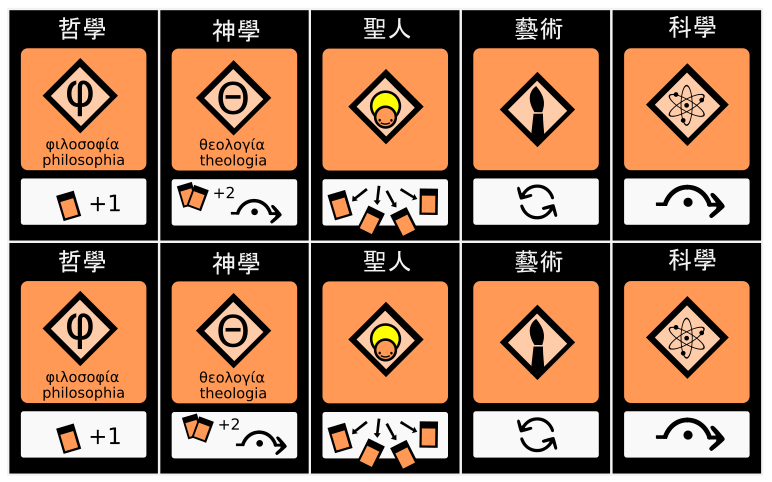
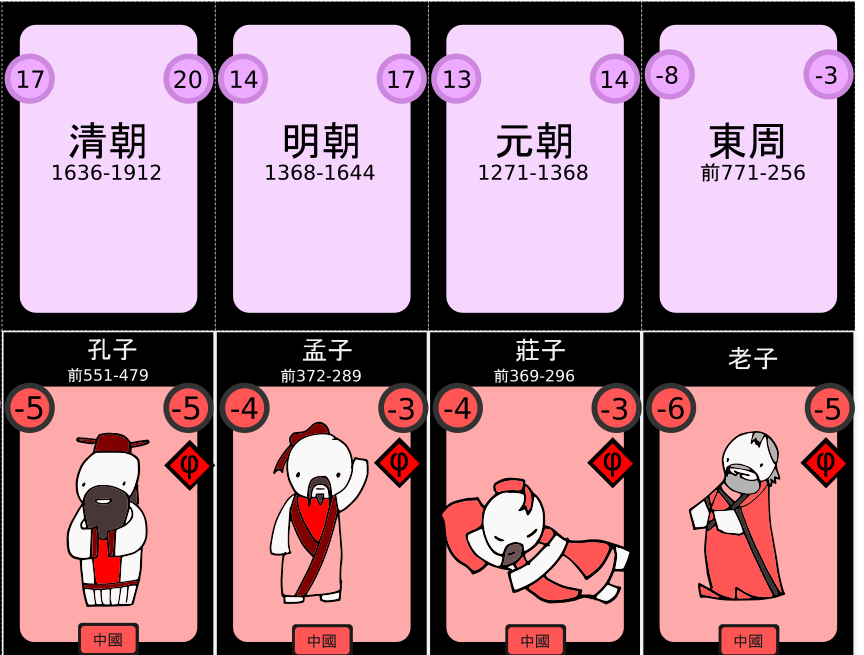
It is based in the game Uno, but a bit more complex. Players have to match historical period with some characteristics of the character (philosopher? scientis? artist? theologian? saint? from which country? etc.) At the end is pure repetition, it is not even spaced repetition. I will try to include more aspects once I test it in class.
Sorry if the style is too cute…
If anyone has experience with this kind of things, please share. Any advice is welcomed. Thanks.
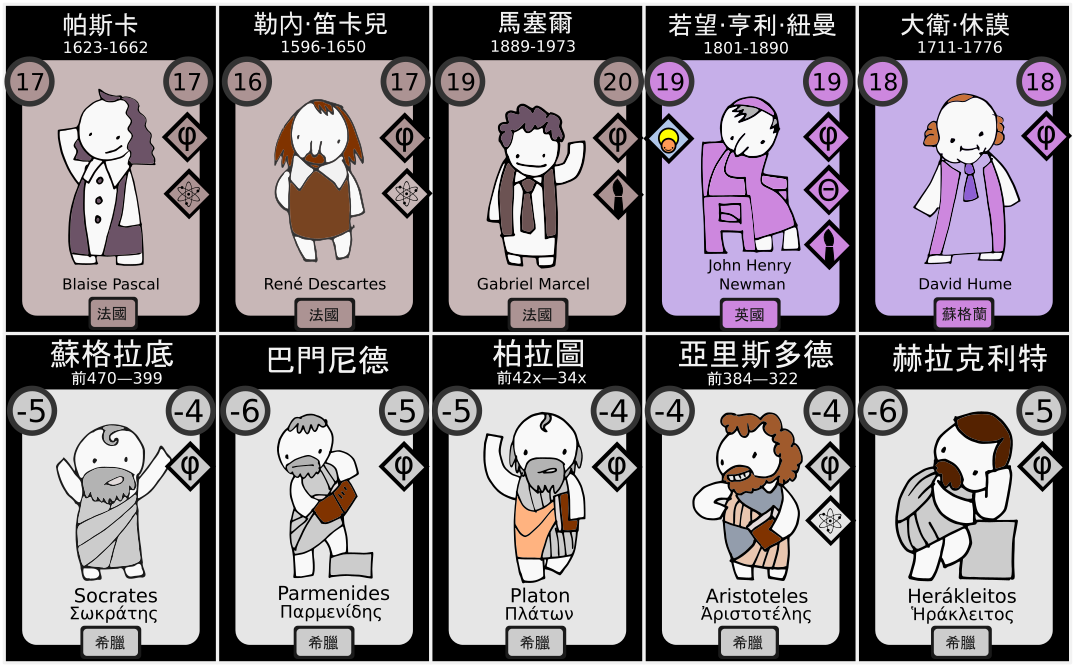
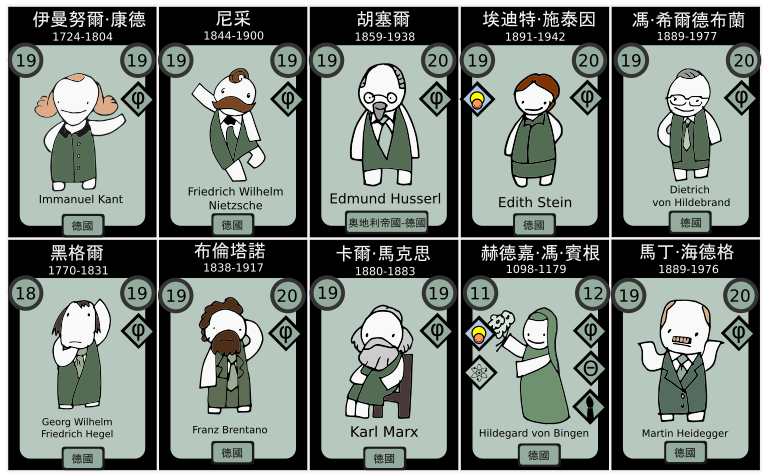
Here we have some Germans. There are many Germans in this game. (Just discovered a typo in one of the cards…)
Liam, this is great.
I’d like to try it.
I’m still fixing the game engine, the mechanics of the game, the details of the rules. In this moment the game never ends 
Very cool.
Philosophy has always been a game. Whether it’s the dialogs of Confucius or Plato, the reader “plays” the different parts on the stage of their mind.
Nietzsche’s great call to roll the dice: a game.
Deleuze’s call to create concepts: a game.
So at the risk of repetition (repetition itself part of the game of philosophy), your idea is very cool. Lean into it!
Thank you very much for the encouragement
This is really cool Liam! I’d definitely purchase/play!
I am not selling it, just for my lessons. Yesterday I tested it again with some volunteers, and it is not ready yet. When it is ready I can share all the pdfs to anyone interested.
Also, it is for Chinese speaking public, I suppose I can easily prepare a version in English.
Hey, Liam!
Great to hear about your efforts and experiments! I’d like to share, from my experience, that it is a lot easier to remember the characters when they look a lot different from one another.
Your images are very good looking, but I suspect they look too alike. Of course, I might be wrong, but take it as you will. Here are some of my characters for philosophers and other people (made “by me” with IA), in case they are useful to you or give you inspiration:
Fernando Pessoa, Portuguese writer and poet:

Émile Durkheim:
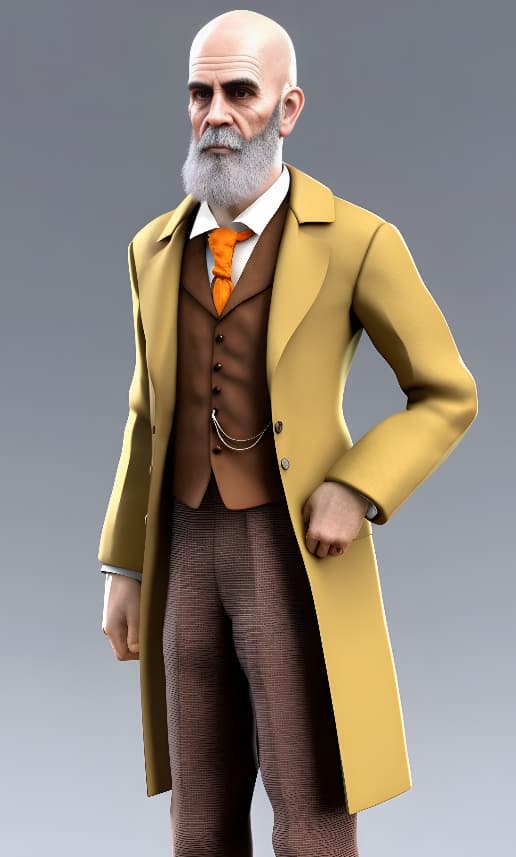
Baruch Spinoza:

Georg W. F. Hegel:

Jean P. Sartre:

Hannah Arendt:
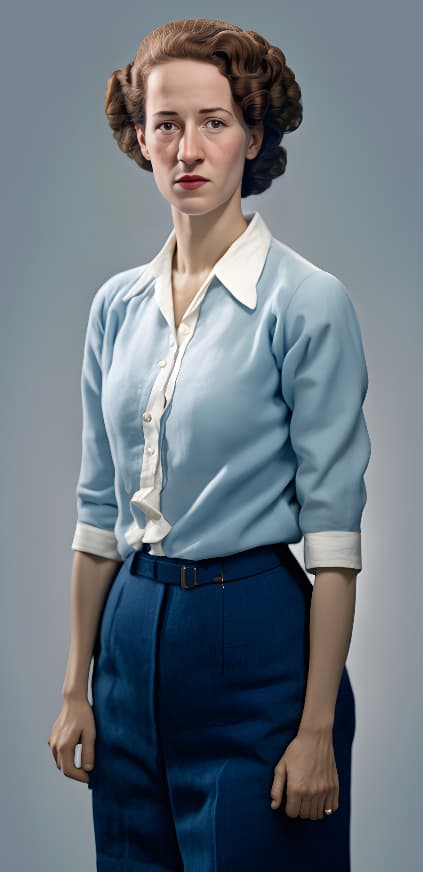
Karl Marx:

Sorry if they are too many to serve as an example. As you can see, they are different not only in their faces and styles, but I try to deliberately make them use one primary color (or some combination). It seems to make the recollection so much easier.
Also, since I can’t seem to make time to do a post about it, I’d like to share my method to memorize the years for these characters. I make a room (or more) for every century I’d be using, say the 1800s. In there I put the characters (so I already know the century of their birth) and then use my PAO to codify the rest. As an example, Marx there is banging its head into Mafalda (a kids cartoon from Argentina), so 1818-1883. Maybe this is helpful to other trying to memorize authors/persons and their dates.
Congrats on your interesting project! I’m a PhD student in philosophy and I believe that memory should be approached much more deliberately than it currently is in the field, for effectiveness and also for fun.
Good morning (of evening.) Thank you very much for your long reply. One of the things I like about this forum is this kind of replies.
I agree that most of the characters look the same, and only in the last ones did I add something in the drawing that conveys some information. Zhuangzi sleeping, Marx sitting on a chair, the gesture of Heidegger, etc. These mean something, and I explain it during the game. The rest of the characters are just anonymous, undistinguishable round bodies. I was rushing before the beginning of the semester to have it ready for the first day. We used it during class and it worked. But if I do it again I would do it in a very different way.
I need to continue working on it, and to know exactly what I want to achieve with it. For many of my students this is their first contact with Philosophy, and I want them just to grasp the main information, in a very memorable way.
I want to add more information like the kind of philosophy, or main ideas of each philosopher. That is also difficult, because it implies over simplification of ideas. Also, I want to add more context, like scientific and artistic ideas.
The main problem now is that the engine of the game does not work very well, and the game tends to extend indefinitely, instead of finishing after a while.
I will share more when I fix the problems.
Muito obrigado
Just wondering how you handle birth-death dates that span the centuries. Example would be Freud, 1856-1939.
Hi, Celtic.
I though that could eventually be a problem, but it resolves itself with common sense. You know Freud was born in the 1800s because of the room he is in, and you know he was born in '56 because of the Action he is doing, and died in '39 for the Object (or the second person, in my PAP system). If he was born in 1856 is impossible for him to have died in 1839, so…
Even if is something like 1856-XX58, if you know the character died extremely young, it was in the same century; if they died in really old age, it was in the next century.
So, yeah, basically common sense. Cheers.
Thank you for your response. Agreed that common sense would enable you to sort it out. I wondered how it fit in your MP, given having separate rooms for 1800s and 1900s. I suppose it would bug me a bit having 20th century ‘contamination’ I’m my 19th century room. Alas, life (and death) is messy!
Exactly like that. As you seem to point out, that can be a little misleading, for example, to have someone from 1801-1856 in the same room as someone 1899-1956, basically separated by a century. I can’t imagine a better solution, though. When you think of them, you know one is from the beginning of the 1800s, and the other one is almost 1900s, so, maybe there is not so much of a problem.
I have thought various ways to solve this problem, but haven’t found any simple and elegant solution.
I’m interested