Exploring mnemonics. Part 2. How to remember for a long time?

How to remember for a long time? There are three options:

  1. Interval
  2. By cards
  3. Mnemonic

Interval repetition is the most popular method. Invented by Hermann Ebbinghausen. In an experiment, he found, by memorising meaningless syllables (parts of words), that forgetting is very fast at the beginning and slows down later.

That is, in his opinion, if we memorize a table of integrals, after an hour we will remember only 40%, after 10 hours = 35% and after a week = 20%.

Only what we will remember is not specified. If we remember 40% out of 10 integrals = 4 out of 10 we remember. Not bad. Or do we only remember the extracts? Then we don’t remember anything. After all, to remember is to remember something whole.
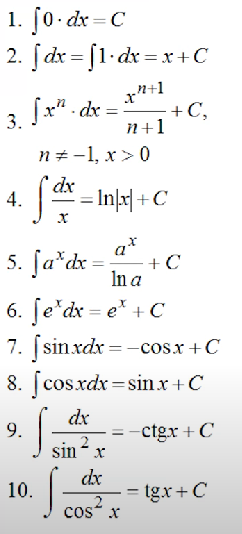
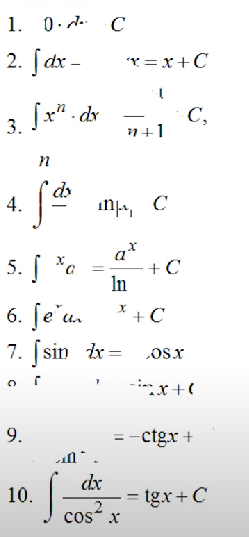
Nevertheless, the interval repetition method is on everyone’s lips. Repeat after an hour, after 2 hours, after 4 hours…24 hours, a week, months, a year, 2 years…Increase the time between repetitions.

3 questions arise:

1 Who is going to get up for the alarm at night if you have studied in the evening and the repetition time falls at three in the morning?

2 We study every day and how do we keep track of the repetition time? It is impossible. Those who offer it are not using it in its pure form or not using it at all.

3 Don’t you find it odd that the method of repeating useful information was based on a method that was derived from an experiment where meaningless and useless information was memorised? The graph of forgetting useful information would be completely different.

The point is that a person most often does not forget information, but loses access to it.
Therefore one should not draw a graph of forgetting, but a graph of loosening of connections.
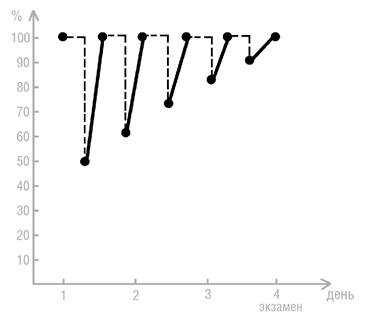
The picture shows a graph of memorization of information for an exam without mnemonics.
Remembered - forgotten - rote and so on.
Why do flash cards suck? Working method, but ineffective and harmful. The brain learns to recall information on external stimulus. But in order to live, we need to learn to recall information on an internal stimulus. We must be able to access information on our own - only mnemonics allow this.

A student has used mind cards, flashcards and interval repetition, has memorised the material. But is still afraid of the exam.

What does the mnemonist do? He drinks tea, rests and waits his turn, because he is 100% sure that he will remember. Not remembering is unrealistic.

The picture shows a memory chart without interval repetition, but with mnemonics.
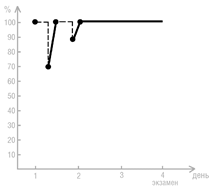
There is no need to look up anything, the information is fixed.
The question is relevant to everyone: how to remember after the exam?

When we remember something = we have formed neural connections. Over the course of a day they either become weaker or stronger. It all depends on the benefit of the information to the body. Is the information interesting and needs to be actively used? The brain will definitely, in sleep, strengthen the connections. Something unimportant will weaken it. Something important - it will strengthen it.

You have learned - you answered the exam - you got a grade, and you don’t need the information anymore? Forget it. If you suddenly need it, remember it again. This is better than repeating something you don’t need for a year. It saves energy and energy.

Always remember - the body is like a small state. If you waste energy and there is no benefit, there will be questions for you. In reality it ends up in fines, dismissals, jail. In the body it is reflected in frustration and not feeling well.

**So how do you remember useful information for life? You have to form a reflex. **
Now you know what to strive for.

When people talk about interval repetition within mnemonics, they put that knowledge to shame.
They cross out the whole essence of mnemonics. The essence of mnemonics is to remember and know, not to repeat an infinite number of times.

[Algorithm of repetition from memory]

  1. error-free repetition
  2. Repeat in the evening.
  3. Sleep
  4. Repetition in the morning, strengthening communication
  5. Performing 2, 3, 4 until reflex
    This process takes 4-7 days. Without mnemonics, a little longer.

It all depends on how well you make the connections and how important and interesting the information is to you. The problem arises - there is a lot of information to repeat. There is not much choice here, only mnemonic repetition. Mnemonic repetition means remembering only from memory and thus achieving maximum speed of repetition.

3 Likes

Another way to remember for a long time (for your list). Get it into procedural memory. I can walk to places that I cannot recall where they are. My feet remember. Same for phone numbers back in the day.

1 Like

Good Write Up. had few doubts though.Could you elaborate on this, which are some of the best mnemonics to be used ( have heard you mention that Memory Palaces are not that useful ). What is the Mnemonic repetition that you mention here? What are some of the best mnemonics techniques that you will suggest

I can’t imagine anyone saying that who has used memory palaces. They’ve been the basis for memorizing massive amounts of information for centuries (if not millennia).

2 Likes

Have you had any experience remembering complex, practical information? For example, material from several books and textbooks, each 500-900+ pages long?

That’s not even the point. Cicero is good for memorizing information that you won’t use in the long run.

If you need to give a talk, you can use both Cicero and association-based memorization (highlight parts of an object and memorize the information encoded into images on them). There is not much difference here, only in the second case the reliability is higher, according to my observations.

In any case, the information can be well coded, to strengthen the weak points and in both cases to have a plan of speech in his head. BUT:

  1. This kind of information is built on: remember → tell → forget for lack of use or leave in your head.
  2. Small number of images, usually 5 to 60+, rarely-rarely more. Especially within the scope of the example. On a small number, the difference is not particularly noticeable.

So, what was this illustration for? To show that both work, but there is a difference between the two. Cicero is needed for remembering non-dual, the volumes can be more than 100-1000+ images. Now it’s more about sports memorization, hence the division.

If you try to memorize practical information on separate locations (1 location = 1 image of information), then…you can still memorize something, but it’s not the most working strategy when the volumes are higher. Resource allocation is inefficient: in sports homogeneity, in practice there are many different choices that you will scatter one at a time. Sure, you can have 2-5 per location…what if it works out. But why, when you can do it differently?

For practical information, you have to create a system of images on which the parts stand out and memorize on them. There is a system, a structure, you will not have confusion and problems with “difficult images” (require > 1 image) On 1 image you can allocate from 1 to 10 parts and on these parts to memorize. It’s called a mnemodisc/nemodiscette/nemoarchive, etc. The name doesn’t quite capture the essence.

Conclusion:
Cicero: for sports memorization, for small-to-medium events where you don’t need to hold information for long periods of time.

Floppy disks: for practical memorization of large amounts of information to be used in life (knowledge of sciences, theses, practical, etc.).

Methods, however, work on the same law of mnemonics: what is simultaneously connected in space and time, that is remembered. Yes, and floppy disk is a combination (highlight parts, link parts, memorize one after another in parts).

You can’t clearly say what’s bad/good. There is complete garbage from popular memory books that won’t help you much, like remembering a story, presenting with emotion (unnecessary waste of effort). You have to be able to separate them out, test and experiment.

You can set a goal to read academic literature that interests you and memorize its basics. Create a system of knowledge in your head. Try it. In practice, many questions fall away and new ones appear if you don’t know about mnemonics fully. You have to be an explorer and an experimenter here.

2 Likes

There are those that are not helpful. They are usually described in popular books, or on this forum. The best way to test them is practice, hard practice. It will show you the white spots in your memorization strategy.

In true memorization, you combine methods.
I’ll try to briefly describe some of what the mnemonist uses:

  1. Linking A image with image B, so that the contours match (The basic thing that follows from the mnemonic law)

  2. Coding information into image(s)
    2.1 Splitting the word into several images (1-3+, try with the names of pharmacy drugs)
    // There are many variants of word coding. Coding is very important in memorization skill.

  3. Highlighting parts on the image
    // described in a neighboring answer, as well as in one of my mini-articles
    3.1 Highlighting a great line (for remembering faces, discipline names)

1 Like

Mnemonic repetition - mentally represent the images you memorized. You don’t read that text X number of times. You’re looking at the images you memorized. In other words, you have memorized the information, and now you need to recall it and write it down. Same mental operations, but you don’t write it down, you just look at the images in your head.

Thus:

  1. Connections are strengthened, reliability is increased
  2. Gaps are found and eliminated. In the places where you do not remember or do not remember anything, you remember again.

Such a check/repeat, in my opinion, should be done in the morning and evening. A week is enough to bring the automatism of information playback.

When you memorize a lot at a time, then take blocks of 10-20 pieces of information, if it is difficult, then less. It’s a matter of practice.

1 Like

Thanks a lot for the detailed response! the floppy disk method that you mentioned- is it like a chunked linking method. For example if you are remembering about malaria. You make a big picture of mosquito and mark/ identify each of if body parts, later you link additional information on each of it identified body parts.

For example.
The treatment options are linked to the wings one by one ( russian doll method or chain method ).

the places where it is found max - in head part

eyes - famous scientists who contributed to its detailed study

This way you use chunking and mnemonic pictures both

1 Like

Hmmm, that’s a good. You can also choose any items that might have nothing to do with what I remember on it.
A stool, a gun, a cap, a radio, a telephone. On each item 5-10 places are highlighted and memorized on each place “chain/sequence”. And I memorize what I want.

From your experience, how many spaced repetitions are required at what frequencies for transfer to long term memory

When you memorize with mnemonics, it’s already considered long-term.

For example, memorize 30 study tickets (answers to theoretical questions for the exam). A simple example.
It takes, hmm, 1-6+ connections for 1 ticket. Memorized 5-10 tickets at a time, take a break. Afterwards, you go over the image connections in your head, eliminate the gaps. Memorized 10 more, and repeated them mentally (reviewing images) + previous ones (connections strengthened = reliability).

As a result, 30 tickets on the subject memorized, they are already in long-term memory.

Then you should repeat them for 5-7 days before going to bed and upon awakening. Until you notice that the information is automatic. If the information is needed for a long time. If not, or not much time, you will still remember, but you will reproduce the information a little longer. Repetition is necessary to strengthen connections, so that the time for “pulling” information out of your head is reduced. Write it down or sound it out.

Why before going to sleep, because there is no consolidation of memory. (Funny how this is written about above and there is a forgetting chart + mnemonicist chart that breaks it down).

Thanks again
I saw the algorithm mentioned. I asked because, some memory masters have proposed different intervals ( i guess mattias ribbing, sort of like 1hr, 5hr 1day 2day 1 week 1 month etc ). This seemed bit more easy compared to the one you have given above. I was looking for a fool proof method.

Appreciate your effort.

1 Like

As they say to you, the SKINNER of memory? Haha. Interesting publication.

1 Like