Are you unhappy with your number system?
1 Like
I’ve got at least a few images that don’t have the sticky power I expected. Or they might get confused with other mnemonic devices.
My system is Dominic-esque, but I have anthropomorphized some objects cause in some cases that’s easier than remembering people for me.
As I go about memorizing (I use the town I live in for technical documentation like Programming syntax and networking concepts), I try different images out when I run into ambiguous images.
Over time, I’ve begun replacing some images as some come quicker to mind than others.
Survival of the fittest, I guess.
Ultimately, I’m developing multiple images for some of the same numbers, which helps with longer strings of numbers, or when syntax is similar, but slightly different in an important way.
3 Likes
Any new association is going to be challenging at first. By new, I mean one that doesn’t reflexively pop into your brain for some reason. You can train just about any association to be fast, it just takes time.
I’m in the process of training 1352 new associations for my card system. Probably 3/4 of these are pretty strong and were the first thing that popped into my head that fit the phonetics. The other couple hundred are challenging. They’re the best fits I could come up with and I like the imagery as every one is distinct so I’m accepting that those will take some extra time and review before they click quickly.
With a large 1000+ image system it’s extremely uncommon to have every image reflexively associate with minimal effort. Keep up the reviews and they’ll get there!
Alternatively, if a different image pops into mind consistently instead of the one you designated, try just using that one. There’s a reason your brain has made a stronger prior connection. The only challenge with changing a bunch of images in a large system is needing to ensure they’re different enough from all the others to not cause confusion when recalling.
3 Likes
As @beau2am mentioned, its ok to learn one image and later on change it. I literally JUST did this moments ago!
I used to associate the person for the playing card pair equivalents of 038 with a guy waving SeMaPHore flags. This is a really strong association reinforced for over a year of practice which pops into mind fairly instantly. When I expanded my card list to include people and objects, my object for 038 was naturally a pair of SeMaPHore flags.
So for the 3  8 the image is the semaphore waving guy, and for 3
  8 the image is of the semaphore flags.
But this has been creating a problem… The person’s only real defining characteristic was that they were waving semaphore flags. But since the flags represent their own pair, this was causing confusion when making scenes and recalling.
Just today I decided to do something about it. I needed a person who was distinct that fit the 038 phonetics. I came up with the word SyMPHony and immediately thought of John Williams conducting. So now, problem solved! 3 8 will be John Williams and 3 8 will be the semaphore flags.
Now the challenge will be overwriting my very strong association of the generic semaphore guy with that of John Williams onto the 3 8 pair. I’m willing to take the short term hit of having to drill this for the long term benefit of the unambiguous assocation.
3 Likes
Well put!
1 Like
Can you give a specific example or two of these “abstract images”?
2 Likes
From your examples, it looks like you have a great way of linking those words back to tangible things. This is all thats really important. Finding a definite solid thing that is able to interact with other objects or people and that you can visualize clearly.
In my list I have a lot of images that stem from “abstract” words or phrases. Since my system is based on phonetics, sometimes the words or phrases that are most strongly associated with those phonetics don’t map with physical objects directly like they would for words like “raft,” “shovel,” or “nest.”
For example, my object word for 846 is “fortune.” By definition, the word “fortune” is kind of an abstract concept. It could mean vast wealth, or luck… So I tried to come up with a physical object that I associate with the word.
I could have gone with a big pile of gold coins, but I already had a similar image for another association… so I thought of the gameshow “wheel of fortune” and the giant spinner wheel:
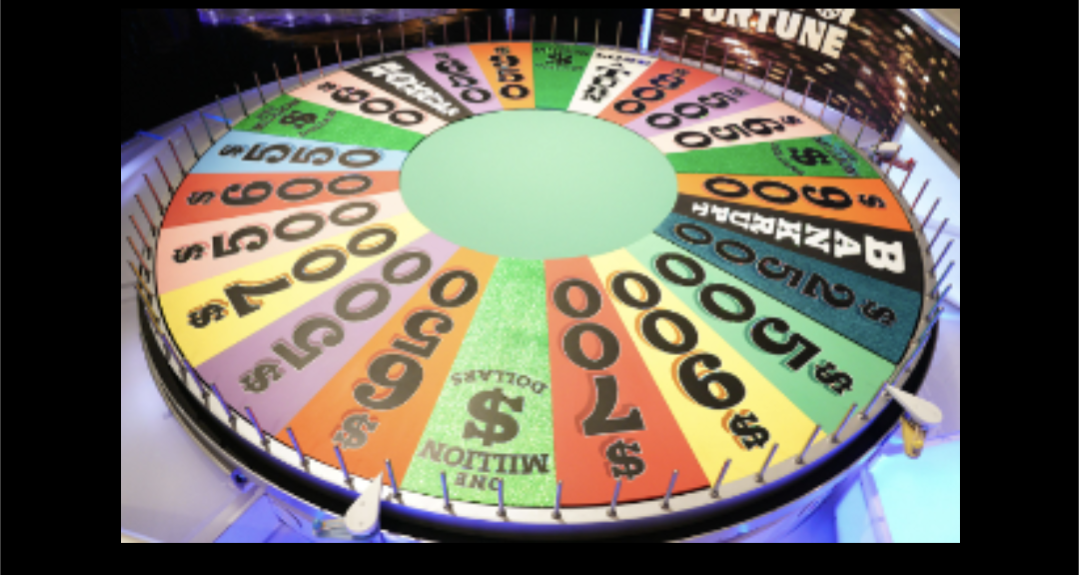
So even though this image is literally of a “wheel” or maybe “spinner,” because I can strongly associate this image with the show “wheel of fortune” I’m able to pretty easily make the connection from the word “fortune” to that image.
If you have a word like “plaid” which is even more abstract, maybe a connection like a scottish kilt with its distinctive plaid fabric would work well. This is usually how I tackle those kind of word associations. They are actually surprisingly strong when trying to do recall. After only a few reviews, there is really no mistaking that the spinner wheel means “fortune” and the kilt means “plaid.”
For your examples, just pick a definite thing to designate. So like for your “Level up” object, you say its a game power up item… Make it a very specific one and always imagine it as that one when it comes up. Maybe its the Mario Bros mushroom that makes Mario bigger. Or maybe its a piece of the Triforce from Zelda… Whatever it is, pick it and use it consistently.
“Lens Flare” maybe picture an actual long camera lens with a very bright glint of sunlight shining off of it.
The other examples seem pretty good to me, it just takes practice to reinforce them. I had several images that I was stuck on for quite a while and then one day they just kind of clicked into place.
3 Likes
As somebody building a 999 PAO right now (and struggling with it), I think its going to be inevitable for me to have abstract words. No way I’m going to find everything otherwise.
I’m fine with it. As long as the keyword for the number makes me visualise a clear person and object, I’m happy.
2 Likes
Couple thoughts on these.
Your “Lie Master” is great because you have a very specific person in mind. I have many people that map to phrases like this in my list. I’ve got Mary Poppins as my “NaNNy Lady” (225). I’ve got magician comic Brian Brushwood as my “NaiLeR” (254) because one of his routines involves hammering a nail up his nose.
For your “Hurry Man,” you may want to try to find a specific person to fill this image, rather than a “generic man.” Maybe Usain Bolt running really fast? I recently revised my image of “lifeguard” to be specifically David Hasselhoff from the show Baywatch instead of just a generic “guy in a lifeguard outfit” that I had before.
1 Like
Honestly, by doing a lot of what we’re talking about. The phonetics bring to mind sometimes abstract words or phrases and then I try to find people or objects that would make some kind of sense with them. The biggest challenge is trying to avoid similarity, mostly with the people. I had lots of options for football or basketball player names, but I realized how challenging it would be to differentiate one guy in football pads with another or one really tall guy with a other, so I had to limit my options. Objects are easier to keep distinct.
1 Like
Hi, Francisco!
I just wanted to stop by to share some ideas as well. As others said, using abstract words is helpful indeed. However, there are times you won’t find any abstract word either. Since you said you’re struggling to fill your list, let me offer some strategies:
- Build a list containing all options that you can think of for each cell.
It’s fast to simply pick the first image that comes to mind, especially when it was immediate. However, sometimes it takes long to find something matching the major phonetics, and the result may not even be very memorable. Moreover, there will be times you’ll have two very similar images and will need to change one. For these reasons, having a list with all pre-selected pegs makes it easier to change and compare options. - When you find a cell that is absolutely impossible to find a corresponding image, try all cases.
For instance, if you can’t find a word to represent 198 at all, use google autofill. Open one tab for each combination of consonants: TPF, TPV, TBF, TBV, DPF, DPV, DBF, DBV.
For each tab, try all combinations of vowels:
"TAPAFA, "TAPAFE, "TAPAFI, “TAPAFO”…
Needless to say, this takes VERY long and is only worth it for the last 20 cells or so. - For people, a faster strategy would be to pick a 2-digit name and look for people with the same first name and the desirable surname. For instance, if you need 199, google for “Dobie,” and you may find “Dobie Broadway.”
You can do the same for objects by picking a 2-digit or 1-digit object and adding a modifier. For instance, 458 may be “Air lift.” - Also, I know that you’re Brazilian, so you can totally steal my 3-digit PO for the remaining 200 numbers you can’t find.
- Here are some websites to help you as well:
1 Like
You’re welcome! I’m glad you found it helpful. My goal in building a list with that many options and without any personal friends was to make it fully shareable.
May I ask how you are using the Ben System with Portuguese? The vowels are too different. What modifications did you make?
Um abração da terra do pão de queijo. Qualquer dúvida, estou aqui.
1 Like
That’s a cool system. I’ve had a similar idea a while ago, but it was for building a 4-digit system. I think it may indeed be more intuitive and faster to follow something like that. One thing that I wanted to have was a phonetic system that allowed me to build a full 2-card system if I wanted to, but I don’t wanna apply complex rules like those of the Shadow system. The only thing I know is that an alternative Ben system would be the way to go to do that.
1 Like
Indeed. I think any system bigger than a 2-digit PAO can’t be filled with Portuguese words only.
Congratulations!!! That’s awesome!!!
I think that’s a problem for any phonetic system. It’s just that it’s quite hard to find that many words following any set of rules. I did manage to have absolutely no phonetic exception in my system, but it was only because I was willing to pick totally obscure images that I had never seen before… like this:
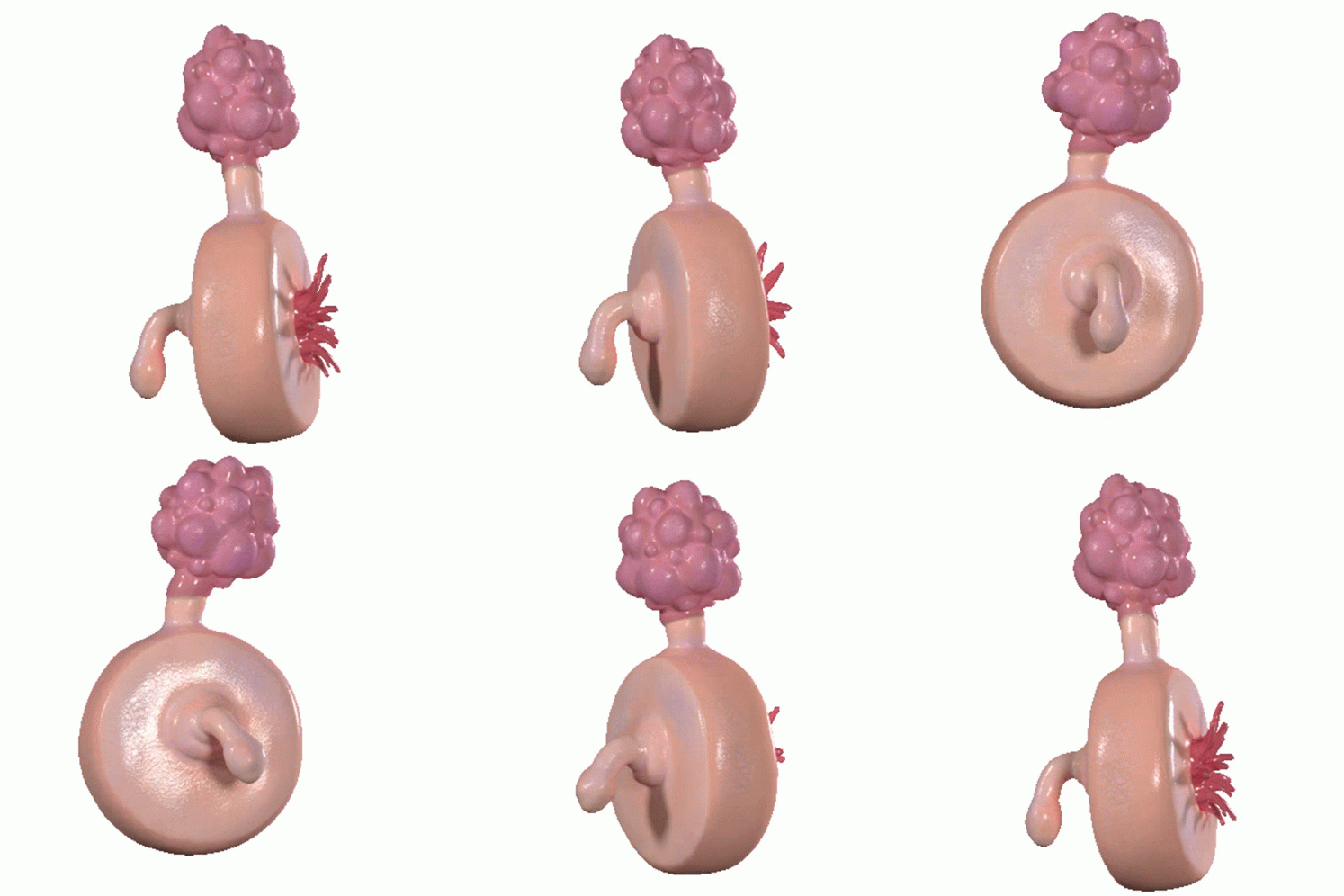
That’s a plumbus from the Rick and Morty show, but I don’t remember having seen this thing there.
Ok, the plumbus is at least weird and memorable, but there are a few objects that are just uninteresting, like this:
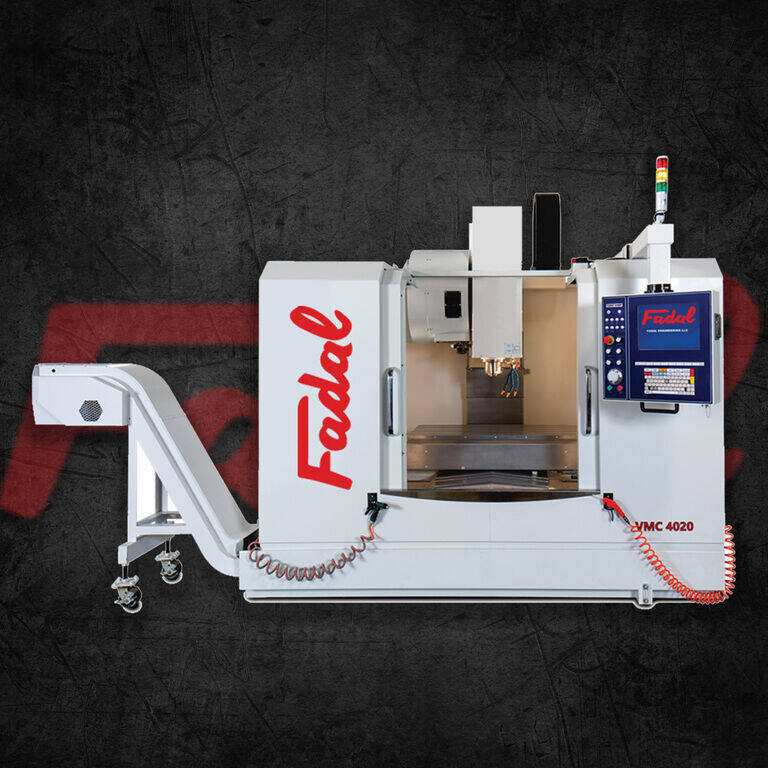
So I will need to go through the process of giving meaning and purpose to this type of boring object.
There probably are images following your system’s rules. I just think that it may be hard to find them since we only type letters on google, not phonemes. However, exceptions are fine, so you don’t need to worry about finding the perfect phonetic match if you already found something that makes sense to you. The reason why I worried so much about having no exceptions was because I wanted to make my list shareable.
I agree that vowels are indeed complicated, especially because they change too much from language to language. My idea to counteract that was to consider the letters instead of the phonemes for the vowels.
Although I think that would be possible, a true 2-card system isn’t worth it for me at the moment because I would need to give up my whole 3-digit list. Also, what matters the most is practice anyway. We gotta remind ourselves that there are people doing great with a simple 2-digit PAO.
1 Like
Btw, are you really gonna use the Double-2-Block System?
For real. I would make this my job if I could, haha.
1 Like
In my opinion this is the toughest part of using a system that doesn’t have a fully unique image for every card pair and what ultimately motivated me to learn a true 2704 system. But this is really the next best thing. Sometimes you just get unlucky with the card sequences.
You could try using “impersonations” or “morphing” to help reduce the number of actual people that need to populate your scene.
So lets say you have Michael Jordan, Wolfman, Donald Trump, and Freddy Krueger as your people that share a scene. Instead of having to link all of them one by one, you could try to make Michael Jordan impersonate or morph into the wolfman, maybe he just starts growing hair everywhere and howls, then this Jordan/Wolfman guy leaps onto Donald Trump, but Trump’s skin starts to shred and he starts growing massive finger blades like Freddy Krueger and tries to fight off Jordan/Wolfman. This way its really only two “people” in the scene but each represents two via an impersonation or morphing.
2 Likes
That’s very cool. It means you are the first real user of my system.
Instead of using Variable Image Stacking, you may experiment using Agent-observer Strategy. You can find explanations on it in my 3-card systems posts. Both methods have the same purpose, but mine will ensure the same number of images in every locus.
That’s great. Congrats on your progress!
And this is probably one of the biggest advantages of agent-observer strategy and variable spatial encoding.
2 Likes
Yeah whatever is easy to translate back to the correct association when you recall. As a system gets bigger, with more and more images, you need to be careful that you don’t have confusion with say “the rope that ethan hunt rappels with” and maybe a specific object of “rope” that may represent a different card pair. This shouldn’t be much of an issue though if you know your images well. I have a “toy gun” and a “nerf gun” as images for two different card pairs. In my mind they are easily distinct even though they’re both brightly colored “toy guns.” So ethan hunt’s rope and the regular rope likely wouldnt get mixed up.
I think it could be usable. Try it and see how it works!
1 Like
KKKKKKKKKKKKKKKKK
Essa imagem me pegou desprevenido.
Yeah, you’d need 26 loci in that situation. With prior planning, I think it may be usable.
It’s good to see that you have tested multiple options.
That would allow you to have a 2-card system with just 676 images. For this purpose, I’d prefer using just variable spatial encoding (with 4 subloci) to avoid applying different types of block, but that’s totally a personal preference, and I believe your idea works too.
1 Like
coming up with new words haha. If I cant find a word, I just make up one with its corresponding consonants