I’m currently learning my 3-digit system, so I don’t intend to apply the following system in the near future, but it’s still a fun mind exercise.
The following is the relationship between digits and consonant sounds (the phonemes are in IPA):
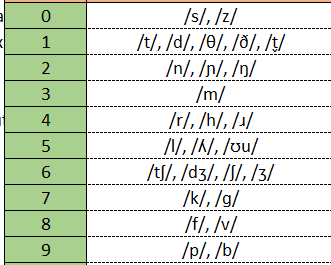
Don’t worry about the symbols if you don’t know them. This is almost the standard major system, but with H encoding the number 4 together with R because this makes words for 4 extremely easier to find.
To encode 4 digits, we need to translate vowels into numbers as well. The following is the table showing the relationships:
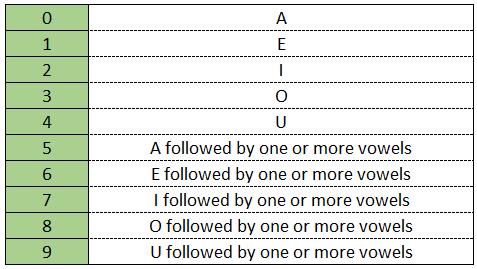
Notice that the vowels aren’t represented by phonemes. This means that the pronunciation doesn’t matter for them. This is CRUCIAL to make this system multilingual. Vowels change too much from language to language, but most idioms still have these five letters.
Examples:
Table: 10951
Door: 184 (“oo” is “o” followed by itself)
Sauce: 0501 (“au” is “a” followed by “u”)
Yoyo: 33 (y is a consonant separating the letters o, so the number is NOT 8)
Auto: 513
A A: 5 (The space in this fictional word doesn’t matter. It’s still “A” followed by a vowel)
Olive: 35281
P: 9
Wy: nothing at all
Notice that this system can generate words for any number of digits. One would probably prefer to have 4-, 3-, 2-, and 1-digit lists, 11,110 images in total.
The following are applications for this system.
2-Card System
By converting each card into a 2-digit number, it’s possible to create a 4-digit number by joining both. In order to do this, we need to associate each rank and each suit with a code digit.
Suits
 : 0
: 0
 : 1
: 1
 : 2
: 2
 : 3
: 3
Ranks
A: 1
2: 2
3: 3
4: 4
5: 5
6: 6
7: 7
8: 8
9: 9
10: 0
J: 4
Q: 5
K: 6
Joker: 7
To create a 2-digit number, we just need to apply two rules:
- If it is a number card, put the code of the suit before the rank’s
- If it is a picture card, put the code of the rank before the suit’s
In the case of jokers, the suits would be just 0 and 1 (black and red).
Examples:
5 would be represented by 05
K would be represented by 61
If they were consecutive cards, you could memorize them by imagining sleet or sleedoorn (0561).
Binary
Let’s suppose there are 30 binary numbers divided in 10 triples, which is the case in memory competitions. Each locus should store 3 images: the first one would be a 4-digit number while the other two would be 3-digit numbers.
Each triple would be converted into a decimal digit, 10 in total. The first four triples would form the 4-digit number while the remaining 6 would form the 3-digit numbers.
Decimal
Each locus could contain three 4-digit images, so it would be possible to memorize 12 digits per locus instead of 9 (3-digit systems).
Conclusion
I believe this system is feasible, especially because it’s easy to take words from any language. However, I’m not sure if the time spent would be worth it. There would be 11,111 images (4-, 3-, 2-, 1-, and no-digit). If I spent on average 15 minutes per image (searching, choosing, building flashcards, and learning), I would spend 2,778 hours just to learn the system. I would rather spend this time practicing my 3-digit Major System. Moreover, the benefits of a 4-digit system seem negligible: a simpler 2-card system plus 12 decimal digits per locus. In conclusion, it’s interesting to think about it although I probably won’t ever use it. What is your opinion about it?