All-In-One System: Two-Card (2704 Unique Images), 3-Digit 000-999 P.O., 2-Digit 00-99 P.O., and 10-Digit Binary. An Experimental Learning Journal

A week or so ago, I found a game-changing Anki add-on that I think really improves the way I train for recognition speed.

It’s called AJT Flexible Grading.

What it does (among other things) is allow you to rate or grade a card (again, hard, good, easy) directly from the front side, without revealing the answer. This is awesome for card pair to image association and recognition training because it simulates what you’d actually be seeing during a deck run, and it will give you way less “false positive” ratings when going at a speed where your clicks need to be almost faster than your subvocalization.

What I mean is that sometimes with the standard Anki “reveal answer, then rate ease” process, I’d need to almost immediately click reveal answer as soon as the card pair appeared in order to keep up with my mental recognition speed. It got to the point where sometimes I wasn’t sure if I actually recognized and visualized a card pair’s image on my own or if I’d see the answer image reveal in the midst of sounding out the answer. I’d also have to almost constantly just double tap “reveal → easy” and I’d often mis-rate a card because I’d be going so quickly. I’d have to undo and re-reveal and re-rate pretty often, especially when mixing newer card pairs with ones I was very familiar with.

WIth this add-on enabled and the “flexible grading” option checked, I can wait until I visualize the image and then just hit the appropriate number to rate the card ease. This builds up the “trust your brain” factor because you won’t see the answer unless you decide to press space. This allows me to blow through cards that are fluent and reflexive that I just “know” the images for and allows me to doublecheck if I’m unsure that I hit the image correctly. It also gives a much more accurate card-per-second pacing number because it actually follows the pace that I’d be revealing and advancing cards in a true deck memorization setting (granted, an actual attempt would be a bit slower because there would be added time to form scenes and traverse loci, but its a much closer approximation than the standard grading timing.)

If you’re trying to use Anki as a speed trainer, I really recommend grabbing the add-on. It will only work on the computer version of Anki, so if you usually do your reviews on the phone app, you won’t be able to use it, but man is it great!

2 Likes

That sounds really cool. I wonder if it works together with the speed focus add-on.

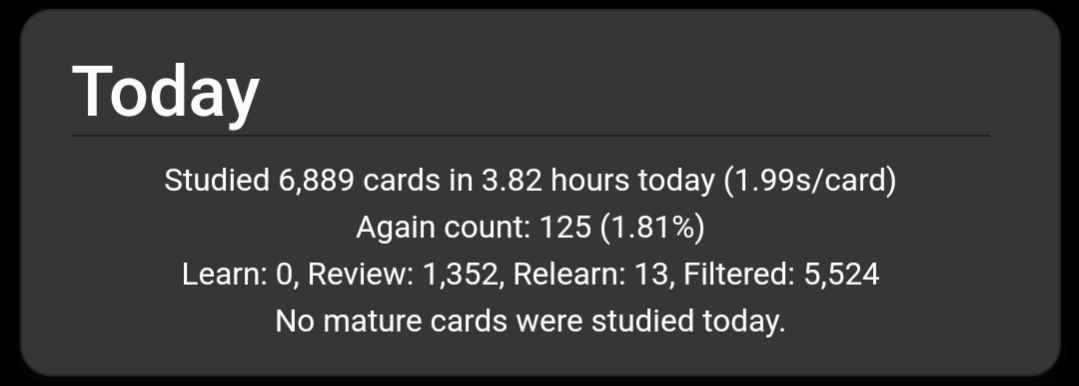
Over the course of this lazy rainy day I completed 4 separate Anki recognition review sessions. I did my 1352 scheduled pairs for the day, then a run of all 1352 object pairs, then all 1352 people pairs, then a randomized run of all 2704 pairs. Did them in 30 minute or so chunks here and there throughout the day.

My brain hurts, haha

2 Likes

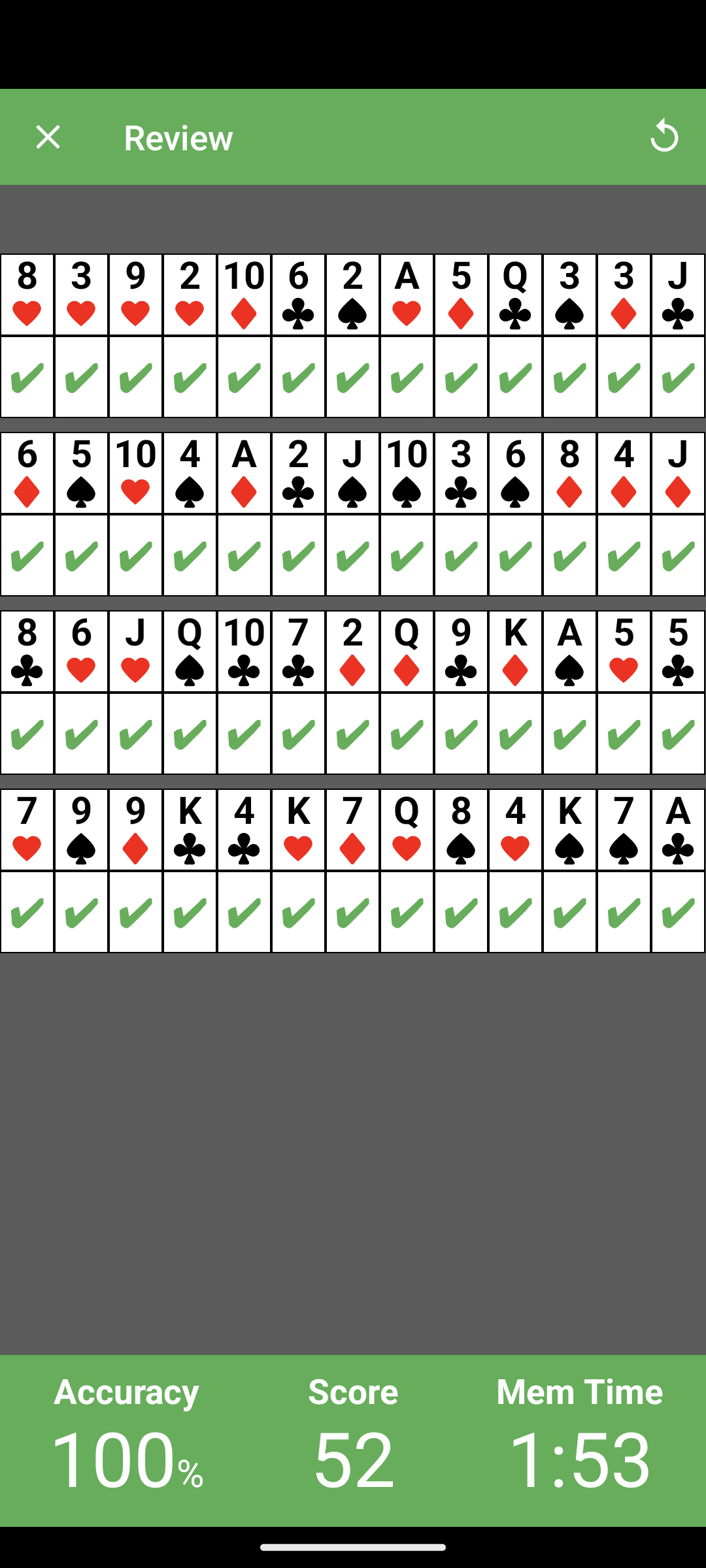
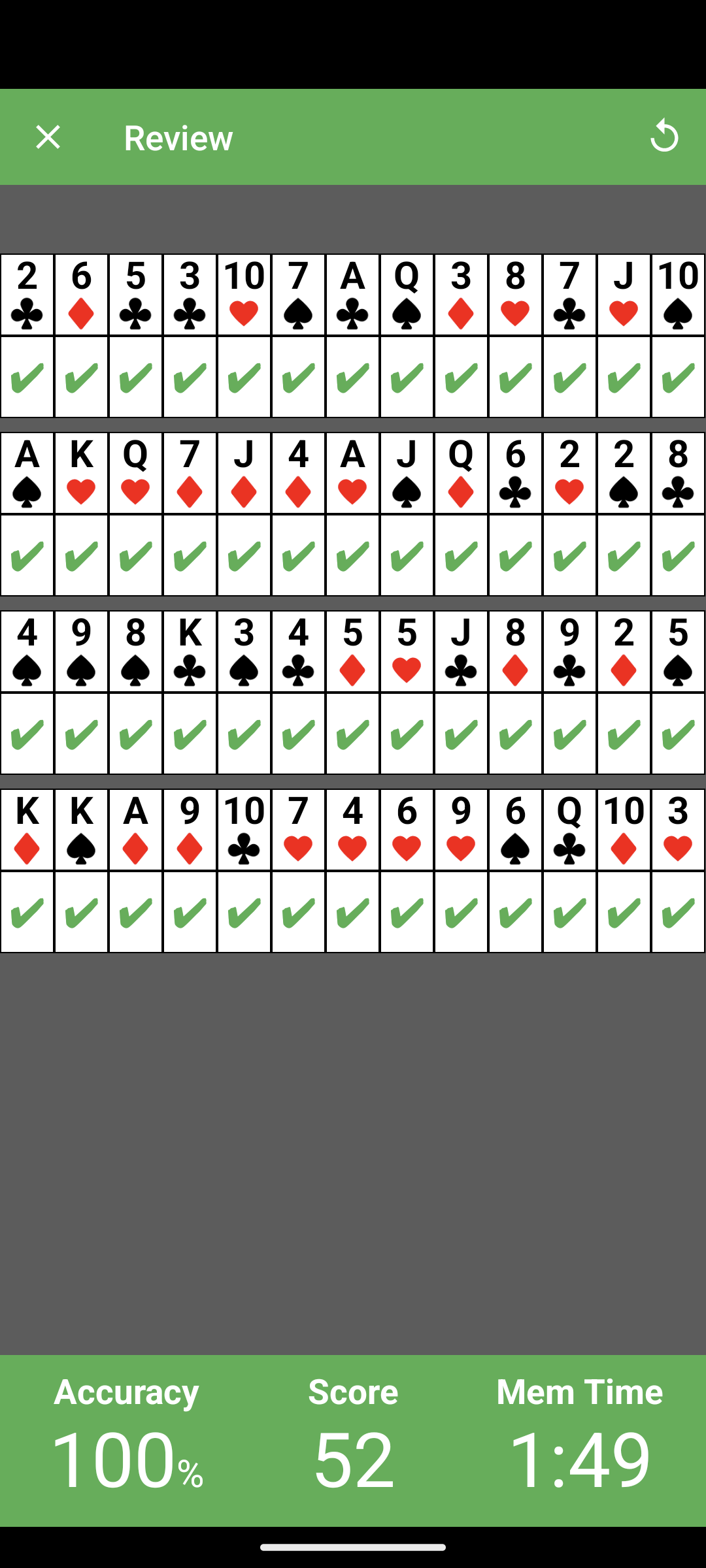
Two quick deck runs before bed. Under two minutes is almost effortless now with this system. I blanked for what seemed like forever while trying to recognize one or two of the images in each of the memorization attempts, so both of these runs could have easily been at least 10 seconds faster. Will really buckle down and use auto-advance to push my time even quicker this week. Shooting for 1:20 or quicker.

Decoding speed is improving dramatically as well. There is almost no hesitation in visualizing the images and being able to translate them into their cards. This is crucial in being able to hold onto the imagery without it slipping away due to focus loss. If you have to think hard about how to decode images to sounds to cards, you have to divert attention away from keeping those images strong. Happy that this is steadily improving too.

Off to sleep now, excited to tackle some more runs tomorrow and to work on strengthening some additional palaces so that I can do even more deck attempts each day.


3 Likes

Best attempt so far at under 1:20. Couple classic mistakes here of swapping Jack and Queen sounds and order. I’m confident that I can pass this time soon. I’m still slow on some of the new associations. As those speed up, the time will whittle down.

1 Like

No new deck run progress to report yet, but am starting to feel all the new images getting more fluent. I’m hitting consistently around 1.5 seconds per pair for recognition over the past week or so, and am rarely blanking or second guessing the instinctual flashes of images as I view the cards. I think once I dive back into deck attempts this coming week, I’ll see some decent improvement.

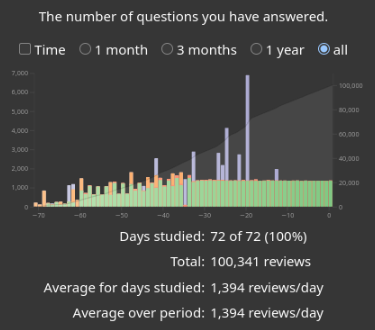
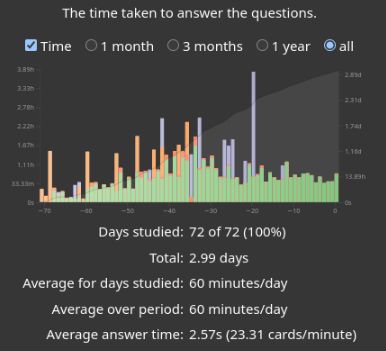
Also passed a milestone today of 100,000 Anki reviews and about 72 hours of review time with my new deck for this expanded system. Half of the card pairs are new images, so about 50,000 reviews on those. I think I was around 250,000 reviews before I nailed my under 60 second time with standard shadow. I feel like I shouldn’t need nearly that much before I can get it with this system. Will find out soon enough!

2 Likes

I was taking a look at my single card system today and something that has bugged me since I moved over to Shadow was that the phonetics for the Jack, Queen, and Kings didn’t match. If I ever wanted to pick up the single card system again, it would be a huge pain for those cards since I’m so used to reading Jacks as F, Queens as R, and Kings as Silent in Shadow. Also, if I ever wanted to teach someone the single card system with the idea that they would eventually transition to Shadow, I’d prefer to have consistent phonetics that carried across systems.

In my old single card system, Jacks were 6 (J/SH/CH), Queens were 8 (F/V), Kings were 7 (K/G). The suits were Spades 1 (S/Z), Hearts 2 (N), Clubs 3 (M), Diamonds 4 (R). Numbers were mapped to numbers with Ace as 1 and 10 as 0. This created a nice grid where I could match up all of the A-10 cards with 2-digit numbers so that the value represented the 10’s place and the suit represented the 1’s place. So 53 would be the 5/Clubs, 11 would be Ace/Spades, 04 would be 10/Diamonds, 72 would be 5/Hearts. For Picture cards, I had the structure reversed. Suits would be the 10’s place and values would be the 1’s place. So 37 would be Club/King, 28 would be Heart/Queen, 16 would be Spade/Jack.

The reason those phonetics worked was because the suits took up 1, 2, 3, and 4’s assignments when paired with number cards. This left 0, 5, 6, 7, 8, and 9 open to use for the picture cards assignments. My reason for assigning the Picture cards the way I did was that “Jack starts with J,” “King starts with K,” “Queens are Female, which starts with F.” (The Queen justification was a little bit weak, but I couldn’t think of a good way to link Queens with any of the remaining numbers.)

When I moved to Shadow and started learning Jack = F and Queen = R, I had some difficulty because I was very used to Queen being F in my single card system. I think this is one of the main reasons I have a tendency to swap phonetics or misread them when there is a Jack or Queen in a pair. (That is starting to get fixed with enough recognition practice, but it definitely was frustrating early on.)

SO, how do I adjust the single card system so that the value phonetics better match with Shadow? Well, I had to change the assignment for the Diamond suit. In the old setup, Diamonds were 4, because a Diamond has 4 points. I decided that Diamonds could be represented by 0. The shape of a Diamond sort of looks like a stylized 0 with straight edges instead of a curved oval.

So now, we’ve freed up the 4s to reassign to the Queens. Moving the Queens to 4’s frees up 8’s for Jacks. This gives us consistent mapping for Jack = F, Queen = R. Now just the Kings remain. In Shadow, Kings either get the H sound or are silent. We can treat them as silent in the single card system as well and assign them to a single digit number just based on suit! So King of Diamonds = 0, King of Spades = 1, King of Hearts = 2, King of Clubs = 3.

With these adjustments, the single digit card system is now fully compatible with Shadow’s phonetics! The Jokers are also accounted for… Black Joker is single digit 9. Red Joker is 99.

Here’s the updated PAO single card grid sorted by Suit/Value:

PAO Cards By Suit
CARD # CHARACTER ACTION OBJECT
A :diamonds: 10 DeSi ToSSing DiCe
2 :diamonds: 20 NoS NoSing NoSe
3 :diamonds: 30 MeSSi MuSSing MooSe
4 :diamonds: 40 RoSie RaiSing RoSe
5 :diamonds: 50 LuCy LaSSoing LiCe
6 :diamonds: 60 JeSSe CHaSing CHeSS
7 :diamonds: 70 KiSS KiSSing GooSe
8 :diamonds: 80 FoZZy FuSSing FuSe
9 :diamonds: 90 BuZZ PoSing PeZ
10 :diamonds: 00 ZeuS SeiZing SauCe
:diamonds: J 08 SoPHia SaVing SaFe
:diamonds: Q 04 SaRa SoaRing SoRRy
:diamonds: K 0 Sia Sawing Saw
A :spades: 11 ToaD TooTing DoDo
2 :spades: 21 aNDy kNighTing NewT
3 :spades: 31 MooDy MeeTing MeaT
4 :spades: 41 RuDy RiDing RooT
5 :spades: 51 LaDDy LeaDing LuTe
6 :spades: 61 JeD SHooTing JaDe
7 :spades: 71 KaTe CuTTing CaT
8 :spades: 81 FaT FeeDing FooT
9 :spades: 91 BaT (man) PeTTing BaT
10 :spades: 01 ZiTa SiTTing SeaT
:spades: J 18 TiFa DiVing DoVe
:spades: Q 14 DaRa TeaRing TaR
:spades: K 1 (Mr.) T eaTing Tee
A :hearts: 12 ToNy TuNing ToN
2 :hearts: 22 NuN NaNNying NeoN
3 :hearts: 32 MooNey MooNing MooN
4 :hearts: 42 RoNNy RuNNing RhiNo
5 :hearts: 52 LioN LeaNing LiNe
6 :hearts: 62 JeNNa SHiNing CHaiN
7 :hearts: 72 KeNNy CaNing CoNe
8 :hearts: 82 ViNNy FaNNing FaN
9 :hearts: 92 PeNN PiNNing PeN
10 :hearts: 02 SoNNy SigNing SuN
:hearts: J 28 NeVe eNVying kNiFe
:hearts: Q 24 NeRo hoNoRing NaiR
:hearts: K 2 Neo kNeeing heN
A :clubs: 13 ToM TaMing ToMb
2 :clubs: 23 gNoMe NaMing gNoMe
3 :clubs: 33 MiMe MaiMing MeM (usb stick)
4 :clubs: 43 RaaM RaMMing RaM
5 :clubs: 53 LeMMy LooMing LaMb
6 :clubs: 63 GeMMa SHaMing GeM
7 :clubs: 73 CaM CoMing CoMb
8 :clubs: 83 FooM (fu manchi) FuMing FoaM
9 :clubs: 93 PaM PalMing PaM
10 :clubs: 03 SaMMy SwiMMing S.a.M.
:clubs: J 38 MoVie (wonka) MoVing MoVie (projector)
:clubs: Q 34 MaRy MaRRying MoRay
:clubs: K 3 Mo (stooges) Mowing aMMo
JOK(B) 9 Poe Peeing aPe
JOK(R) 99 BoB PooPing PooP

And here it is, sorted by number:

PAO Cards By Number
# CARD CHARACTER ACTION OBJECT
0 :diamonds: K Sia Sawing Saw
1 :spades: K (Mr.) T eaTing Tee
2 :hearts: K Neo kNeeing heN
3 :clubs: K Mo (stooges) Mowing aMMo
9 JOK(B) Poe Peeing aPe
00 10 :diamonds: ZeuS SeiZing SauCe
01 10 :spades: ZiTa SiTTing SeaT
02 10 :hearts: SoNNy SigNing SuN
03 10 :clubs: SaMMy SwiMMing S.a.M.
04 :diamonds: Q SaRa SoaRing SoRRy
08 :diamonds: J SoPHia SaVing SaFe
10 A :diamonds: DeSi ToSSing DiCe
11 A :spades: ToaD TooTing DoDo
12 A :hearts: ToNy TuNing ToN
13 A :clubs: ToM TaMing ToMb
14 :spades: Q DaRa TeaRing TaR
18 :spades: J TiFa DiVing DoVe
20 2 :diamonds: NoS NoSing NoSe
21 2 :spades: aNDy kNighTing NewT
22 2 :hearts: NuN NaNNying NeoN
23 2 :clubs: gNoMe NaMing gNoMe
24 :hearts: Q NeRo hoNoRing NaiR
28 :hearts: J NeVe eNVying kNiFe
30 3 :diamonds: MeSSi MuSSing MooSe
31 3 :spades: MooDy MeeTing MeaT
32 3 :hearts: MooNey MooNing MooN
33 3 :clubs: MiMe MaiMing MeM (usb stick)
34 :clubs: Q MaRy MaRRying MoRay
38 :clubs: J MoVie (wonka) MoVing MoVie (projector)
40 4 :diamonds: RoSie RaiSing RoSe
41 4 :spades: RuDy RiDing RooT
42 4 :hearts: RoNNy RuNNing RhiNo
43 4 :clubs: RaaM RaMMing RaM
50 5 :diamonds: LuCy LaSSoing LiCe
51 5 :spades: LaDDy LeaDing LuTe
52 5 :hearts: LioN LeaNing LiNe
53 5:clubs: LeMMy LooMing LaMb
60 6 :diamonds: JeSSe CHaSing CHeSS
61 6 :spades: JeD SHooTing JaDe
62 6 :hearts: JeNNa SHiNing CHaiN
63 6 :clubs: GeMMa SHaMing GeM
70 7 :diamonds: KiSS KiSSing GooSe
71 7 :spades: KaTe CuTTing CaT
72 7 :hearts: KeNNy CaNing CoNe
73 7 :clubs: CaM CoMing CoMb
80 8 :diamonds: FoZZy FuSSing FuSe
81 8 :spades: FaT FeeDing FooT
82 8 :hearts: ViNNy FaNNing FaN
83 8 :clubs: FooM (fu manchi) FuMing FoaM
90 9 :diamonds: BuZZ PoSing PeZ
91 9 :spades: BaT (man) PeTTing BaT
92 9 :hearts: PeNN PiNNing PeN
93 9 :clubs: PaM PalMing PaM
99 JOK(R) BoB PooPing PooP
2 Likes

Oh man, a new twist has emerged… I’ve been waiting to hear about Lance’s new system for some time. I’m definitely not opposed to changing systems, as evident by this project, so I’m going to be watching this very closely and thinking hard about if I want to make another jump to this one! Exciting!

3 Likes

I have a question, how will creating this system even be an upgrade from your previous shadow system? Its all the same except that you don’t have to “skip” at black or red. Is this the only thing you want to achieve with this system or anything else that I’m missing?

Doing away with variable image stacking and having unique imagery for every pair were the biggest selling points for me. I love being able to just put two elements into a scene and know exactly what cards they represent. Having the system images also map to a complete 3-digit (and 2-digit) Person / Object number list is a huge bonus. And upgrading from 9 to 10 binary digits in a really intuitive way all with the same imagery is great too.

1 Like

Also what is the name of this app?

Quick update… I’m continuing to plow ahead with this project. I’ve again slacked on actually testing and pushing my deck speed, but as has always been the case I’ve kept at my daily anki sessions and am continuing to build speed and reflexivity in recognition.

I think I’m going to get to sub60 with this system and then… likely dump it in favor of Lance’s new system (with some modifications.)

This would mean going back to a 2-block structure, but I think ultimately the ease of reading with the Eclipse System (that’s what I’m definitely calling my modded version of Lance’s new system) outweighs the brainpower needed and slight hesitation that comes with having to recognize person or object and then parse out the appropriate image.

I really do love having a unique image for every card, but just playing around with Eclipse phonetics and I can already feel how quick it can be. I especially like how Lance deals with Picture card phonetics. He gets rid of the clunky S-Blends that really cause a big slowdown for me. I have found a way to modify what I know of his structures into something that maintains almost all of the phonetic mapping that I’m used to with Shadow in a way that keeps every pair in monosyllable or trochee format for really fast subvocalization. I may expound on that in Lance’s thread once he has laid out the last bit of his details. I still have some questions about how he differentiates some card pair structures and want to see the system as a finished whole before I really dive into actually finalizing and learning it completely either as he presents it or with my tweaks.

I’ll keep this thread updated as I push towards my time goal and probably start a new thread once I make the (likely inevitable) move to Eclipse!

1 Like

Been playing around with Lance’s new system (as much as has been shared so far), and in doing so I’ve been experimenting with some alternate phonetics and structures that retain both the monosyllables and the trochees but make more sense to my brain with what I’ve pre-wired with my major system words and with Shadow.

Its almost a hybrid Ben / Shadow where face cards generate vowel sounds in certain positions, but leaves all of the standard Major mapping for numbers.

Don’t want to get too far ahead of myself as Lance’s writeup for his new system isn’t totally complete yet, but I’m pretty excited at where I’ve landed with this modded version. I have every pair mapped to a “logical” structure and have unique words / images for all of them ready to go for when I make the switch.

Will share it at some point if (when) I decide to move forward with it!

1 Like

Well… I did it!!!

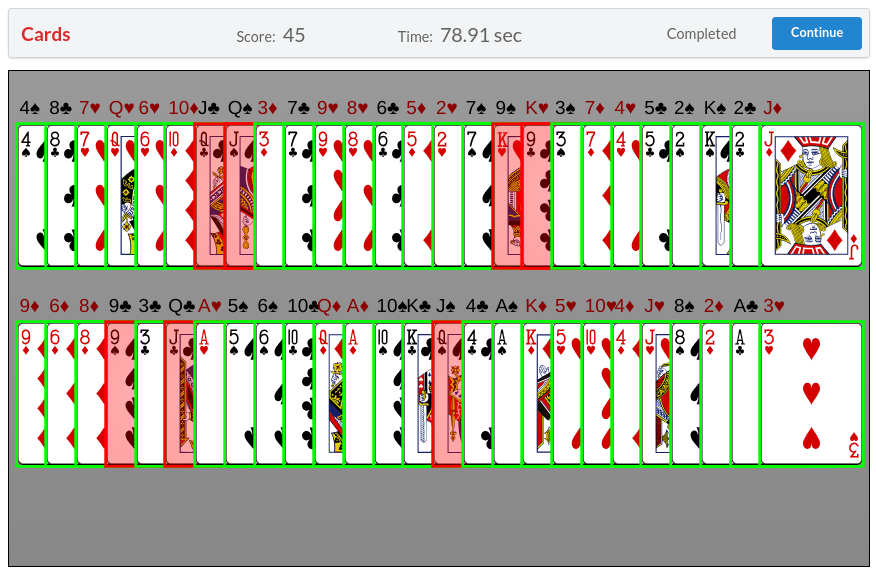
Only took 4 months to learn this new system and drill it down to under one minute! Even beat my old best time from standard Shadow by one second. :wink:

So this system is absolutely viable!

Some final thoughts:

I loved knowing that I could construct simple consistent scenes with 2 elements per scene and just make the first affect the second somehow.

I loved knowing I’d use exactly 13 loci every time. I could drill those palace routes and learn them well and know that I’d have a scene at every spot.

I have hundreds of weak or meh images in this system, but it was ok because the others are strong and good. But I want a system where all or nearly all of them are strong and easy to pronounce quickly.

The more I explore my new Eclipse System phonetics and how simple they are, the more annoyed I am at Shadow’s and by extension this system’s handling of picture card pairs, especially those picture-second S-blends. They are huge time suckers!

I’m going to turn my attention now to learning and using the Eclipse system and getting that down under one minute as well. Hope to have that accomplished by year’s end. This will be a bit more challenging than this effort of going from standard Shadow to expanded P/O Shadow because of the new reading and phonetic rules, but I’m up for it.

Maybe some day down the road, I’ll expand that too to make it a full P/O, or play with a truly unique 2704 system like Ben where every pair has unique phonetics, but for now I’ve put a bow on this one.

On to Eclipse!

6 Likes

Awesome!!! Congratulations Tim!!!

Do you have an estimative of how many hours in total it took?

Haha, that’s crazy, in a good sense. I find your motivation to build and rebuild speed all over again quite inspiring. Thanks for sharing the process with us.

About 100 hours of Anki recognition drilling, with about 150,000 pairs reviewed.

Didn’t keep track of total deck attempts. I’ll do that for Eclipse.

4 Likes