All-In-One System: Two-Card (2704 Unique Images), 3-Digit 000-999 P.O., 2-Digit 00-99 P.O., and 10-Digit Binary. An Experimental Learning Journal

Did a few deck attempts today with my custom double :spades:'s and :hearts:'s only deck. I tried a little variation on one run to try a pseudo PAO that I’ll describe too (Spoiler alert: I didn’t like it.) Here’s a few takeaways from today:

I’ve always struggled when I have to visualize scenes with multiple “people” images in a row. Back with standard Shadow and using variable loci stacking, I’d dread having to link up multiple people and I would have a much harder time recalling them than a scene with a bunch of object links. I could visualize a crazy cause/effect Rube Goldbergian contraption to link objects, but had no such luck with people.

I’d usually recall the first person fine, but then the second was fuzzy. I’m weak at creating memorable interactions between two people images, I think because the action I think of for the first person doesn’t naturally provide any hint of who that second person is.

For example, today I had a loci where my images were a guy in a rubber FeTiSH suit (no judgement, please! lol) and the lead singer of the band SeVeNdust. The scene I formulated was the rubber suit dude was playfully whipping the sevendust guy. In the moment it was really easy to visualize, but then later on recall all I could get was the rubber suit guy was whipping someone else. I couldn’t recall that specific person. I think the reason is that I didn’t put any kind of memorable detail into the scene that would cause me to remember sevendust. All my focus was on person 1 and how he would interact with the next image.

So, what I decided I’d try was if I had a loci that drew two “people” pairs, I’d have person 1 impersonate person 2. This simplifies the scene tremendously. Person 1 can act like person 2 and interact directly with the loci.

The next deck run I had a loci with two people, Eeyore (the donkey from winnie the pooh) and old school comedian Andrew Dice Clay (I vividly remember his clothes and cigarette smoking haha). The loci was the recycle bin in my garage. Usually I would create a scene like “Eeyore sits on Dice Clay, squishing him.” Easy to visualize, quick to create… difficult to remember! Eeyore squishing SOMEBODY would be easy to recall, but WHO WAS HE SQUISHING?!?

INSTEAD, this time I used the impersonation technique and imagined Eeyore dressed in a spikey jacket and smoking a cigarette doing stand up comedy. He flicked his cigarette into the bin and it lit on fire. I had zero hesitation or difficulty recalling this scene, and no concern about swapping the characters either. It was clearly Eeyore first and Dice second.

I also played around with being an active agent in scenes that were object-first. After some discussion with @Mike4 about the ideas of being agent/observer in scenes, I realized that I was almost exclusively an observer in mine. I tried to make a point of taking on an agent role and it definitely made some scenes easier to remember. I’ll be incorporating that technique regularly now!

Last note today, I tried one deck run where I placed 5 cards per loci, linking my two card pairs with a single card action that I’m still fairly fluent in from back in my PAO days. This essentially created a 2x1x2 “PAO” scene even though it could really be PAO or PAP or OAP or OAO depending on the pairs drawn. I did NOT like memorizing with this approach. It was KINDA cool to only use 10 scenes/loci, but the un-naturalness of some of the scenes and the rigidity of having to use the action I drew turned me off quickly to it. So, unlikely to pursue a PAO-style card technique again. I’m sold on the freedom of interaction between P’s and O’s. No predetermined A’s needed.

Other than that, progress continues on the new images for the :clubs: :clubs: / :diamonds: :diamonds: set.

I’m also definitely getting faster determining if a pair represents a person or an object! This is the main skill needed in order to make this system work, and its working!

Good stuff this week so far.

Onward!

1 Like

I used the 10-digit binary feature a few times today to encode the red-black sequence of a deck of cards. Its really intuitive and aligns with how I split my card images. Black or (0 in true binary) first means a person word, red (or 1) first means an object. It works surprisingly well, although it didn’t really confer much of an advantage with a sequence as short as a deck of cards. (Its pretty funny that I now consider a 52-digit binary sequence “short.” Me from a couple years ago would have been hugely impressed by memorizing a string that long!)

Anyways, for a 52 digit sequence, going by 10’s gives you 5 full images and 2 remainder cards. I visualize those cards as either the person or object equivalent of 00, 01, 11, or 10. So really I’m visualizing 6 elements. My previous 9-digit layout via shadow required 5 full images and 7 remainders. I’d treat the first 6 remainders as a single sequence and encode it from my 2-digit list and then make whatever it was appear tinted the color of the last card color. So 6 elements plus one color tint at the end. Really not much difference between them in terms of ease of use.

But, if I were to extend the sequence to 90 digits… 9 images vs. 10 starts to become advantageous. Expand to 26 images, the same amount as needed for a deck and you can encode 260 digits with the new system, vs 234 with the old. So the advantage in binary really kicks in with larger sets. Its pretty neat though to blast through 10-digits in just a single element. I can definitely rip through a deck and recall the color order easily in under 20 seconds. This is almost a more impressive demonstration for people than doing the full card information, just because you can memorize so quickly and the recall is almost as fast.

More reviews today, and more deck runs too. Liking the progress on both fronts!

Started learning new images for :clubs: :clubs: / :diamonds: :diamonds: pairs today. I’m halfway through initial learning of the new images in less than a month! Its going better than I expected when I decided to try to take this project on. Having fluency with the phonetics is definitely helping to speed this up.

I think I’m picking images that work really well too. One thing I’ve been doing is trying as much as possible to keep the established word that I’m used to and try to find an image that fits it for either the person or object that I need.

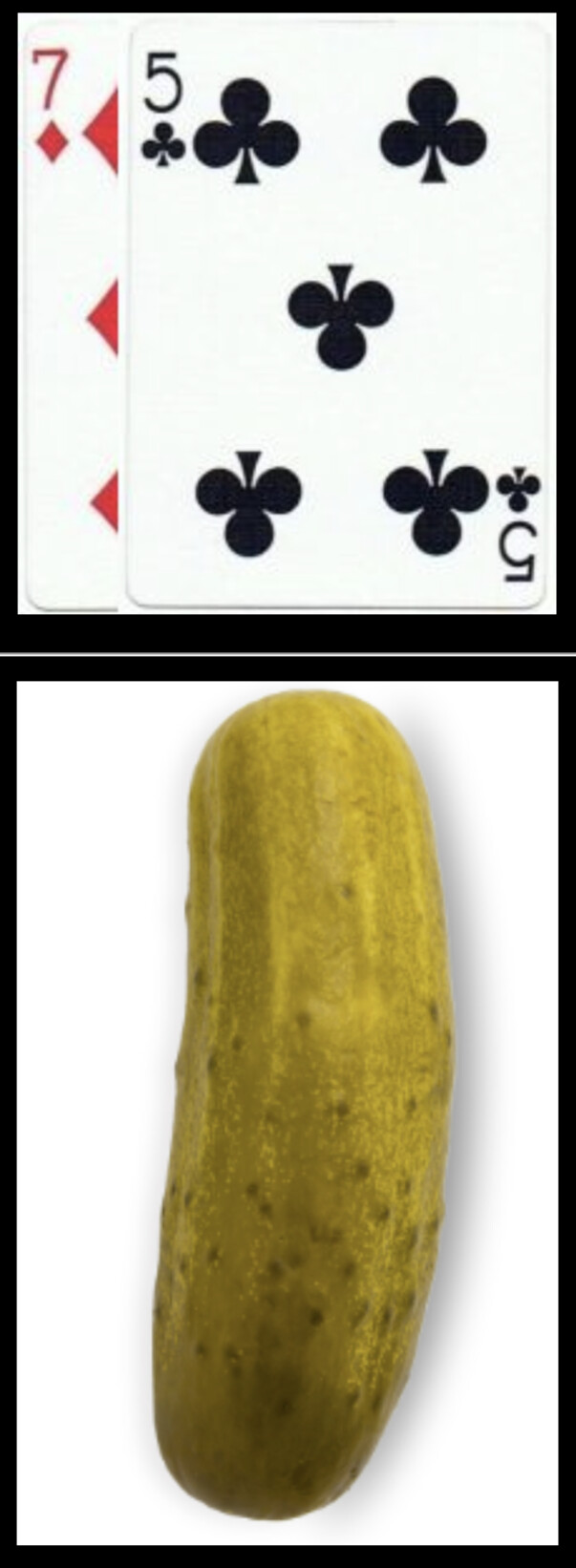
So, for example, my word for [7 :diamonds:] [5 :clubs:] is “PiCKLe.” The image is:

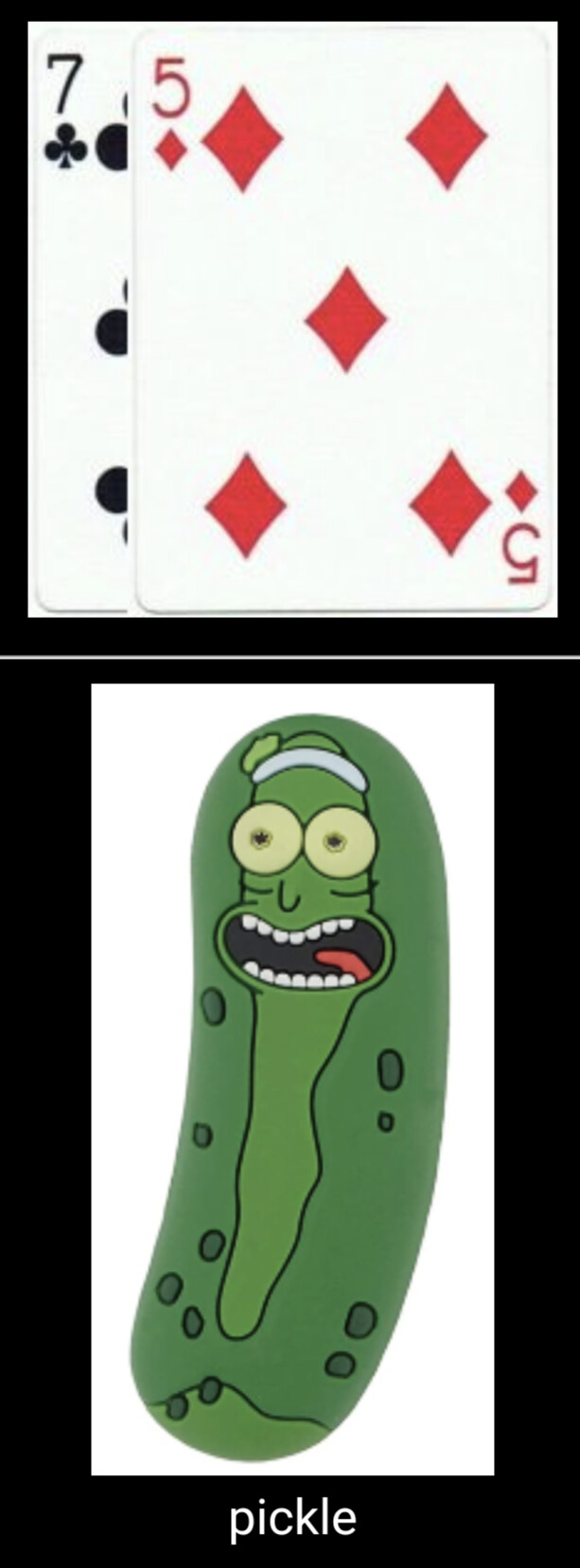
Now, I need a “person” matches those same phonetics, P/B-K/G-L. I could use “PeG Leg” and visualize a pirate, or a “BuGLe boy” and picture a kid blowing a horn, but instead of trying to find a brand new person name that fits those sounds, I just used the word “pickle” again and used “Pickle Rick” for my image:

This way I don’t have to try to learn a whole new association for those sounds, I already see those card pairs and think “pickle” so now I just need to look at the color indication to see if its just regular object pickle or person pickle rick. I’ve been able to do this for a lot of pairs so far and its made things a lot easier!

2 Likes

One observation today after several memorization runs…

There were a couple runs where I didn’t immediately recall all of my images. At the end, I had maybe 4 or 5 pairs that I couldn’t bring immediately to mind. When doing recall either with a deck or online, you know which cards are available to place in your recall attempt. In the case where I’ve missed 5 pairs, that would leave me with 10 cards leftover and unassigned.

With my previous system, Standard Shadow System, I would sometimes try to take those leftover cards and start trying to pair them up to see if the resulting pair would jog my memory for my scene so that I could place them correctly. This was difficult because there are 90 possible pair combinations with 10 cards, there’s generally not enough time to try all the combos. Sometimes I wasn’t positive how many elements were in a scene, or the order they appeared, especially long runs of people stacked at a loci.

With the new system however, I know there are only two elements at each loci, and I usually can recall if the scene was structured as “person-person,” “object-object,” "person-object, or “object-person.” This makes looking at the possible pairs that can be made from the leftovers much easier. Today I had a scene where the images were “cast - bear” (a leg cast and a polar bear.) The loci was my dining room table. I imagined the table wearing the cast and the bear signing it. This was apparently not a strong enough interaction or I didn’t focus enough when constructing it… I easily recalled the table wearing the cast, and I knew something was signing it, but I couldn’t remember what. I did recall that it wasn’t a “character/person”, but I had an impression that it was some kind of “object” (which in my lists contain generic animals, not just inanimate objects.)

Of the left-over cards, there were only a couple red cards so I knew one of them had to be the first card kf the pair. It was easy to run combos until “bear” popped up and then boom, I was sure that was it.

Its much easier to use the remainder cards as the fallback crutch if you completely blank when you know that you have a simple scene structure at each loci.

2 Likes

Jumped the schedule by a few days and started learning the :spades: :diamonds: / :diamonds: :spades: set today. Doesn’t feel overwhelming to add new stuff at this pace. The learning phase is going so much faster than last year. I’m allowing myself to push my pacing much more aggressively. Learning standard Shadow, I took two weeks per suit pair combo. So to get through all of them was 16 weeks. I’m midway through week four and am 5/8 of the way through this time. I can probably get through them all within 6 weeks. Recognition is consistently speeding up for all the new stuff, so I’m happy with where I’m at!

2 Likes

I may have gone a little bit crazy today…

Added the new :clubs: :hearts: / :hearts: :clubs: set into the mix. So I only have two more sets to go. The plan is have them all in by the end of next week! This will be just 5 weeks to see all 1352 of the new pairs. Thats less than 1/3 the time I took for the first go round learning Standard Shadow.

With this set added, I can also make two new practice decks to work with. After next week I’ll be able to use a real deck and memory league again to start really honing my speed.

It would be cool if memory league had an option to customize which suits or values were included in the deck when doing training runs so that people working on learning 2-card systems could progressively add combinations as they go. What do you think, @Simon ?

As I’ve been re-learning and re-assigning images to specific single pairs, I’ve been re-evaluating some of my old ones to make them more memorable. For people in particular, I’m trying to designate a specific person wherever possible.

So for example, for “biker” I used to have an image of a generic motorcycle guy riding his bike. This worked ok, but I decided to replace it with a very specific biker from the TV show Sons Of Anarchy:

I’m very familiar with this character. How he sounds, acts, the emotional connection I have with the show. This makes my memorizing imagery MUCH more vibrant and memorable.

Same thing with “lifeguard.” Instead of generic life guard guy, I’ve replaced him with:

The Hoff is a very specific personality and much easier to picture than just a nebulous “lifeguard.”

2 Likes

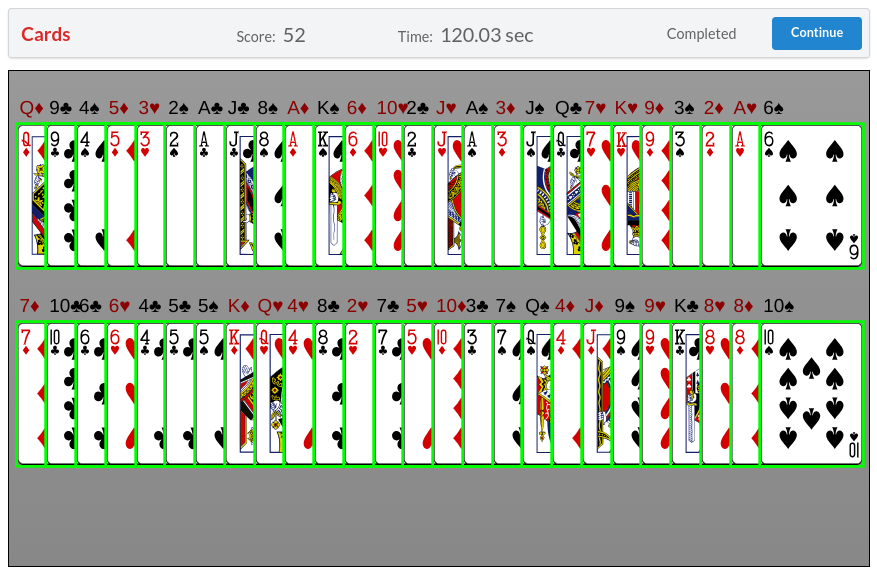
Just did 8 deck runs, two with each of the physical practice decks. Was able to recall all of them perfectly. 5 of them were 100% from memory. The other three involved looking at the leftover cards to help jog the memory. I never missed more than 3 or 4 pairs out of the 26 on first recall. Not sure how the speed is but I’m not worrying too much about that quite yet. Tomorrow I may try to time the attempts to see where I’m at there. I expect it to be in the 2-3 minute zone at the moment, which is fine considering I’ve only been looking at the new images for a couple weeks. I’m confident that I’ll be pushing towards a minute again very quickly.

I’m loving this system and how easy it is to build scenes. There is no sense of angst prior to a memorization attempt like I had before worrying that I’d have to stack a bunch of images and derail my flow. I also can build and practive very consistent palaces for cards with 13 loci each. I have over a dozen in the rotation now so no worries of ghosting either. One thing I’m gonna try is taking a few attempts with 26 loci palaces and trying to have a single image interact per scene. Just want to get a comparison to the two per loci approach I’m taking now. There may be some upside because it would avoid the challenging “person-person” scenes. I know the palaces well enough that I don’t anticipate much of a drop in speed because of navigation, but we’ll see!

Either way, good stuff and good progress!

1 Like

Figured I’d just give mem league a try with an open-ended time. If I encountered any new pairs in the sets I haven’t seen yet, I’d just try to brute force an image in there or just try to put the alternate previously associated image with it and try to make some kind of marker that it’s the alternate suit. This run actually worked really well. Lots of new images, but all ones that I’ve been practicing. The “old images” luckily matched the suit pairs they were supposed to so I didn’t have any freezes with those. I’m pretty happy with the 2 minute pace right now considering my much slower initial recognition speed for the new images. I didn’t use auto-advance for these attempts to set the pacing because I wanted to make sure if I hit a new untrained image, I’d have time to figure it out. At the end of next week once all the new images are in, I’ll start pushing the speed with auto-advance.

One last new cool feature of this full 2704 system is that there will never be a repeat image. There were times in the past with Standard Shadow where I’d have both the red-first and black-first versions of a pair in the same deck run, requiring an image to appear twice. This would sometimes get confusing. This is no longer a worry with this upgraded system!

2 Likes

Added :spades: :clubs: / :hearts: :diamonds: tonight. A few days of drilling this set and then I’ll add the final one! Will be through the first stage of seeing all of these new images in 5 weeks!

1 Like

Yes, this is something I have done recently as well. I went through my 2704 pairs and tried to make them more specific and add more senses to them as well. Keep up the good work!

1 Like

Added the final set this morning! I’ve now seen all 1352 new images and am ready to start applying it with an unmodded full deck!

This only took 33 days! Just a shade over a month to get through what took me four months last year. I think this is due mainly to the fact that I already had associations made for all of the card pairs and I was able to link the new images both to the sounds generated from the cards AND the previous image. It has been especially easy to learn new object images because I would see the card, reflexively visualize its former “person” association and then just make the person do something with the new object, while speaking the object word out loud and emphasizing the consonants of the cards.

For cards that I already had objects for, it was a bit harder to lock in the new person. I’d see the object, then have to make up a reason why the new person would be doing something to or with that object. Its tricky to do that in such a way as to easily recall the person. I knew SOMEONE ate my FUNGI but I had a challenge connecting it to VAN GOGH. A better way that worked really well was to picture the FUNGI cutting off a piece of its own cap and mailing it, like Van Gogh did with his ear.

This reinforces the idea that I’ve discussed before with @Mike4 that person → object scenes are generally more easily recallable than object → person scenes. I think for those, maybe the “impersonation” action works well. Have the object act LIKE the person instead of it acting ON the person. Same thing for person → person scenes… Try having Person1 act like or wear the outfit of Person2.

Anyways, I’m pumped to have seen all the images. Now reviewing in Anki will be much simpler. I can just go to the root deck and pull 1352 random cards as a starting point per day and be set going forward. Will do some deck attempts later today and start working on cutting the time down. Lets see how quick I can get back under one minute with this expanded system!

2 Likes

A monumental effort. Congrats!
Is there a way to PM you?

1 Like

Your account is new and was in a temporary holding period, but you can now click on a user’s profile picture and then on “Message”.

1 Like

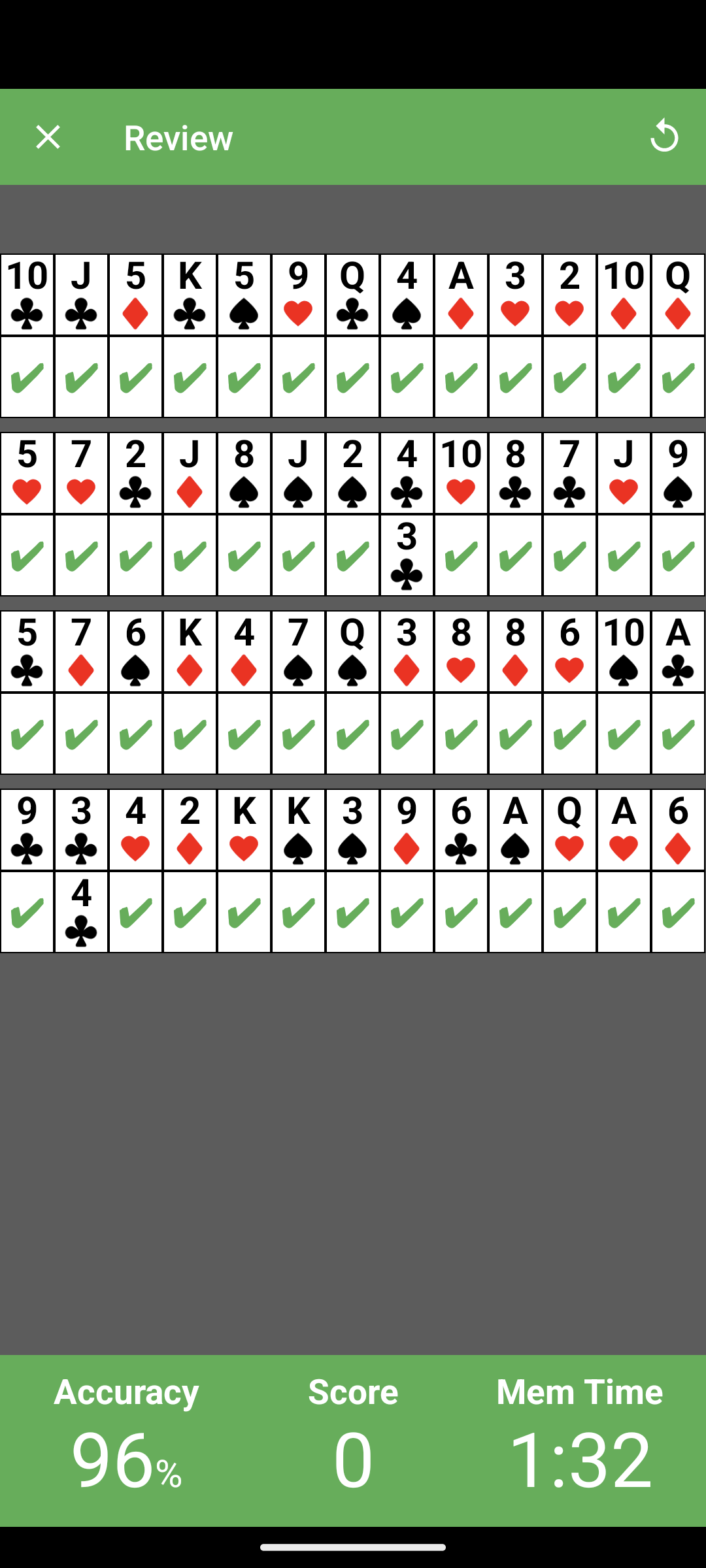
Not a bad effort today. Should have definitely had this one 100%. Confident that this speed will keep on improving as the person/object distinction and the new associations become more automatic.

One thing I’ve noticed is that recall speed and the ease of punching in the cards is definitely way faster using this method vs. where I was with standard shadow.

5 Likes

Man, you’re already so close to 1 min!!! That’s awesome!!!

2 Likes

Couple deck runs in the 1:30-1:40 range today. No auto-advance yet. Will start that tomorrow, set to 1:20 and see how the pacing feels. I’m not going to do like last time and wait until I can 100% my accuracy at a given time before speeding up. If I can get in the mid-40’s for total cards correct, I’ll set it faster.

My recognition speed is improving noticably in the last couple days. Today I hit a 1.9 second per pair pace, which was across a random mix of 1532 pairs both old and new. This pacing could be fast enough to put me back under a minute for a deck. I’d like to get to 1.8 or faster, which would leave me at least one full second per loci to visualize the scene, giving me a total time of 59.8 seconds. I’m confident I’ll get there soon.

I’ve only been at this system for about 6 weeks and am really happy with how quick I’m integrating the new images and speeding everything back up. I knew the old images would take a speed hit and there would be some challenges where I’d see the opposing “new” pair and reflexively jump to its old original image, but that has corrected itself surprisingly quickly and the original images are regaining their reflexive links to their now isolated single pair associations.

The person/object distinction is really getting quick and the good thing is that I don’t find myself hanging onto the opposing image hardly at all once I recognize the pair to be one or the other. It’s almost like there is a Schrodinger’s Cat phenomenon happening. When I see a pair it is both person and object together all at once until I observe the color and then the waveform collapses in my mind and resolves into it’s appropriate designation and the other one is pushed right out of consciousness. It’s a kind of surreal thing… pretty fun to experience.

I’ve done a few review sessions where I filter anki via either the person or object tag and just run all of one type of card. This has been pretty helpful in locking in that black-first is people and red-first is object. It has also helped in forming a more direct connection between the pair and the single correct image rather than the double conversion of person/object scene and then picking the correct one. It forces me into “person only” mode or “object only” mode which is great for breaking that habit.

1 Like

I’m getting faster at recognition again! (Also yes, I reviewed a lot of pairs today, haha)

1 Like

I think something may be clicking with my pair recognition…

1 Like

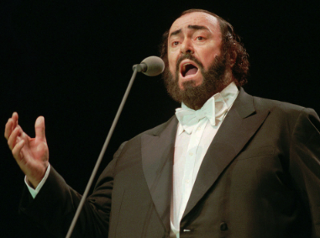
I changed one problem image today. Since the start I had [2 :spades: / 4 :hearts:] as robert DeNiRo. The object that shares phonetics for [2 :hearts: / 4 :spades:] for me is a “tuner,” a tuning fork. Every time the person pair came up, I’d hesitate and start sounding out “t-n-r” and then it would click that it wasn’t the T sound but the D sound and it was DeNiRo. I hate little hesitations like this, so I switched to a person that made more sense both phonetically and “paired” with the tuner. My [2 :spades: / 4 :hearts:] is now:

The “TeNoR.”

I know that given another week or two of reps and really drilling the association to DeNiRo, it would have stuck and gotten fast for me, but I like Pavarotti much better as a vivid and active image. If an image just isn’t really working well for you and your brain wants to go in a different direction, sometimes you shouldn’t fight it. I’ve probably changed more than 200 images from what I originally brainstormed from their starting words, whether to make them more specific, more memorable, or simply more reflexively recallable phonetically. Yeah, it kind of sucks to have to overwrite a practiced association with a new one, but It feels awesome to find a great fit and be able to trash those images that you just “settled” for at the start of learning the system.

1 Like