To keep the entire conversation brief, I am trying to learn arabic vocabulary – but not spoken arabic. My goal is simple, when I read the verb or noun on a piece of paper I want to recognize it immediately.
How should I go about it; memory palace, peg system?
Are you going to be looking at the Arabic script or the transliterated version in English characters? I don’t know any Arabic but the linking method has worked best for me when studying Spanish. Saying the target word out loud and listening to what it sounds like in English.
Buzón = Mailbox so I picture Tony Buzan either checking a mailbox or maybe his midsection has a mailbox attached. Linking something known to something unknown and the definition is the image.
I was looking at the Arabic script and was thinking of trying to add an image of the definition somehow sketched around the text but wasn’t really able to for many of the words but Some came easily to me
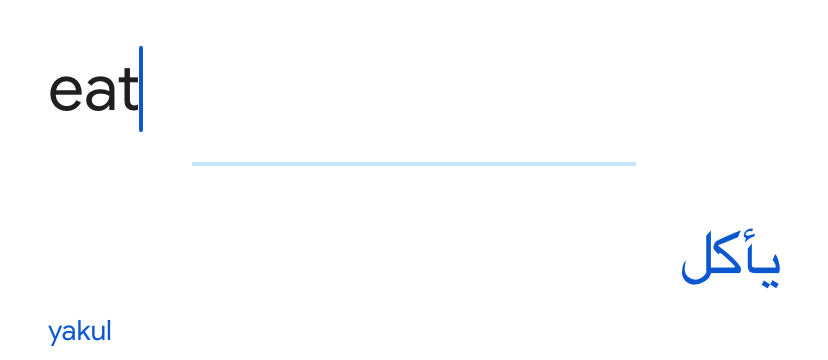
Not knowing their alphabet I approached it thinking what English letters does the script look like? JSU or JSL could be “Just some lunch” = eat. The two dots at the bottom are two fries leftover. I don’t know how often the script will resemble acronyms so maybe you can print out enlarged versions and try to draw a pic of the definition some way that you’ll recognize it when you come across the word
Or listen to the sound of the word pronounced and try to tie it to something and make a scene out of someone eating. Sounds like Yak cool oo
Maybe a Yak very cold or cool with sun glasses eating.
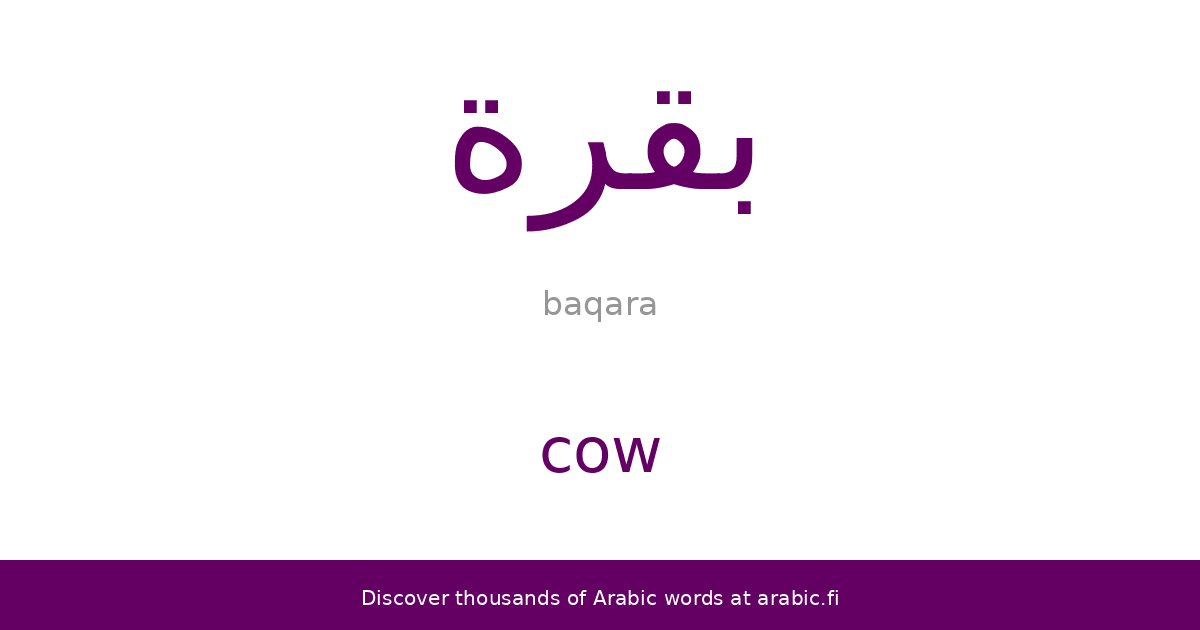
For cow I think sketching a couple cow body’s around this word I’d recognize it later as long as theres not very similar looking words to it
Im sure knowing the Arabic alphabet would help a lot too
You have three separate pieces of information here: the reading, the writing and the meaning. You will need a separate system for each. Memory palaces are what I use. Mostly, I use palaces to place the reading of a word - how to pronounce it. I basically use puns or encoding the word somehow into an image to place at a location. I don’t use palaces for remembering how to write, though I have in the past. Sometimes I will use a separate palace for word meanings and associate the meaning and reading palace by location order.
I don’t recommend making a peg system personally. For me it is a lot of extra work and will cause you to make mnemonics that fit the peg system in cases where there are more natural mnemonics available.
For the spelling would you do like an alphabet PAO for each letter and have it in the corresponding location as the palace that held the pronunciation?
I strongly recommend against memory palaces for learning languages, because it’s unnecessarily time-consuming, and a (piecewise) linear structure is inefficient for the fast retrieval needed for actual conversation in a target language.
I’ve written more about it in other threads on this forum—feel free to check my other comments (I’ll avoid duplication here).
People who learn languages easily often use spaced repetition (Anki or whatever), and I’d recommend that. Use ad hoc mnemonics for any troublesome words that don’t “stick” the usual way.
[Source: I learned Spanish and Portuguese as an adult, and know many multi-lingual people]
[Disclaimer: there are some people on this forum with the contrary opinion to mine, and would use memory palaces anyway for languages]
I agree with you that memory palaces are not good for fluency. It is too mentally taxing to recall a word from a palace in the moment. But they do have the following benefits for language learners:
You can review anywhere. You can simply quiz yourself on loci locations in your head any time you want. This turns otherwise dull moments into useful study time.
You know what you know. Flash cards are great and can be used along with palaces and other methods. But after a flash card study session, it is difficult to think over what you learned. For production, you need to be able to access knowledge, not simply recognize it. Palaces allow you to access your knowledge at will.
With enough review, many of the items in your palace will move to your active vocabulary. You may not be able to access items in your palace fast enough in the moment for fluent conversation, but you will inevitably end up “tagging” locations while speaking, thinking, “I know I have a word for this”. Then you can review those items mentally when you have more time and eventually they will move to your active vocabulary. With flash cards you think “I have a word for this” but simply have to hope that you see it again in your next review.
A memory palace is like having a book in your mind. Anything you could do with a book in person, you could do with a memory palace. Thinking about it this way, it is easy to see what the strengths and weaknesses are. You wouldn’t be able to fluently flip through a phrasebook in the moment either, but still they have their place.
I agree with point (1) even if I don’t personally consider it valuable. Someone with a different preference to me might find this valuable, and I’m happy for them.
I consider that points (2) and (3) are mostly covered by using flashcards in the correct direction (source language → target language (i.e., if I’m a native/proficient speaker of English, and I’m learning Portuguese, then my flashcards should ask me what is the Portuguese word for e.g. “to talk” (answer: “falar”) rather than asking what “falar” means in English)). Then when you want to mean X in a sentence, you know “I have a word for this” in e.g. Portuguese.
(If someone is using memory palaces for vocabulary and is liking it, then I don’t tell them they must do something different. But these are my reasons to recommend alternative approaches instead.)
I speak six languages and have been a teacher of three for 8+ years. Anki does wonders, but memory palaces for language learning I would not recommend at all.
I will also comment on another recommendation given up in the thread. Somebody said that there are three pieces of information in the memorization of a foreign word: the written form, the sound and the meaning. And I have to say here: no, there are two, for the written form and the sound are one, once you already know how to read the written system.
And only character based writing systems require a lot to learn, but an alphabet or an abjad, like Arabic’s, takes just a few days to learn. In less than a week, one can read the characters. There is no need to create mnemonics in order to encode it in a memory palace.
Once only needs to take the sound (the example of “buzón” provided by Chris was good) and relate it to a word that sounds similar in a language one already knows; that then goes to the Anki and voilà.
A memory palace, though it evidently has a mnemonic advantage in itself, is mainly “to keep order”, but are you gonna create a 2000+ memory palace and go through it every time you wanna read? The thing one wants with language is inmediate recognition, and that requires multiple encounters, so spaced repetition and practice with real use is what helps with it.
Even if you are learning simply for the purpose of reading or recognizing words on a page, it helps to write vocabulary by hand, preferably in sentences of some kind or as exercises in whatever textbook you use (ideally, that can be corrected by a native speaker or the closest available equivalent in the case of dead languages). This is especially useful in learning a language with a different alphabet. Those who advised against creating memory palaces for vocabulary are right - it can be too much. I have given up largely on my attempts to make memory palaces for Greek vocabulary in favor of writing sentences with whatever Greek words appear in my Anki shuffle for the day then seeking corrections from more advanced friends. Using the words, again and again, in writing seems to help the meaning stick, even if the sentences are very stupid and mean simple things like “the dog barks”. I suspect, based on my experience with Greek, lots of writing or even simply copying of words, phrases, etc will help you firmly internalize the alphabet and the meaning of words.
I would also suggest making Anki cards not only for words but for phrases you come upon in your studies or reading, because even if you understand all the words in many common idiomatic phrases literally you cannot always understand the phrase. These phrases can also be used in sentences to practice.
I want to thank you all who responded to this discussion, your insights have truly helped me. For me the problem was simply coming up with images for certain words, especially in the Arabic language where certain sounds don’t have equivalents in english.
I decided not to use a memory palace, because like many of you said, it simply isn’t efficient enough for what I’m trying to do, and the recall isn’t as immediate – although I agree 100% that it is a useful way to turn free time into a study session.
I have used Anki in the past, as it utilizes spaced repetition, it truly helped me, and I think I will continue with Anki to solidify my recall; which honestly, every mnemonic device is only really there to give you a comfortable window to take that item within your working memory and insert it into your memory palace, mnemonic techniques simply “extend” the time it takes for you to forget that word.
Thus it seems that spaced recall or repetition is in the end of the day the most useful way to recall words and transfer them over to your long term memory. However my intention is to take a word and assign images to it so as soon as I see it, I can recall back what the word was – I guess you dont necessarily need a PEG system for this!
there are two, for the written form and the sound are one
I wish it were this simple. Arabic is an abjad, as you mention, not an alphabet. It doesn’t seem like you understand how Abjads like Arabic actually work in practice. You might see “ktb” written down, but that single form could be “kataba” (he wrote) or “kutub” (books), so assuming the written form automatically gives you the sound is just plain wrong.
but are you gonna create a 2000+ memory palace and go through it every time you wanna read?
This is ridiculous. Do you have experience with memory palaces in practice? Eventually, you dont need the palace and simply learn the information. The memory palace method simply allows you to speed up the process. I use the palace to hold the word securely until my brain naturally absorbs it, then the palace dissolves.
Once only needs to take the sound (the example of “buzón” provided by Chris was good) and relate it to a word that sounds similar in a language one already knows; that then goes to the Anki and voilà.
Great advice, this is what I do as well. I just also put these images in a memory palace so I can review them on the go and answer anki reviews correctly on the first review. Eventually, soon really, the palace is forgotten as the words move to long term memory.