Hello everyone,
I’ve been reading about Giordano Bruno and Raymond Lulle work on this forum for a long time without understanding a thing.
I feel I did a good jump in my memory journey and start to grasp a few concept from what I’ve been re-reading lately.
I’ve been playing with memory wheel and combine them and I feel there something that work with me. I would like to dive a little bit more on there work to see what I could learn or understand.
Do you have any advice on book I should start with? Do you have any other documentation that could help me go deeper?
1 Like
Ingrid Rowland and Hilary Gatti are great places to start for Bruno.
Many people will recommend Yates on Bruno, and any book is worth consideration. But I think she invents a very strange Bruno that did not exist and I don’t think she understands his mnemonics, perhaps not even superficially. She does say she never tried them, after all (though it’s not clear to me that this is true and her biographer Marjorie Jones raises a similar note in my reading of her book on Yates).
One thing to note with both Bruno and Llull is this:
Their ideas were not fixed. Bruno in particular developed them over many years, so if you read his early books, understand that (at least as far as I can tell) he changes his mind about more than a few things.
For Llull, definitely read:
Ramon Llull: From the Ars Magna to Artificial Intelligence
Finally, I think it’s important to read oppositional takes. Hannam’s God’s Philosophers will probably annoy some Bruno fans, but the considerations are still important.
On Llull, Mystics in Spite of Themselves has good alternative takes that amount to criticism worth considering.
At the end of the day, I would suggest not reifying either of them. Bruno himself said that anyone who thinks long and hard enough about mnemonics will come to the same conclusion about them that he did. A very scientific thing to say, and almost certainly true. Perhaps the closest thing to truth he ever stated.
6 Likes
Yes, yates had no idea what bruno was proposing with his techniques, in de umbris bruno proposes a new method for the memoria verborum and that could also be used for the art of ramon llull, bruno also proposes the liberation of the places using lists of images that serve this purpose.
I recommend starting with Fénix sive artificiala memoria de Pietro da Ravenna “Bruno himself considered the artificial memories of Pietro as the most useful and interesting he had ever read” and then robert fludd, as it is much easier to understand, it is not that bruno has created techniques impossible to learn, since “Henry III of Valois” himself used “de umbris idearum” as a mnemotechnical method (treatise on memory), the problem is that it is an advanced book on mnemonics that did not need to be explained in depth for the connoisseurs and/or scholars.
De umbris para la memoria verborum are used in a very innovative way with respect to those of previous memory treatises and how this novelty is not at all an end in itself, but comes from different grammatical, combinatorial and structural assumptions from which Bruno starts to design his own memory practices.
Here I review several interpretations of Giordano Bruno’s secunda praxis. Tocco, for example, points out that Bruno uses letters from the Greek and Hebrew alphabet to complete his system of predicates, since the Latin alphabet was not sufficient. However, he errs in interpreting this as an end in itself, when in fact it was only a means to expand the possible combinations. In the end, Tocco concludes that Bruno simply distorts Lullo’s art to create his own mnemonic method.
Yates takes a different approach. She proposes that Bruno’s images were to be placed on concentric wheels to activate his system, but he reverses the order of the wheels, starting with the circumstantia in the center, when in fact Bruno was starting from the outer wheels. Moreover, Yates indulges in a magical interpretation of the system, imagining astrological combinations between the images of stars and zodiacal decans.
Sturlese, much more pragmatic, suggests using five strips of paper with images and syllables instead of physical wheels, which would make it easier to memorize words like “NUMERATORE,” where each syllable is associated with a specific action or image. For example, for “NU,” a bee weaving a tapestry is visualized, while for “ME” a woman on horseback on a many-headed hydra is added.
Nicola, on the other hand, suggests that Bruno had an extraordinary memory capacity, something four times greater than average, which would explain his use of up to 30 elements at a time in his system. Maddamma, for his part, introduces a sixth wheel of personal names, although he eventually ends up merging it with that of the agents, creating an even more complex interpretation that is difficult to apply in a practical way.
Bruno’s second praxis aims at facilitating the memorization of whole words by means of complex but unified images. Unlike the first praxis, which only allowed the combination of letters in its initial phase, this second praxis evolves to allow the creation of syllables, which opens the door to the memorization of whole words.
Bruno explains that this evolution is only possible when the first practice has reached an advanced level, which implies meeting certain requirements. First, it is essential to have a large number of well-established and reliable loci. Then, it is necessary to master the techniques of association between agents, operations and instruments, and the ability to combine them effectively. Finally, the key is to apply the principle of adjective multiplication by using known or familiar faces, which can represent the mythological agents, which helps to make the representation of syllables more effective.
A clear example is that different “actors” should be assigned to each initial letter of a syllable, with it being especially important to assign more actors to those letters that appear more frequently. This ensures that there is always a representation available for each syllable and makes it easier to combine these elements into a complete word.
4 Likes
Quick clarification: Frances Yates was a woman.
1 Like
Thank you, I had made a mistake… I asked the ia to explain what I wanted to say, I’m a bit lazy to structure the text, explaining consumes a lot of energy and time.
And it is not that I have detracted from the work of Yates, only that his explanation is wrong and goes more of the magic rather than the method itself really, which is not magic at all which is said to “Henry III of Valois” who practiced this art of memory with success.
1 Like
Bruno uses the decanates because they are known to his readers, he also says that you can create your own agent images and this was necessary, he is also the first to get rid of some rules and make the practice easier.
Nowadays it is much easier because of the great amount of material such as video games, movies, manga and comics, images that you can find online, lists of people, lists of places, virtual maps, accessible books, etc… You only need methods or structures to order all this (lists, matrices, trees, forests, etc.) and a massive palace would not seem crazy.
Bruno only uses data structures, places and images… He orders numerically or alphabetically, although he uses several memory techniques mixed, he also uses astrology to order his places, he also creates memory theaters which he calls atriums and fields full of images to associate to other information, he also uses verborum memory techniques that in fludd can be better understood… He also atomizes the ideas by combining them into single images that encompass the concept, he also combines these ideas, he did not mind experimenting and encouraged to do so… In the art of memory a great referent, in other ideas probably wrong since human beings are not perfect, he incited to look for the truth and to investigate.
He also did not like the authoritarian nature of the church, because you could not doubt and not doubting is dangerous, it limits curiosity and the search for truth.
2 Likes
Yates even says she dont know about using mnenonics in the preface. Shes historian.
That is what she says, but that doesn’t make it genuine. She did participate in drawing the Memory Wheel featured on some covers of various editions of The Art of Memory, which is telling.
Perhaps I am misreading comments in Marjorie Jones’ biography of Yates, but it seemed to me that she also questions just how genuine this claim is likely to have been. Given the Memory Wheel drawing, it doesn’t quite make sense on its face…
1 Like
I think she simply found it helpful to put things into drawings to make sense of them—e.g., the large foldout map of Camillo’s Theater in The Art of Memory.
I take Yates at her word. I think that’s why she finds some of the early statements about memory so astounding (she adds exclamation points to some things that many here would find matter of fact) and, at times, over explains processes while at other times (possibly) misinterprets some of the rationale behind memory techniques. What astounds me, though, is how someone who is not a memory-art devotee would invest the incredible amount of time and detailed research necessary to craft The Art of Memory. I think it’s easy to overlook how groundbreaking this book was when it was first published in the 1960s—and how it remains one of the most relevant texts for the history of the art of memory.
Bob
1 Like
I feel remiss in not having asked either Buzan or Lorayne about what, if any impact it had on them. I don’t recall them mentioning her, but in Ageless Memory Lorayne finally gives a more in-depth “origin story,” suggesting a possible secondary lineage.
In other words, I don’t doubt Yates was groundbreaking for many reasons, but the extent to which The Art of Memory has been groundbreaking for mnemonics could be well worth looking into.
Probably Ronald Johnson would do an amazing job of tracking it via Craft of Memory, even if its impact could never be confirmed one way or the other on the two people who are probably the greatest populizers of actually getting mnemonics into use in our time.
People are strange. I watched someone talking about memory and the brain, and he was discussing someone with a fantastic memory they studied. “But then we found out it was just a trick, it turns out he knew his street so well that he just placed the lists of items we gave him along the route.”
We’re all prone to silly follies like that. I can be prone to vainglory, so there was a very real chance I’d have dismissed mnemonics in the past saying, “I’m smart. I don’t need a crutch like this.”
Then again, maybe she just really liked the idea behind it, but didn’t have an interest in pursuing it. In the same way some people will get deep into a subject like music, but never pick up an instrument.
4 Likes
This happened to me a lot to the point that I did not train and only searched for texts on these methods, I came to puzzling texts, memory methods were more used in the renaissance than many believe, many methods are probably lost, it is known that astrology was used as a mnemotechnical means using the images of the decanates and many experts in mnemonics sought an encyclopedic memory … The methods of memory were more important than we think, the problem was the church which was against the mental images since by the mnemotechnical rules the images should move people even if they are grotesque images, bloody, erotic, etc… Also many books were made about the donkey, because the donkey when personified is the most silly and unforgettable character, something that also Bruno appreciated this animal and I even have books that explain why Bruno liked this animal in mnemonics and even in the comedies of the time was personified in plays … bruno was interested in magic as any curious person, he liked the egyptian art for its remarkable use of mnemonics and thought that they were the first to develop this art.
Actually I really like the background of the renaissance memory techniques, many of them lost and/or forgotten.
1 Like
Johann Heinrich Alsted and the Consolidation of Encyclopedism
Historical Context
The 17th century was a period of intense intellectual activity in Europe, marked by a desire to systematize and compile human knowledge. Figures such as Francis Bacon and Gottfried Wilhelm Leibniz were at the forefront of this movement, but it was Johann Heinrich Alsted who articulated the encyclopedic ideal most clearly. His work encompassed not only theory but also influenced educational practice and the organization of knowledge.
Central Figure
Born in 1588, Johann Heinrich Alsted was a theorist and educational reformer noted for his interdisciplinary approach. His education and career as a teacher in Herborn allowed him to interact with students and colleagues, enriching his academic perspective. His engagement with works and authors such as Giordano Bruno and the ideas of Ramus and Lull positioned him uniquely to merge seemingly disparate thought traditions.
Main Contributions
-
Educational Reformer: Alsted focused not only on the accumulation of knowledge but also on the reform of pedagogy. He firmly believed that education should not be merely the transmission of facts but a systematic development of critical and analytical thinking. His influence on Comenius, one of his most famous students, is a testament to his enduring impact on education.
-
Systema Mnemonicum: This work represents the culmination of his efforts to create a unified system of the sciences. In it, Alsted proposes a structure where all disciplines are interconnected through common principles. This approach not only facilitates learning and retention of information through mnemonic techniques but also promotes a deeper understanding of how different areas of knowledge complement and enrich each other.
-
Comprehensive Method: Alsted advocated a teaching method that facilitated the path to comprehensive and profound knowledge. Using the logics of Aristotle, Ramus, and Lull, he aimed to guide students from a state of ignorance to a ‘pansophic’ understanding of the world. This method was intended to lead students beyond superficial knowledge, toward an appreciation of the true interconnections between different fields of knowledge.
Influence on Pansophy
The term “pansophy,” denoting a system of universal knowledge, was significantly influenced by Alsted. His vision was that by unifying various branches of knowledge, one could achieve a complete understanding of the universe. Alsted considered the encyclopedia not merely a compendium of information but a tool to reveal the systematic nature of knowledge, which in turn could promote a more rational and effective educational method.
Legacy
Alsted was more than an academic; he was a visionary who sought to make the vast world of knowledge accessible through an organized and coherent structure. He criticized others for unnecessarily complicating the understanding of systems like Lull’s, and instead proposed simplifying and clarifying these complexities to make them useful in the pursuit of a universal science. His approach influenced not only his contemporaries and students like Comenius but also future generations who continued to explore the possibilities of encyclopedic education.
In summary, Johann Heinrich Alsted was a pioneer whose work on encyclopedism and pansophy helped to shape the contours of modern European thought, bridging the gap between medieval thinking and the Enlightenment.
Credits: Logic and the Art of Memory (PAOLO ROSSI)
1 Like
Are you the real metivier? 
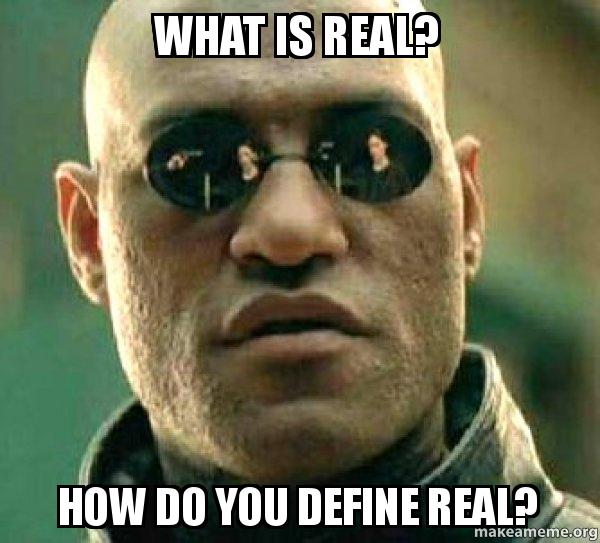
I mean to post this meme in full earnestness, @Biondi1789. In a project on the philosophy of memory (which is really just an extension of philosophy of mind), the “realness” of memory as what I believe is essentially a process… is exactly the question all the different “metiviers” work on in many different ways.
Contradictorily, I often chuckle to my “self” an old phrase I heard once upon a time, “Lights on, no one home.”
So, yes, no, maybe so, depending on what we mean by “real.”
1 Like
In short, he is.  He’s been a thoughtful, informative, and encouraging participant here for years.
Bob
1 Like
I mentioned it in another post, but there are now tags for giordano-bruno and ramon-llull to make things easier to find.
It looks like this one, if anyone is searching:
1 Like
Hi. I spoke once with the real metivier o YouTube ( I guess) hes a star of mnenonics so I wanted to know,  .
.
1 Like
In that case, I can probably get word over to at least one of the YouTube versions of him. 
2 Likes
I wonder what conclusion did bruno made.I read some of his work but those are not easy to understand.