Hi,
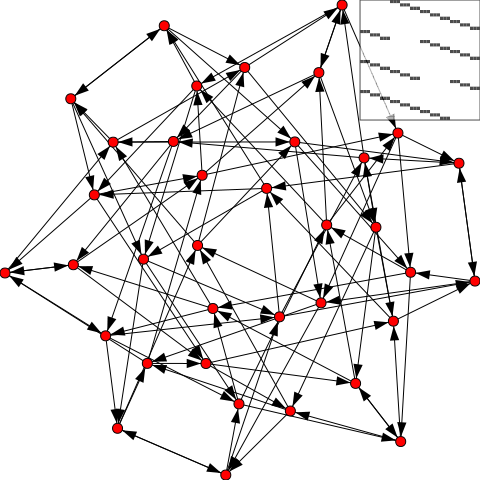
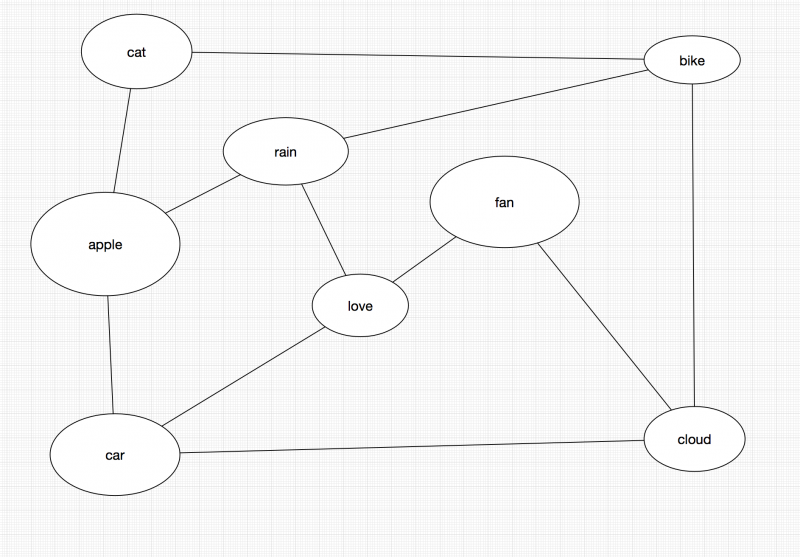
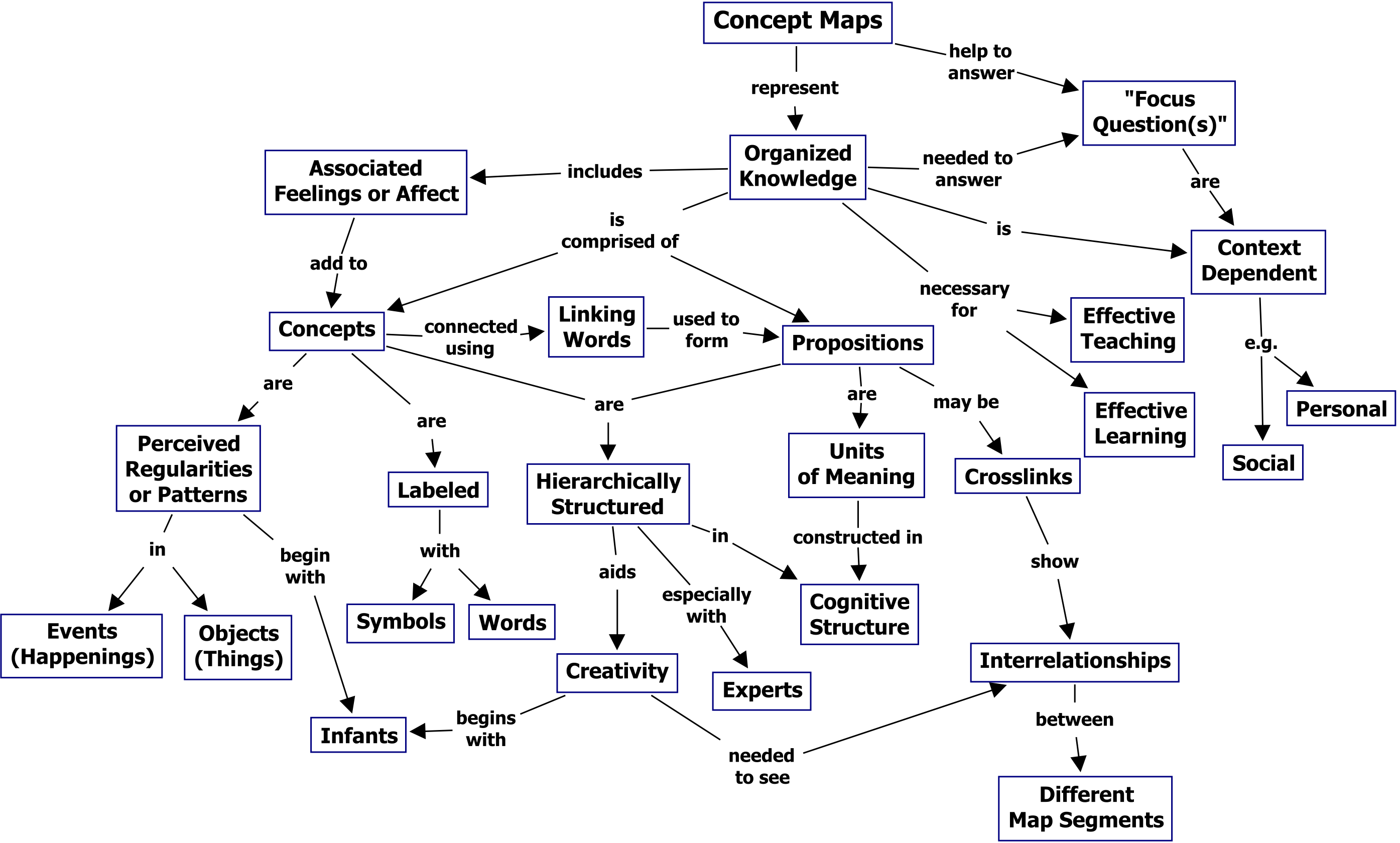
Interesting challenge. The two digraph examples are slightly different. I will focus on the second one since it more or less matches a structure I know as an entity-relation diagram and has 2 types of nodes.
At the risk of being pedantic, let me just lay out how I think of the diagram.
In the second diagram, the items in boxes (e.g.: “Concept Maps”, “Focus Questions”) would be entities and the unboxed nodes (e.g.: “represent”, “help to answer”) would be relationships. A digraph implies directionality: this feature is supplied by the relationships. The best way I can think of to clarify that statement is through an analogy from linguistics. The sentence “A dog bites a man” means something very different than “A man bites a dog”. The verb ‘bite’ implies an action in one direction only. Similarly, a relationship like “help to answer” implies a direction and is like an arrow pointing in one direction only. I will refer to each of these two entities as either the ‘source’ or ‘target’ entities, depending on which end of the relationship they are on.
So, with that said, the challenges are:
a) to efficiently memorize this structure, and
b) to be able to efficiently traverse the structure in your mind to recall nodes along any given path.
I decided to give it a try to see if I could find a way that works for me. For the sake of time, I only did a part of it, but the following seemed effective for me:
First, I memorized the list of entities using pegs. In this case, there were only a small set–26, if I counted correctly–so I used alphabet pegs ('A’pe => Concept Map, 'B’eep => Focus Questions, etc.).
Second, I found special places for each of the entities: I found spots that were just in front of multiple rooms. For example, in my house there is a corridor that leads to multiple rooms. I put “'A’pe => Concept Map” in that corridor.
Third, for each entity, I selected only the relationships that point away from that entity.
Fourth, I placed those relationships in rooms adjacent to their respective source entity.
Fifth, I placed the target entities in the room with their respective relationship.
So, in my memory palace, (as previously mentioned), my upstairs corridor leads to several doors, two of which are my study room and my master bedroom. In the corridor, as I said, I store “Concept Maps”, in my study I store “represent” along with “Organized Knowledge”, then in my master bedroom, I store “help to answer” along with “Focus Questions”.
Since there are exactly 2 relationships emanating from the Concept Maps entity, I am done with this part of the diagram. Now, I set up a similar structure for the next entity on my list, and continue on in the same way.
It is might be worth noting that any given entity will need to exist in multiple locations, equal to the number of nodes that point to it, plus one. I am not a particularly fast memorizer, but this seemed to me to be fairly efficient. That said, when you get to a much larger number of nodes, it might become unwieldy. Not sure what could be done about that.
Also, I found it not too difficult to traverse different paths in this structure. But, again, size might cause problems. I can quickly find each entity from my peg list, and with only a small number of relationships leading to each entity, it seemed easy to find the same entity in rooms, but this would probably be more challenging as the number of nodes grow.
To deal with that problem, I think I would use at least one more room for each entity to store references to the rooms where it may be found. So, in the example I used above, the Concept Maps node is not the target of any relationships, so it would not exist in any other rooms…but, if it did, I would add a sixth step, which would be to use my second bedroom off the upstairs corridor to store references to whichever other rooms it is stored in. If I had to do that, I might start to wonder if the overhead effort is worth it. That would have to be answered on a case-by-case basis.
Hope this helps.
Best regards,
Darn