What makes an image Memorable?

I’m sure that many of us along our paths of developing better memories have had the occasion where a ‘pre-rehearsed image’ in our PAO system say, has failed us for one or other reason. This led me to enquiring what makes for a memorable image and a Google search pointed me towards an article published by MIT (Massachusetts Institute of Technology) entitled: “What makes an image memorable?” by phillipi, jxiao, torralba, [email protected]. I will attach a link below to anyone who may be interested in reading the article which was a study that used computer generated art to understand what makes for memorable images. The researchers found in short, that images that people remembered best had bright colours, simple backgrounds and subjects centered prominently in the frame. The paper’s abstract is quoted below for ease of reference:

“When glancing at a magazine, or browsing the Internet, we are continuously being exposed to photographs. Despite this overflow of visual information, humans are extremely good at remembering thousands of pictures along with some of their visual details. But not all images are equal in memory. Some stitch to our minds, and other are forgotten. In this paper we focus on the problem of predicting how memorable an image will be. We show that memorability is a stable property of an image that is shared across different viewers. We introduce a database for which we have measured the probability that each picture will be remembered after a single view. We analyze image features
and labels that contribute to making an image memorable, and we train a predictor based on global image descriptors. We find that predicting image memorability is a task that can be addressed with current computer vision techniques. Whereas making memorable images is a challenging task in visualization and photography, this work is a first attempt to quantify this useful quality of images.”
Reference: Isola, Xiao, Torralba, and Oliva. What makes an image memorable? CVPR 2011, pages 145-152.

Can anyone add anything further as to what they believe makes the images that they use as mnemonics in the ‘theatres of their minds’ for remembering important information most memorable for them?

3 Likes

@fred2, this is a useful topic. I’m always trying to make my visual mnemonics stick better. I look for any kind of method that will add a little glue for me. Here’s my conclusions after doing some research and from my experience.

First, some definitions. Free recall is when you are shown/told a list of items and you repeat them back in any order. Generally, this does not mean there is any mnemonic system in use. The other type of recall is cued recall where some help is given by the tester. I tend to think that all mnemonic systems are the hidden helper supplying cues whether it’s a peg in a peg system or the last piece of a story that links to the next.

Some people think that bizarre imagery works better than common imagery. This was the standard belief in 1961 in psychology. But it was shown by Wollen and Cox in 1981 that bizarre imagery worked best in free recall and common imagery worked best in cued recall.

But that’s just for non-mnemonic systems. If you use a cue, Wollen found out in 1972, where there are two images, you should use action to tie them together to get the best recall. The difference between a piano smoking a cigar and a cigar resting on a piano was insignificant.

So the moral here, is to tie common and well-known images to you with actions for committing to long-term memory. I can give citations on these points if anyone is interested. And I haven’t found anything in my images that contradicts these studies.

I read through the article you gave a short summary for and liked it. But your conclusions are not of the researchers unless I missed that. I did see that the most memorable images had strong recognizable objects or subjects in the foreground.

Another important thing that perplexed me for awhile was how a strong visual image was constructed and I came up with the idea of a visual sentence to give me a handle on it. The PAO system is quite similar which in my mind makes it a strong visual system if constructed properly. The one key that made a big difference in stronger visuals for me was the understanding of an elaboration. It could be a subject’s clothing, an action’s necessary implement, or an object that was acted on and resulted in a change.

Say you have Albert Einstein. Which is more memorable? a) Albert writing with chalk or b) Albert writing with chalk on a large blackboard. The chalk really is an elaboration because you have to have something to write with. The item that is changed is the blackboard. You always need a direct object receiving the action which needs to be a transitive verb. Maybe you have Godzilla roaring his trademark roar with flames from his mouth. There’s nothing being acted on so it’s not useful as much as it would be as if King Kong was the one being flamed.

I have a problem with the cigar resting on the piano and would more likely have it rolling off the piano setting something on fire. That’s because I like to use exaggeration in my images which I find to be helpful. Exaggeration is a type of elaboration and can be used on subjects to extend their superpowers or actions to increase speed, scale, or violence. Items can have size and color exaggerations as well. My most common elaboration is making something bigger as in a giant blackboard that dwarfs Albert Einstein or his 10 lb piece of chalk.

Another way to enhance the retaining of the image was to add a relevant background, which I call a terrain to suit an acronym of my system, the SEA-IT system (subject, elaborations, action, item, and terrain). Put Albert in front of a class of students in a lecture hall and the scene is more memorable.

One last thing that probably isn’t too controlable is that I read that strong emotions tend to make images stick in your head. Car crashes, 9/11, your first kiss, and so on probably have left impressions that can’t be erased. Also there’s topics here where people talk about using caffeine to enhance memory. Another good post is from @mayarra who also posted about long-term memory enhancements of Focus, Sensation, Familiarity and Repetition.

Hope that gave you something to chew on.
Doug

5 Likes

I often say that my best image is 797: a can of Coke. I’ve always believed this is because it’s brightly coloured (and has a predetermined colour), smallish (and has a predetermined size) and of a predetermined shape. What I mean by ‘predetermined’ here is that you instantly know the size, shape and colour - there is no guesswork. Having said that, not all my ‘images’ are objects or things you can ‘see’. But since we’re talking specifically about visual images, this is my best example.

5 Likes

Thanks Doug. I really would be interested in the academic papers you are referring to in your answer given. Is there anyway you could upload them for our general consumption on this site? I particularly like the concept of “cued recall” as you’ve coined it. That’s half the battle won there, if for instance you have memorable images for numerical ordered peg words (say 1 - 20), that is the very thing that is cueing you to the image that you want to recall/remember that you are associating to the already “rehearsed peg word”. Could the actions or (verbs) you refer to in and of themselves be ‘elaborations’ as you’ve defined them? I think so! I also find when I’m linking images that I also tend to exaggerate my images and also use as much “movement” in my mini-movie scenes created in the theatre of my mind, which of course ties back nicely to the ACTIONS as you’ve termed it. The fact that we tend to find movies more stimulating than still photos is testimony to this I think. Even young babies in cots are stimulated by having ‘mobiles’ (not phones LOL!) hanging above their cots. The slightest of breezes coming into the nursery causes these mobiles to move and attracts the baby’s attention to the stimulus. I believe that there is something there deep ingrained in our DNA regarding movement. Is the movement say a caveman witnessed ions ago the result of a predator or prey? The predator will kill the caveman if it has its way, whilst the prey will give sustenance to the caveman, if it is hunted, killed and eaten. Perhaps a little of topic?

Coke would also work well for 77 instead of Cake

1 Like

@katiek, I agree that those are qualities that make the Coke can work as an image and not just in an image. But the main quality I believe that is supported from psychology is the fact that Coke is one of the top ten most recognized brands in the world and has a strong familiar image. Other top ten strong brand images are backlit Apple icon and the Mercedes-Benz hood ornament. See if those work as well as the Coke can and then you’ll know it’s the commonality instead of the color, shape or size. (Congrats on the personal best in names! Simply awesome.) Are you hinting about having musical cues, Katie?

@fred2, free and cued recall are terms you see in the psychology papers. I thought they make things clearer, especially when looking for tips from research.

And I’ve toyed with the idea of having the action be an elaboration of the subject but it’s such a strong element that corresponds to the verb in grammar that it makes sense to leave it by itself. Adverbs modify verbs and are elaborations of action. Adjectives modify nouns (direct objects) and are elaborations of subjects and items. Seeing this correspondence is what made me coin the phrase “visual sentence.”

I think you’re right about movement as part of our survival instincts. Both for danger as well as a way to spot the next meal. I try to push my mental images towards the goal of animated cartoons I grew up with where extreme action and exagerration were normal.

I found your IEEE conference paper from 2011 and placed it and the Blunt thesis pdf on animacy and bizarreness/commonality on my repo for memory in the pdf folder. I picked up the reference to the Wollen and Cox study from my favorite psychology book on memory by James Worthen called Mnemonology: Mnemonics for the 21st Century. You can find more quotes in a past post of mine about Mnemonology.

Interesting idea about brands. I will try this out, but I find that other images that have a defined size/shape/colour are also pretty good: a banana, for instance. Of course, you can also define these characteristics yourself - e.g. every time I visualise a 791 (coat), I try to use the same pink coat.

No, I’m not referring to sound - I mean that my ‘images’ can also be adjectives, abstract nouns or other words. For example, 561 is ‘late’. You can’t see lateness but it’s still meaningful and memorable.

2 Likes

@katiek, you must eat a lot of bananas!
Interesting about your non-concrete words. Lateness conjures up an emotion for me. Perhaps that’s the key to abstractions. I could use a specific time (or several) I was late and my wife created a memorable moment for me.

#1 factor Active attachment of the idea.

A proper use of memory biases more importantly:

  • Self serving bias: if the image is interesting or something you like
    Example: I like images with women and darkness, thus more memorable.

  • Generation effect: (that which you think of or imagine is default more memorable than anything else) in order to exploit this bias, consider thinking of your thoughts not only your visualizations as steps, you should pay attention at what you’re doing. When you imagine a person, do you start by a full body, profile, close up to the face or an eye? then where do you go? and what’s the final thought of the particular target?
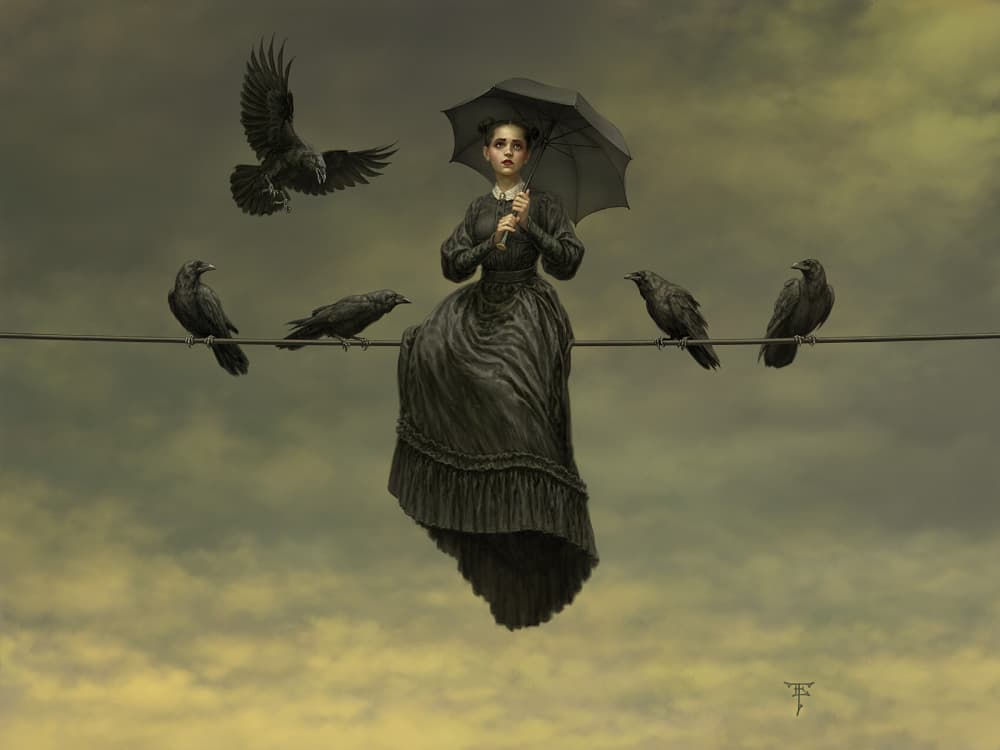
    Example, as you visualize pay attention at what you’re doing, as the process is “steps” like a meta memory palace. THINKING about what you’re doing matters for long lasting detailed identifiable images. Try visualizing this pictures, if you notice where you start and what chunk you visualize and fulfill the rest:


    If you started with ther face, did your mind made up the rest of the body? how detailed? say this were a peg, that facial image is enough, but versatility exists in multiple options. Personally, not only my numbers are attached to multiple people but I have multiple visual references to them, so it’s easy to imagine them doing anything vividly.

  • Verbatim effect: have in mind that you always remember a bit at time. Like in the Generation effect bias, this puts emphasis in the fact that every thought is a chunk of a bigger cluster of ideas. Understanding themes or subjects can be measure on how wide and consistent the chunks of ideas you hold, it’s the same with images.
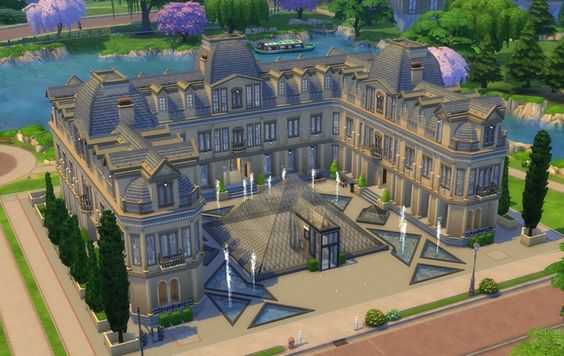
    Look at this castle, close your eyes and imagine it, then pay attention at how much you remember and if the silhouette is formed:

  • Peek end rule effect: that which causes you emotions will be more memorable

  • Availability bias: the ideas that were in your working memory would be more memorable and trigger similar images.

  • Primacy effect: the first thing that comes to mind would have a higher likelihood of becoming the next first thing that comes to mind when you later random recall. (Still figuring out how to fully exploit this tendency)

  • Modality effect: The more details in a particular “step” the image has the more memorable. Do you remember a character from TV or a movie? What do you remember? colors, sounds, shapes, background, decoration, emotions and everything else. So, if you imagine someone using a car, put on the engine sounds and the shinny bits of the machine!!!

  • Humor effect: Is funny? It sticks. I leave to you to figure out what part of something funny is what’s memorable the most: the trigger of the laugh, who/what causes or dictates the funny vibes (the comedian/show)?

4 Likes

In modern times we are exposed to a constant stream of images, many of them surprising, shocking, amazing or funny. One becomes inured.

A real life experience is much richer than just a visual perception. There is sound smell, texture, emotions and very likely a history with connections to other memories.

IMO the number of such connections is more important then the strength of the visual image alone.

4 Likes

What you have said makes a lot of sense. Memory can be split into ‘untrained memory’ = memory we haven’t necessarily trained our minds for and ‘trained memory’ = where we are going out of our way (using mnemonic techniques etc.) to commit something we want to remember for later recall into our LTM (long-term memories) by actively setting out to accomplish such a goal. Indeed to your point, the popular media has inured us to a world full of unpleasant events sadly called “news”.

But returning to the theatre of our own minds, oftentimes the ‘images’ that best facilitate what it is we want to recall from LTM, are those images that are vivid, bizarre, sexual and downright surreal, as the opening paragraph in Joshua Foer’s “Moonwalking with Einstein” will attest to: Quote: “Dom DeLuise, celebrity fat man (and five of clubs), has hocked a fat globule of spittle (nine of clubs) on Albert Einstein’s thick white mane (three of diamonds). Michael Jackson (king of hearts) has engaged in behavior bizarre even for him. He has defecated (two of clubs) on a salmon burger (king of clubs).”

Some of us are obviously better then others in creating such ludicrous narratives as Joshua Foer displays in his book that he is capable of doing, the importance of which let him recall a randomly shuffled deck of cards in an astonishing time back in 2006 as one of the events leading him to become U.S.A Memory Champion.

The point you make of having multiple connections is valid too. I imagine for a “memory competitor” however, there will be a trade-off between speed and vividness of the images that they are able to conjure up on the fly to set the amazing type of records they do?

2 Likes

I think there’s a big difference between memorizing for competition and acquiring for long term knowledge. In situations like competitions, or perhaps counting cards in a game, speed is very important and images with very striking, robust qualities probably work fastest. But for long term retention, IMO, the richness of attachments persists better.

2 Likes

Concept is a strong factor for me so following Jonas advice of ask yourself “Why are they doing that?” helps me a lot. If I forget a story and I am enhancing it I always add some reason why they are doing what they are doing.

Recently I needed to memorize Bam Margera at some vending machines in a blizzard with time rewinding by 5 seconds. The vending machines became hot chocolate dispensers - why? because its a blizzard. The wind blows his money away and he despairs - why? because he is cold. He rewinds time 5 seconds - why? to recover his blown away money and try again.

2 Likes