What do you do with your notes?
I take some (by hand), while reading books or listening to podcasts. But if I’m honest I very rarely reread them after a while.
I’ll revisit them a short time after, when I’m trying to understand a subject and listen/read to several medias about the same subject, but past a few weeks, not any more.
Yesterday I found notes on diverse subjects. And while it’s interesting to look at them (seeing what I’ve implemented or not)… if I didn’t take action on them right after taking them, I’m not going to take action now, I don’t think. At least I didn’t feel any desire to do so. And some of them felt really… outdated.
Because I’m a person who feels better less stuff than more, I even throw a good bulk of them away (I know it feels sacriledgeous!). But I really need all my papers / notebooks, etc. to fill in the one box defined for them, otherwise I feel overwhelmed having to “manage” them…
The thing is what’s the use of having tons of notes if I’ve forgotten what’s in it? If I want to concentrate on a certain subject again, if I have boxes and boxes of notes, I won’t remember if I already have something about it / and if yes, where it is…
Now I’m wondering if I could organize things better than one box with folders with broad categories. I mostly take notes by hand so it’s all paper (mostly).
Do you take a lot of notes? What system do you have to manage them? Do you keep it all?
I digitize my notes, so they all live in a program in my computer (that is just an interface for a bunch of text files in a folder/directory.)
Over time I’ve realized that I have 7 broad categories of interests, so I can organize all of the information into those categories. Subcategories can be added in where needed.
A lot of the time my note-taking process looks something like:
write down notes on paper as I find things I like or as things occur to me - I generally carry around index cards to jot down ideas
consolidate those notes to a single sheet of paper, or a few different pages if they cover a variety of categories.
if more things occur to me, they get added/re-written again at another time
put those notes into one of two digital “inboxes” (one for personal and one for work)
every week I have a recurring task to “process inboxes” - during this I look at those notes and actually put them in their category/sub category where they fit the best
Going through this process allows me to distill down the ideas further with each re-writing. Giving the process time over a week or two lets the ideas percolate - sometimes they end up being discarded and other times they grow into something more fully-formed.
As I put them where they best fit in the sub/categories, I occasionally find that I’m repeating myself, or adding to a past thought-process. Looking through my notes gives me a chance to revisit old ideas that I might not otherwise look at again.
Having my notes digitized allows me to search easily.
There have been times when I’ve looked up books that sound interesting/familiar and discover I’ve already got notes from them (this happens more often when I copy text verbatim rather than distilling concepts into my own words.)
Thanks for all the details.
I thought for a while that I should save things on my computer, but I’m afraid it would become a huge unusable mess.
So I’ll have to think it well through. Distillating it before, is a very good point.
Just a question: when you say “digitalize” do you mean that you type everything? Or scan the paper? When notes are mind maps you’d need a special programm for it, wouldnt you?
They do make special mind-map programs. I’ve used a few in the past but always grew frustrated with the process (or the program quit working and I ended up losing that information). So I have found myself using mindmapping for brainstorming. Then that eventually gets rewritten as a list of some sort. That list eventually becomes a digital note.
Just this morning I moved forward in this process. I took 6 or so index cards with random ideas handwritten on them and consolidated them into two index cards. These include ideas for future projects, notes for current projects, to-do lists, quotes I jotted down, etc.
Some of those items have already been completed or otherwise put into use so I discarded them. At least a couple were no longer of interest and dropped off. There was at least one duplicate.
Rewriting gave me the opportunity to reorganize and group like thoughts together.
Today I’m working from that 2-card list. A few of the things are quick to-do’s that will get knocked off quickly.
The next step will probably be tonight or tomorrow - that’s when I’ll take the not-completed items and put them into an appropriate digital holding space.
Off-hand, there are 5 destinations.
directly into the calendar
or to-do list
the personal “inbox”
the work “inbox”
directly into category/project notes
number 5 is much less common - but I’m currently working on a particular project so I’m thinking about it a lot. As such, a lot of these notes can be directly applied into that project.
Thanks all for your insights!
I don’t think I’ll embark on trying mind mapping on the computer, seems like a headache waiting to happen.
I found the idea of having folders that are projects/action. Meaning the labels are verbs “learning a language” “eating healthy” “organising holidays”, etc. Which is a small difference but appeals to me because it means I have to think: what am I actually do with these notes?
That should help keep it to minimum.
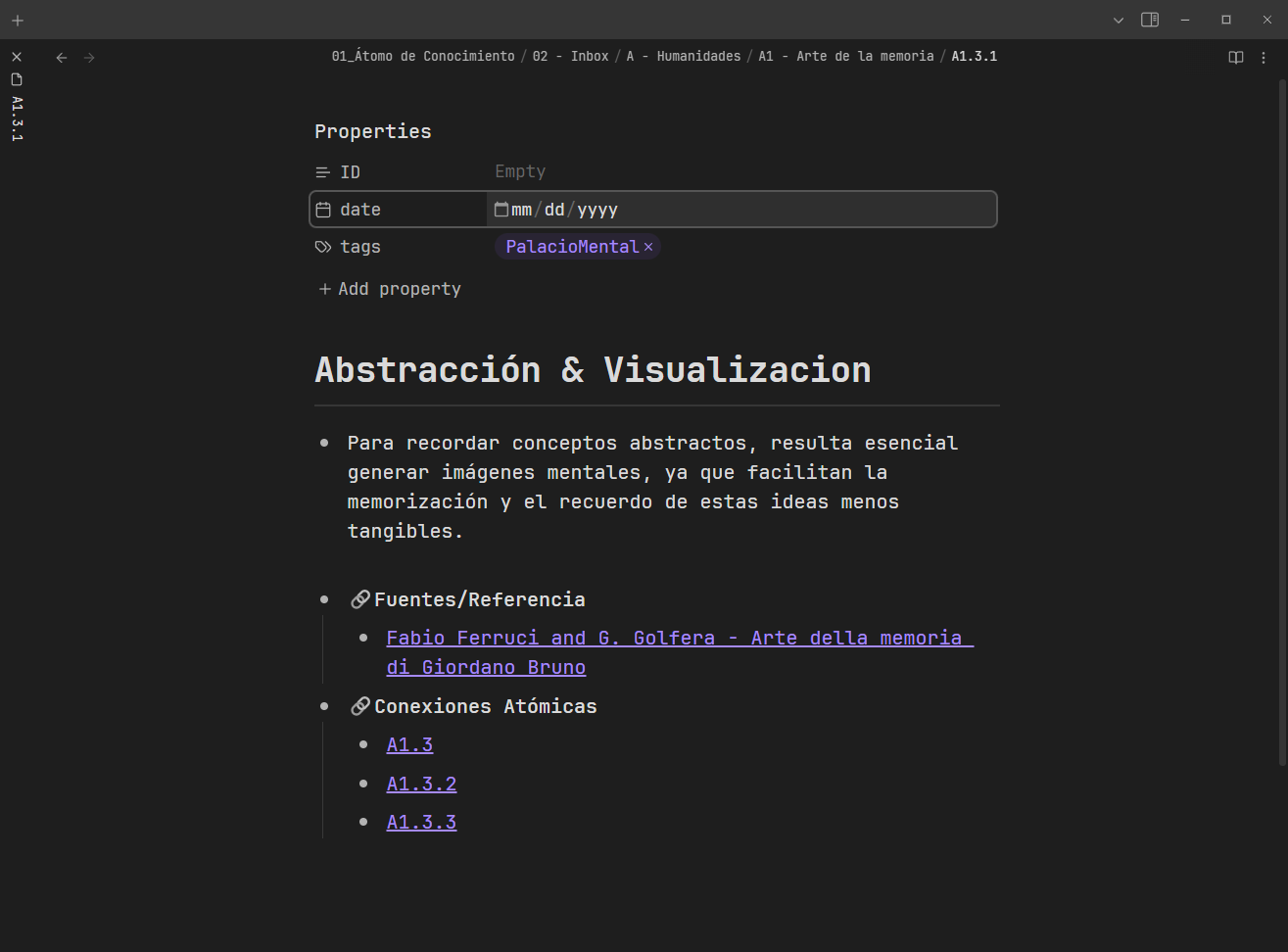
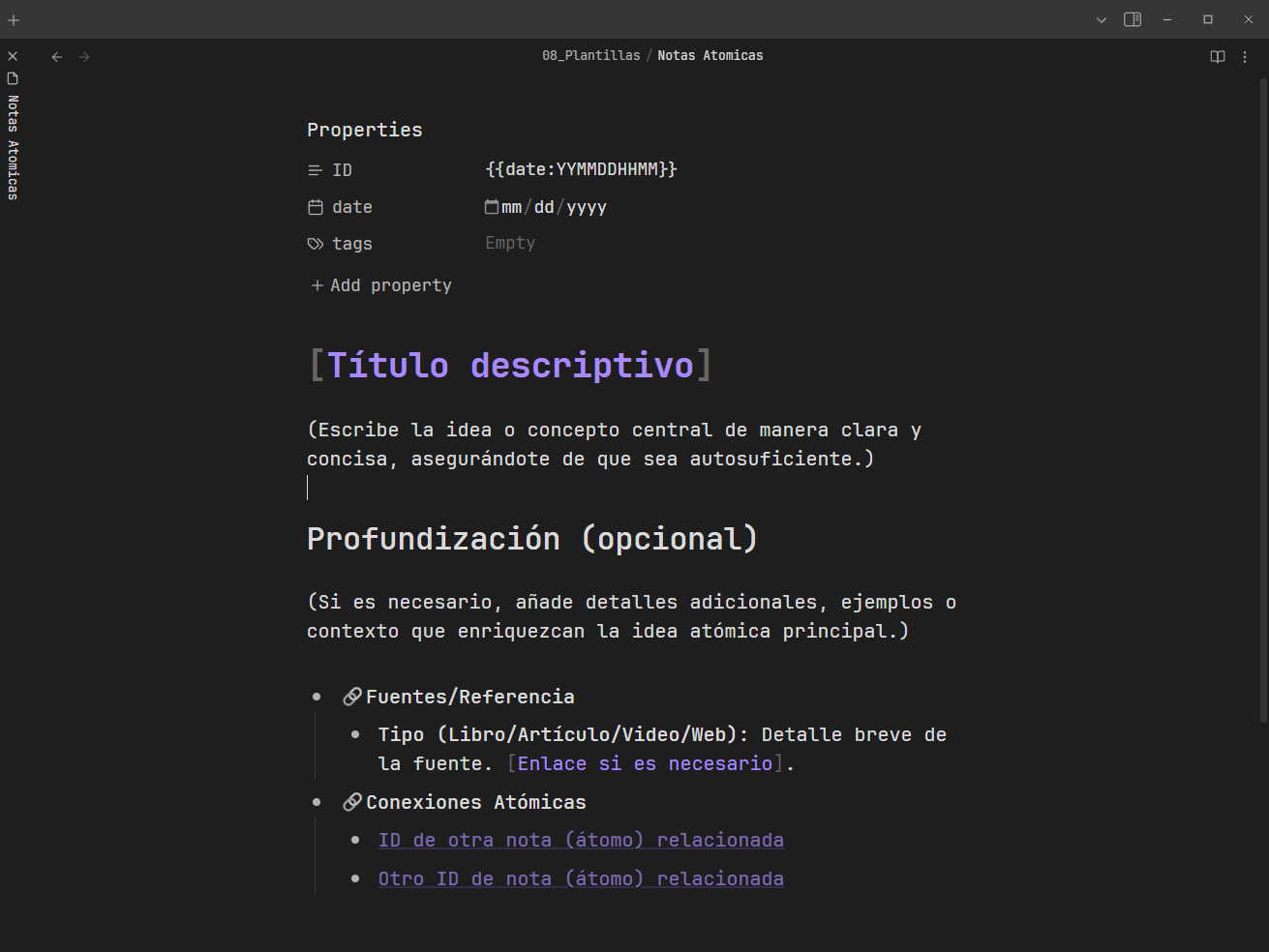
I use atomic note taking to centralize ideas or concepts in a single note… If the note is very technical, such as in the area of computer science or technology, the note will be technical and will have no limits.
But for concepts and ideas it is better to have small notes that centralize ideas, quotes, concepts, etc.
The note should be designed in a way that is self-explanatory.
To convert notes extracted from places such as books, websites, educational videos, or any media, you must understand what you read to be able to convert an atomic note, it is not simply creating an atomic note that later you do not understand what you have done.