4 Likes
How practical is it to look at which columns add to ten or more before starting the calculation? I found I can then know during the calculation when to add 1, allowing me to say/write the answer down as I am solving it without having to adjust for carrying, but I’m not sure if this scales well as one gets better at adding. Thoughts?
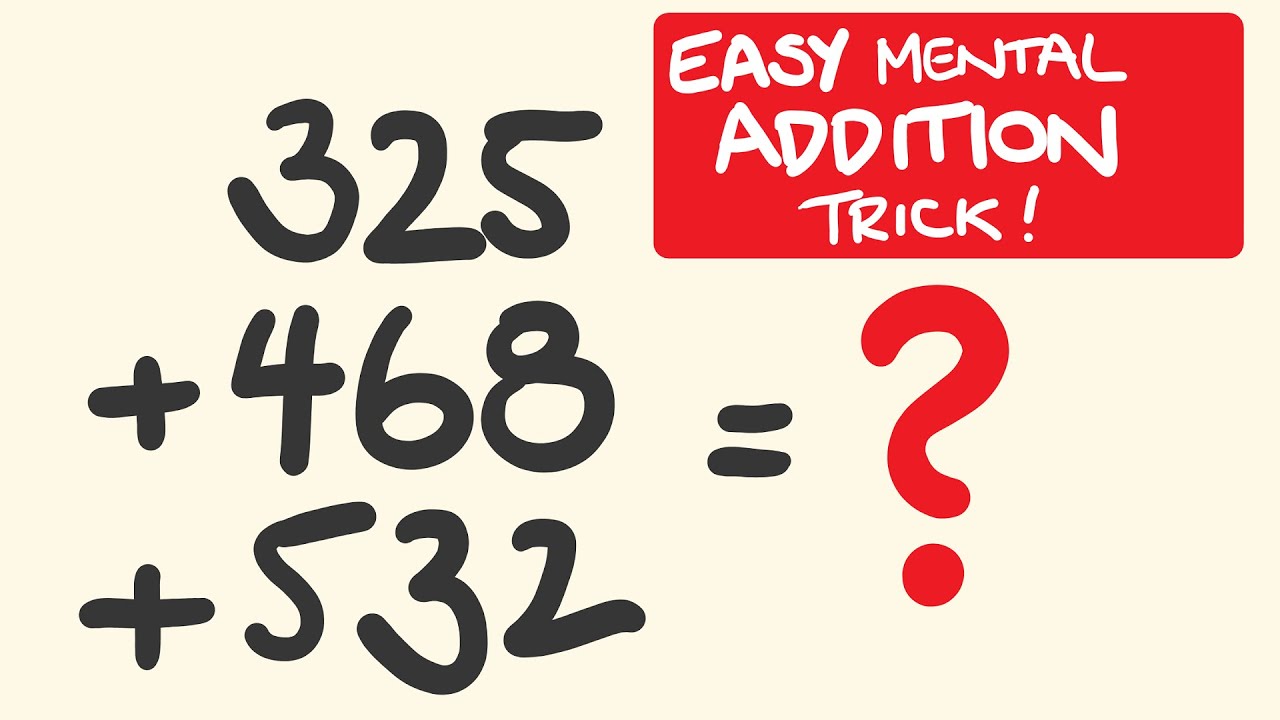
Addition is without a doubt the most fundamental aspect of mental math; here are some simple addition tricks for adding large numbers.
Proceed from left to right.
Start with hundreds, then tens, and finally ones.
For example, if the number is 597+234,
If we use the technique in this case, we will get
500+200, or 700, appears to be a simple calculation.
following 90+30 equals 120
Finally, 7+4 adds up to 11.
As a result, our final answer is
Some tips for quickly adding higher digit numbers:
- Always keep in mind
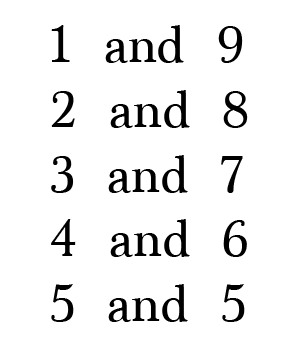
- Attempt to break the numbers first.
for eg: 874+324+257
At first glance, this question appeared to be quite difficult, didn’t it? What if I told you it’s not true?
Let us use the left to right method.
800+300+200 = 1300
Next,
70+20+50 = 140
(If you found this difficult, try breaking it again: LIKE THIS—> 7 + (3 +2)5 + 2
We now know that 7+3 = 10, and adding numbers to 10 is simple.)
Next
4+4+7 = 15
(If this was too difficult, let’s break it down again: 7+ (3+1) 4 + 4
Once it reaches 10, we can easily add 10+1+4 = 15).
See? Isn’t it simple?
2 Likes
Hi David,
Great post!
And thank you for telling people to calculate from left to right.
A little more advanced calculators do it like this:
First realise that 597 is 600-3.
So then 597+234 = 600+234-3 = 831
874 is 900 - 26.
324 -26 = 300-2
So for me 874+324 translates to 900+300-2 = 1200-2.
1200+257-2 = 1457-2 = 1455.
3 Likes