Has anyone else tried using paintings to memorize things? I have been experimenting with using books of paintings to memorize poetry. I usually get about 8 loci from a single painting, depending on its size, and I put about a half-line of poetry at each locus. So each painting gives me room for four lines of poetry.
I do about 2/3 lines in one loci but they get messed up sometimes.
I don’t really use paintings but I think that it’s an interesting idea because you can easily hang them in other journeys which increases the loci you can find there.
Do you have a museum in your mind where you place all of the paintings?
So far, I’m just using the books of paintings themselves as “containers” for the paintings. The downside here is you have to recall the order of the paintings in the books and become familiar with the images in the paintings in order to have the loci available. I try to see it as a bonus, learning paintings as well as poetry, but I’m not sure if it’s a good way to memorize poetry. That’s why I’m curious whether anyone else has tried something similar.
The upside is that there’s no shortage of paintings (or books of paintings) out there, so it’s practically impossible to run out of little rooms. One thing I’ve started doing is finding groups of paintings or buildings that contain paintings. For example, Giotti has a series of frescoes that he painted for the Scrovegni chapel. This building is a way to group the paintings. Unfortunately, the building isn’t already in my mind. I need to transfer it and the paintings in it and then stick the poetry on the paintings.
Can’t decide yet whether it’s a good method or not . . .
I would, strictly speaking about what i literally would do, allow the characters in the paintings, or settings in the paintings to move very slightly. I would think of the paintings as 3 dimensional places analogous to how holograms are three dimensional. I think this might allow your mind to travel around the painting more. I would also avoid placing any time related information into the painting. I don’t mean time as in dates. I mean time as in Franks “new” Gloves vs just franks gloves. For me time adds another dimension that over-complicates recall and encoding. Certain forms of meditation are very very useful in strengthening ones ability to visualize. I recommend, http://www.dhammasukha.org/Study/Talks/Transcripts/METTA-JT2-FEB07-T.pdf this frees the mind of distraction (aka things that remind you that your visualizations are something your adding to reality).
my two cents, i saw you were talking about visualizations on another topic.
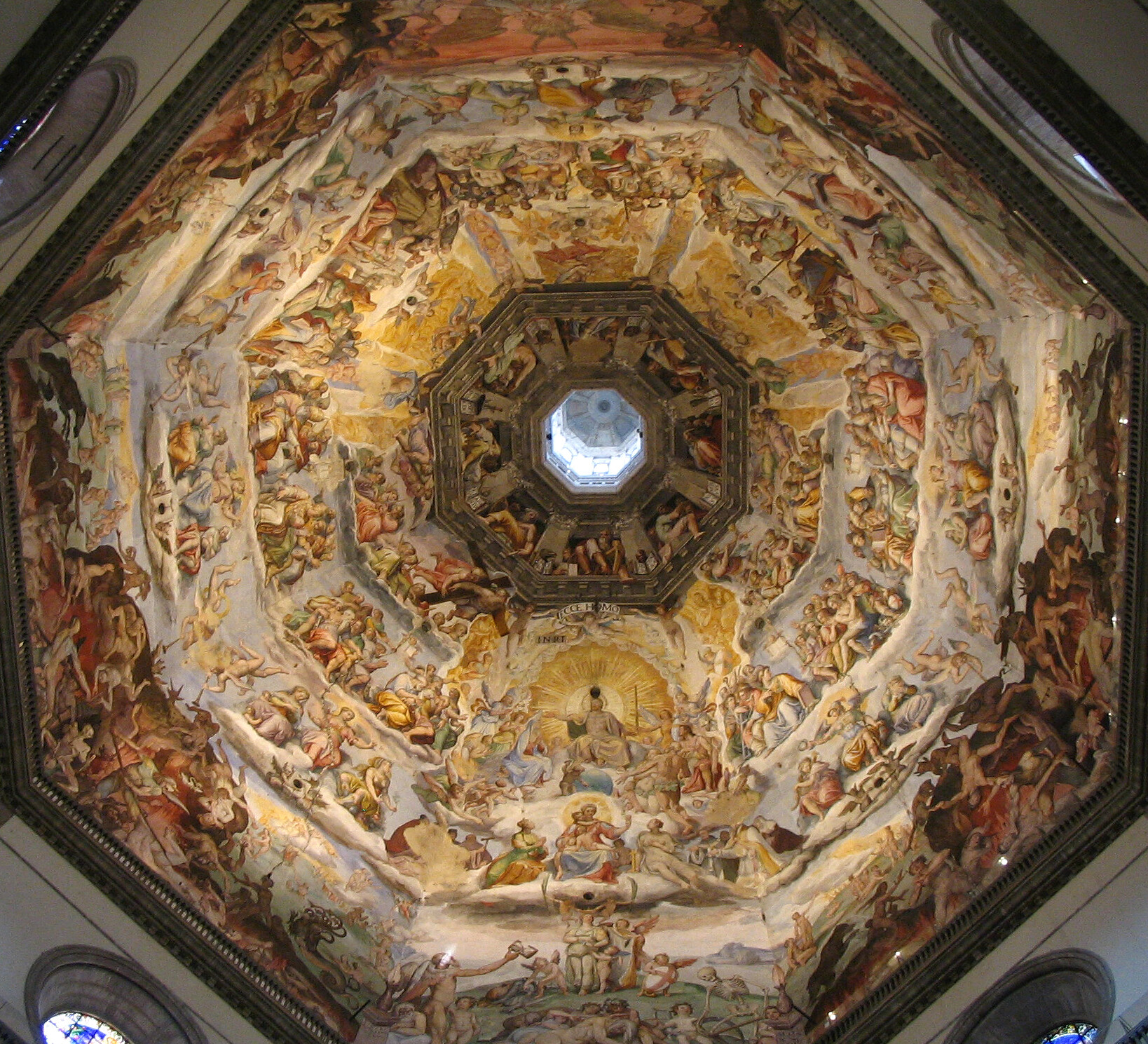
I wonder if creating a memory palace from a complex painting would be a good way to memorize the painting itself – either out of interest or for a memory demonstration. Examples:
You can also create your own ‘paintings’ in your head and use them as imaginary memory palaces. The bonus is the location IS the image and you can also link the images. You end up with a sort of mix of images, link method and method of loci. I’ve been using this to remember my dreams because I don’t want to make a new memory palace every morning.
Hi, Rublev. Did you end up making more memory palaces out of paintings?
I’m thinking of making a palace out of this painting by Bruegel (“The Census at Bethlehem”):
I’m considering imagining a clock face on the painting and choosing 12 loci at or near where each of the hours would be, taken in order from 1:00 to 12:00. A drawback is that’s not mimicking how my eye travels the painting if I just look at it. But it’s systematic, which would make for less frustration, I think.
Have other people done similar things? What would be a recommended route through the painting, if not this “clock” approach?
Cool. I don’t remember ever seeing this post before, but I have wondered for a very long time if many of the classical artists from Renaissance times were consciously creating memory palaces.
I use paintings, usually with perpesctive (depth), for instance landscape, with buildings, people or animals, or objects.
Generally, I use picture files with a high resolution, in order to zoom in.
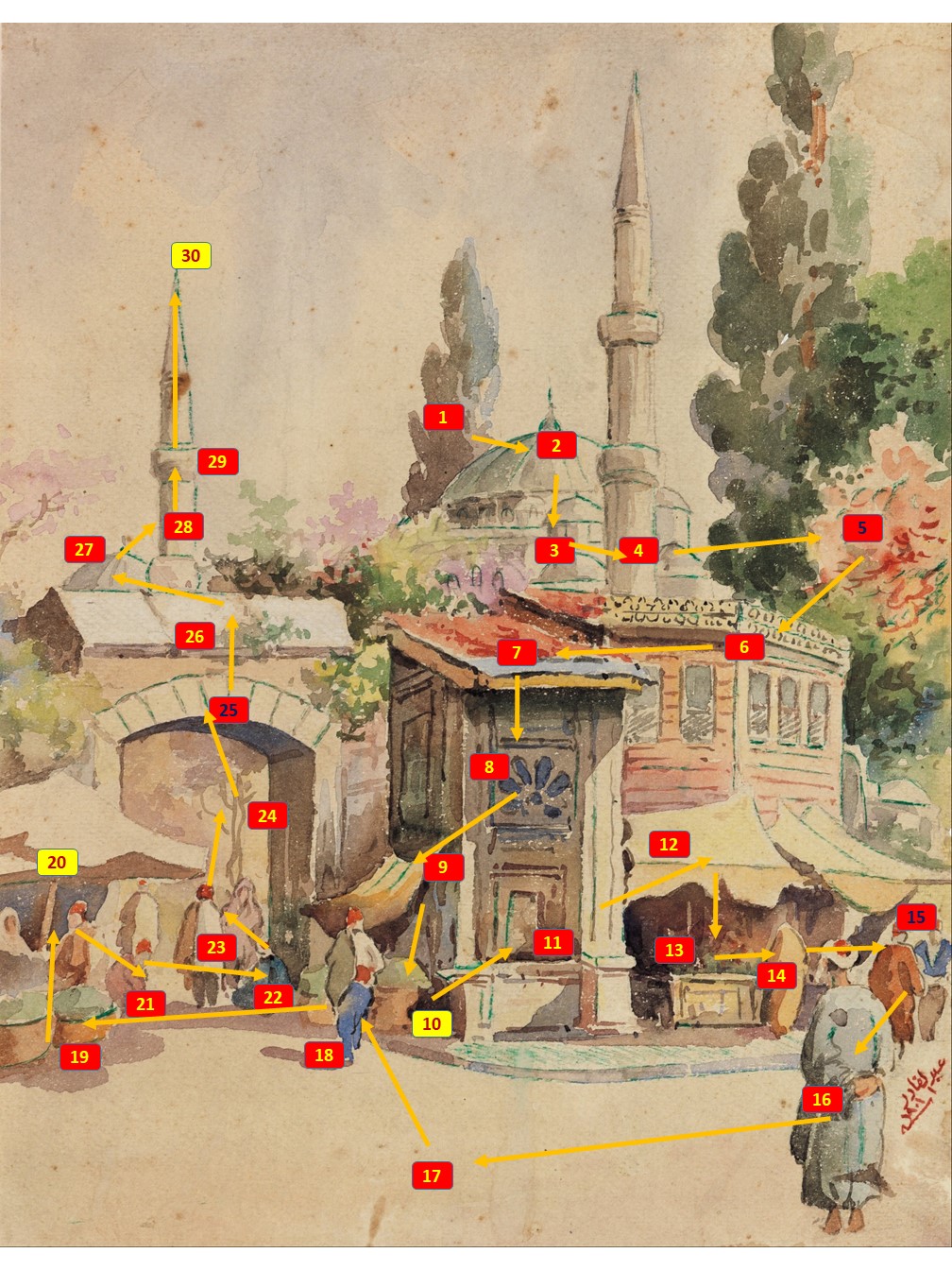
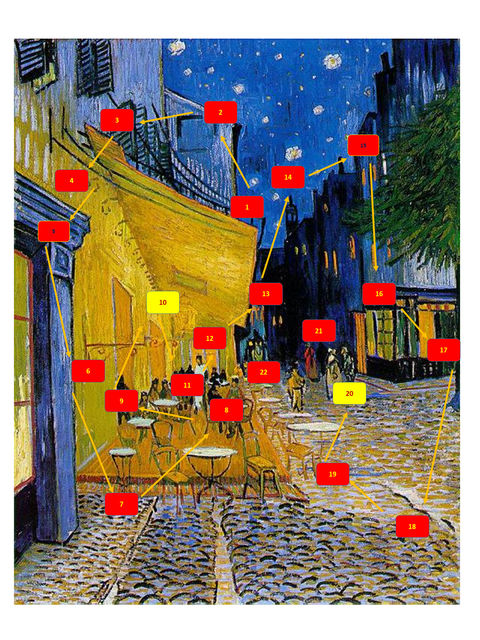
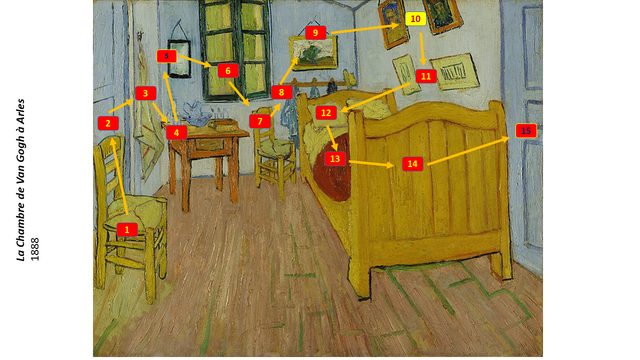
Then I imagine a path, most of the times clockwise, usually from farest to the nearest point in the right side of the painting, then in the down part, in the center, then to the farest point in the left side. I find this path easier than a grid-pattern.
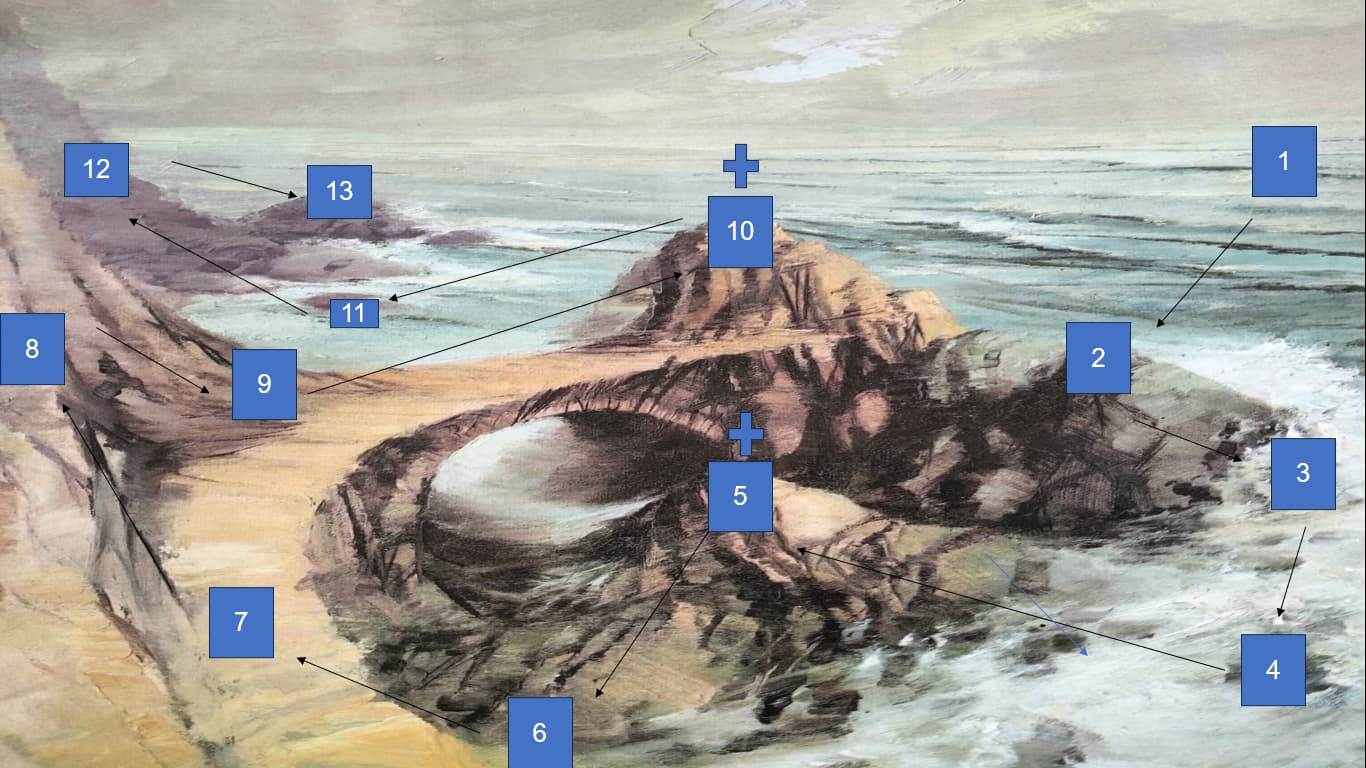
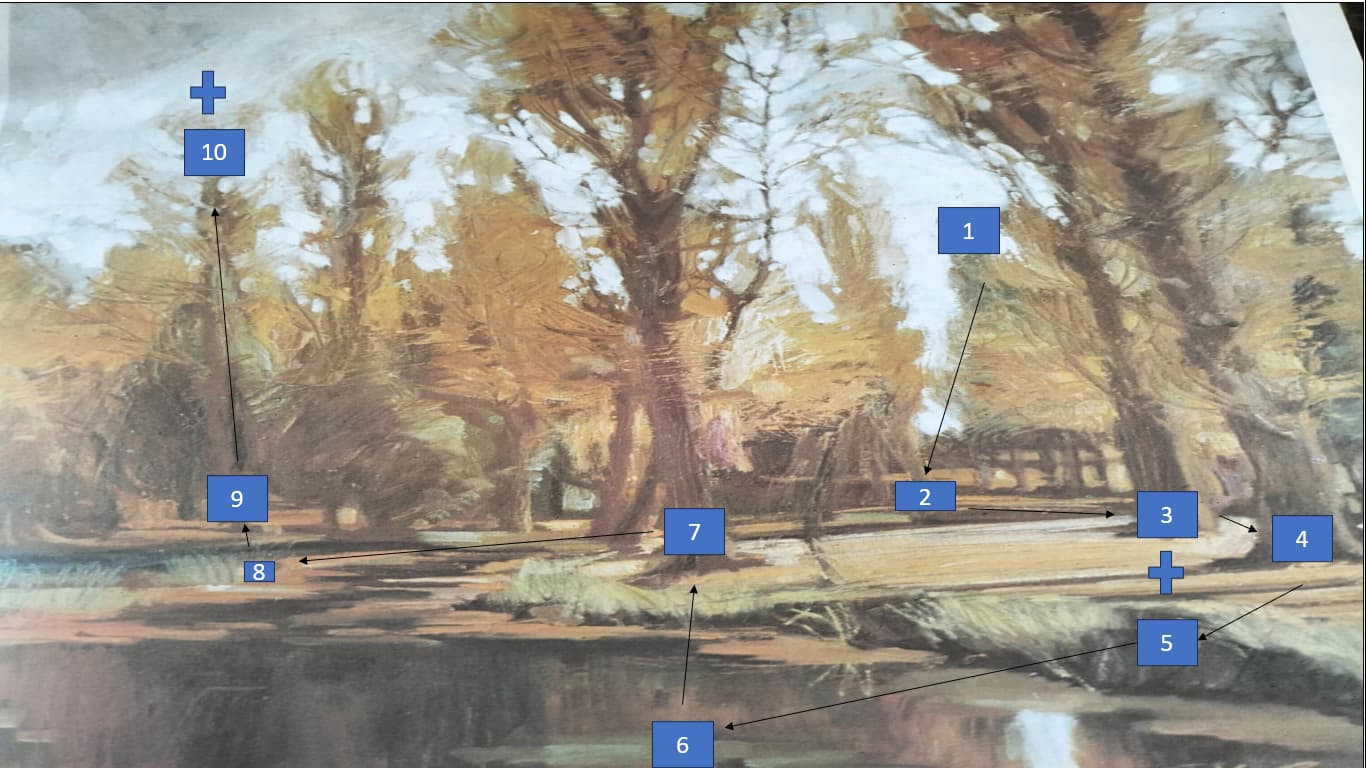
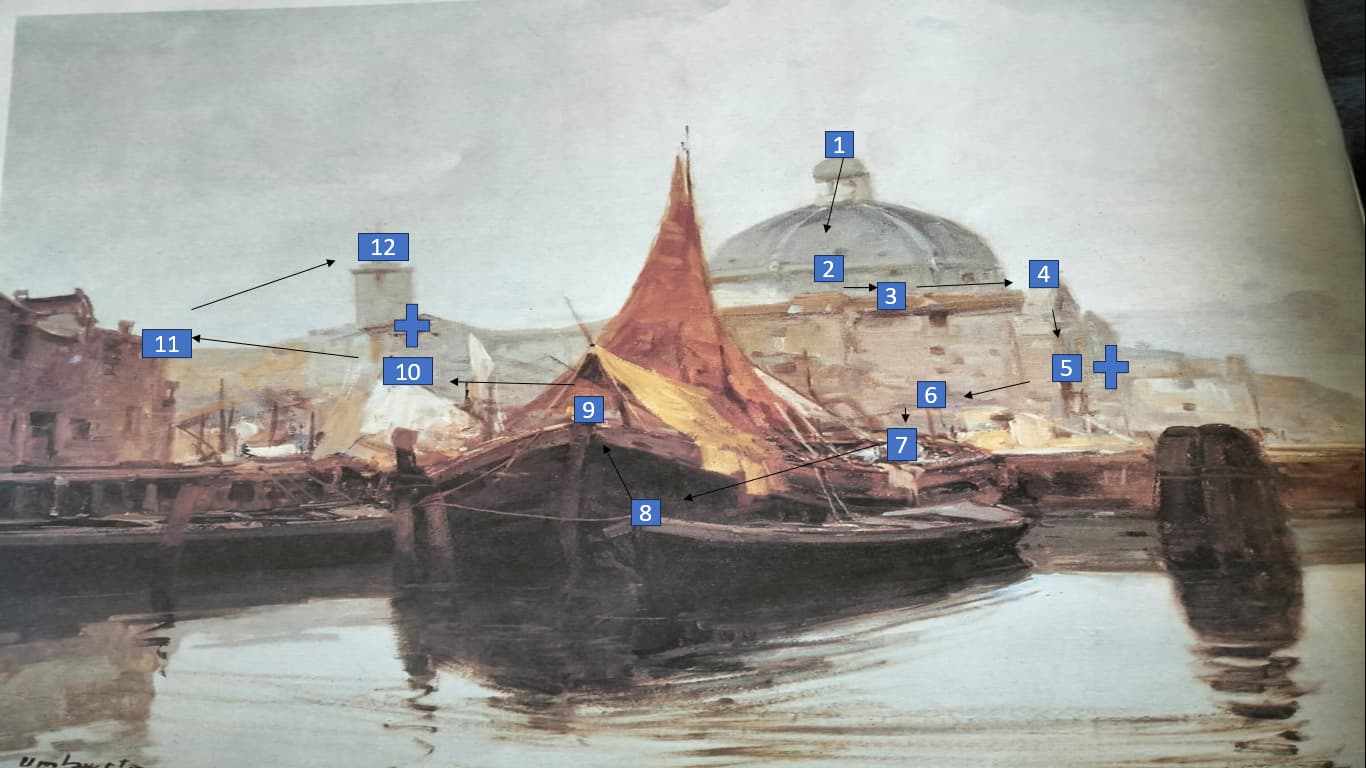
With powerpoint I place the loci (with a different color for the loci 5, 10, 15, etc).
I first learn loci 5, 10, 15, 20, etc, in order to avoid loosing/forgetting a locus when I recall the path ; then I learn all the loci, and link them with the stuff I want to learn.
I hope my explainations were clear enough. This is one example :
If you want to use a painting as People Memory Pegs then I don’t think you can do much better than Discussing the Divine Comedy with Dante by Chinese Artists: Dai Dudu, Li Tiezi, and Zhang An, 2006, oil on canvas. The three artists are pictured as self-portraits in the top right hand corner of the painting behind the wall alongside Dante Alighieri.
The link provided below gives the list of names of all 103 People pictured in the painting. I think the painting is a good reference point in explaining memory palaces in paintings?
Anyways, enjoy identifying all 103 people both heroes and villains in the painting:
If you hover your cursor over any of the people in the painting and click on it, it will take you to the Wiki page to identify who the individual are.
Which software have you used to create the boxes and arrows inside the images? Moreover, could you share more of your mental palaces with paintings? I am deeply interested in your method. If not, could you suggest more paintings?
Interesting approach! I haven’t tried using paintings for memorization, but your method sounds creative. How do you choose the paintings, and does the visual aspect enhance your recall compared to traditional memorization techniques? I’d love to hear more about your experience and whether it’s been effective for you.
Yes, there is clearly a connection between paintings in the renaissance and loci, as per Frances Yates Art of Memory book.
It is part of the aesthetics of medieval paintings.
that also answers your question @tarnation
Hello, I am quite new here. I have read some tips on memory palaces and stumbled upon this forum on using arts as memory palaces. I tried to use some and would like to know your opinion on it, any tips?
Personally I imagine interactive scenes within the paintings. Different scenes (representing different information) happen at the different “loci” in the painting.
ahh, I see. that’s pretty cool. I Feel like it’s much more memorable when there are scenes instead of just an object in the palaces. Thanks, I am definitely going to try that.