Using a straight diagonal path that changes themes to keep historical centuries organized. Thoughts?

Hey everyone,

I’m currently organizing a personal task to memorize historical events and timelines. I want to pair the Major System with open-air memory palaces.

Based on memory theory research, like Dr. Kelly’s work on indigenous memory techniques, it seems that open, linear journeys are better for chronological timelines compared to closed, non-linear spaces like traditional Roman Rooms. A linear route can minimize confusion when keeping events in order.

To put this into a visual format, I am creating a template built on a straight, 30 degree upward diagonal path. Moving up the diagonal line from left to right represents moving forward in time.

To prevent confusion between palaces over multiple centuries my plan is to keep the exact same 30 degree upward path angle for every single era, but completely change the environmental theme, colors, and physical path texture for each century.

I intend to use memory palaces that are typical for specific time periods. Also, the loci in the memory palaces are very recognizable objects that fit well with the environment.

Example memory palaces/loci for US history:

The 1600s - Memory Palace: Native American Village. Loci: a traditional conical structure, canoes, a fire pit, weapons and hunting tools, a totem pole, a buffalo, etc..

The 1700s - Memory Palace: An 18th century Galleon Ship. Loci: a helm, a cannon, a mast, a lookout platform, a wodden barrel, a rope net, etc..

The 1800s - Memory Palace: An Industrial Rail Yard. Loci: a steam locomotive, a wooden water tower, a pump handcar, a track switch lever, telegraph pole, a turntable pit, etc..

The mechanics rely on three elements: the physical locus, an animated character representing the historical event, and a Major System year word (completing the final two digits of the year). Rather than a static image, the character and the Major System object engage in an interactive animation.

For example, to combine the Declaration of Independence with the ship’s helm locus (1700s):

  1. The Major System Anchor: The target year is 1776, so the word is CAGE (76).
  2. The Historical Character: A yellow parchment scroll character wearing a powdered wig.
  3. The Interactive Action: The scroll is trapped inside the iron CAGE at the helm, shaking the bars in a 2-second looping animation.

I would love to get your thoughts on this 30 degree highway logic before I fully commit to it.

• Will changing the background theme be enough to keep the centuries separate, or will using the exact same diagonal path for every era make the memories blur together?

• Is there a better way to map out a straight historical timeline without it getting confusing?

Thank you :slight_smile:

I don’t think anybody will use exactly your system so there little chance to get feedback exactly on that.

First things that come to mind is:

A timeline is already naturally ordered (because it’s numbers and numbers have an order), so there’s no need to stress too much about ordering it geometrically I feel. But it also can’t hurt so why not?

I used to not being able to use streets as memory palaces because I was going in straight lines and mixing up stations (was the butcher’s after or before the pharmacy? I never remember). BUT as soon as I began using corners to anchor it all, it worked ten times better. In fact the more twists and turns a route has, the better I remember it.

Now that may be something personal (since we don’t form our sense of orientation the same way if we grow up in a old winding village, a big city with a grid layout, or in the countryside).

Anyway you can always test your concept on a smaller scale first. And don’t worry too much about “fully committing”. I can assure you that, if you build up systems to use for years, they will change and evolve. Nothing is set in stone, you don’t need to be afraid of messing up, it’s guaranteed you’ll change SOME things with practice.

3 Likes

Thanks for answering. That’s an interesting point about the straight lines vs. corners. I’ve read about other people having that same issue where a straight street causes the loci to blur together.

Perhaps the reason corners work well in a real world journey is because they provide a shift in perspective, which creates a stronger connection with the loci that we have after that turn.

For the system that I suggested, my hope is that by making every single century a completely different visual world (shifting from a foggy forest to an 18th century ship, then a rail yard), those obvious environment changes will act, in a way, like the corners in your system. Maybe I don’t need the turns if I’m transitioning into a completely different environment.

I appreciate the advice about testing on a smaller scale. I’m definitely going to test a small part first before building the whole timeline.

Out of curiosity, when you use corners on your journeys, do you store multiple memories at a single corner, or do you use the turn itself as a single locus?

1 Like

It’s not even that the turn is a locus, though it can be. It’s just that if you would draw a line going through the loci they wouldn’t make a straight line.

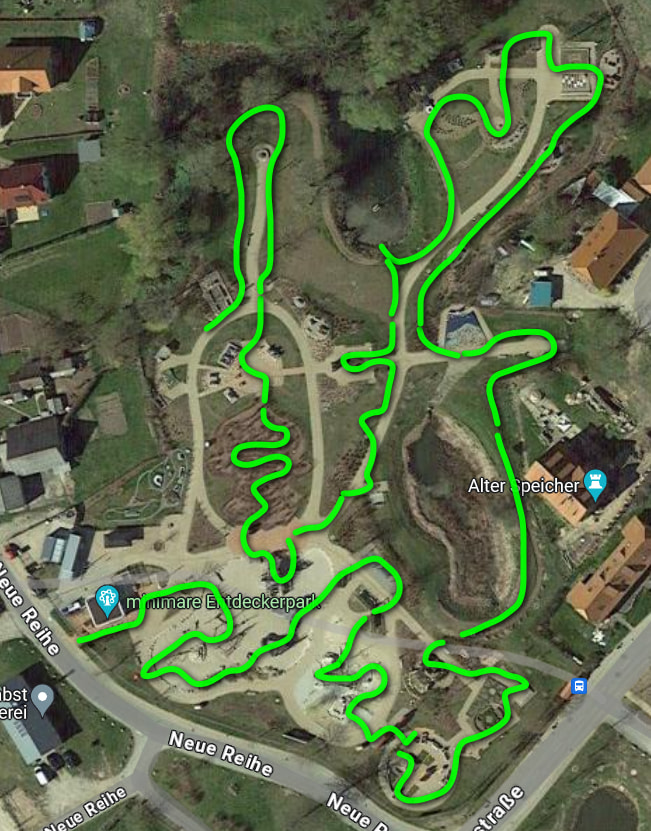
Example:

In some palaces (like for verbatim) I have lots of small loci near each other, and one thing per locus, because I know precisely what’s there and that’s not going to change.

In some palaces (like for history) I have big loci (more like zones), because I know I’ll put a lot of information linked to that date or century, so I let more space between stations and inside the loci/zone, because I expect the locus to grow with new information over time.

3 Likes

I agree, massive landmarks with plenty of room around them so you can and add extra facts to a specific event works great for history.

When you pack multiple historical details into one of those big zones, how do you keep the details organized inside it?
Do you link them together in a smaller route inside the zone to create a somewhat separate story, or just have everything interacting together in one big scene?

1 Like

I pay attention to the interactions with the locus most of all, so that the locus triggers remembering the scene/historical event, and so that the scene/historical event cannot happen in another locus (in another year).

The events are linked to different places in the locus, I don’t make them interact with one another, except if they are thematically linked (like a timeline of the months of 1945, what happened at the end of the second world war).
Then either I put them in a cluster near one another in one zone of the locus or (if it feels too cluttered) I make a chained story with only one starting point linked to the locus.

Mostly I do what feels the most logical at the time. Maybe my practice will change, my history memory palace is still young compared to the others.