Last night while watching a video related to The First Astronomers, I came across a clip in which Australian elder Uncle Ghillar Michael Anderson indicates that indigenous dendroglyphs (markings on trees) or petroglyphs (markings on stone in the stony territories) are the libraries of the Indigenous peoples who always relate (associate) their stories from the markings back up to the sky (stars, constellations).
These markings remind me of some of those found on carved stone balls in neolithic European contexts described by Dr. @LynneKelly in The Memory Code and Memory Craft and carvings on coolamon in Knowledge and Power.
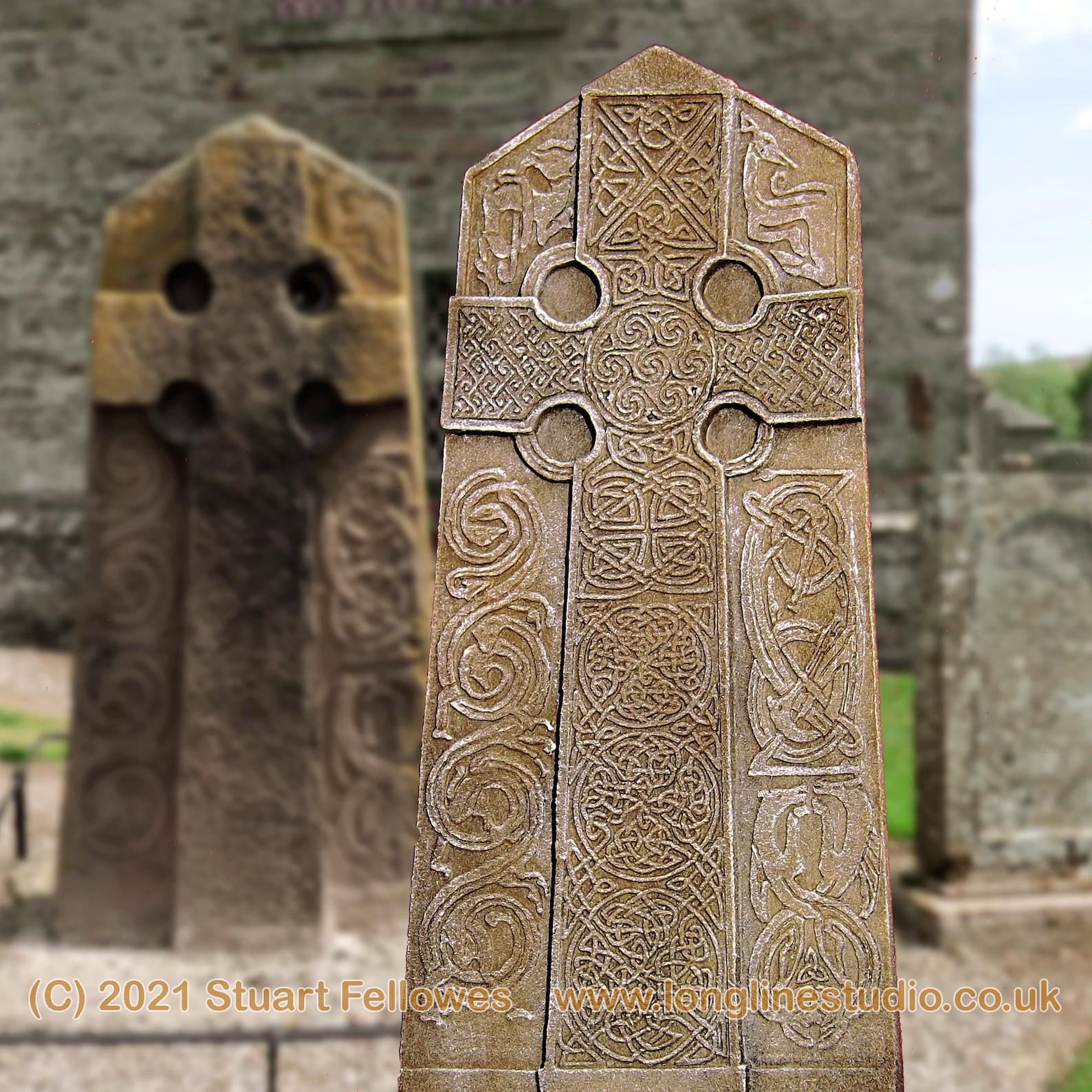
Using the broad idea of the lukasa and abstract designs, I recently bought a small scale version of the Aberlemno Pictish Cross as a small manual/portable memory palace, which is also an artwork that I can hang on the wall, to use to associate memories to the designs and animals which are delineated in 18 broad areas on the sculpture. (Part of me wonders if the communities around these crosses used them for mnemonic purposes as well?)
Sorry about the delay in replying! This is all rather surprising, if you didn’t somehow know what has been going on here. Did you?
I was in Melbourne for the launch of The First Astronomers. If you get the book, you’ll find my endorsement quoted inside. It is a fantastic book. The author, Duane Hamacher, invites me each year to give a lecture to his cultural astronomy class and then run a lukasa workshop at Melbourne University. Because of the launch the following day, Uncle Ghillar was in Melbourne too. He turned up at the lukasa class. It was a strange feeling to have an Aboriginal Elder there as I compared the African nkasa (plural of lukasa) the students were making to the scared Aboriginal tjuringa and other memory devices - the abstract ones you are describing.
Uncle Ghillar was saying how they all work exactly the same way and was delighted with the workshop. We had a long lunch after talking about the things you refer to here, @chrisaldrich. Isn’t that a beautiful endorsement of the way these objects are universal in the way they work? An Australian Aboriginal Elder identified so easily with the workings of an African memory device.
Yes, I use a lot of objects with abstract designs in my memory practice.
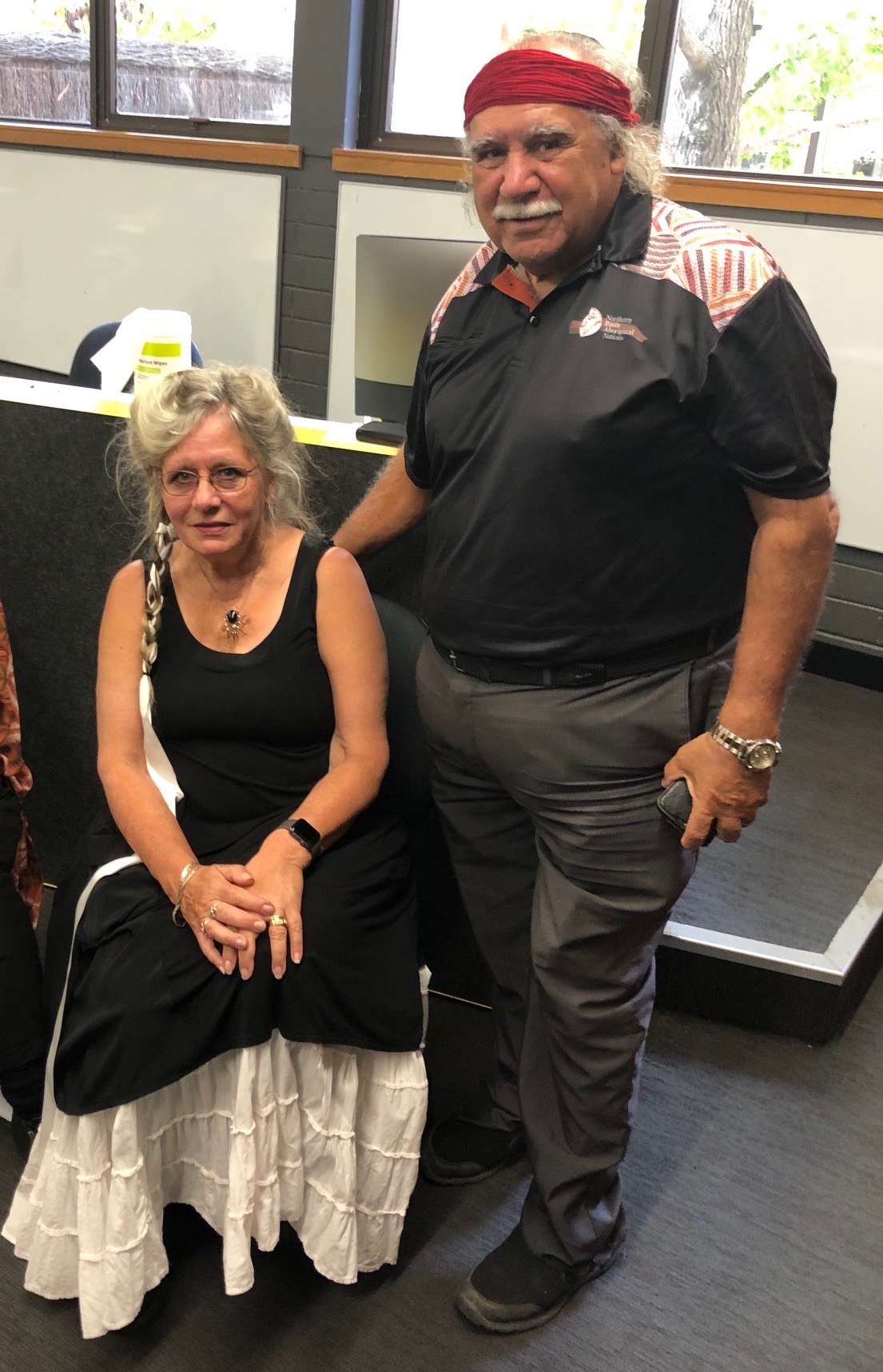
Just to show off, here is an image of Uncle Ghillar with me at the lukasa workshop.
I have wondered the same thing about Pictish artwork, but never had the chance to follow it up. Please tag me in anything you find out - from research or your own experiments. It is all so fascinating.