So, I’m a music lover but, when it comes to musical knowledge, I’m just a little more than being zero. I write songs and compose them, I decide the tune without even actually knowing what musical note it is or the key my song is in. I have zero idea on it.
I decided that I want to get better at this and I want to start by memorizing the basic cdefabc major scale. I need some help on how to start. I am taking help from youtube, I just heard all the cdefabc and I don’t know how am I going to memorize them and actually recognize whenever I listen to each one of them individually. Would be good if any of you could suggest me ways.
I know someone will definitely be willing to help, so thankyou in advance!
This is an interesting topic! I have played an instrument for many years and still have no idea what the notes are when I hear them. I made a video about this one time but the hard part of trying to memorize a note’s sound is that it might vary depending on when you hear it.
Say you memorized what a high C sounds like. Will you be able to tell the difference between a high B even if a low note is payed before? In this aspect, the sound is relative because the context in which you hear it might affect what you think a note sounds like. I have had this problem before haha
Being able to recognize the name of a note when you hear it without context is called “perfect pitch” and I’m not sure if it can be developed if you don’t acquire it when you’re very young. (See this discussion.)
It’s possible to develop relative pitch though — that’s when you can identify all the musical components based on their relationships without necessarily knowing the exact note names.
I’m not sure if it’s what you’re looking for, but I recently stumbled on a free online textbook about music theory. In chapter 2 it describes how scales are constructed, including the C Major scale (cdefgab).
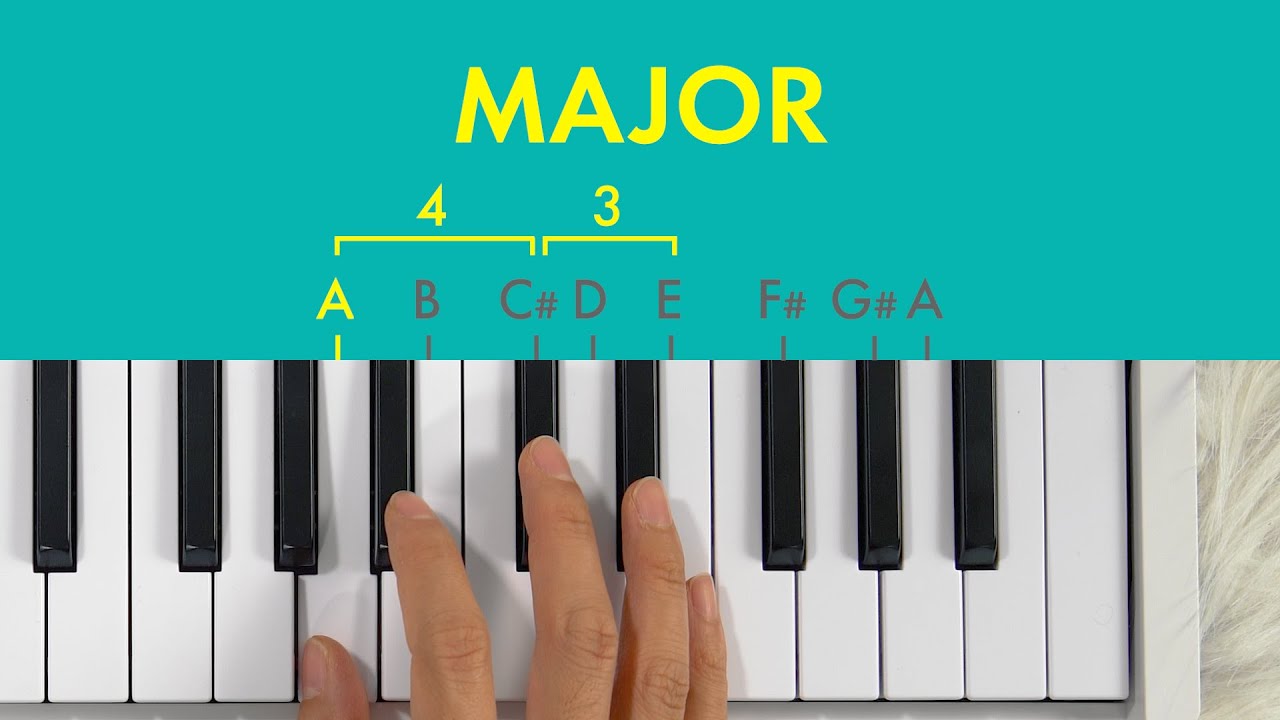
Once you know how the major scale is constructed, you can learn about the names of intervals and then triads (chords) that are built on each note of the scale using intervals. That’s where things start getting really interesting. Once you learn how chords are built on the scales, it helps with identifying common chord progressions by ear and also with writing your own music.
Here are two videos that might help:
One way to learn to hear intervals is to find melodies that use intervals. The melodies work like mnemonics. For example, if you hear two notes that sound like the theme from the Jaws movie, it’s a minor 2nd interval. If you hear something that sounds like the first two notes of Somewhere Over the Rainbow, it’s an octave. If it sounds like the difference between the 1st and 3rd note of Somewhere Over the Rainbow, it’s a Major 7th interval.
For guitar I’ve had fun using a 00-99 PAO mapped out over the fretboard.
I haven’t spent much time on it at all, but you can do the same thing over the 88 hammers of a keyboard (or whatever you’ve got).
The neat thing is that if you really want, you can memorize the herz of each note. I’m not sure that would stimulate perfect pitch, but it would certainly be fun.
@Parkouristx Is your video still up? Would love to see it!
I don’t play any instruments and I thought that people who play instruments can easily tell which note they’re playing. But I see it’s definitely not the case.
As you described it, I will surely have a lot of problem while differentiating between high B and C. Seems it’s gonna take a lot of time. But I want to master this and I’ll keep trying.
Thankyou for mentioning all the websites and links. It will help a lot. About the mnemonics, I’m not sure how to work on them properly, I’ll check out the links you mentioned.
That is actually fun, yesterday when I was just checking out how they tune the piano or any other instruments and how what’sthe base or standard tuning, I came across the standard pitch A440 (also known as Stuttgart pitch), which is the musical pitch corresponding to an audio frequency of 440 Hz, which serves as a tuning standard for the musical note of A above middle C, or A4 in scientific pitch notation.
There is also an equation to figure out the frequency of other notes if we can find how many semi tones away the note is from A.
Love that attitude! Maybe some people just have the ability to know the note just by hearing it, but definitely not me haha
There is another thing I just thought of! Depending on where the sound is coming from could also make the note sound “different” like hearing a high C from a trumpet vs a piano. In reality, it would be the same note but the instrument might make it sounds like something else! Mind blowing haha
Sadly, you can’t learn perfect pitch. I think that many musicians have the dream but it will probably never be possible. Perfect pitch is something you’re born with, alternatively something you obtain during your first months as a baby by hearing a lot of music and different notes.
With that said, perfect pitch can also be a burden. I’ve been in many different choirs and sometimes there is someone with perfect pitch. Since perfect pitch can’t be “turned off” it can get really problematic when the choir accidentally change key in the middle of the song (this happens sometimes and if it happens during a concert you just have to roll with it) but the guy with perfect pitch stays in tune. It won’t sound good.
The closest you can get is knowing all the intervals (as mentioned by earlier posts). This skill is almost as useful as perfect pitch. If you know your intervals, all you need is a reference note and you’ll be able to find every other note.
I think it’s also possible to learn to sing a specific note without reference. Since your vocal chords are muscles you could potentially get a specific tone in your muscle memory. I think this would take a lot of work though. After many years of singing I can’t do it. Neither have I ever had to.
Thanks, a lot.
This was very useful!
If not perfect pitch atleast I’ll try to attain what ever is nearest to it! I just want to be sure of what I am trying to compose, and it’s clear that you definitely don’t need perfect pitch for that, I will try to learn the music theory and notes as much as possible.
You might like this ear training app. It won’t give you perfect pitch, but it will improve the ability to hear things in music.
I also posted a link to a video about why perfect pitch isn’t always a good thing that I thought was interesting. It talks about quasi perfect pitch, which is something that can be developed.
I saw Adam Neely’s video on that and was underwhelmed with some of the points made, especially the argument that people tend to lose perfect pitch as they age, which is like saying “there’s no point learning sports because you’ll lose the ability to do it when you get old”.
Regarding the learnability of perfect pitch, it’s a really interesting topic that’s been dominated by a few old assumptions that have only recently been examined more critically – namely that “you’re either born with it or not”, and “if it’s learnable, it’s only during a critical period in early youth”.
Certainly the first one is false, and there’s a small trickle of evidence suggesting that the second is also false.
Van Hedger’s study is the most compelling evidence I’ve seen published so far, but there are at least two active trials of teaching some level of absolute pitch skill to adults. I’m taking part in one of them and it’s a long one with slow progress. Actually very fast progress at the beginning, then slower improvement as the margin of error decreases. Right now I can automatically recognise the 12 tones with no reference, but with limited accuracy (maybe 90-95% if I hear a piano note in isolation, 80% if I hear a repeated note in a song, 60-70% if it’s a passing note). My tone production is much worse, at around 50-60% of trials getting within a certain margin of error around the target note.
The best summary I know of that goes into the current understanding of the science of perfect pitch and differentiates between “heightened tonal memory” (probably where I’m at now) and “absolute pitch encoders” (people like Jacob Collier who can recognise and produce tones very reliably even at the microtonal level) is a YouTube video by researcher Sam Leak called “Why Rick Beato is wrong about perfect pitch”.
Yes, you are right it is hard when it comes to memorizing musical notes. I am also a music producer but It’s hard to recognize musical notes. Sometimes I am trying to learn from youtube, Worshipchords, Blogs, and many more but I still can’t learn. maybe someday I am able to memorize the notes.
In the name of Gawd don’t try to memorize musical notes… Memorise starting pitches and the relationship between pitches that’s to say intervals which build into licks chords and melodic phrases. Not note names. And of them into memory palaces. Temporary ones.
Developing perfect pitch is possible but not really that desirable ,. Much more useful and necessary is developing Perfect Relative Pitch where you name the relationship between two pitches (one of which might simply be the Tonic). That’s the way to do it.
I gave a Masterclass on Memorising Music last Saturday at a Guitar Exhibition in the UK, the audience - all of them - were pretty good guitarists, bass or piano players - funny thing was none of them had previously used Peg or PAO systems - and I think they were generally shocked how easy it is to memorise tunes when they are converted into numbers which represent music intervals but really difficult when you are thinking note names, piano keys or guitar string and fret positions - which have no real relation to music (except how to play it parrot fashion).

 But I see it’s definitely not the case.