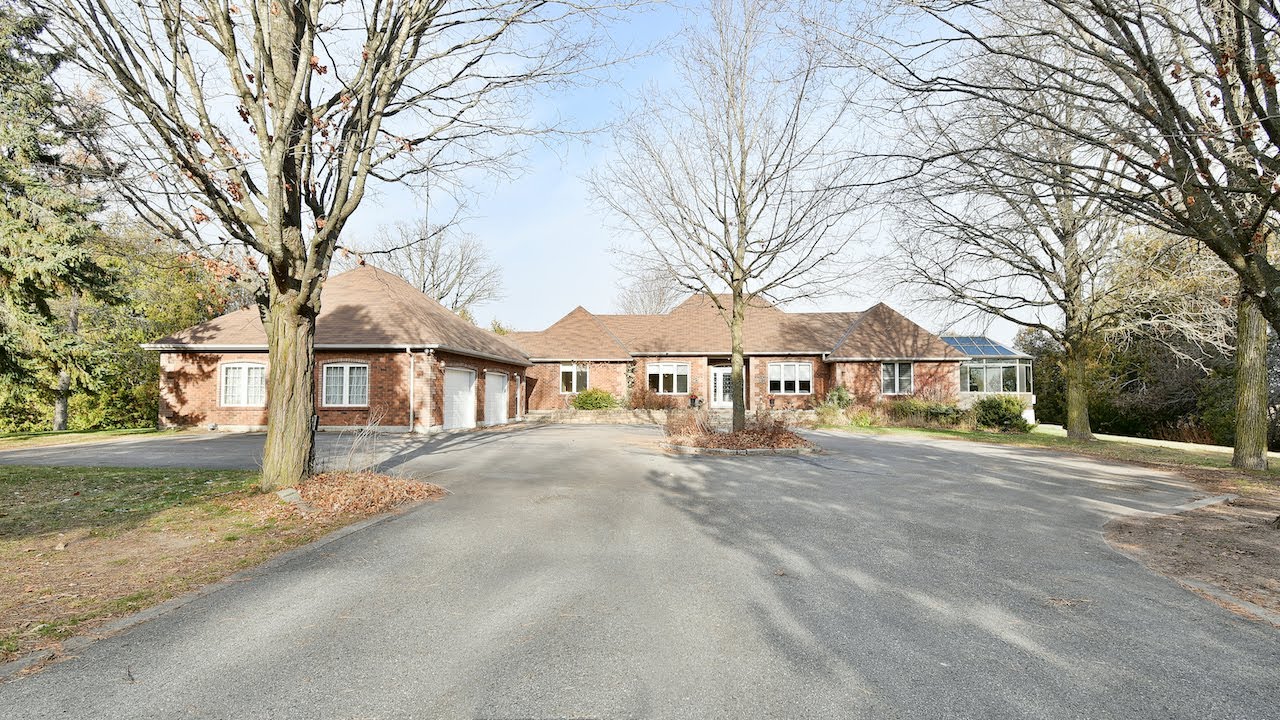
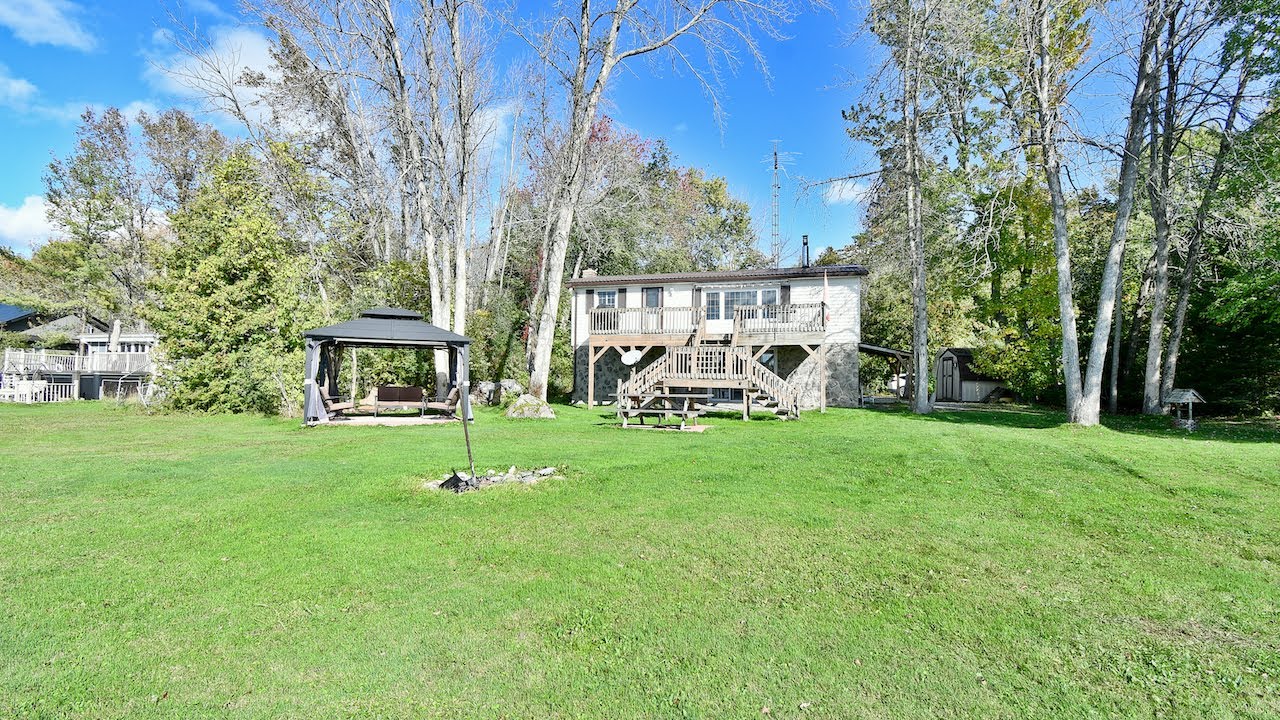
In order to apply this system, I built 2 memory palaces from these two house tours:
As I applied this system, I noticed a few things:
It’s extremely difficult to find a room with 13 loci. Even if it’s a luxurious one, most of it will be too similar. Therefore, a region will often be made of 2 rooms;
It’s very easy to remember where each region starts and ends;
The loci may be very close to each other because they won’t all be used. If you make the image interact with or in the direction of the locus, then you won’t miss it;
The images are extremely memorable. I’m used to crowded loci in numbers memorization, but omg having a clean room with just one locus filled makes it so remarkable;
The subloci are very distinct. It’s impossible to confuse left and right or up and down. The sense of direction is quite strong;
Decoding is easy: just peek inside the room and the image pops out.
You don’t need to build 17 regions and hold the last card in memory. I think it’s better not to store the last 4 cards in a memory palace; you can either create 1 composite image with your 2-card system or hold them all in working memory. During decoding, pick these last cards first;
Finding a memory palace with 16 regions containing 13 loci each is tough. That is why I ended up using two. If you watch the first video, you’ll see that it’s a huge house, but it wasn’t enough.
Although my first trial took extremely long, it was not due to Variable Spacial Encoding. If anything, this method made things easier.
Thanks, Tim! I would never recommend that to a complete beginner in memorization techniques, though. Previous experience with memorization of numbers was essential for developing the strategies, building my 3-digit PO, and understanding the systems. If we disregard that, I’d say that Variable Spacial Encoding actually makes things easier. The time that I, a beginner in speed cards, took to go to the right locus was nothing compared with the time of conversion.
It’s a 53% increase! Isn’t that awesome?
Man, you really gotta give this a try. It’s surprisingly natural. Although my time was not impressive at all, my experience convinced me that this thing is worth it.
I was thinking of building flashcards, but then I’d need 13*17 = 221 cards per memory palace. A good strategy would be to create one note per region with 13 entries, and then create 16 types of cards (encoding and decoding for each locus).
It is so so simple. However, I imagine it would be a little bit too troublesome in that 4-card system.
To save some time, I had chatGPT generate 17 connected palace areas with 13 distinct loci per area. The result was surprisingly good. I’ve only changed a couple of items in the lists and I’ve rearranged the loci a bit to give them a more natural flow through my imagined space, but other than that, the bulk of this was AI generated.
I’m imagining the meta-palace as a beach-side mansion with a bunch of connected rooms. (As a side note here: even if I don’t end up applying this 3-card method, I’ve just acquired 17 new palaces that can be used for standard 2-card memorizing!)
As a proof of concept, I just did a run with those locations and was able to recall 13 of the 17 sets correctly. I looked at the list of loci for each area as I memorized to guide the VSE process, so it wasn’t a pure memory run, but it was interesting on recall to go down the list and be able to be like “area 1 loci was the bench, area 2 loci was the plant, etc.” The other loci in each area were just… empty, so it was pretty easy to lock into the correct one. Took about 7-8 minutes to get through the deck which I don’t think is too bad considering I’d never picture the loci before and never tried applying VSE in this setting… Under 30 seconds for each loci is ok.
I also had almost no trouble recalling the spacial position for the image at each loci. Now granted, I was using my spades and hearts only deck so I only had two spacial options for each loci to indicate either Spade or Heart for the first card suit, but it was pretty easy to remember if the interaction was in front of or behind the loci (the two suit zones that I’m using for now.)
I think I credit my fails on this attempt to the large amount of extra brainpower used to follow along with the loci list and try to visualize them on the spot for the first time. Once I looked at what the loci was supposed to be on the ones that I missed, I easily recalled the image that was there.
I think that this approach could be pretty usable once the loci lists are second nature. It would take a decent amount of time to get to the point where you’d see a 7 and just know instinctively what the 7th loci is in the specific area you’re in, but it could definitely get there. Same with the suit zones.
I’m probably gonna put this idea to the side in terms of trying to actively learn it until I’m fluent with my 2704 pair system. It will definitely be worth it to revisit later on though!
The rank of the first card of the triple is represented by the locus you choose to store the image. The suit of the first card is represented by the sublocus. The image itself will represent the last two cards of the triple.
Since I use the double-2-block system, I can encode the last two cards of the triple using the D2B’s rules. The onlu difference is that instead of using variable image stacking, I use agent-observer strategy in this 3-card system.
You’re right, this is an absolutely revolutionary system.
I use a similar approach, only using a 2 cards system with a total of 52 images
Totally memorized them.
A 3 cards system with 1352 images is definitely doable.
Just wait and see.
I will use it
Thanks to Mike for creating this system. So funny
But I don’t use the 4x13 subposition method. I figured out another way that is more efficient but only has 4 subpositions. I don’t know what level this system can achieve. Please look forward to it
I spent most of yesterday trying out your idea by creating this palace with all of it’s sub palaces, inspection method etc, and I must say it really does have potential!
I did however forget to create different zones, so I had a hard time remembering in which order the cards came in hehe
@TheHumanTim , @Honje , and @bjornxyz Since I was the one to create VSE, it may be disappointing to know that I gave it up. That’s because I would need to get acquainted with too many loci to achieve my long-term goal for 1-hour cards ( 4,680 loci, only for this discipline! And over 6,000 loci in total!). Moreover, I feel that having 2 blocks (VSE and agent-observer strategy) for every triple is probably not worth it, especially because mastering VSE would be as hard (or harder) than mastering a system, requiring constant maintainance and intensive drills.
Before reaching this conclusion, I’d already built 7 memory palaces with 18 regions each (13 loci per region). It took me about 3 hours to build each one (not to get familiar with it, just to structure it on Excel). You can find that many loci in places like megamansions and megayachts. For this purpose, I recommend Enes Yilmazer videos on YouTube.
Although I gave this idea up, the palaces I built are still great (1,638 loci in total so far), so I’m gonna use them for my training. I intend to memorize using a method to store 2 cards per image and 2 images per locus, so I’m gonna need a single region of these “Giant Palaces” for a single deck. I may share more about this idea next month.