I teach high school students Latin through Zoom. I would like to incorporate some mnemonics to help them learn the material more easily, but the online platform makes that a little bit difficult. One idea I had was to have each topic be associated with a different painting which I would have as my Zoom background, and teach them from that. Thoughts?
For example, the present tense active verb endings are -o, -s, -t, -mus, -tis, -nt. So let’s say when I teach those, my zoom background is the School of Athens painting by Raphael. I tell them to imagine Plato spinning a basketball on his finger to remind them of -o. Right next to him, Aristotle’s holding a snake with his outstretched hand for the -s. Diogenes has a cup of tea as he reclines on the stairs. A moose is sticking its head into the painting from the right side. And so on. Do you think the use of paintings as loci could help with memorizing grammar and vocab for a language?
Let me assume for a second that this is what you would do…
For some reason I doubt that your students can identify Plato, Aristotle, etc. and where’s the moose coming from and why is Plato “I” and Aristotle “you”… I don’t understand the mnemonic connection in the story you’re telling.
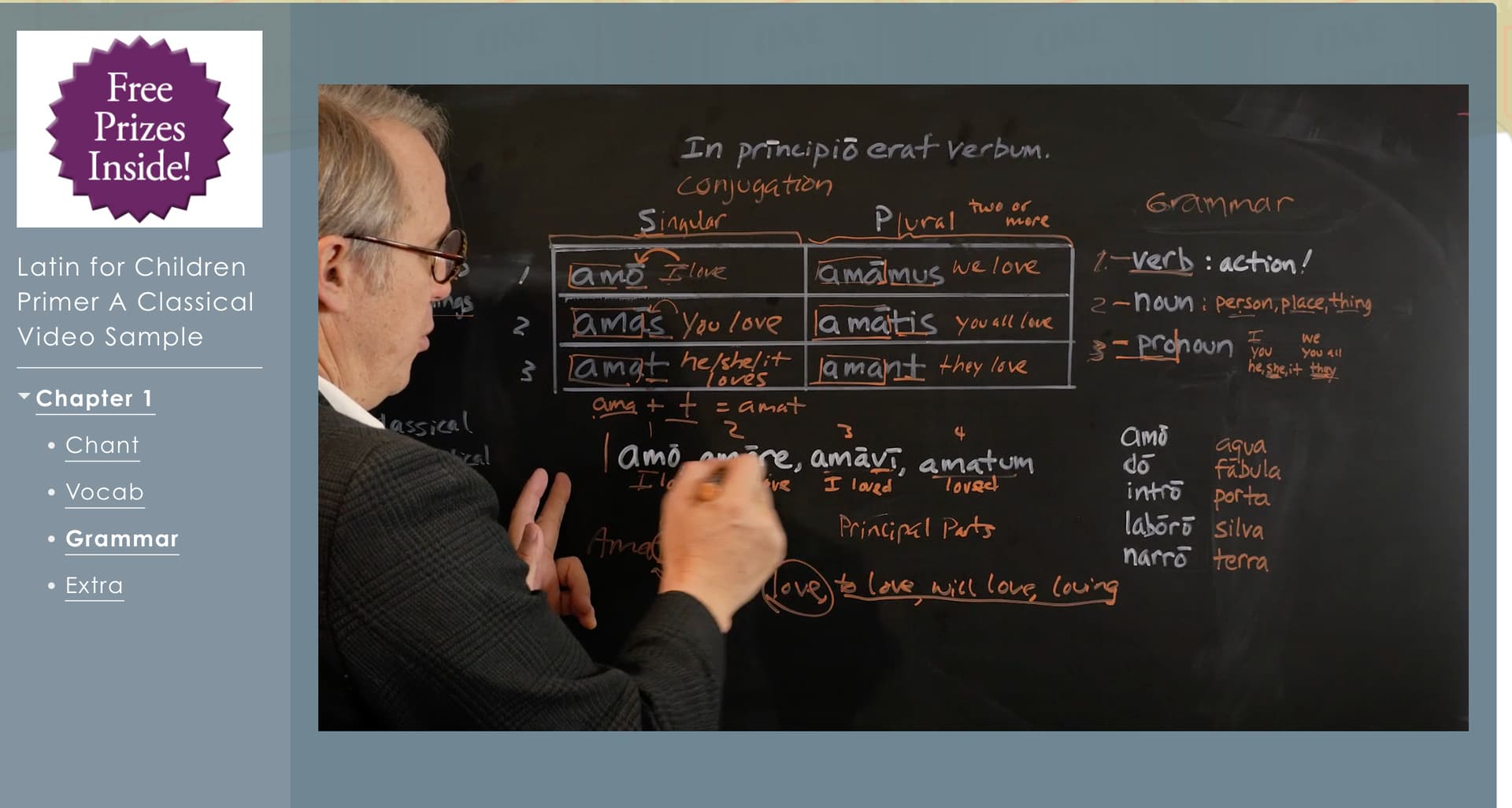
Right, that’s usually shown as a matrix of three rows (1st, 2nd, 3rd person) and two columns (singular and plural).
      sg.    pl.
1st    -o    -mus
2nd    -s    -tis
3rd    -t    -nt
Except for the f-irst person singular, s-econd and t-hird actually starts with the letter that is the ending. O-h, and the first person is me o-h o-kay, I get it. These sounds are the OST (Original Soundtrack) of the Romance languages and “we mustn’t forget this!”
So the fact that WEmustn’t gives you the connection with the first person plural. The the mustn’t is the third plural, because they also mustn’t forget this. Did you all (2nd pl) understand this?
Then you form two teams with a spokesperson. The spokes person will repeat the s is second person and t is third person, point to himself “oh okay”. Afterwards, speak for the group (we) mustn’t, point at the other group… they also mustn’t, and asks the other group afterwards did you all (2nd pl) understand this. Then reverse roles and let the other group speak. Repeat at the end of the lesson and beginning of the next lesson.
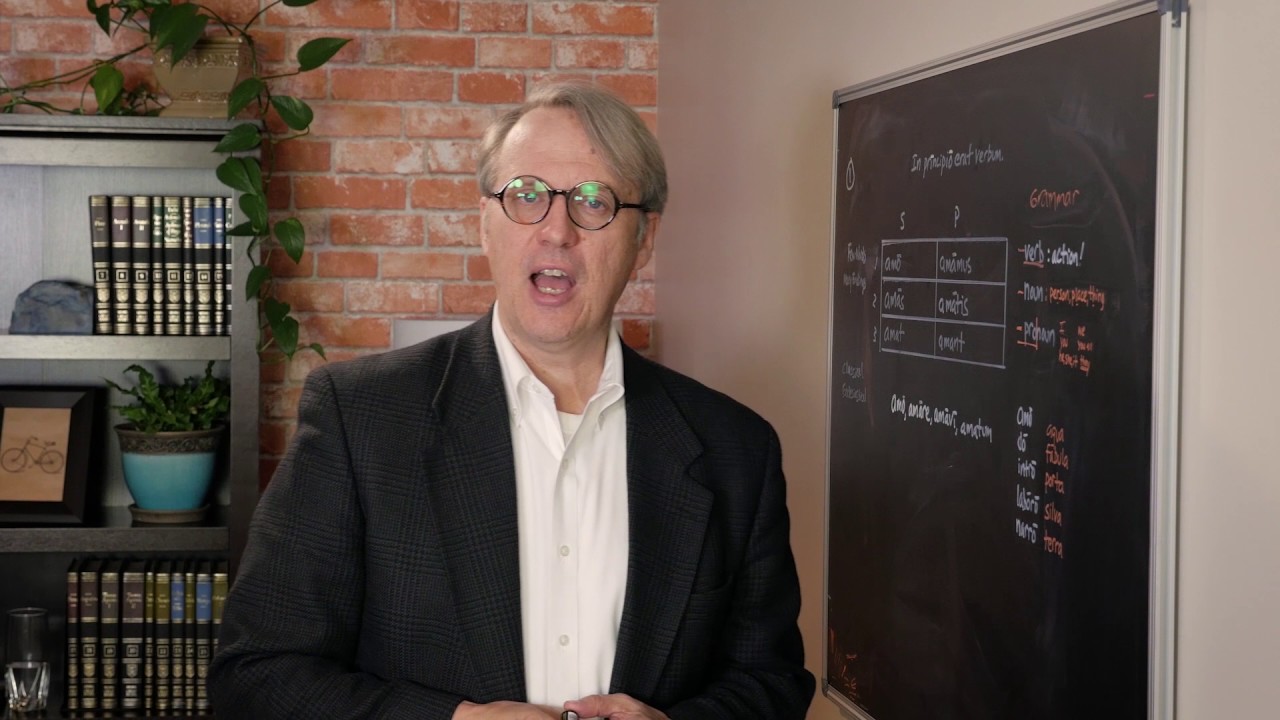
Doesn’t Zoom have a digital whiteboard anyways? But then why waste time with that, just make the chart your background image. Or at least start with an image of the chart and then use markup on top… not like the guy in the picture wasting time by just writing out everything.
…so essentially rote memorization by chanting. Might take longer than “The OST and we mustn’t forget thIs”… but to each his own; personally, I wouldn’t have that much time to waste on things that can be easily memorized.
Is there such a thing as “time” in the mind of a true memory master?
Remember: active recall studies show variety is the key and one-size-fits-all-ism robs many a teacher from benefitting memory a student.
Anything that aids memory is a mnemonic and we would do well as teachers to enable others to explore and experiment with all possible roads to remembering.
I’ve taken classes on Zoom before. The teacher often shares Google Docs on screen with the screensharing feature. If you make slides in advance, you could share your screen and flip through them if needed. (Google Docs, PowerPoint, Apple Keynote, etc.)