Hello,
I have just discovered this forum and find it wonderful, thanks for all the great posts. I would like to receive comments on the set-up (a mixture of well-established ideas) that I have come up with to learn new vocabulary. Ideas of improvement are welcome, and so are warnings about issues that may arise as it scales up.
Goals
- Learning a few thousands of Sanskrit words as I browse textbooks and absorb the grammar.
Situation and description of the method
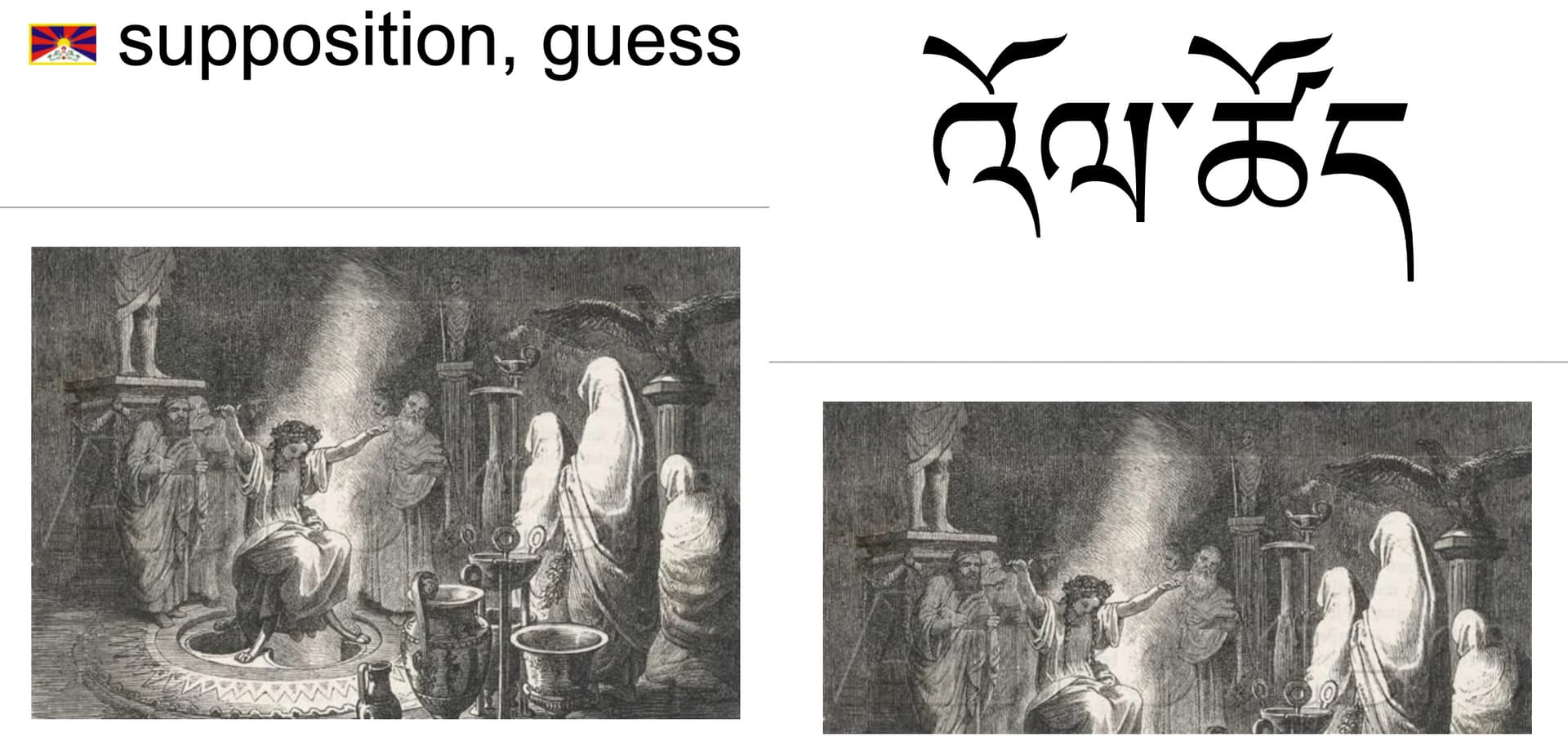
- I currently have about 10k vocabulary flashcards for half a dozen of languages in Anki. My review load each day amounts to 200 cards, which take less than half an hour to study. Each card is associated with a picture and its pronunciation by either a native speaker or a Google TTS voice (fig. 1, Front on the left, Back on the right, Tibetan).
- While this system is efficient and helps me strengthen and maintain my reading fluency in a few languages, I have come to be dissatisfied with the fragmentation it entails: my vocabulary ends up being a galaxy of dispersed, distant dots. Reviewing requires using Anki, there’s no peg I can cling to to start a free recall session in my mind. I now long for structured galaxies instead of lonely stars.
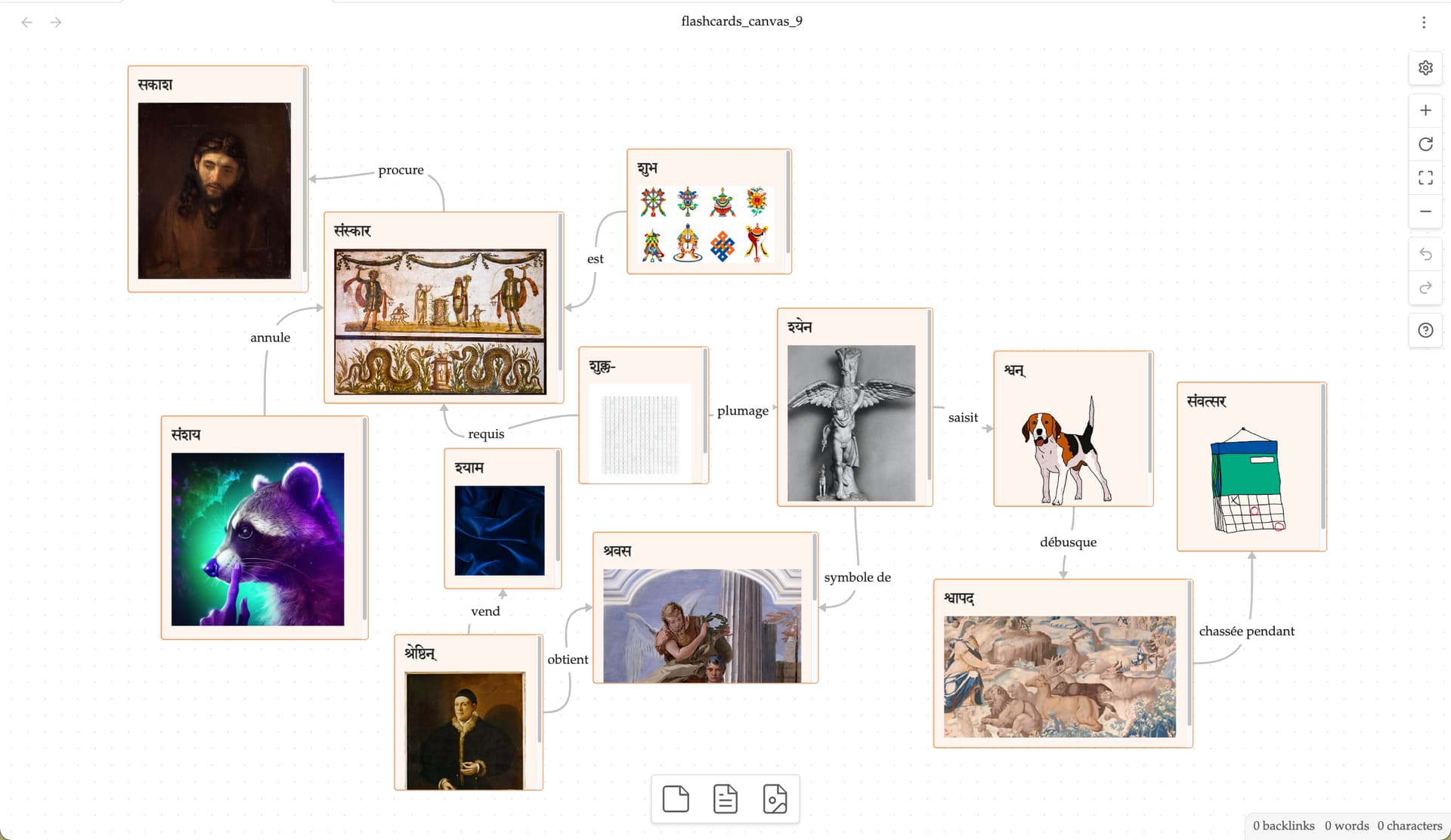
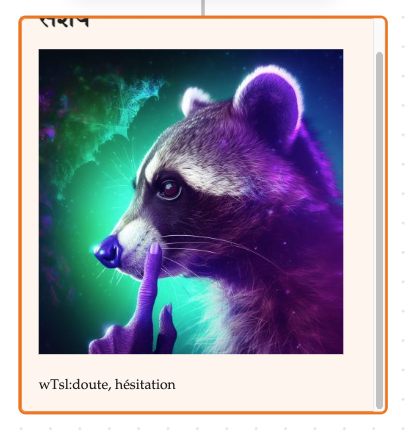
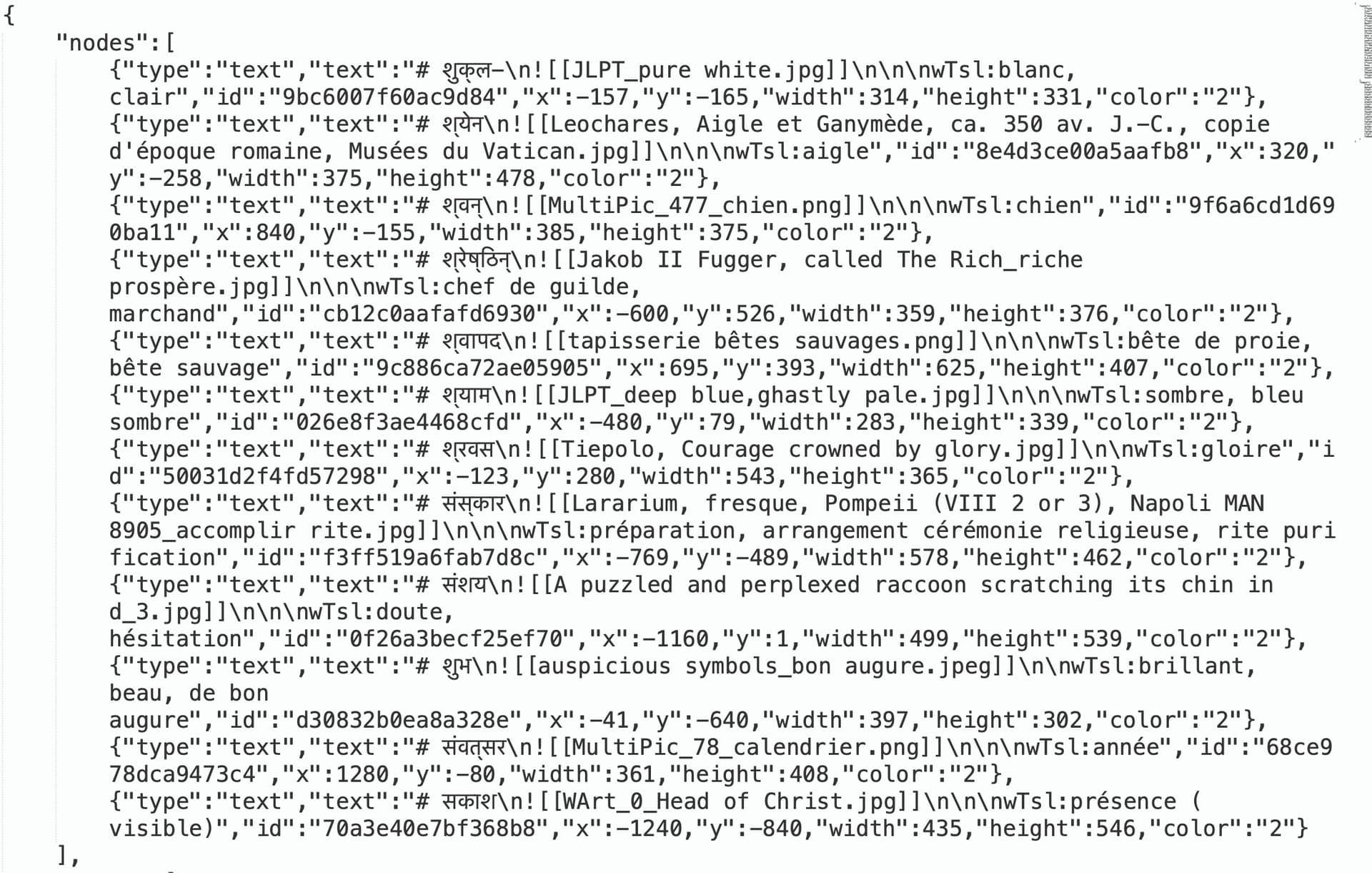
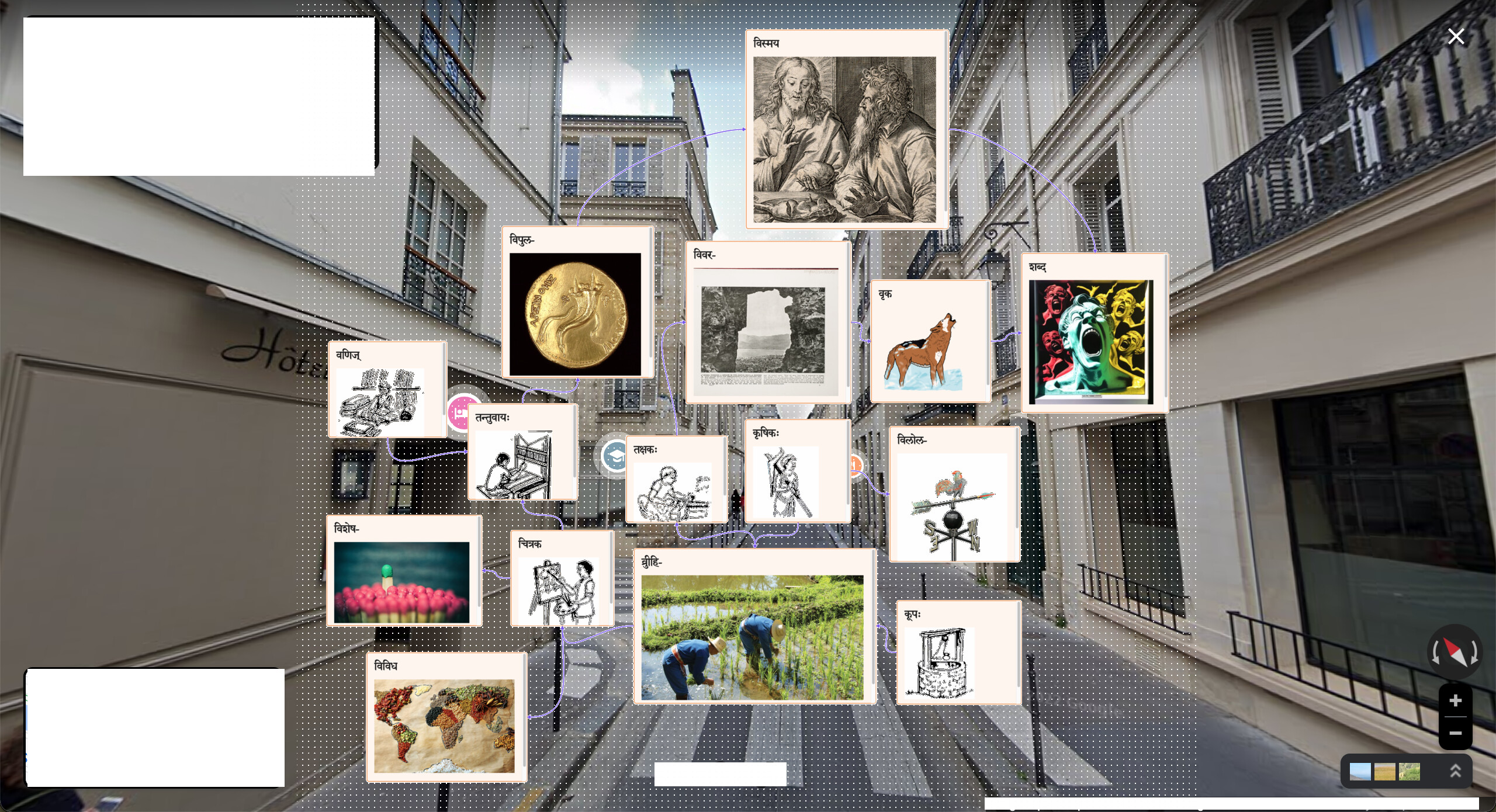
- My first move was to assemble a dozen of words into a diagram / mind map / arborescence, using the Canvas tool in Obsidian (fig. 2, Sanskrit). Each of the little cards herein contained also carries the translation of the word, if you scroll down (fig. 3 for a specific card and fig. 3 bis for all the translations as they appear in the source code of the file). Those cards are then turned into flashcards in Anki thanks to the Image Occlusion Enhanced add-on and a few custom scripts.
- When I have a minute or two, I can now try to remember the diagram, jumping from one word to another thanks to the semantical label I have thought of when linking the cards (preserved in the labels on top of each arrow). Flaschards in Anki are now a reality check, more than an essential study tool: they help me make sure that no mistake has crept in during my recurrent mental revisions.
- To make it easy to move from one diagram to the next one, I take Street View screenshots of the street intersections in my native neighborhood and overlay one picture over the other, thanks to a very simple script (fig. 4, unnecessary UI elements are automatically deleted in the process).
- If possible, I’ll try to make it so that the top word of diagram n is always the bottom word of diagram n + 1, to provide myself with a second cue when navigating this virtual map (in addition to ingrained spatial memory).
Remarks
- My aim is not to remember random lists of numbers or cards, however commendable I find this feat. I’m not devising this to be able to remember temporary information on the fly, but rather stable vocabulary in the long run.
- As you might have guessed my native language is French.
- Associating an existing image to each word, creating an actual diagram, taking a screenshot of road intersections, all these steps spare me the hassle of creating my visualizations: they have an actual reality out of my mind.
- Words are harvested in lists located at the end of textbooks, or in etymologically ordered lexicons.
- Journeying though a diagram takes about a minute, or 4 to 6 seconds per word. At some point I might run out of time to “walk” though the whole map every day, and a schedule will come in handy (streets W and X with all their intersections on Monday, Z and Y on Tuesday, for instance).
- Remembering words in order is not necessary, all I want is to be able to recognize them when reading texts.
Concluding remarks and questions
- So far I have created ten diagrams, and I’m currently trying to learn a new one every day. Before I accumulate more of them, I want to fine-tune the whole process, to avoid spending countless hours retrofitting flawed material. Hence my humble request for advice!
- What steps do I need to take to make sure the system will stay robust once I reach thousands of words? What strategies, in either diagram design or recall routines, could help me along the way? I look forward to reading the suggestions of seasoned mnemonists

Best,
L.