Hi all, so I start doing sound production next year as a full time course, which will involve both practical and theory. THe theory can get quite heavy, given sound is basically maths, and that when recording in a studio, the use of numerous microphones, and other props will influence the end resulting sound, not to mention the software side of things.
I have read a few posts here, especially the one on The Zettelkasten system, as well as a brief one on the cornell system.
I am not great at taking notes, I usually try to write a lot of info down, trying to pick out the main points as I write. I am looking for some suggestions on better system that I can work on now to play wtih, as I learn 3 instruments that I can become comfortable with before the school term starts.
Yeha, but currently I don’t find anything works. I mean I take notes, use colors, and even reviewing doesn’t seem to make it stick. So looking for something that might help the process along.
I was asking because I got back into music a bit during the pandemic. I’m using Logic though and am not familiar with Pro Tools.
Are you practicing the material a lot while reviewing the notes? Taking notes alone might not be enough.
If you haven’t already seen it, there are some Pro Tools courses on Udemy. The courses go on sale every couple of weeks for $10-15 each. It might be useful to go through one of those before your other course starts so it’s less overwhelming. I watched a couple of Logic Pro courses there and it helped me learn the basics.
I would probably do that and take notes with checklists for common tasks. Then I would practice recording music every day, working from the notes until I didn’t need them any more. Checklists that aren’t sticking in memory naturally could be memorized with a memory palace or peg list.
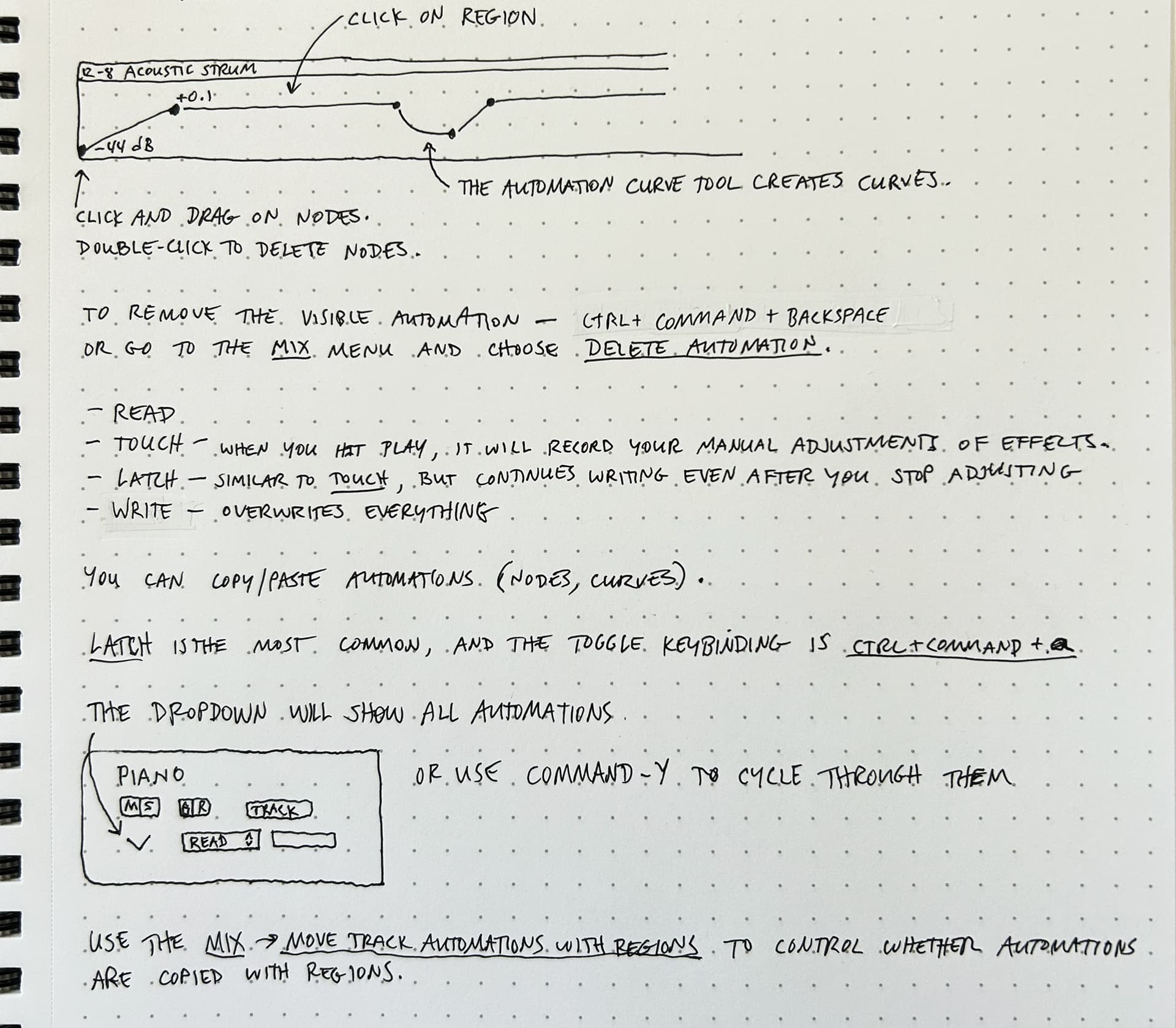
Example Notes
I’m just using Logic casually, but one example weak spot for me is automations. I’ve done it a few times, but not often enough to remember it with out looking up tutorials. I just watched a YouTube video about it and took some quick notes as an example.
It’s just a small sheet that I can refer to the next few times I need to use automations (which I will practice while recording some music tonight). Just the process of writing it down and deciding which things were important made the information much clearer in my head, and I’m not sure if I will need to look at the notes again more than once.
I’m not sure if that helps, but that’s how I would approach it.
Regarding [note-taking, retention, and getting a lot out of your notes], you might check out a copy of Tiago Forte’s “Building a Second Brain.”
I use my library account pretty aggressively.
Forte covers a lot of ground and provides a lot of sources where you can dive deeper if you hit something that resonates with your particular situation.
When in a classroom situation though, would you do the same thing? as things move so quickly, especially if a teacher is lecturing, the time to draw the diagram and then create the list. I guess those are the things I am questioning, maybe take as many notes as possible, then re-write those notes more coherently with these ideas?
I do know Udemy, and will be getting a course on that for sure… Great idea to record every day, I need to do that.
It has been a while since I’ve been in a classroom, but I would scribble the notes as quickly as possible and then copy them onto a new sheet if they need to be neater.
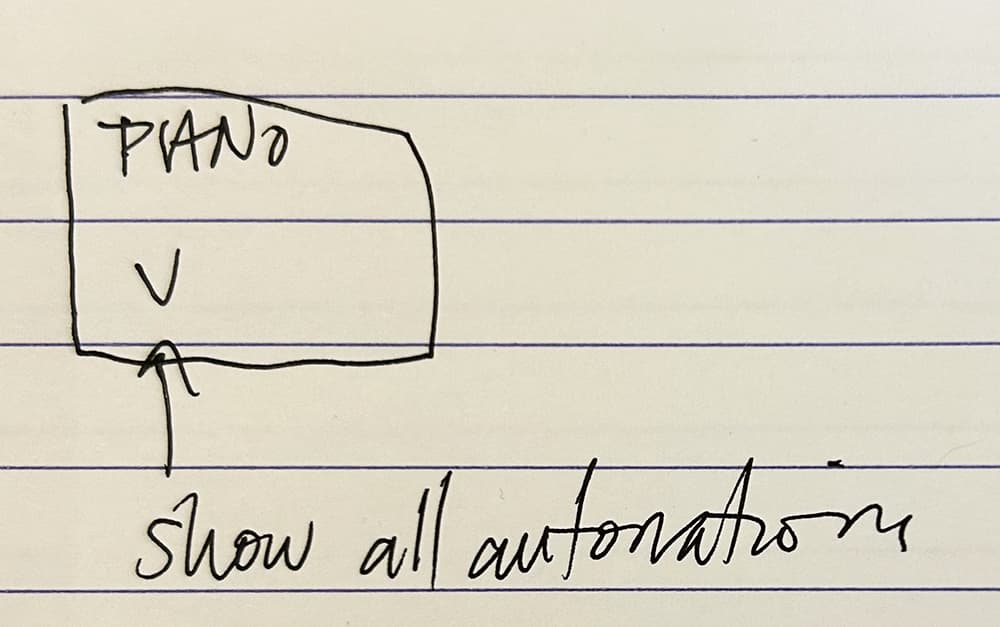
If it were taking notes in a class where the teacher is speaking rapidly, my drawing might look more like this, and I would fill out the rest after class:
If you’re allowed to record the audio of the lectures, you could auto-transcribe them later. Apple devices transcribe speech automatically now (like the Apple Notes and Voice Memos apps), and there’s probably something for Windows too, or at least some online services that can auto-transcribe.
I took a deep dive into Zettelketsen these last two days and I think this is a system that I can work with.
My mind races a million miles a minute most times. I tried a couple of things, one was just writing stuff down that came to me so that it was out of my head, but never really did anything.
I realized now though that while I understood the idea of the more connections things have the easier they are to recall, there was never really something I connected with that helped, and revision was constantly reading the same thing over and over.
I purchased a course from Udemy on Zettelketsen, and while I have read that writing things down is better for the system, an adapted way of using it with Obsidian seems to be a key…
Will be implementing it with my music studies now and building upon it as I go…
It sounds like you may have found your solution. But if you are still seeking some help, I’d recommend two books: How to Remember Anything by Mark Channon and How to Pass Exams by Dominic O’Brien.
Channon’s book focuses on memory/learning techniques primarily within a business context (i.e., working in an office). However, nearly half the book is devoted to using mind maps, which might prove very helpful for you as a note-taking method. And his memory-technique advice is sound.
O’Brien’s book tailors his standard memory content for students, although I think it’s worth reading even if you’re familiar with his approach. There are some unique school-focused tips and strategies that I thought were useful for anyone, not just students.
BTW, good luck in your studies! I’m a home-based recording musician who has been with Pro Tools for the last 20 years.
I second the Mark Channon book. That thing is packed with exercises. There may be twice as many exercises as there are pages in the book. And I did most of them! Cheers!
I wish I had known about Zettelkasten system years ago, the limited dive I have been doing into this has been astounding at how it could work, especially for someone like myself that my brain moves onto different subjects a thousand times a minute.