Simple Peg word List 1 - 20 suitable for 7 year olds

This is a simple peg list 1 - 20 that a 1st year Primary School pupil could use:
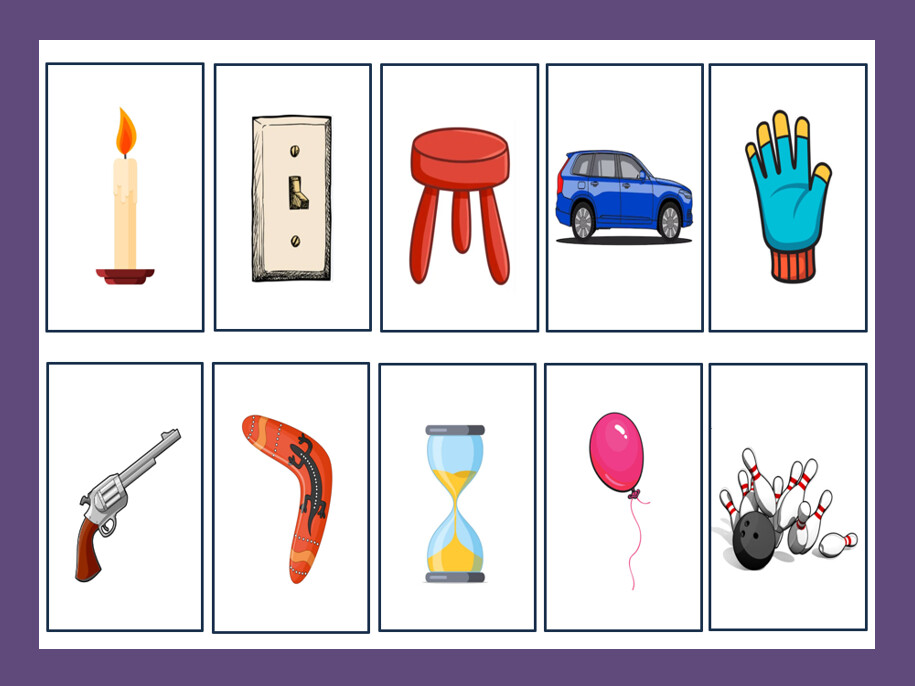
Explanation:
1 = Candle shaped like a 1
2 = Light Switch. Has two positions On/Off and 2 screws in cover plate
3 = Stool. It has 3 legs
4 = Car. It has 4 doors and 4 wheels
5 = Glove. It has 5 fingers
6 = Revolver. It has 6 chambers. 6-shooter
7 = Boomerang. Shaped like a 7
8 = Hourglass. Shaped like an 8
9 = Balloon on a string. shaped like a 9
10 = Ten-Pin Bowling Ball. Strike = 10 points
11= Chopsticks. Shaped like an 11
12 = Dozen Eggs
13 = Unlucky Horseshoe upside down.
14 = Cupid. Valentine’s Day is on 14th Feb
15 = Rugby Ball. 15 players are fielded in a rugby match on each side
16 = Cake. Sweet 16
17 = Disco Mirror Ball. Dancing Queen young and keen only 17. ABBA Song
18 = Steering Wheel. You get your driver’s license in most countries at age 18
19 = Average age of US combat soldiers in Vietnam. Paul Hardcastle’s song “Nineteen”
20 = Pack of cigarettes has 20 cigarettes in them.

The list can continue way beyond 20 numbers with a little imagination, but I feel for a 1st year Primary school child, 20 peg words is probably more than adequate for their purposes?
1 Like

I thought that perhaps the vietnam skull is a little inappropriate for a 7 year-old but then would a Covid-19 virus ball be any less frightening for youngsters? Yes, upon reflection there are many inappropriate pictures in the peg words I’ve selected. I think your comments have given me some food for thought. Maybe a snowman with a broom may be a better image for 18 for the reason you’ve given about the legal age of driving. I will rethink these numbers to make them more 7-year old appropriate. Thank you for your comments.

Battling to find “age appropriate images” for numbers: #15 and #19.
Note to self: Whilst not advocating 7 year-olds should smoke, #20 is too strong an association not to use? or a tortoise or snail could be used?

Update:
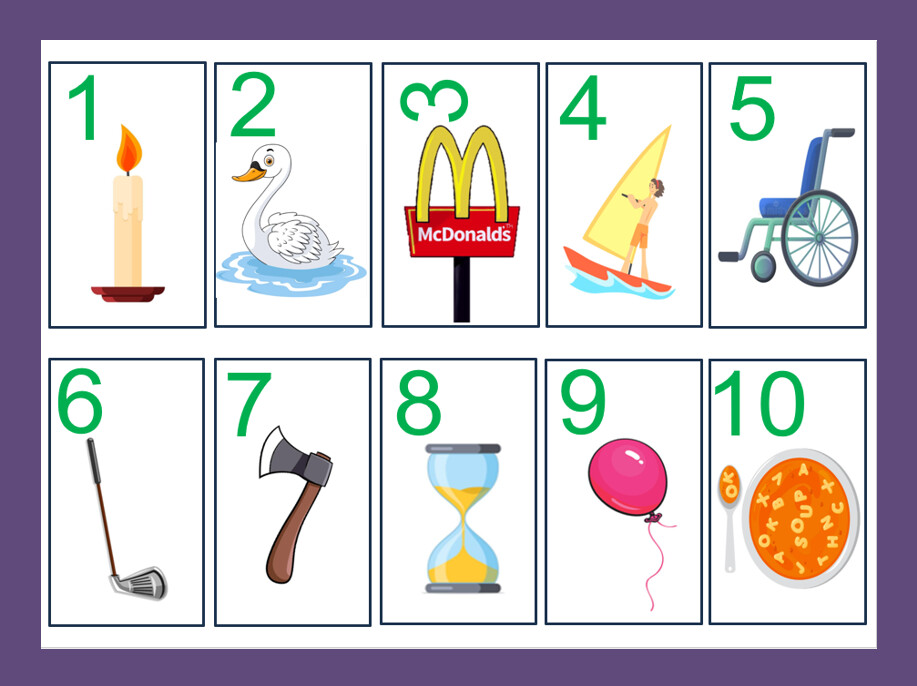
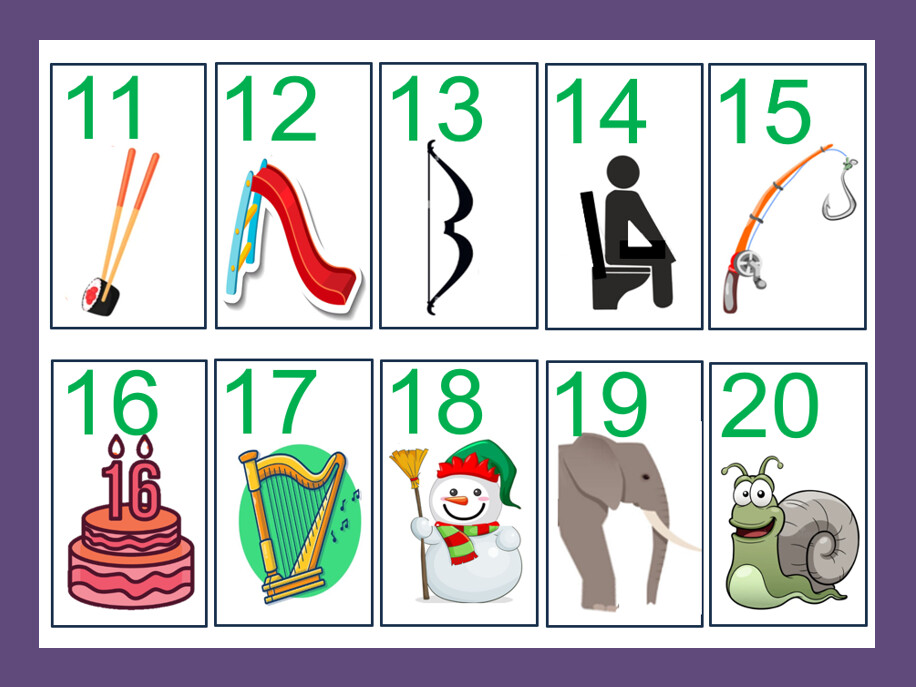
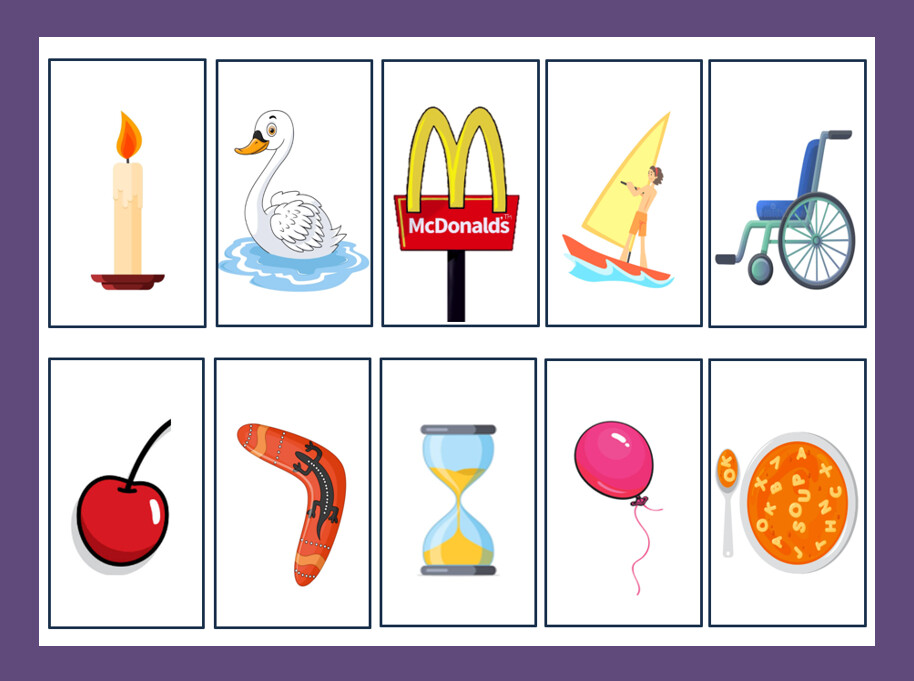
After going around in many circles, I have decided the best option and certainly the strongest and most logical as you are able to read images directly from the numbers concerned is to go for the Errol - Number-Shaper System. I have made some slight embellishments or modifications to the lists provided by @Erol in his number-shaper system but all credits duly acknowledged to him as the pioneer and inventor of this system. My chosen images which I think are age appropriate for a 7 year-old are as follows:

  1. Candle
  2. Swan
  3. McDonald’s Sign
  4. Windsurfer
  5. Wheelchair
  6. Cherry
  7. Boomerang
  8. Hourglass
  9. Balloon on a string
  10. Spoon and Soup Bowl
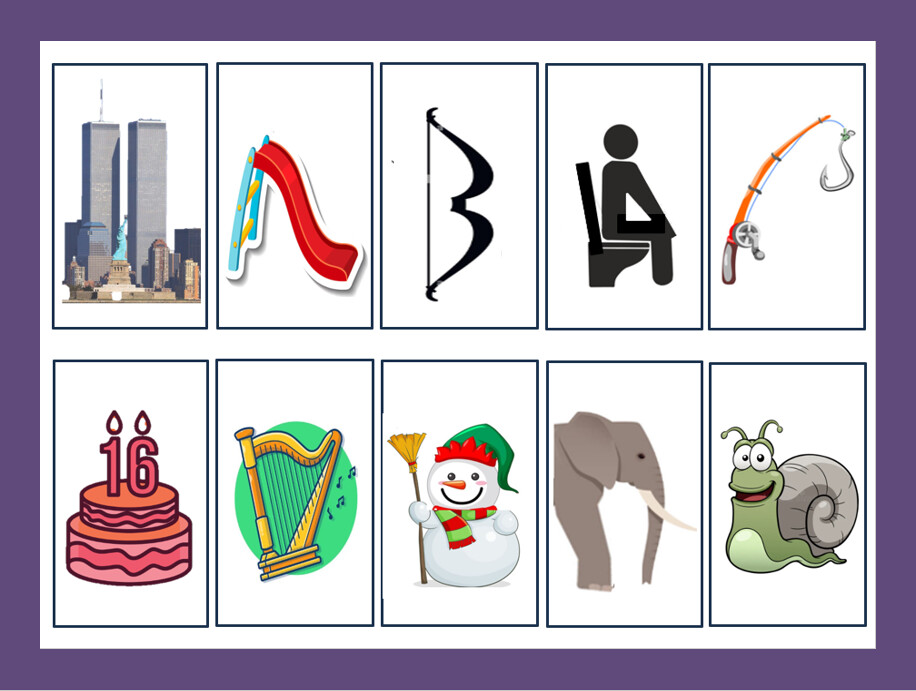
  11. Twin Towers
  12. Slide
  13. Bow (Weapon/Toy)
  14. Person sitting on toilet
  15. Fishing Rod with Hook
  16. Sweet 16 (Cake)
  17. Harp (Instrument)
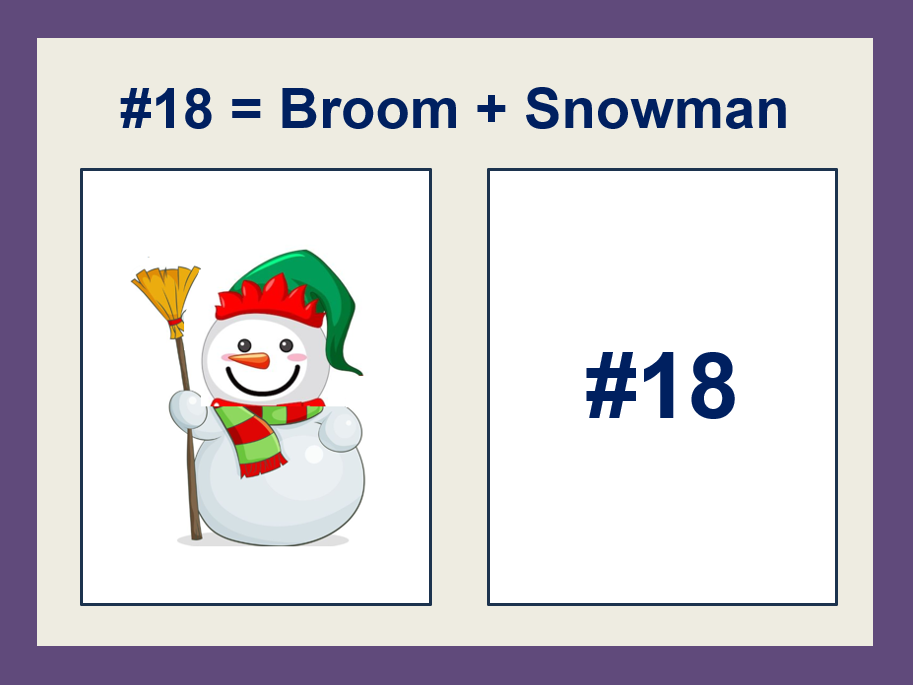
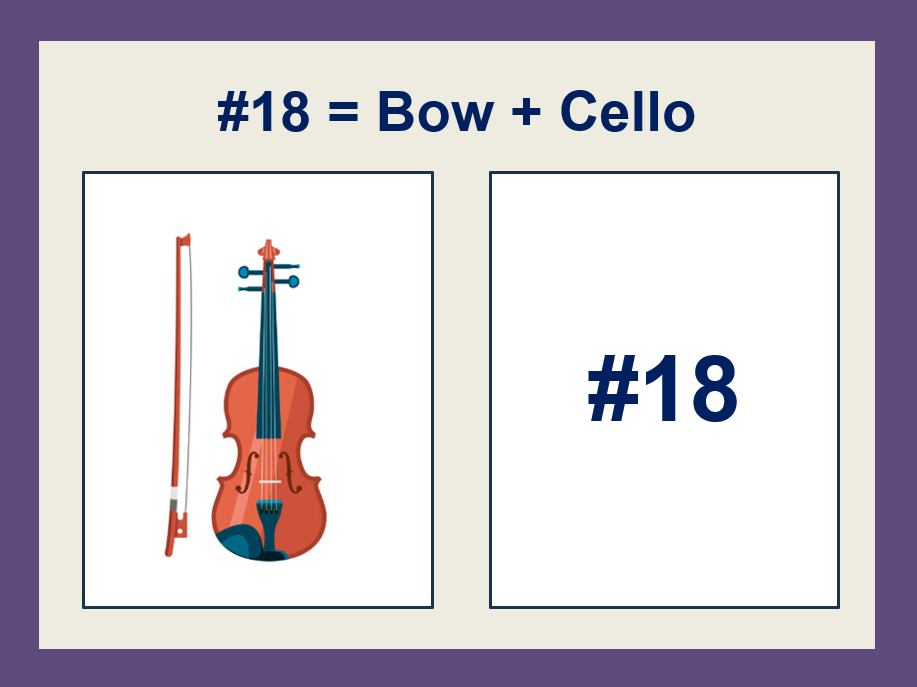
  18. Broom + Snowman (could also have been a Bow + Cello)
  19. Elephant (profile front leg + head)
  20. Snail

Final Images 1 -20 are:

I’ll settle for a snail as my image for 20. the head and neck and body being the 2 and the shell being the 0.

Agree that no kid anywhere would have any association whatsoever between 20 and cigarettes, I bet the vast majority of adults wouldn’t connect this either. Thats an oddly specific connection to try to make. Snail is much better.

11 as chopsticks is a MUCH stronger and widely recognizable image for a 7 year old than the twin towers. They’d have been born 16 years after 9/11 and would likely have no strong connection with the events of that day, especially if they are not American. Chopsticks on the other hand are fun, a common thing that kids likey would know about and have positive associations with, and can be imagined as being manipulated and interacting with other things very easily.

2 Likes

6 could be a tadpole…

I think 17 as a harp is ok. It would be pretty easy for a kid to learn what harp looks and sounds like if they didn’t already know.

If the guy on the toilet is leaning forward so that his back makes a diagonal and his arm hangs down straight, there is no problem.

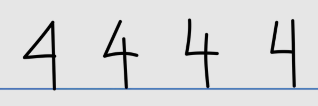
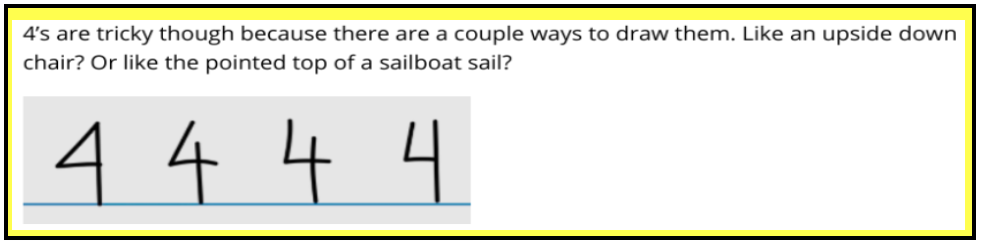
4’s are tricky though because there are a couple ways to draw them. Like an upside down chair? Or like the pointed top of a sailboat sail?

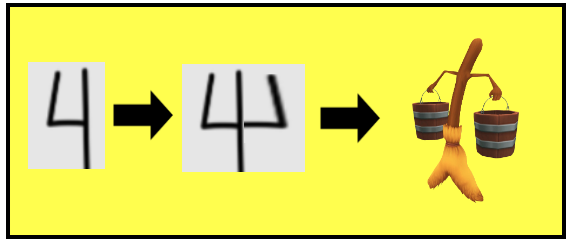
Let’s confuse those kids so much, that by the time they leave elementary school they don’t know what is up or down.

Hahaha how about:

1 Like

A 7 year-old who drinks Guiness would know what a harp is. LOL!

2 Likes

I’m going with a golf club to represent a 6 as cherries which occur naturally in pairs can be used as 66. Also your point that 11 could be represented as chopsticks makes perfect sense. I’m sure most 7-year old’s who have eaten a Chinese takeaway can identify more with those than a Manhattan Skyline? I have also changed the 7 to an axe as the axe depicts a 7 perfectly. Thanks to @erikfromholland for his suggestion there.

Full Revised Lists 1 - 20 now look like this:

Just unsure of whether a Snowman or Cello is the stronger image for 18? I’m guessing the snowman. That being said, there are many parts of the world that don’t experience snow, so a 7 year-old would not have experienced a snowman, except in animated TV cartoon shows?

Or Neither?

Good points all around, @erikfromholland. I like an image of a knight or warrior with a spear and circular shield for 10, but that could just as easily be confused for 01 if they’re a lefty or viewed from the back.

Agreed about the bow, my mental image of a bow shape is a simple curve, not a 3 shape.

I also think that for teaching kids, consistency in the system is super important. They are not going to want to have to keep track of exceptions to rules where some numbers are shape based and some symbolic. I agree that 16 as the cake is a bad image and would be a confusing exception to the system rules.

I think the simplest thing for a 7 year old kid would be to use rhymes for 0-9.

Hero, Sun, Shoe, Tree, Door, Hive, Sticks, Heaven, Plate, Sign.

Even introducing basic phonetic sound associations via the Major System, while slightly more complex, would still be pretty simple for them (I did this with my 7 year old and she had no problem picking up the sound associations after only a day or two of practice.)

Saw, Zoo
Toe, Dew
kNee
Mow (lawnmower)
Row (rowboat)
Lei (tropical flower necklace)
Shoe, Chew (chewing gum), Jay (bluejay)
Key, Goo (sticky slime)
iVy (vines), Fu (kung fu fighter)
Pie, Bee

With either approach, 2-digit compound images can be created by having digit 1 interact with digit 2. Rather than try to force visual associations that don’t really work naturally, these ways would be consistent and only require 10 memorized associations. No need to push a true 2-digit system on kids until they’re ready and express interest in upgrading their ability. Start simple.

One thing I hadn’t though about much is utility of systems for those who are blind or deaf. I’d think that the shaper based systems would be much easier for a deaf person to use than a phonetic system. Dominic would be better than Major as it’s not sound dependent but letter/spelling dependent. For a blind person, I’d think that phonetic systems would be easiest to use.

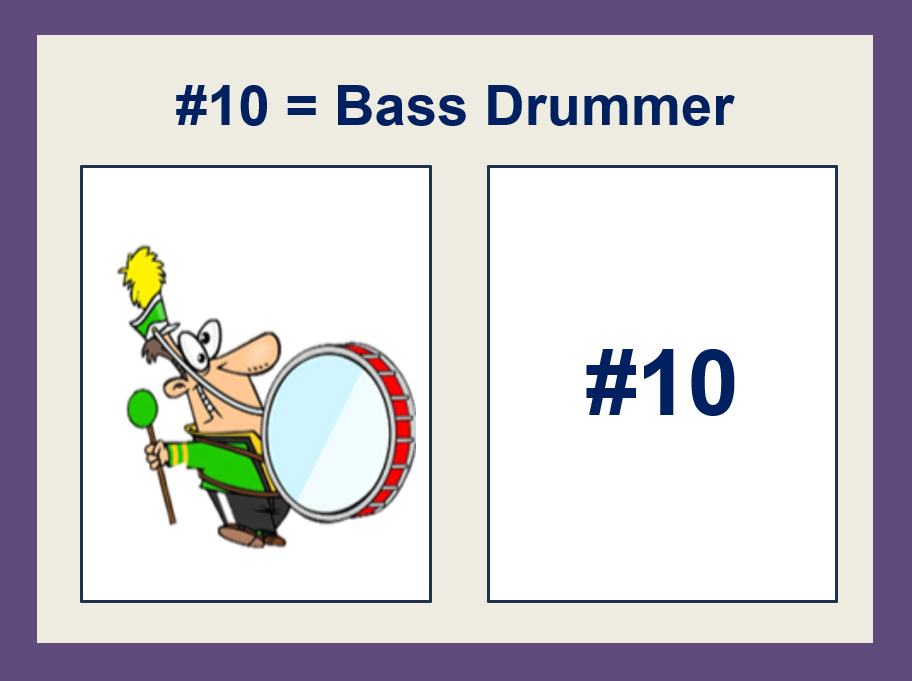
I see what you are saying about number 10. You are of course assuming a “right-handed” world as a “left-handed” person would in all likelihood be found to have their soup spoon on the left side of their soup bowl. In a right-handed world, the number 10 could be pictured as a drumstick and a bass drum, like one of those drums worn by a Marching Band:

I very much doubt that any system be it a Phonetic Major System or a system that is solely based on direct transcription of letters to numbers and visa versa (such as the one you are showing) and is not dependent upon the sound that letters make as such themselves, would ever be able to be coded UNIVERSALLY? Just think of the variety of different languages we speak as a world. In South Africa we have no less than 11 official languages (call it 12 if you include sign-language as used by the deaf?). The reason behind the Major Systems choice of sounds assigned to letters is in no manner not well thought out and has all to do with the subject of PHONICS or how sounds are expressed in English. Given that the vowels A, E, I, O and U and the letters W, H. Y carry no values and are solely used as placeholders, the Major System would yield (imho) the greatest combinations of potential words. Obviously in using the Major Phonetic System, one can derive many different images for a lot of numbers. For example, owL or Loo would both work equally as well, to denote the number 5 in Major System. I am or rather was an ardent user of the Dominic System as I thought the non-phonetic nature of the system works well but as we all know, try finding ACTIONS for a PAO System using the Dominic System or even try making a 000 - 999 System of images and you will be destined to failure. I think that the Major System trumps all other systems in terms of it giving more versatility than say a Dominic System does but that’s just my personal opinion. The point about using rhyming images to the numbers themselves is indeed a good idea. In fact the nursery rhyme we are taught in pre-primary school of "One-Two buckle your Shoe - Three-Four knock at the Door is testimony to this. But what do you do to rhyme the numbers 11 through to 20? That’s the downside there.

Do the majority of your images (assuming movement is involved) move from left to right or from right to left? I don’t have a problem with my drummer as he is consistent with the vast majority of my images that move from left to right?

Why bother with 11 through 20? If you have images for single digits, just combine them in cause/effect scenes.

I think you either need to just learn single digits, or you need to learn all 00-99 two-digit combos. Kids will surely need to use numbers past 20. I think asking them to acquire a 2-digit system that young, while certainly possible, is a bit overkill. Also by playing around with scene combinations of single digit numbers it gives practice being creative with interaction.

I agree that a phonetic system definitely wouldn’t be universal. A picture-based, lookalike system would be best at that. I think the instructor would need to bring examples and guide students on how to “see” the numbers in the images. Just telling them “the 6 is a golf club” wouldn’t be enough. But you know how with some optical illusions, once you “see it” you can’t “unsee it?” I think having someone there pointing out how an object takes the shape of a number would lock it in quickly for a kid (or anyone really) and I don’t think directionality would matter much once they’ve “seen it.”

Once you associate a golf club with 6, then as long as your mnemonic scene contains a golf club, it doesn’t matter the orientation. It doesn’t have to look like a 6 in your mind or be oriented to read that way, you’ll know that if a golf club is there, a 6 is there.

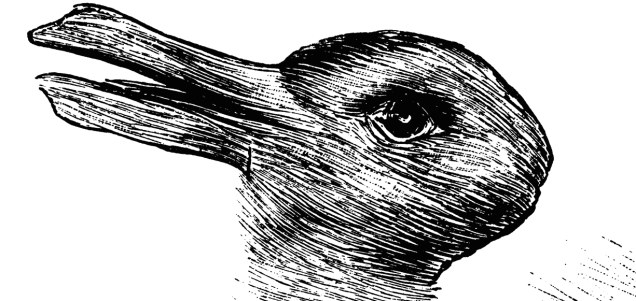
If you see a rabbit and I point out that it can also look like a duck, you may suddenly “see it” and from then on can’t help but noticing it.

Same here… Once you see the tiger, you will always see it.

1 Like

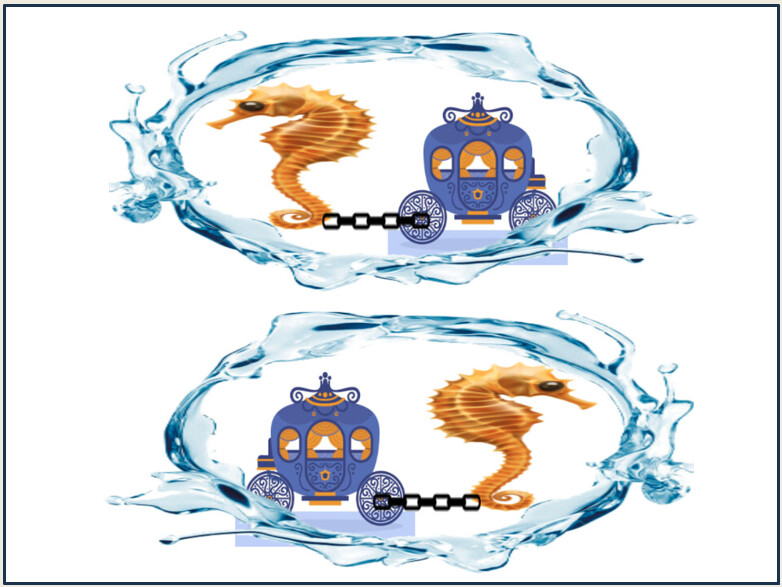
I concede the example you have given for #17 does look left but my harp picture didn’t have a player looking left that’s something you added? That being said I can understand why you may perceive its orientation being left once you’ve added the man. The snail is unapologetically facing and moving to the left which is an exception to how I (and I stress I) tend to orientate my images. The picture you have used with a coach and seahorse in my orientation would look like this (i.e. it would move left to right):

In trying to understand why I have a preference in having the majority of my images moving from left to right, I think it may have something to do with the way I read my languages English/Afrikaans which both read from left to right? Sheet music is also read left to right too? I am surmising that perhaps as Arabic is written from ‘right to left’ that an Arab would ‘see’ their images moving right to left? Don’t unnecessarily shoot holes in my hypothesis as I did use the word ‘surmising’ which means I am assuming something is true without having any proof of it. I believe this question of whether there is a correlation between a language orientation and an ‘image orientation’ would make an interesting research question in mnemonics, I guess?

[quote=“erikfromholland, post:26, topic:93908”]
What kind of (letter based or phonetic) system is not dependent upon the sound that letters make? I don’t know what you mean here.

The answer to this question is simply the Dominic System which is not a phonetically based system. Example: Cyril Suk = #36 (Czech Republic Tennis Doubles Player). But not that Caster Semenya = #36 (South African athlete). Note how Cyril has a S-sound, whilst Caster has a K-sound!

I think I have shown you above that letters can actually have ambiguous sounds. Sounds are of utmost importance in the Major System which is a phonetically based system. Dominic System is clearly is NOT a phonetically dependent based system as proved with the example of Cyril and Caster above, different sounds but only the LETTER is of importance NOT its sound.

The number of words you can make with a system is the ‘acid test’ of the system’s usefulness! The more options or words you can derive from a system, the more its value. Think of someone who has a Dutch vocabulary of 3 000 words compared to someone that has a command of a Dutch vocabulary of 400 000 words! Which is better. As proof of what I am saying try to devise a 000 - 999 system with your system and you will find you will not be able to. Elsewhere on this Forum you will find Major System’s lists for 000 - 999, already made.

This is exactly what I am saying. Compare Cyril to Clive. Both names could act as standalones for the number 3, although both have phonetically different sounds.

Major System “out-trumps” the Dominic System in that ACTIONS can be found in a PAO Major System from the Major System sounds themselves e.g. #11 PERSON =(Tina Turner)/ ACTION = TaTTooing/ OBJECT = TiT). Try that with Dominic System where #11 = AA = Archie Andrews, what is Archie Andrews’ ACTION and OBJECT? maybe drinking a Milkshake but those actions and objects do not follow a phonetically encoded system at all?

I agree that would work well:
0. Hero (Batman)

  1. Bun
  2. Shoe
  3. Tree
  4. Door
  5. Hive
  6. Sticks
  7. Heaven
  8. Gate
  9. Wine
  10. An Egg
  11. Candle
  12. Swan
  13. McDonalds
  14. Windsurfer
  15. Wheelchair (I know its pointing to the left!)
  16. Golf Club
  17. Axe
  18. Hourglass
  19. Balloon
  20. Snail

I appreciate your honesty in your responses. That is what this forum is all about, a robust exchange of ideas, where ideally we can learn from one another.

Your suggested system would work for a 7 year-old I’m sure. Whilst I did not include a Zero in my original list, as I understand you 0 = Hero (Batman) and 10 = An Egg (shaped like a 0).

There is a method with the (number) shaper system to learn the timetables (and conjugations): the multimalins ( Multimalin : apprendre les tables de multiplication n’a jamais été aussi facile ! - Multimalin) - I think they have some products in english too in their shop.
Of course you’ll find a ton of reviews saying it’s great. But for my nephew (7 y. o.) it didn’t work so well (he was mixing up stories when the same numbers were coming too often). Also he liked some of the characters, but some stories combining them he didn’t find logical or he didn’t like them. I’m not sure why, but it didn’t stick.
I’d be very interested about other testimonies of people using a shaper system (or major) with children. In the end, a child may be perfectly able to use it developmentally speaking, but if they didn’t decide it’s interesting, it doesn’t matter how good it is, they won’t use it.

1 Like

Two tigers?

1 Like