Request for help with learning memory techniques (mnemonics)

Hello everyone. First of all, I want to say that I am really, really happy. After months, weeks, and days of searching, I managed to find people who shared something in common with me: they hate forgetting things but know how to solve this problem.

What I mean is that I am truly happy to find people who can help me, who have much more experience than I do, and who understand what I want to learn. I hope they can assist me in my growth in this field.

I’ll give a brief introduction, even though I know no one is really interested. I am a 16-year-old boy who, ever since arriving in Italy and starting school, has been in great difficulty because I lack basic knowledge. I skipped primary and middle school and went straight to high school. I experience a terrible, terrifying difficulty that prevents me from achieving my goals because there’s no one in this awful society who can help me catch up on what I missed and improve, learn the basics, and build everything up.

That boy is me. Since I’ve been in Italy, since high school, I’ve tried to find a method to learn how to learn. I’ve doubted myself many times, and even now, I question my sanity. I think I have some mental problem because I can’t explain what happens to me.

To put it simply, I am here to ask for help from anyone willing to genuinely assist me in improving and mastering memory techniques. I want to perfectly master memory techniques and become a true memory athlete. I want to be able to store large amounts of information, but not just store it—also use it to create new things, to develop my brain’s maximum capacity, and to get the most out of my memory.

This is my goal: to get the most out of my memory, solve all my mnemonic problems, and memorise anything. I believe this is the goal we have in common. The reason I am reaching out to you is because I am sure that all of you have achieved most of your goals thanks to memory techniques. And not just that, there must have been sacrifice and much more.

However, the way I see memory techniques is completely different from anyone else. I see it as the tool that helps you achieve your goals, a way to get the most out of yourself. I believe we share this in common.

My request is for clear, well-defined instructions, not the kind you find on the internet, YouTube, or social media. On YouTube, I found Anthony Metivier, an extraordinary, excellent, wonderful person who does great work and has done great things for everyone, especially for people like me. Unfortunately, I haven’t had access to all his videos and resources because I don’t speak English. This is another problem I’ve faced since I came here. Learning Italian was already difficult; now I have to tackle English too. Google Translate helps me a bit, but I still need to improve my Italian.

Honestly, Italian matters little to me. I’m much more interested in learning English, which is the native language, the language spoken, the most used language in the world, so I can access all information regarding memory techniques. So, I want to learn memory techniques and English.

However, there’s a small problem: to learn memory techniques, which I will then use to learn English, I need English to learn memory techniques. Do you understand the problem?

I even tried following the normal school system to learn English at school, but it’s impossible. I say this from experience: if you’re someone who is behind, teachers abandon you. That’s what has always happened to me, just because I’m different, just because I don’t have the same intelligence or whatever as others. I’m judged, I know nothing, I’m discriminated against. There are so many problems that I can’t face alone.

I think the only goal, the only thing that can save me from all these problems, is to learn memory techniques to improve my studies. I study Environmental Biotechnology; I’m in my third year of high school. The only way I’ve found to retain all information, to prevent the oblivion of memory from taking away everything I’ve worked for, is to learn memory techniques.

But the problem is that in the past, I’ve already tried memory techniques, but I’ve never managed to solve anything. First of all, because of time, but not only that. The main problem is that I didn’t really know what to do. On YouTube, you find videos that give you instructions and everything. Anthony Metivier clarified some doubts for me and helped me understand them. However, the fact remains that I can’t speak to him directly; we don’t have a chat or anything. I can only take what is given to me; I can’t ask for help, I can’t talk to him.

But this time it’s different, I feel it, because I can talk directly with you, with all those who truly care about memory techniques, all those who love what they do, all those who have felt difficulties and had to learn memory techniques not just to help themselves but also to achieve their goals.

So, I ask all of you for your support, help, and everything necessary to achieve my goal: absolute mastery of memory techniques to memorise anything long-term. Scientific subjects are complex to memorise. I would really like to start from the basics of memory techniques because I am not at all sure that I truly know this extraordinary world. With Anthony Metivier, I heard a lot about circles, memory circles. I heard about Giordano Bruno, Aristotle, and many other things, and their inventions, their updates, their techniques ofThe problem is that it tells you the story and everything. A problem I’ve noticed in Anthony Metivier’s videos is that he introduces the technique but doesn’t give you well-defined instructions to master it, to learn it properly, and to have well-defined, well-made foundations. I have this block because I’m afraid that if I don’t execute something well, and if I let myself be carried away by creativity and all these things, I’m afraid of making mistakes, I’m afraid of ruining the basic technique. I’m afraid that if I don’t learn them as I’m told, I’ll ruin it. This is one of my problems; it’s an unconscious thing that stays with me, and I can’t understand why. I’m afraid that by not executing what I’m given, I won’t be able to achieve the same goal. Maybe I’m overcomplicating things because I’m afraid that by modifying the technique or trying to do it my way, I risk ruining it, making the situation worse, or even making the technique more difficult than it actually is.

These are small issues, but the real problem is that, first of all, I didn’t know how to see the memory palace. I didn’t know how to visualise it. What does it mean when it says “you have to visualise”? What do you mean by visualise, see it? I’ve done the tests where I walk through the various loci of the memory palace, but I don’t know how to memorise, or even how to build the memory palace, how to memorise it. I stand in front of, for example, the wardrobe and try to memorise the wardrobe, but I can’t. Maybe I visualise it, I try to visualise it, I try to analyse the individual details, I try to reconstruct it in my mind, but it doesn’t work. Maybe I’m focusing too much on the details. I don’t know how to see the thing, maybe I’m making it too complicated. I’m a person who reflects on every single detail of what is told to me, and therefore tends to ruin everything.

But apart from that, I don’t know how to build the memory palace, how to see the locus, the loci, how to insert the loci. The biggest difficulty I’ve always had is transforming scientific concepts, terminologies, and memorising texts. If I were able to memorise books, texts, and various things, I’ve searched for thousands of things, thousands of information on how to memorise books and things, definitions, various things. I’ve never found anything. Nothing, nothing, nothing. In reality, what I’ve found tells you that it’s not possible to memorise the whole book, you have to choose the information. Yes, I know that. Alright, I got that far. But it doesn’t tell you how to do it. It doesn’t tell you to use the link method for this, use the memory palace for this, do this first and then this. It doesn’t give you precise instructions and it doesn’t give you well-defined examples.

Another problem I’ve always had since I started memory techniques, and I think everyone has had it, is when you have to create images for complex terms. I’ve never, ever, ever understood that. I can’t understand how to use phonetics to memorise terms. I would really like one of you to focus on that part and explain it to me very, very well. Any advice is fine, but please just explain it to me step by step, perfectly, with examples from easy to very easy, to understand how to use this phonetic system to memorise complex terms. This is the most complicated part of all: creating images for complex and abstract things.

I’ve read books, for example, I’ve read the book “The Art of Remembering Everything” – I don’t remember the author, but it always talked about this journalist. I’ve seen someone advise a medical student to read this book. I will read all the books you recommend, but the problem is remembering what you read. I can read thousands of books, but if I don’t remember anything, it’s a problem. I also need to find an effective mnemonic reading method that allows me to select and memorise the necessary information, understand how to apply memory techniques, but also small memory techniques in reading to remember certain things, but a specific reading for memorising. I’m not really interested in speed reading, but if it’s necessary, I want that too.

I’ve done a lot of research and discovered that at my age, 16, neuroplasticity is still at its peak development. I would like to create the perfect memory already now. I want to start already now, very early, at my age, and I want to continue until my death, studying and mastering mnemonics to have a perfect memory, a memory that is able to memorise everything it intends or wants to. It decides to memorise and memorise it and keep it forever, not like they do in memory competitions where you memorise 10,000 digits, 20,000, 30,000 words, digits, names, faces, and then once the competition is over, everything disappears. No, I want permanent memorisation that remains forever.

I want to understand the review system. I’ve heard about spaced repetition, but I don’t know how to apply it, I don’t know how to use these things. Because if I studied maths today, I memorised some formulas, geometry, analytical geometry, all that part, complements of maths, I studied it and I have to review it. I memorised it, I studied it with the perfect method of memory techniques and with comprehension, the use of active learning and all these methods. Then to maintain it, I have to use spaced repetition. But if the next day I have to study again, I have to discover a new topic, study a new topic, that overlaps. More things overlap, and then I don’t know how to organise myself.

Speaking of organisation, I don’t know how to organise information. There’s some small information because what I’ve memorised so far are lists of objects. I haven’t memorised abstract words. I’ve even tried, but it doesn’t work, the method I try doesn’t work at all. I try to create associations or use phonetics, but it doesn’t work. Maybe I really have some brain problem, I don’t know. The more I go on, the more the people around me make me notice it. The more I go on, I compare myself with people, I see extraordinary people at school who manage to achieve their goals. I’m the only one left behind. The teachers don’t care, they don’t care about anything, they don’t try to help you, nothing. That’s why I’ve heard that the only way to move forward and achieve your goals is to do everything yourself But doing it all by myself, at first I tried: it was another one of the phases of my learning of memory techniques, but it wasn’t effective and it didn’t work. For this reason, I find myself here now asking for help from you, from all of you, and I truly hope to receive it. I would really like for you to be part of the change I want to bring into my life, because I have already experienced several times that alone it doesn’t work.

​I want to undertake this path in which I feel I have to ask other people for help; I almost feel the necessity of it. This is why I am turning to you: give me advice, things to read, exercises to do, every single useful thing to start over from scratch and reach the peak of excellence.

​All of you, in my opinion, have gone through a difficult phase in your life. I know it is so, the life of a human being is made precisely of ups and downs. If you succeeded, perhaps it is because you had the strength, the discipline, the intelligence, or simply the way to make it on your own. I have tried several times, but I am starting to fear that I have problems with my head, my brain, or my memory. I don’t want to believe it and I cannot instill it in myself, otherwise I would risk truly convincing myself of it.

​I really hope you can help me: both those who have had experiences similar to mine, and those who have had worse experiences or different projects. I truly ask you for help and support; I am desperate and I don’t know how to move forward alone. It is as if I were living in error: I read, I watch videos, I study and I try different methods, but I always stay stuck. I really don’t know how to do it, I can’t manage to memorize or study well the things I would like to.

​My parents don’t help me at all and even refuse me the possibility of doing courses or similar activities. Nothing, I would have to do everything alone, but this time I want to ask for help from you, hoping for a change and hoping that someone actually reads this message and helps me.

​Thank you everyone.

1 Like

First of all, your situation is really tough! The language barrier is real, it’s relatively easy to become functional and fluent in a language, but it’s another to get to a level where you feel at ease to study and get a higher education in a language. Not impossible by any means but you sure have hard work ahead of you! Good for you for exploring many options to learn, it will serve you well.

You don’t need to actually “see” anything if your brain doesn’t work that way. You only need to KNOW where things are in space in relation with each other.

You shouldn’t need to “memorise” your memory palace, because the whole point is to use places you already know (except of course selecting which loci/stations to use).

(There are degrees of that and the whole question of virtual memory palaces but if you’re a beginner I would advise to start with places you can physically go to - or that you know REALLY well).

If you use your house as a memory palace you only need to know that you can walk from the kitchen, to the living room, to the bathroom, etc. if you don’t get lost going to the bathroom, you’re good!

If you use a wardrobe as a memory palace, same principle, the point is to use the memories you already have (you know where things are already, more or less): the right half is the part where I hang my shirts, under it a basket in which I throw my sweaters, the right half is shelves where is have my T-shirts on the top, and on the bottom the shoes, etc.

You’re going to notice more details and will be able to use more details, so have more stations/loci in your memory palace if you stand before your wardrobe and look at it, but again the idea is to use memories you already have, not add a burden of having to remember new things to memorise about it before you can get started.

Also I find learning empty memory palaces is way harder. Train by putting things in your memory palaces! (And that way you’re also memorising things you need to know at the same time.)

3 Likes

First of all, I would like to thank you for replying to my message. Thank you very much, especially for your advice.

As you mentioned, I am a beginner. I thought the only way to create and use “memory palaces” was to build them all in advance. I had no idea that it was enough to simply memorise the position of objects in a room and recall certain details within those objects (the loci).

Based on your message, I understand that my first steps should be:

1. Developing my memory palace by filling it with information immediately, rather than building it as an empty space.

2. Using this process to help me gain practical experience and dexterity with the technique.

This is what I have gathered from your message. Thank you for your insight! "I would like to ask you a question. One of the biggest problems I have always encountered in using these techniques is the creation of mnemonic images. After building the palace, this is by far the most difficult part, because it is not easy for me to transform abstract concepts or scientific terminology into images.

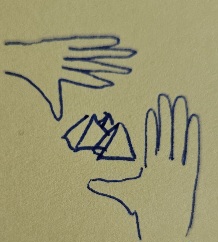
​I don’t quite understand how to use phonetics to create associations. Very often, I see people leveraging the literal meaning or the etymology of words. For example, for the term ‘chirality’ (which, if I’m not mistaken, derives from Greek or Latin), they break it down: knowing that ‘chiral’ means hand, they use the image of a hand to memorize it. The point is, I haven’t studied Latin or Greek: how am I supposed to trace these roots? Having to learn a new etymological term every time just to create an image feels like learning a new language, when I only need the scientific term itself. If it’s necessary, I’ll gladly do it, but I wonder if there are other ways.

​Specifically, I would like to know which systems to use for:

  1. ​Scientific terminology and definitions.

  2. ​Mathematical or chemical formulas.

  3. ​Texts, explanations, and terminology for a presentation (such as a thesis, a test, or an oral exam).

​I am familiar with the phonetic conversion for numbers, but I don’t know which techniques to apply in these cases or where to find them. Which books or manuals should I read to learn these things? Concretely, how do I transform a formula or a definition into something memorizable and, above all, how do I retain them over time?

Searching for mnemonics is, like most things in life, something that you become better at with practice. It’s perfectly normal to be bad/slow at something when you’re a beginner. You can always ask here to help you find ideas.

Also the more you know about a variety of subjects, the more material you will have at your disposal to make mnemonics. So I would just encourage you to stay curious about everything and anything, to read and learn about a wide array of subjects. It doesn’t matter which ones – if you know the pokemon catalog by heart and are able to use it to memorize the periodic table of elements it’s great !

“Chiral” for me sounds like the city “Cairo”, I’d use that for a mnemonic. You could use somebody looking at the pyramids of Cairo through their hands (meaning you see the chiral symmetry) – like an artist would do before painting.

In this case, our hands are an easily understandable example of what this kind of symmetry is, so it’s useful because it’s an illustration explaining the concept.

As for etymology in general, it doesn’t seem that much work to include it in the mnemonic (you don’t actually need to learn any Greek, just doing a quick google search with “[term] etymology” is enough) .

People like to learn roots because it allows you to understand other words later without having to search for their definition: chirography is “hand-writing”, calligraphy is “pretty-writing”, chiromancy is “hand-divination”, oneiromancy is “dream-divination”, etc. If you learn French we have “chirurgien” for surgeon, etc. So the idea is to put a bit more effort upfront, that pays dividends later in a variety of subjects.

But if you don’t want to bother with etymology there is, strictly speaking, no need. Eventually your brain is going to notice the pattern “oh another scientific word beginning with “chiro”… so these concept all have something in common!” (Etymology is just the shortcut to understand it sooner ).

Yeah, just get started, you need to accumulate experience, and your practice will change anyway. When I look at the first memory palaces I made, they are… not great. (Or at least I would do things differently now).

In the beginning I thought it would be good idea to have reserves of memory palaces at my disposal, just in case, and I spend way too much time preparing empty memory palaces. Most of the time, when I then wanted to use them, I had to modify them: change the journey a little bit or change the number of stations in this or that chapter, to adapt it to the things I wanted to learn.

It can be a form of procrastination.

For scientific terminology, I feel it’s like learning vocabulary in a foreign language. There are lots of threads on this forum (if you search “memory palace for vocabulary”), some people use memory palaces, some don’t (I fall into that camp, I feel soundalike/image mnemonics alone is more efficient). In the end it may be a personal preference. Always with spaced repetition of course, whether with or without memory palaces.

For science in general, I think that it’s more important to structure the knowledge first: drawing mind maps and the like, to understand how the concepts relate to each other and how they relate to your practice (meaning how they are useful for what you want to do with what you’re studying). It’s more useful to put them in a memory palace AFTER having done that work. Something understood is already half memorized after all.

Now if you’re studying with a well-made textbook, a lot of organizing is already done for you, but it’s always useful to see if you couldn’t trim down the amount of info you put into your memory palace. Memory palaces are very efficient, but there still is an opportunity cost: you need to take the time to review them (even if way less often), so all the time you’ll spend reviewing you can’t learn other new things .

Same for mathematic formulas. If you understand the formula and how the concepts relate to each other, you probably can reconstruct it (mostly). You then need only to encode the few points that you always forget or tend to remember wrong. Also plenty of threads on this forum, for example: Physics Equations - 180+ - Video Inside - General Memory Chat - Art of Memory Forum .

For verbatim (for example, if you need to learn a definition word for word), I find the first letter method (or redux method) very useful (again always with spaced repetition).

For presentations, a memory palace is super useful (because you’re going to give it in linear order, and you don’t want to forget a part, etc.). One of the most straightforward uses of memory palaces imo.

The most common one is the major system. You don’t need to make it complicated, only learn which sounds translate to which number (so ten of them, from 0 to 9), and you’re ready to replace abstract number with images to memorize them more easily.

Let’s say you need to remember that the absolute zero is 273,15°C, you need to have a word/sentence with the sounds N for 2 / K or G for 7 / M for 3 / T or D for 1 / L for 5. Whether you want to choose a frozen sheep “the Enigma Dolly”, “neko metal” (cat that looks frozen, is actually just metal), or “Nekoma ('s) tool” (extreme cold used as weapon to win at volleyball) is up to you. Usually the first association coming to mind is the one your brain is going to remember, no matter how dumb it is.

Spaced repetition. You need to review everything. Using memory techniques means that you’ll need to review much less often, but you still do need to review.

Most people use spaced repetition software to schedule their reviews, but you can organize it however you want.

3 Likes

I am very grateful for your advice. I will apply all of it, especially regarding the creation of “memory palaces” that are pre-filled with mnemonic images rather than left empty.

I completely agree with you regarding the use of etymology. It is incredibly helpful for understanding new terms without needing a formal definition, as you can build the meaning yourself using your existing knowledge and mnemonic associations.

I also appreciate your tips on spaced repetition. I was aware of the technique, but I lacked confidence in it because I struggled to maintain it consistently. It felt as though too many overlapping topics were crossing paths every day, and I wasn’t sure if that was sustainable for the mind. However, I am going to give it a proper try now.

Regarding mnemonic images, I would appreciate some help with complex terms and especially with definitions. I am currently struggling with how to memorise definitions effectively. It feels as though the only way is to learn them word-for-word, perhaps by combining etymology with the text. However, I suspect etymology only works for keywords and might not be suitable for full definitions. I need to find another way.

I have also heard a lot about the phonetic system, but I have never quite understood how it works. I would really value your help in understanding it. Even though it might be subjective—and I realise explaining it in English might be different from Italian—could you provide some examples of how you apply it? I want to know if it is similar to phonetic conversion or the Major System for numbers, or if it is something else entirely.

There are so many memory techniques and options available, but I want to understand which is the most efficient. Even though it is subjective, what works best for you?

I would also love to know how you organise your memory palace. For example:

1. Do you use hierarchies for constants or dates?

2. How do you place them?

3. Do you put everything into a single image, or do you separate them (for instance, placing a date on the top shelf of a bookcase and the event on the bottom shelf)?

While I am not particularly interested in historical events, I am studying Environmental Biotechnology, so I need to focus heavily on physics, chemistry, and biology. You mentioned that you don’t have much experience with memorising chemical formulas or constants, as that isn’t your area of expertise.

If you know anyone who does use these techniques for science, please let me know. I will also search the forum for other university students who might be able to help me with memorising definitions, formulas, and constants.

Thank you again for all your help.(By the way, sorry for the delay in replying; I’ve had a couple of tests and haven’t even had time to touch my phone.)

1 Like

I forgot to ask you a few questions regarding mnemonic techniques that aren’t commonly used anymore. I hardly hear anyone talking about the methods of Giordano Bruno, Ramon Llull, Cicero, or Aristotle, nor things like the “nuclear alphabet”.

In your opinion, is it actually worth learning these today? I hear Anthony Metivier talk about them a lot, and it seems like something extraordinary that could really work (like the “Memory Circles”—I can’t quite remember the exact name, but it has something to do with circles). I definitely need to improve my own memory because I struggle to remember even the things that interest me.

Regarding these specific techniques:

1. Do they still need to be learned, or are there more efficient modern alternatives?

2. Given that someone like Anthony Metivier advocates for them, do they have untapped potential or are they perhaps simpler than modern methods?

3. Are they considered advanced or more foundational?

I am currently in my third year of technical high school. Based on your knowledge of memory techniques, which ones would you recommend I include in my “toolkit” to excel both now and later at university? Specifically, which techniques are essential for mastering my studies and retaining information forever using spaced repetition?

If you don’t have the answers, could you recommend someone who specialises in these specific academic applications?

Additionally, I have a few other questions:

- In what areas can memory techniques be applied outside of school and academic life?

- How do you actually go about memorising names, words, and faces?

- What is the process for memorising images?

Finally, what is your personal experience with mnemonics, and how do you use them yourself? I look forward to hearing your answers.

1 Like

The thing is, we could talk for months about memory techniques and how to use them. And in the end what other people do are not exactly what you need to do, so it stays only theory.

So my practical advice would be pick one thing that you think will be useful and start.

Then you can ask more precise questions with examples and problems you actually have. I feel it would be more useful that way. (Also other people on this forum may be more interested in brainstorming ideas for concrete problems).

For example, instead of saying “I struggle with memorising definitions” give us an example of one definition you have a problem with, give us an example of what you tried and what didn’t work that you want help with.

2 Likes

OK, I understand.

I will ask more specific questions and try to be more precise, as I’ve realised that my previous questions have been very general. I will be much more specific and accurate from now on.

Thank you.Thank you so much for everything you said and all the advice you gave me.

I will do my absolute best, and I’ll ask you very specific questions when I encounter any problems.