Recommended techniques for memorizing Bible chapter summaries

GOAL
I am trying to find some memory technique to memorize summaries of chapters of the Bible.

EXAMPLE
So for instance, if I hear “Matthew 11”, I would want to know that’s the chapter where “John the Baptist doubts”. Additionally, I also want to be able to remember the reverse direction. I.e., if I hear “John the Baptist doubts”, I want to know that’s “Matthew 11”. One complication with this summary to book+chapter direction is that some events occur in multiple books. For instance, the story above in Matthew 11 is repeated in Luke 7.

MY ATTEMPTS
I have thought about using imagery such as the number 11 of Matthew 11 looking like prison bars, which would remind me of John the Baptist doubting since he was in prison at the time. The issue with this is that it would become very easy to forget which book the story comes from (i.e., was it Matthew 11 or Mark 11 or…?). I guess a more elaborate encoding would ensure I can distinguish between the books, but even then, I am not sure how well this would work when I try recalling the book+chapter based on the summary.

I have also thought about using a memory palace, which would probably make it easier to distinguish between books, since I can just put each book of the Bible into its own palace. However, similar to imagery, I am not sure how well this would work when trying to recall the book+chapter based on the summary.

So I guess my final question is, how would you memory enthusiasts approach this?
I’d just create a memory palace with 28 places. To your concern about it, I wouldn’t worry too much. Since you’re just doing summaries right now, you’d just put something that reminds you of the summary at each place. So your first location (say your front door), there’s a massive family tree. You don’t need the specifics here (David the father of Solomon, Jotham, Ahaz, etc) just that it’s a giant family tree and it ends in Jesus. Boom.

Moving on to the first closet, Matthew 2: the wise men, herod, and the egypt trip. You know that story, so you just need to remember which verse it is. So you can represent it in the second place in your palace with whatever you want. a north star, a manger, even just a pyramid will probably trigger your memory. Matthew 3: John the Baptist. There’s a baptism taking place on your coffee table. I think it would take a small amount of extra time in the encoding to make sure you associate the number with the locus, but i think it would work quite well.

1 Like

What I’ve done is a memory palace (real location) with one station per chapter, and in that place several stories if necessary.

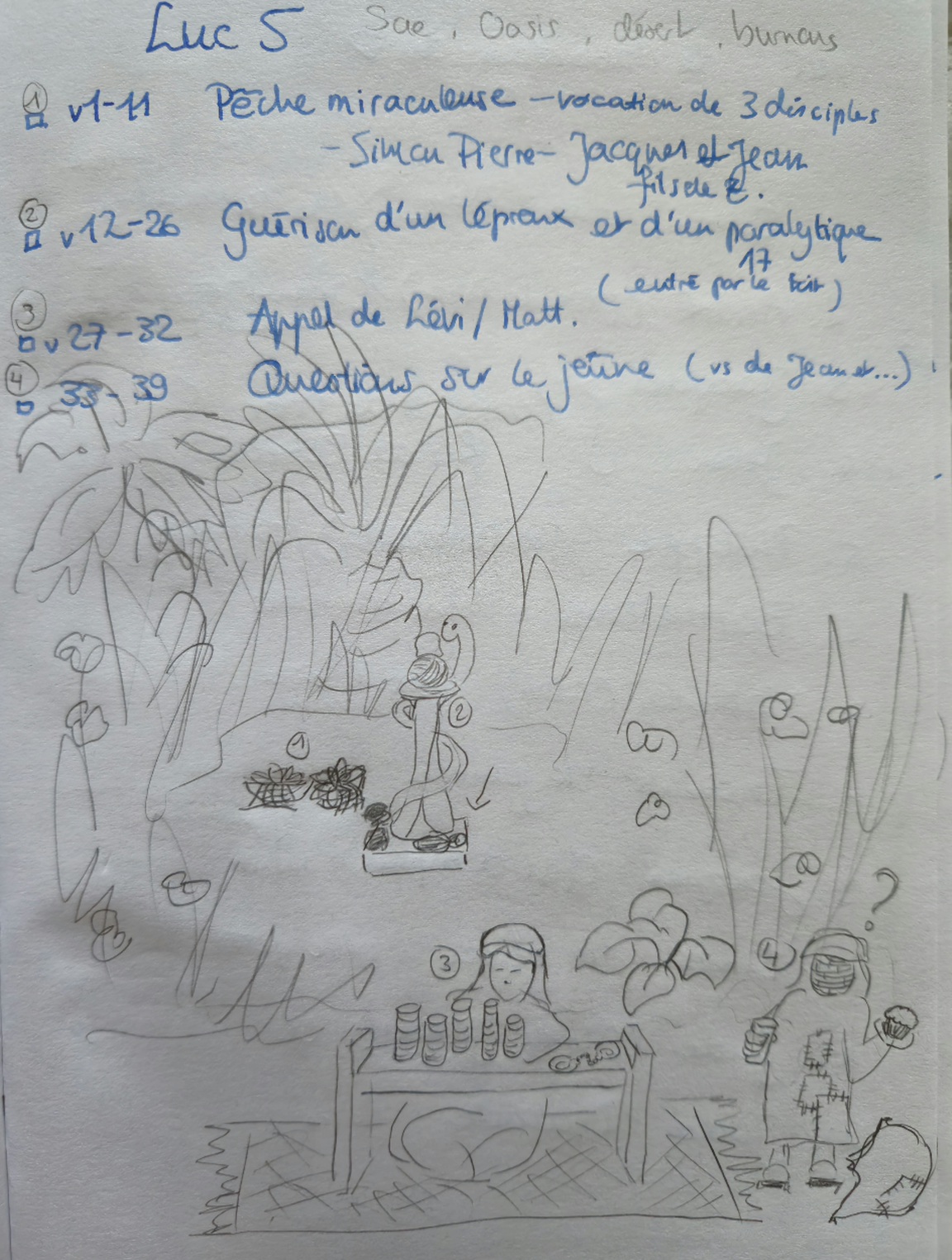
Once I’ve placed the stories in place my brain knows where they are without any special referencing necessary. I mean if I think about the paralytic brought through the roof I see it happening on the statue in the pound of the hospital’s garden, so I know it’s Luke 5. And for the same story in Matthew/Mark it’s like visualising the same person in different chapters of a book… As long as each memory palace is distinct your brain knows.

Jesus travelled around and taught with stories/parables because we remember places and stories best. Go to the place (IRL or virtually, imagine being there), sit and read the story there, and your brain associates the story with the place and you can do back to it easily in your mind afterwards.


2 Likes

Love the picture :slight_smile:

You are doing an even better version of what I was planning — better, because your approach allows for more detail when chapters have multiple events. I have a couple questions if you don’t mind:

  1. How are you relating the chapter number with the station?
  2. Do you always do one station per chapter?

Depending on your answer to Q2, I think I might have questions about how small/large your stations are (other than your example for Luke 5), and how many items you put in each station.

One station per chapter?

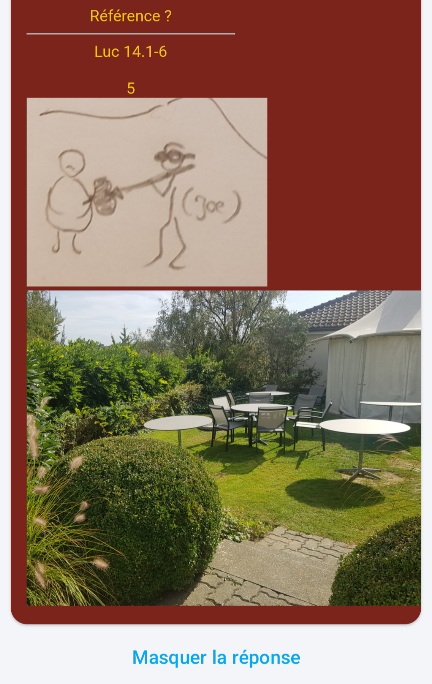
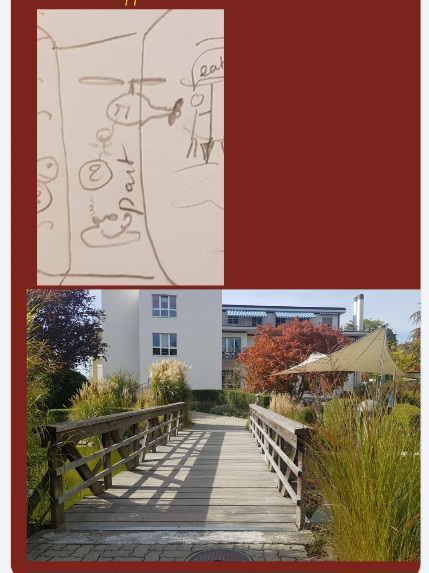
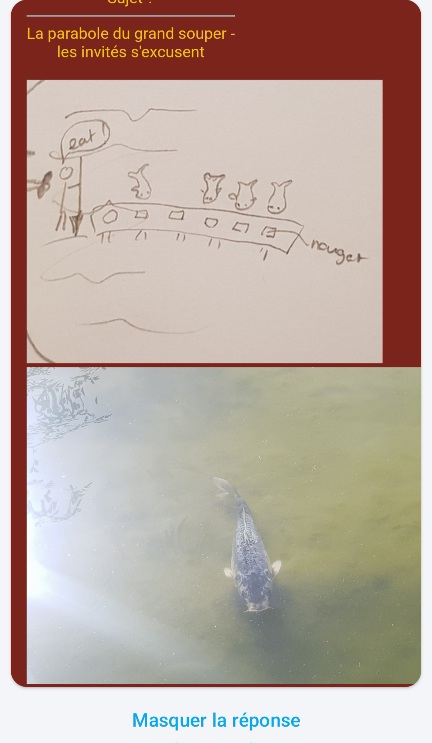
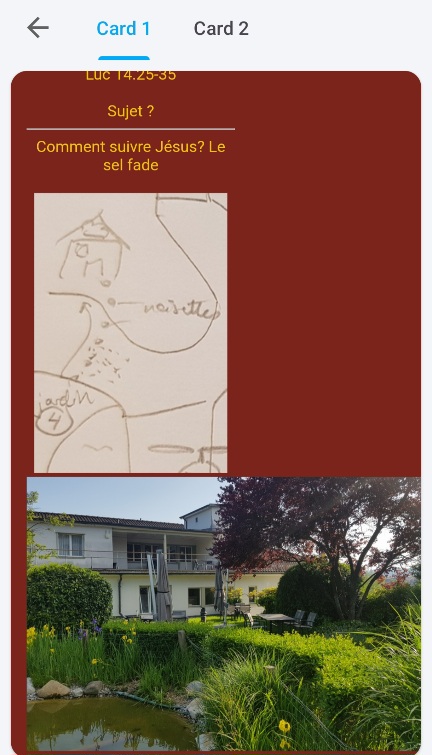
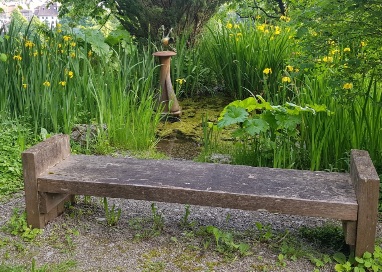
Yes, I always do one station by chapter… But my stations are large, more like zones. For example, “the bridge at the end of the lake” is Luke 14. But since I need several (sub)stations inside it, I used not only the bridge itself, but also the water, and a piece of garden left and right.
You can consider it several stations that are near each other if you prefer.

The important for me is that all the (sub)stations of one chapter clearly belong with each other. So I would stay somewhere and all the (sub)stations for one chapter should be visible from where I am. Then for the next chapter I’ll walk a bit to leave space between the chapters and go to another view point, where I can see enough elements to put the stories on.

I want to add that parts of my drawings are objets to help me remember the verses numbers (conversion letters-numbers). It’s not strictly necessary and honestly I don’t really use it in practice: when I think “where is the story of the paralytic brought through the roof”, I instantly know “Luke 5”, but then I just scan the chapter to find it (I thought it was important when I set up the memory palace, and later noticed it wasn’t). So I could have made it simpler. But spending time drawing was beneficial, slowing down and the sensory imput of doing things with your hands is huge for memorisation.

Adding details like the repaired bottles and patched clothes on the mummy (Luke 5 drawing on the right down corner), is more useful because it tells my brain where are the verses with the new/old clothes and the new/old wineskins. I didn’t want to make another substation for them, because I didn’t want to make too many of them, it works well enough like this.

How to know the chapter number?

I have a system with 10 “atmospheres” . Chapters ending in 0 (10, 20) are always at night, in 9 (9, 19) under snow, etc. I figured that chapter 10 and chapter 20 are far enough from each other that there’s no risk of mixing them up.
But with practice, like the verses numbers, I notice it wasn’t necessary. In fact I stopped being careful to do this after about ten chapters. When you’ve learnt something by heart, after a while the mnemonics fade and you just know, without consciously saying how you know.

I would say that it’s good to think about what you want to do before starting, but don’t worry too much, you can always go back and tweak things a little later if you notice you need something more/less.

In fact it’s probably a given that you’ll change things a bit after getting started, it’s only with practice that we know what we need.


1 Like

@NewbieToMemory,

I always like to hear how others approach Bible memorization. You and @Hari-P are tackling a large body of information and both of you have good ideas. Tweaking is essential as @Hari-P says and I had to tweak my system in a major way many times over about five years.

My initial goal was to create a framework to memorize scriptures. But I wanted a complete narrative that used large containing mnemonics unlike what Jerry Lucas did. After organizing and analysis, I found that my 7711 system included chapter themes that were provided such as in the NIV, chapter numbers, groups of chapters, and book titles. I was able to complete the NT but the OT was so much more work that I put it on the back burner.

So with your example of Matthew 11, I used a math building (Matthew) where Jesus is in an elevator (Otis elevator = chapter 10) and using his phone to tweet a message (chapter 11). The actions that follow determine the themes (Jesus and John the Baptist, woe on unrepentant towns, the Father revealed in the Son.)

My story that provides the context for more detail is that inside the elevator but before the doors close, the students from the previous chapter, not recognizing Jesus, keep asking where John the Baptist will be next and what time they could see him. Putting a little more relevancy to the questions, you would add that John is finding out who the Messiah is and they bug Jesus about it.

The context of this story is completely changed in Luke where the background is that of a hospital and location is in a pharmacy where calcium pills are the main goal (chapter 7). The questions are asked and more relevancy of the questions can be added to that scene.

My 7711 Bible Memorization system is all sorts of techniques put together. It’s groups of memory palaces, numerical peg list usage, and lots of stories. But then it’s also a lot of information to keep straight. When you just attack one scripture or theme, it’s easy to come up with solutions, but putting it all into a logical system is difficult.

Good luck on your path to keeping scripture in your head!
Doug

3 Likes

Sorry for the late reply, but thank you so much. Lots of awesome information here.

1 Like

Very interesting approach. I think I have seen you on Reddit with the 7711 system when I was researching this lol. You mentioned you use multiple techniques – do you have some preference for one approach versus another when choosing how to memorize chapter summaries for a given book?

This is very helpful! I was looking at chapter summaries, but was struggling because I was trying to fit too many “words” into each image. I need to think more simplistically.