Question: single and double digit pegs

Perfectly put and 100% agree with you but… and here comes the but… I suggest you rather learn to crawl before you walk and then walk before you run and preferably learn to do all three crawl, walk and run before you get thrown into the deep end to learn to swim.

I think that nothing should stop you from operating multiple systems simultaneously either. Whilst I am a proponent as @TheHumanTim suggests of the Dominic System, that doesn’t exclude me from the “Major Old Boys Club” either. You will find that often systems build upon systems and there is much commonality between the various systems in any case. For instance, they are all underpinned by the same skills sets of being able to visualize “mini-movies” in your mind’s eye. Association, Linking and Imaging underpin both the Dominic System and the Major System (and remember too that there are many ‘personalized variants’ of the Major System to boot. I recently advocated for a Visual Encoding Major System. The following picture will illustrate:
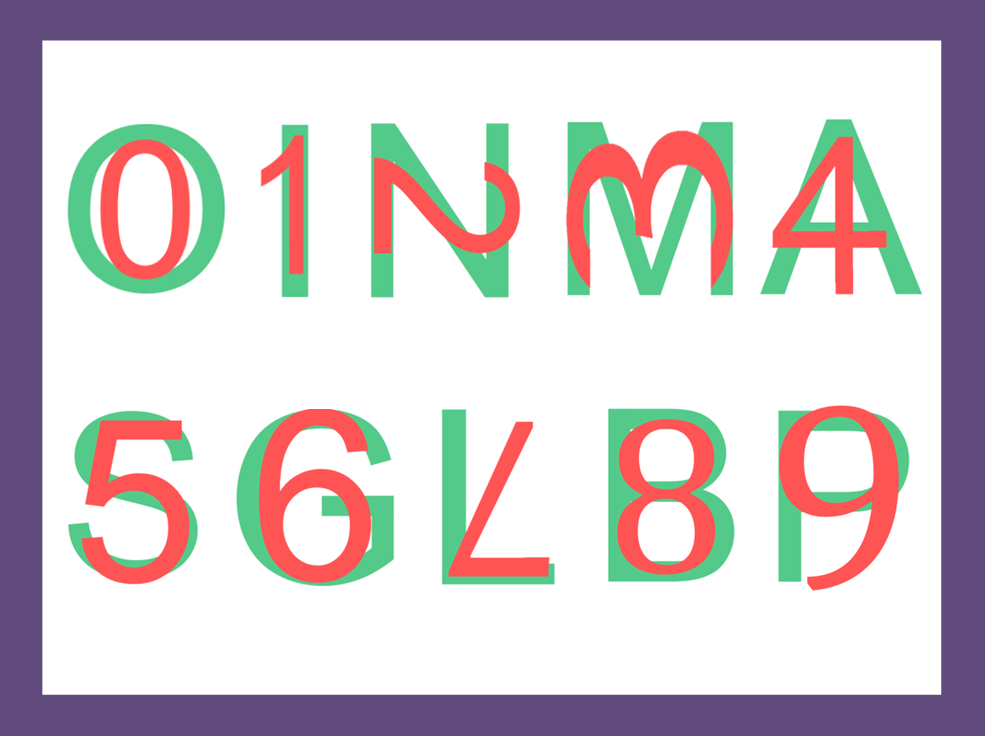
@TheHumanTim however is 100% on the money that if you are going to devise maybe a 1000 peg word system that the Major System would be the preferred route to follow. My recommendation to you however, is don’t see any Systems as an either/or scenario as they are not! Why restrict yourself to only one system when its well within your means to take both systems on board and enjoy having the best of both worlds?

2 Likes

Thanks so much. This information is gold. So I now need to go over my single digits and make them like heN" for example so it’s clearly only one digit/consonant, and continue with my 00-99 which can later expand. Then learn either by rote or memory palace (or both as I’ll input in anki as I go, may start to use gif animations too). Back to the drawing board then :pray::blush:

Try Anki’s spaced repetition with the max delay set to just a few days when building speed. This way it will select and prioritize the more challenging ones for you to see more often and you won’t go too long without seeing an element.

The learning process of a system is different than the process of using the system once it has been learned. Be careful that you don’t bake in extra associations to your images when learning them.

For example, if you try to learn the system by putting your numeric PAO images in sequential loci, memory palace style, you may be forcing an unwanted location element in. Say your practice approach is that in your shower is the loci that you have representing the number 1. If Di, eaTing, a golf Tee is your PAO for the number 1, and you learn them by first visualizing the shower and linking to those elements, you may start instinctively picturing those elements as “in the shower” every time they come up in a real attempt.

This presents a problem when you go to apply the system and you’re trying to memorize a sequence of numbers using a different palace. If the loci that Di appears at is your friend’s living room couch during your actual applied memorization attempt, you may still have a weird ghost of Di appearing in the shower and that could cause some interference when you get to recall. It’s not guaranteed to be an issue, but it can be totally avoided if you don’t associate a location while learning those elements.

When I first learned PAO, I set up 10 ten-loci palaces to speed up learning just as you are suggesting and after the fact realized that it was a hindrance in application. Same thing for reviewing them often in sequential order… i found myself wanting to visualize the images in order instead of taking them as they appeared in a real random setting. When I learned my 3-digit system I purposely learned the elements without mem palace help, and forced randomness so that I would have to actively thing about reading each element on its own, not dependent on a sequence or a location, and although it took a bit longer, they’re stronger and more distinct images in my mind.

The instinct is to use the powerful memory palace technique to simplify the learning process, like you would do for other info, but sometimes its better to go with other approaches, especially when trying to develop isolated associations.

The only pieces of information to work off of should (in my experience) be the number, the sounds, and the word/image. It’s more challenging, but I think it will make the direct connection stronger quicker.

1 Like