Question About Using Your Hand, Or Any Memory Devices

This might be obvious, but it’s been a while since I’ve read about this, or any other memory method (though I’m currently reading @LynneKelly’s “Knowledge Gene” and it’s amazing!!!)

(I’m using hands as an example, but I’m going to be making my own Lukasa soon, so I’m also mainly asking about how it works with those too)

Anyway, the question is:

When memorising using your hand (or something like a lukasa), I’ve always thought people were just imagining the images on parts of their hand. For example, if you’re memorising:

  • Ant

  • Bear

  • Centaur

  • Dragon

  • Elephant

I thought that you were just ment to visualise an ant on your thumb (maybe it’s biting it or something), then you’d imagine a bear on your index finger (maybe it’s digging through it, whatever image comes to you), then you’d imagine the centaur doing something on your middle and so on…

I’ve always had 2 issues with this:

  1. I’d forget which finger a piece of information is on. I might think the ant is on the pinky, dragon on the index finger, etc. (the animals are just an example, I mean information that doesn’t have an alphabetical or otherwise obvious order)

  2. I’d forget the information (quite a big issue lol). I’d try making the images as vivid and extreme as possible, but I’d always end up forgetting them

I was watching this interview below with Lynne (I’ve linked it so it takes you to the correct timestamp, 8:50) and it made me start to wonder. In the video, Lynne shows how you can find images in even the smallest of places. She picks a bit of stone, and finds a mark that looks like an elephant
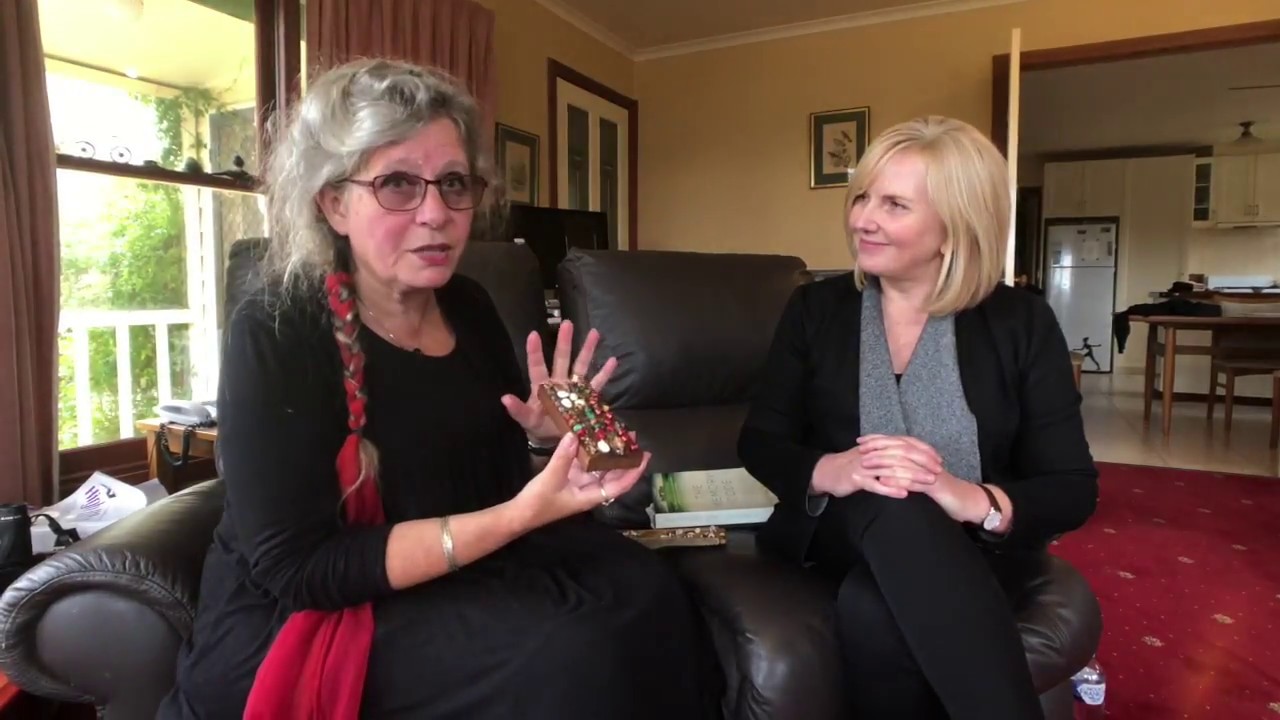
After hearing that, I started to think: when people talk about encoding images onto their hands, are they finding marks/lines on their hands which remind them of a particular piece of data?

For example, I was memorising the beatitudes with the method in the above paragraph, and it’s worked wonders! For example, one of the beatitudes is “Blessed are the peacemakers, for they shall be called children of God”. On one of my fingers, I found 2 lines that kinda look like a scythe. So I pictured the grim reaper swinging his scythe at a kid, then Jesus puts up his hand and freezes the scythe before it can hit the kid. Ever since picturing that, I haven’t forgotten the image.

So I’ve been wondering, is that what people normally do when using their hands which remind, or any memory device such as a Lukasa to remember things? Obviously I should do what I find works for me, but I’m curious if that’s the “regular” method, or if people do actually just visualise the image on their hands, without linking it to any marks or lines?

Thanks!

Daniel
7 Likes

This is a great observation and an important one I think.

Whatever the “anchor” point or “starting off” point is that you have access to should have some way of triggering a connection to whatever your mnemonic imagery is.

This is the same with a memory palace with physical locations and why it is very difficult to remember things that just “exist” “at” a location compared to remembering ones that the location itself provides clues and connections to.

If you think about the recall process, you use previously known and familiar things (a memory palace location, a body part, a pre-determined peg list, etc) to trigger the recall of your information. So when you’re memorizing and encoding that information, doesn’t it make sense to find a way that the location or the pre-determined thing can remind you of the mnemonic thing? Sometimes its not quite as blatant as a scythe shaped line in the perfect spot to indicate peacemakers, but similar links can be made with seemingly unconnected starting things if you’re imaginative enough.

I think the most powerful and easiest to remember mnemonics are the ones like this.

Next would be a strong interaction where something memorable has happened TO the pre-determined thing or that it is an integral part of an active scene that contains the information.

Then the weakest is just the passive “this thing exists at this place” with no real connection happening.

Hope this all makes sense. But yeah, I think finding a detail that you can connect to your information from that familiar thing is the most powerful way to go!

4 Likes

I agree with @TheHumanTim (no surprise there! :P)

I use my hands—and toes and all sorts of odd things. I was just using my usual traveling backpack (aka Beau’s purse).

“Remembering” boils down to creating strong associations, and good lord there must be a gazillion ways to create those.

I use different techniques at different times (often just to experiment and see if it will work, and how well).

One shortcut I use when I’m uncertain about how to make the association strong (you know, so recall is easy)—I choose anything nearby, arbitrarily (could be my fingers—the other day I did a table of contents on my toes) and I merely make a note that i will see the same day (and the next couple days) of both what I memorized and “where” I memorized it.

Every time I see the note, I do a quick “recall” of the material. Often the note is merely something like “Binary powers of two on my hands”.

After a few days, the association is plenty there no matter how arbitrary.

To ensure i don’t get things confused, I always maintain a specific “order” that I review the items in.

To remember the order, I need to create a strong association between each item (or between the “landscape” and the item, much like your Scythe-looking hand lines).

This is as simple as making one mnemonic object interact with the next in a way that changes how each “next” mnemonic “exists”.

One Table of Contents starts on the bottom-back of my left Thumb, the next location is on the “thumbnail” part of the back of my thumb, the scene/imagery I use then interacts with the scene/imagery I placed on the “front” (the pad) of my thumb.

The Devil and a gal I know are on the back of my thumb. They look through a telescope that extends out the pad (front side) of my thumb.

From there they “observe” across the gap of my hand to my index finger and watch Data from Star Trek typing out a huge receipt with a green accountants visor-cap on his head.

The tallest finger (middle finger) is the “next” location and is someone tall switching between Happy/Sad drama masks with a giant bank statement in hand while towering above Data and the next location, which involves someone using a level and trying to make sure the giant “statement” coming down beside them is level (they’re looking at those little green bubbles in the level).

In another palace that I’ve also had on my hands for a long time, I first used a mansion down the street from me as a memory palace, then I made the effort to assign each finger one “location” from the mansion mnemonic. Over the next few days I would merely hold up a finger and think about which “location” that finger was assigned to.

In that palace, I assigned different locations for both the fronts of my fingers and the backs of my fingers so I could do a variety of binary calculations for subnetting (a la internetwork engineering).

Mostly I chose these arbitrary “locations” because nothing came immediately to mind that seemed particularly better.

Sometimes I think “Oh that would be a PERFECT palace for such-and-such topic!” In that case, I roll with it.

Keep experimenting and playing around! You never know when you’ll stumble across the perfect mnemonic for you.

Regards,
Beau

4 Likes


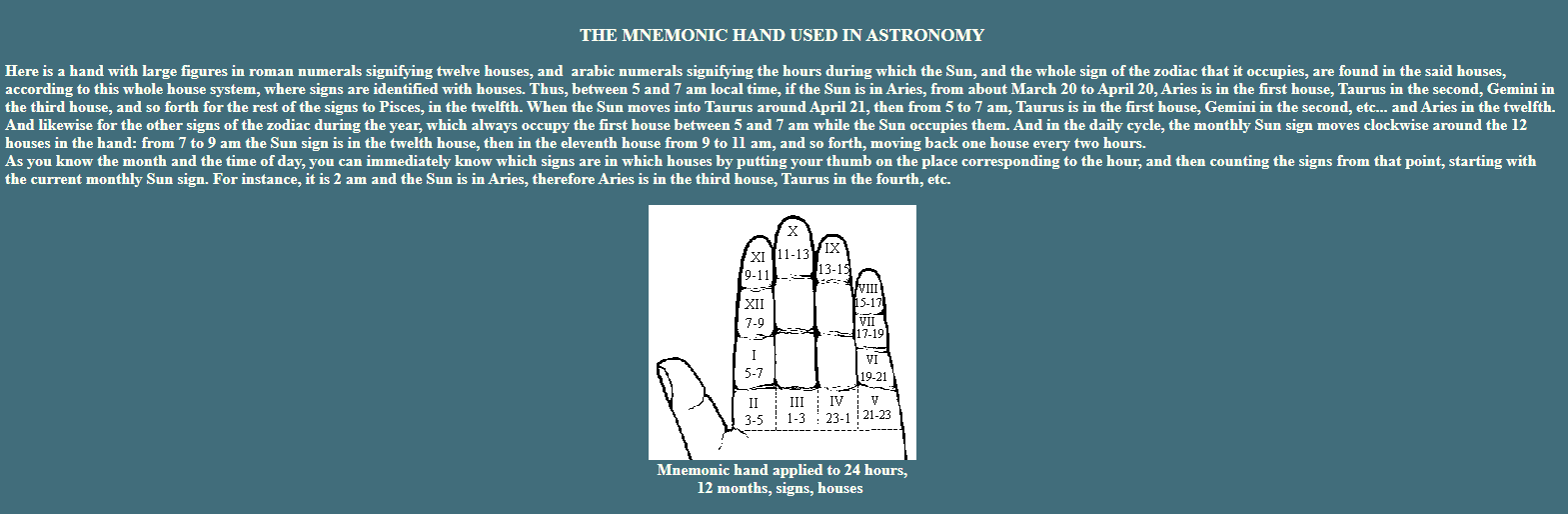
source: mnemonic hand with twelve loci

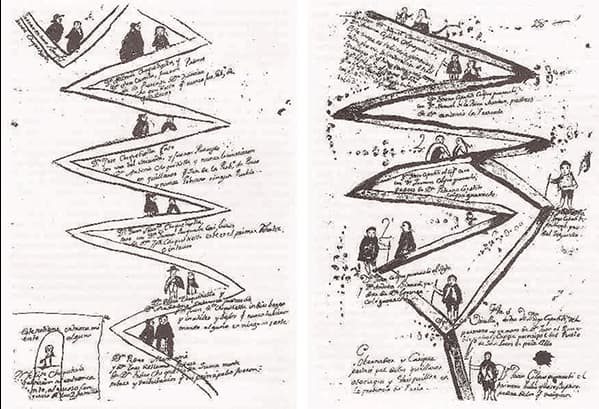
The hands can be a mental palace of multiple layers, for example the 12 zodiacal signs with 7 houses each and each sign can be combined with the others making it even deeper, it is an ancient method, the forms however abstract they may seem can serve as a basis for or as atomic loci however small they may seem because the imagination can transform it enlarging and accommodating it in the following image you can see the Andean trails:

source: https://www.scielo.cl/scielo.php?script=sci_arttext&pid=S0718-68942020000100201

3 Likes

Hi everyone, thank you so much for your replies!

I’m going to continue using the “markings” method, since it’s working so well!

You all are great, happy memorising!

2 Likes

I use the markings, but I also use movement. I will move the finger (curl, circle …) or touch the required location, or pinch it, or attack it with a nail from the other hand - and so on, to aid the story I am connecting.

4 Likes

I have kind of combined the method of using a Lukasa with the method described by Feinaigle by making Mnemonic Cubes. They work really great. It is simply a cube and on each face there is a background picture and, laid over it, a grid that devides the picture into little boxes where you can put your information. I have cubes with different themes, for example one where each face shows another geological period, or another one with the continents, another one with fairytales etc.
Because of the background picture it is easier to use than for example hands where all loci are similar

here a link to a scaffold for a five face cube with 100 loci. You can insert your own background images:

2 Likes

This might be better for inserting the images

1 Like