Piudi on his journey of memorizing binaries and more (in Brazil 🄲)

I’m jumping on the bandwagon and starting my own journal about my daily memory training. Unfortunately, I’m good at reading English, but not so much at writing it, so I’ll be using ChatGPT to translate my texts, and I’ll review them myself afterward. (se vocĆŖ for brasileiro, gostaria muito de ter alguĆ©m daqui para conversar sobre esses tópicos)

My goals:
1 → 360 binary digits in 5 minutes
2 → 150 decimal digits in 5 minutes
3 → 1 deck of cards in under 2 minutes
4 → 3x3 BLD in under 2 minutes
5 → 10,000 digits of pi, e, and √2

Other goals might come up later, but since I haven’t seriously practiced some areas I’m interested in, I don’t know yet what would be a realistic target. For example, memorizing faces or random images—something I’ve never trained but would like to in the future. Also, I’m not totally sure if my current goals are realistic, too easy, or too hard.

About the goals:
1 → I’ve memorized 234 binary digits in 5 minutes, but I have to admit I was cheating. Since I haven’t fully memorized my 3x3 binary system (512 images) yet, I used my phone to look up the image in my spreadsheet. I believe I’ll be faster once I’ve internalized the list, as I wasted some time searching for each word.
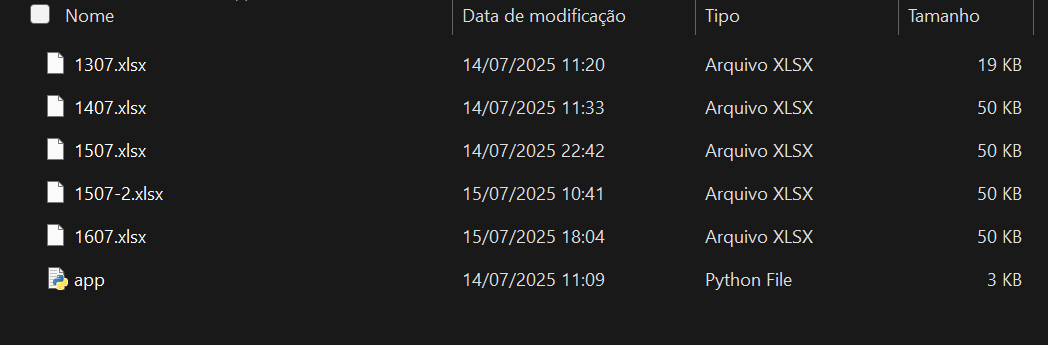
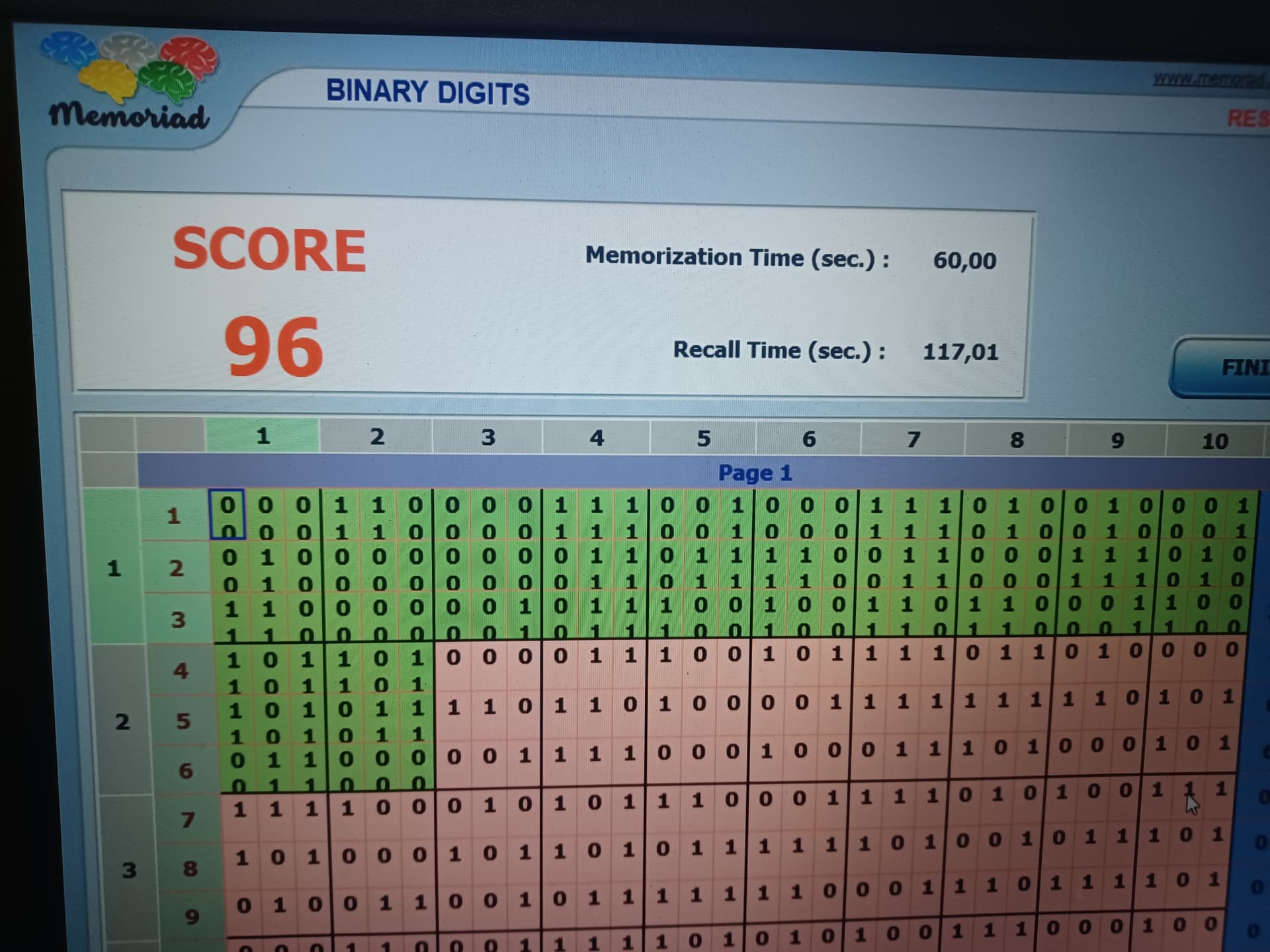
My target is 360 because I’m using a 3x3 matrix system, using the Memoriad app. In this system, 360 binary digits represent 3 lines of the 3x3 matrix. I’m still unsure whether I should keep using this matrix or switch to reading in 9-digit chunks per line. I’m currently using a Python program made with ChatGPT to help me memorize my 3-digit system.

2 → A few months ago, I managed to memorize around 90 digits in 5 minutes, so I think 150 is a good goal to aim for.

3 → Several months back, I used to train card memorization regularly. I just got back into it a few days ago. Back then, I used a PAO system made specifically for cards, and my best record was 6 and a half minutes.
Today, I did my first card memorization in a long time, but I didn’t use PAO. I used a PO system and integrated suits with numbers to use my Major System. I got 5 minutes and 4 seconds and was able to recall all the cards. It felt much simpler without needing to force an action—you can imagine things much more freely.

4 → I’ve just started learning 3x3 blindfolded recently. Right now, I’m not timing myself often because I feel I should focus on learning the fundamentals first. But I do know that once, I managed to solve it in under 10 minutes.

5 → This is something I’ve always found amazing and have always wanted to do—memorizing extremely long numbers with thousands of digits. I was thinking of starting with pi, and then reusing the same loci later to memorize E and √2. I’m not sure if 10,000 digits is too ambitious, but I’ll find out along the way.
A few months ago, I memorized 1,000 digits of E in a single day using a PAO system, which was a cool experience. My goal now is to use a 3-digit system, placing 3 images per locus. Or maybe even create a system with 1,000 people and 1,000 objects and use PO.

That’s all for now. I’ll try to update this journal at least weekly.

2 Likes

Brazilian here! I’m pretty new to memorization, so I don’t know what advice I can give. But I found the number of goals to be quite long, don’t u think?

1 Like

How nice to see another Brazilian here! I’ve set a lot of goals because I want to achieve them over a long period of time, they’re more long-term goals. And I’m already halfway there with some of them.

1 Like

Greetings Pedro.
I’m also Brazilian and I think Everest of Pi it is a really interesting challenge too.

Some athletes advise to not reuse loci / memory palaces when you need to keep images for long term.

What are your strategies to create lots of memory palaces?

2 Likes

Hey, it’s great to see more Brazilians here! I didn’t think I’d find others.

To be honest, the first time I memorized a thousand digits, I already needed quite a few different memory palaces. But I noticed that I was jumping around a lot from one location to another. Lately, I’ve started being more detailed—there were palaces where I used to jump from one room to another, which made me need a lot more palaces. Now, I place images in smaller spots, as long as they’re at least slightly different. From mentally walking through my 14 palaces, I’ve estimated that I have about 855 locations. I want to place 9 digits per location, which would give me around 7,700 digits. Then I’d have to create new palaces for the rest. Right now, I’m not super focused on this goal—I’m way more into binaries at the moment—but soon I’ll dive back into this project.

Some of my palaces include: my house, my street, and my childhood school. I also use some virtual ones like:
Dust (from CS2), SpongeBob, and Rick and Morty.

As for reusing locations, I don’t think it would be a big problem. I’ve probably forgotten over 90% of the 1,000 digits I memorized anyway. I’d probably wait a few months before reusing the locations.

1 Like

I’m getting used to binary patterns and trying my best to associate images with the shape of the matrices. I try to somehow link the drawing to a word or character. I’ve currently selected about 60 images that have noticeable patterns—ones that you immediately recognize when you see them—and I’ve associated them with specific images in some way. Now, I can quickly tell which image each one represents.

I created a separate spreadsheet and cloned my memory training site to include only these specific patterns. By the way, for anyone who knows a bit of programming, here’s the app page with the full list (a bit outdated):
:backhand_index_pointing_right: Jogo de Adivinhação
I personally use a Python version because I find it simpler. I might publish it as a repository at some point.

Here are a couple of pattern examples:
111
111
000
This one is Bob Esponja (SpongeBob) to me—coincidentally, it kind of looks like him.

111
101
111
This one is Pica-pau(Woody Woodpecker). I imagine he pecked a hole (the 0) in the middle of the wood. And so on… Even if it doesn’t make total sense, this method has helped me a lot.

I also just broke my personal record with cards—4 minutes and 19 seconds, no mistakes. It feels like my eyes have been opened now that I realize the images don’t need to be super detailed or sharp. Later, you’ll have the other deck to help you recall. What I’m doing now is placing the images I remember, and when there are about 6 or 8 cards left, I look at one and ask myself, ā€œWhere was Gandalf again?ā€ And many times, I manage to recall the image.

1 Like

July 15

Once again, I broke my personal record with cards. Today I memorized a deck twice — one in 3:32 and the other in 3:29, both without any mistakes. I still feel like I’m spending too much time on each image, so I think I’ll start pushing myself to go under 3 minutes, even if I get a few cards wrong at first.

I didn’t memorize binary sequences today, but I spent a good few hours studying my system. I’m still working on the patterns, and I believe that by July 22nd I’ll be fully fluent with my list. Right now, I’ve memorized 120 out of 512 patterns and I’m already recognizing them pretty quickly. Until I fully memorize my list, I won’t be doing binary digit memorization, because I’d have to ā€œcheatā€ to make it work — and I don’t think it’s worth it.

As for the patterns, many of them don’t make much logical sense, but sometimes that actually helps with memorization. For example:

001
010
000

This one means ā€œdinosaurā€ to me. I imagine he’s sticking his little arm out in front of the screen — the two 1s are like his tiny arm.

Another one:

011
101
011

This one is ā€œmagmaā€ for me. I picture that zig-zag line of zeros as magma flowing down the volcano like a river of lava.


I’m also using another Python program to help with the binary patterns. In it, I create a separate spreadsheet for each day, with no more than 40 items per sheet. That way, I can focus on memorizing a specific amount of patterns at a time.
Here’s the repository for the app (created with ChatGPT):
:backhand_index_pointing_right: GitHub - pedrodocarmodev/pythonbinarypatterns Ā· GitHub

As for the cube, I’ve decided to learn the Orozco method for corners, and I already know M2 for edges. Both are intermediate methods, but I think they’re good enough for my goals. I don’t want to learn 3-style because it takes too much effort.

1 Like

17/07

I feel like I’m progressing really fast in card memorization, even though I know I’ll eventually hit a kind of plateau in this process. Today I memorized three decks with the following times: 2:49 (swapped 1 card), 2:38 (swapped 1 card), and 2:19 (swapped 3 cards among themselves). Even though I didn’t have 100% accuracy, it was very satisfying to see that I’m so close to hitting my goal. I believe that with a bit of luck and by using the memory palace I’m most used to, which is my house, I could get below 2 minutes.

I’ve memorized a total of 257 patterns from my binary list, and I feel that most of them have already become quite intuitive. This idea of seeing images directly in the patterns feels like a great one because I don’t have to go through the process binary to decimal to major system, I just see the image. Of course, the images were created using the major system. I spend most of my time reviewing these patterns so I don’t lose any of them from memory.

I was thinking today about how I plan to build my systems. I came to this conclusion:

-First, I’m getting fluent in my binary system, which has 512 images.

-Second, I’ll complete the other half of missing images and build my 3-digit system for numbers, which will be much easier since I’ve already memorized half of the list.

-Third, I’ll create 300 more images and switch to the shadow system for card memorization. I feel like it will be much easier to reach my goals by following this order.

1 Like

21/07

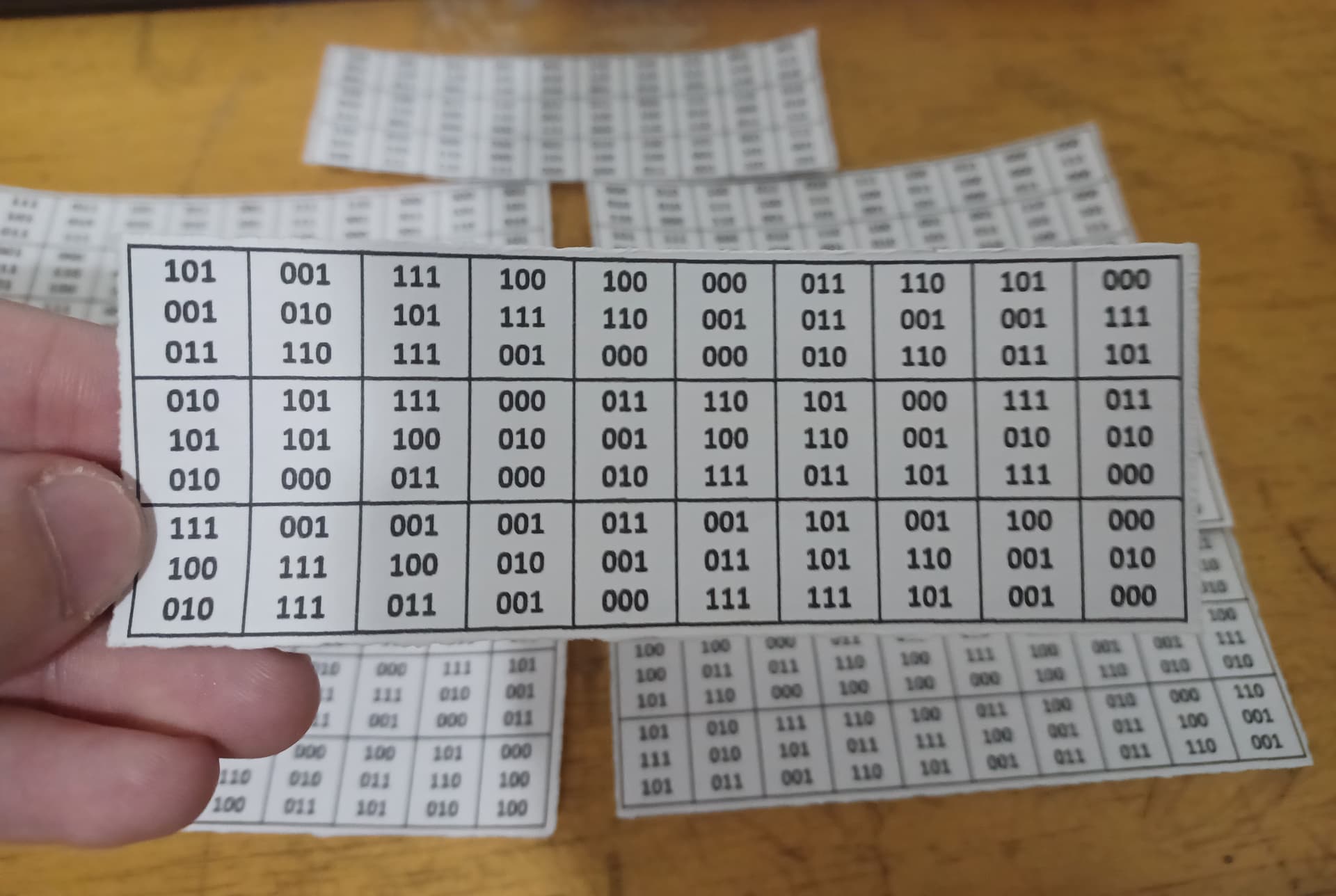
Today I had an idea that’s going to be really useful. Since I’m still in my last year of high school, I spend half of my day at school, and honestly, I learn very little. So, I thought about how to implement memorization into my school routine. Right now, I’m going analog for that and using my printer.

First, I printed out some papers that I’ll later use to memorize during class.

Each of them has 270 digits, one step before my goal of 360. The good thing is that they’re really small, so it’s economical and doesn’t draw too much attention—the hard part will be memorizing without looking like a lunatic hahaha.

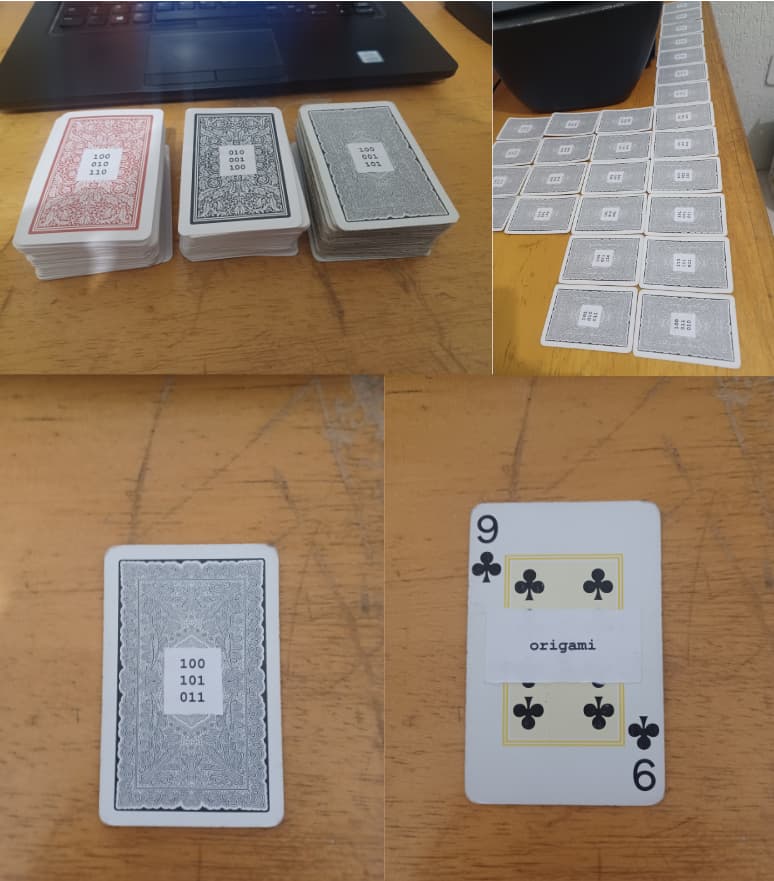
Also, I was still missing about 190 images in my system, so I had the idea to make flashcards like I was doing before, but this time physical ones.

So far, I’ve memorized one of the decks, and it feels like being physical made it a lot easier to memorize. Maybe it’s because of the motivation, but I also feel like I can spend a lot more time having fun with these decks and take a break from the computer. I still have one more deck to make, but I’ll leave that for another day.

As for cards, I memorized just two decks in the last few days, but without timing it, just for fun. I’ve decided to give the Rubik’s cube a break before fully focusing on it. I’ve got too many goals and personal projects going on, and it’s driving me crazy.

1 Like

10/16/25

I’m back! I had taken a break from memorization to focus on some other goals, but over the last three days, I’ve gotten back into the binaries. Finally! I finally memorized all 512 images and created associations with their patterns. Some are still weak and take a bit longer, but most of them are coming up pretty quickly.

Today I managed to finish linking all of them using a second app I made (again with ChatGPT’s help). It has an option to mark whether I got something right or wrong, and after going through all the shuffled combinations, it goes back to the mistakes until there are none left. That’s been really helpful, since I keep missing the same patterns.

Late tonight, I started testing my fluency in the system. I still stumble quite a bit, but when everything flows, it feels really good. The biggest issue is that I’m still used to cards — where, if you forget some, you can look at what’s left and figure it out. With binaries it’s different: if you forget one, there’s no way you’re going to scan through all 512 images looking for the right one.

Today I only did 15 one-minute runs, all with 100% accuracy. The scores were: 54, 90, 72, 81, 72, 90, 36 (ouch), 72, 90, 90, 45, 72, 90, 81, 108. You can tell it’s still pretty inconsistent, but I’m sure it’ll get better little by little.

There are lots of matrix patterns that look alike, and some are really tricky to turn into images. Some of them fit so well that I reuse their shapes for others. For example:

001  
100  
101  

is ā€œdragonā€ for me — which works perfectly since the shape already looks like a dragon breathing fire.
Now this one:

110  
011  
010  

is ā€œsmoker,ā€ and it has the same silhouette as the dragon, so I imagine it as a smoking dragon. That helps connect the new images to ones I already remember.

I’m excited to train the 5-minute rounds tomorrow and see how it goes. I want to try to keep the same ratios I get in the 1-minute sessions.

10/17

Now that I’ve memorized my whole system, everything’s a lot easier. I did a bunch of one-minute runs and broke my record with 117. I know I could score even higher if, at the end, I just memorized a few by name instead of forming full associations, but I don’t want to rely on that kind of last-minute desperation.

I did two five-minute runs, and I’m sure I’ll reach my goal — actually, I already consider my first milestone achieved. On the first run I played it safe and got 270 digits. On the second one I reached 360 (my target) and missed only a single digit, just a silly mistake during recall. Now I want to push that number even higher, aiming for 450, maybe even 540 — that would be amazing for me.

Now that I’ve gotten this far, I’m already thinking about whether I should get back into making a three-digit system, since half of it is already done. But for now, I’m staying focused on the binaries.