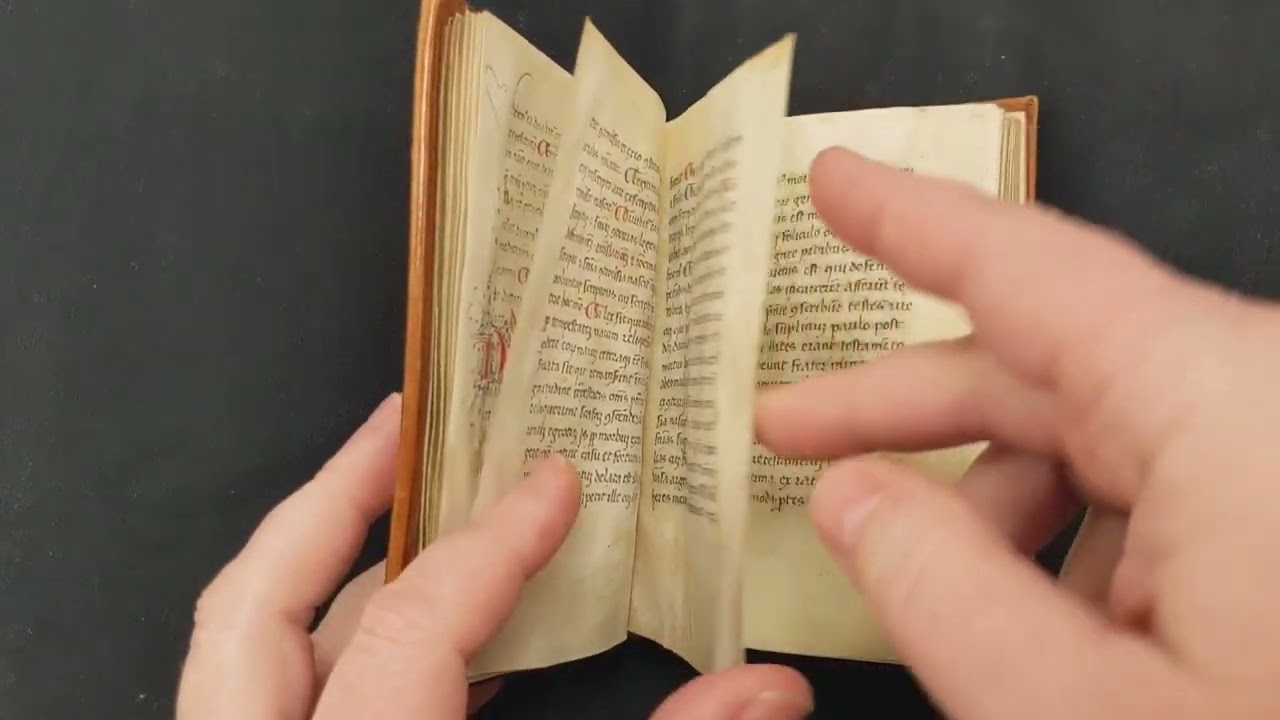
Passage from Rhetorica ad Herennium

Interesting passage in Rhetorica ad Herennium, from 2,100 years ago:

Now, lest you should perchance regard the memorizing of words either as too difficult or as of too little use, and so rest content with the memorizing of matter, as being easier and more useful, I must advise you why I do not disapprove of memorizing words. I believe that they who wish to do easy things without trouble and toil must previously have been trained in more difficult things. Nor have I included memorization of words to enable us to get verse by rote, but rather as an exercise whereby to strengthen that other kind of memory, the memory of matter, which is of practical use. Thus we may without effort pass from this difficult training to ease in that other memory. In every discipline artistic theory is of little avail without unremitting exercise, but especially in mnemonics theory is almost valueless unless made good by industry, devotion, toil, and care. You can make sure that you have as many backgrounds as possible and that these conform as much as possible to the rules; in placing the images you should exercise every day. While an engrossing preoccupation may often distract us from our other pursuits, from this activity nothing whatever can divert us. Indeed there is never a moment when we do not wish to commit something to memory, and we wish it most of all when our attention is held by business of special importance. So, since a ready memory is a useful thing, you see clearly with what great pains we must strive to acquire so useful a faculty. Once you know its uses you will be able to appreciate this advice.
7 Likes

That’s one of the more important passages in my opinion.
The translator uses ā€˜background’ instead of loci . . .they’re the same thing, but it’s a clearer concept. Another way of looking at it . . a stage.
A journey is a series of backgrounds. . . or a series of stages, like a play or film.
The memorisation of words passage is significant.

3 Likes

OK. I read some Latin. Loci = background. So shouldn’t this be called Method of Backgrounds then?

2 Likes

Either ways.

  • Method of background suggests that you have a stage and the images are the main characters. (more narrative)

  • Method of Loci, focus in learning on the run, you put in one’s shoe, and discover stories.

:wink:

I just read through the relevant text of Rhetorica ad Herennium on memory. He has some basics on creating encoded images and how to store them. I didn’t find any reference to the Method of Loci. The author also talks about backgrounds as locations or what we would call milestones along a journey but not rooms in a palace. But I didn’t see location or loci or locus. OK, I don’t read Latin, but am I missing something somewhere or is that just a repeated mistruth?

Here’s the quotes I most liked:

  • And that we may by no chance err in the number of backgrounds, each fifth background should be marked.

  • …it will be more advantageous to obtain backgrounds in a deserted than in a populous region, because the crowding and passing to and fro of people confuse and weaken the impress of the images, while solitude keeps their outlines sharp.

  • … backgrounds differing in form and nature must be secured, so that, thus distinguished, they may be clearly visible…

  • … backgrounds ought to be of moderate size and medium extent, for when excessively large they render the images vague, and when too small often seem incapable of receiving an arrangement of images.

  • … intervals between backgrounds should be of moderate extent, approximately thirty feet…

  • … such an arrangement of images succeeds only if we use our notation to stimulate the natural memory, so that we first go over a given verse twice or three times to ourselves and then represent the words by means of images. In this way art will supplement nature. For neither by itself will be strong enough…

  • … if we see or hear something exceptionally, base, dishonorable, extraordinary, great, unbelievable, or laughable, that we are likely to remember a long time.

  • … incidents of our childhood we often remember best.

  • Greeks… have taken the course of listing images that correspond to a great many words, so that persons who wished to learn these images by heart would have them ready without expending effort on a search for them. I disapprove of their method on several grounds… it is ridiculous to collect images for a thousand… why do we wish to rob anybody of his initiative, so that, to save him from making any search himself, we deliver to him everything searched out and ready.

  • You can make sure that you have as many backgrounds as possible and the these conform as much as possible to the rules; in placing the images you should exercise every day.

5 Likes

But I didn’t see location or loci or locus. OK, I don’t read Latin, but am I missing something somewhere or is that just a repeated mistruth?

Latin is quite different from English. Word order is almost totally free, and instead the ends of the words change to show who is doing what to whom. English does have some remnants of this, for example, he vs him vs his.

So from Ad Herennium ā€œConstat igitur artificiosa memoria ex locis et imaginibus .ā€ - ā€œThe artificial memory is made of places and imagesā€ (literally: ā€œstands therefore artificial memory from places and imagesā€)

ā€œLocisā€ is an inflected form of ā€œLocusā€ (the accusative plural), ā€œLociā€ is the nominative plural. There are many mentions of the various forms of locus scattered throughout the chapter.

ā€œLocos appellamus eos qui breviter, perfecte, insignite aut natura aut manu sunt absoluti, ut eos facile naturali memoria conprehendere et amplecti queamusā€

ā€œWhat we call places are small, complete, conspicuous, naturally or artificially made, so that we can easily grasp and embrace them with the natural memoryā€

Thus if you were to be really pedantic, it would be something like ā€œmethod locorumā€ (locorum meaning ā€œof lociā€ - all in one word) instead of ā€œmethod of lociā€.

2 Likes

@niten, thank you for bringing some understanding to us Latin illitterati. I don’t think Method Locorum will take the world by storm even though you are so right.

What do you think of the issue I have with the system in general? Should locus be better translated, based upon how we should use it and not so traditionally, as

  1. Location (a common usage)
  2. Background (the Rhetorica translation I used) or
  3. Scenery, as a play uses artificial backgrounds (what I’m tending towards myself)

A few weeks back I joined the Schoenberg Institute’s ongoing series ā€œCoffee with a Codexā€ which featured two manuscripts the Penn Libraries have relating to Rhetorica ad Herennium. One is MS Codex 1630, a 15th century copy of the text itself, and MS Codex 1629 which is a 14th century commentary on Rhetorica.

As a few here are interested in some of the older memory texts and having access to older copies from the Renaissance is rare, I thought I’d share some of the resources from that session including photos, descriptions, and the videos themselves which have recently been posted online. For those who are interested in these spaces, I hope this is as much of a treat as I thought it was.

A blog post with some details, links, and great photos:

A short video introduction to the MS Codex 1630:

And here’s the full 30 minute video of the walk through session of both manuscripts:

Full digital copies of both books and bibliographic details for them can be found below:
Ms. Codex 1630: Liber rethoricor[um] / M. T. C. - Franklin

Ms. Codex 1629: Commentaria ad Rhetoricam Ciceronis. - Franklin

5 Likes

Hi Chris, my AI helpers failed to find any relevant articles for the Codex 1629. Are you aware of any English translation, articles or summaries made about the codex I would be very interested to hear. As far as I am right now I simply lack the latin language skillset.

I am quite sorry, but locus does not mean background except, perhaps, in this context, but physical place or passage from a piece of writing. Loca is often, but not exclusively, the plural if we mean physical places, loci if we mean passages in a book (e.g. ā€œloci in schola legendiā€ = ā€œpassages which must be read in classā€).

I know you haven’t asked me, and I apologize for the intrusion, but I would (and indeed have, when teaching) translate locus as place in this context… there are other words for stages, other words for backgrounds.

I don’t see why we cannot say ā€œmethod of the locationsā€ or simply ā€œart of memoryā€ (ā€œars memoriaeā€), which is what I say in Latin and English.

Loci = Place
Locus = Objects within the place (this is the background), with which the mental images must interact.

I like it this way because it’s easy to pronounce, since it only has two syllables, and you go from general to specific, that is, from loci to locus.

Are you saying this is how these words are used in this work or how you would use them in the phrase ā€œmethod of the lociā€?

This is how Bruno explains it in De Umbris Idearum. He calls the locus an atom, where you first have 10, then 20, and so on. You’ll use atoms most often; they tend to be faster, since it’s like having a list of objects in a certain location.

Loci is the general location, like a house. Locus is the specific point within the loci, like a door, window, etc.

That’s not how I use it. I use it much more divided, from the most general to the most specific (atom), since I mostly use rooms. If it’s outdoor spaces, I only have stops because outdoor locus tends to be larger, like a poster, a tree, etc. Although, I should also mention that you’ll mostly use locus.

Do you have the passage from Bruno, by chance, in the original? I should like to read it.

If you have the book ā€œDe Umbris Idearum,ā€ it’s in the section on the art of memory, Part One, which deals with places… but here’s a summary of what Bruno tries to say about the practice of places. The first point encourages you to collect 100 atomic places before moving on to memorizing words or terms… the summary:

These ā€œatomicā€ loci must be enlarged, broadened, increased in size until they reach the order of magnitude of the ā€œmore specificā€ subelements, that is, those formed by four or five elements. This additional transformation, seemingly meaningless at first glance, requires clarification, as it has confused many researchers. In our hypothetical home, location number 3 was represented by the trash can (I hope you’ll forgive me for using such an ungraceful term as ā€œsubjectā€); if the images of memory were always just a few small shapes, there would never be any problem of space. Unfortunately, in the second case we also find images of the following complexity:

Apis weaves a rug, dressed in rags and with shackles on his feet.

In the background, a woman extends her hands,
riding a multi-headed hydra.

Which, as you can well imagine, is highly unlikely to occur within a container 30 cm long, 40 cm wide, and 50 cm high. Therefore, the locations must be the size of a scene, so that each one can contain a small snapshot of memory, a mini-story. Nothing prevents the use of a light switch, a vase, a letter opener, or an ashtray as locations: the important thing is that they can serve as a setting, as containers for the image, and therefore, that they expand to the size of a room, or at least large enough so that actions like the one we have just examined can easily take place within them.

Note: That’s one of their methods for getting an image at a locus, however small it may be—mind you, not like a needle, it has to be something you can perfectly inspect with your inner eye… The method shown there is very good, but I won’t explain it here; I’m writing about it for now. In time, I’ll have a way to practice all of that… I’ll probably do it on video.