You Sir are a certified genius! I love this!! I have a new project to work on now. 
1 Like
Certified something for sure haha 
1 Like
Hahaha!!
I only have a couple words or phrases out of the 1352 for this project that don’t perfectly map to their exact phonetics.
One is for H06. It should be structured as H - S/Z - J/CH/SH.
I still have yet to find a good match for those sounds in order. But. Every time I read that card pair I say the word hostage, but without the T sound… Like “hah-sidge” I have zero trouble remembering that the T doesn’t count in that one.
The other is for W06. I have “WiSe saGe” as my phrase, with the S in sage being ignored. It works well because I kind of blend the words together on the S’s… “WiSe_aGe”
When I went to build out my separated word lists for T and D for this project, I had one that I just couldn’t assimilate into my brain.
T89.
The best I came up with was “TooF Brush” a mispronunciation of “toothbrush” like a young kid or a Brit might say it. But I’ve blanked recalling that word and image every time the pair has come up in practice.
I keep wanting to say “TouGH something.” Well, today my brain decided to associate “TouGH Pill.” Which is a cool phrase, “that is a tough pill to swallow.” I thought, maybe I can just use the image of a huge pill capsule, but then google did me one better. I now have a really memorable image for “tough pill” and I can toss my “toof brush” into the trash.
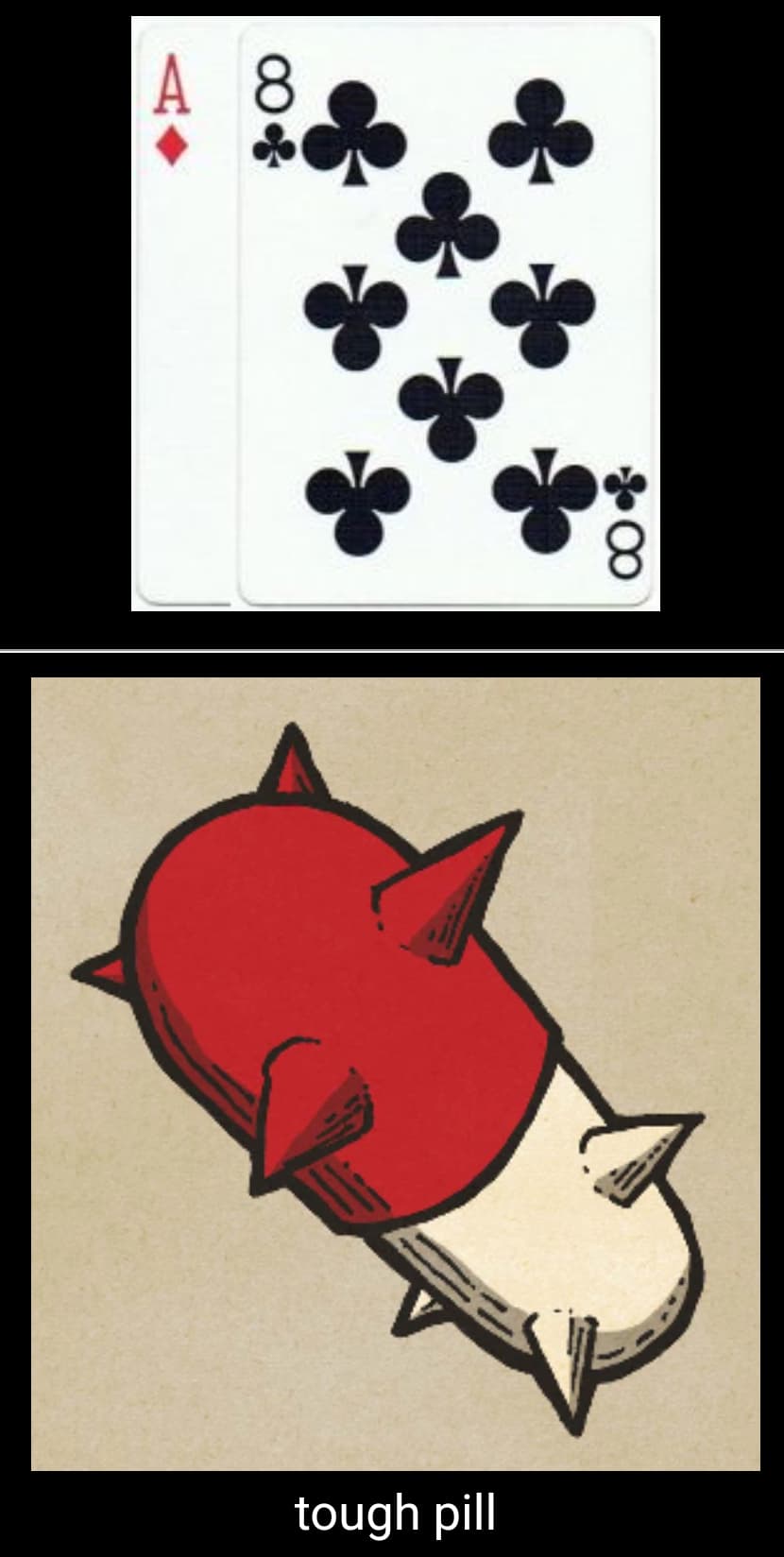
More support for the idea that sometimes you just need to let your brain spit out it’s subconscious association and fit an image to that rather than try to force a connection to a word or phrase that your active brain really likes but your reflexive brain does not.
2 Likes
As promised… Here is my list for all 1352 images in this system. Let me know what you think!
2 Likes
Been working on learning the new words this week. I think its going pretty well. Isolating the starting sounds is not as hard as I was expecting. There are a few challenging words or pairs that were deeply ingrained as one sound or another that need to either change or re-map to another pair, but they’re coming along. I do think it will be worth it once I lock in the associations to the unique starting sounds. It already feels “faster” for the ones that are comfortable at this point.
I am loving the reading structure. Always starting on the first value is so clean and really reduces the “active thinking” needed when a new pair pops up.
Lots more work to do, will update if any significant things occur!
1 Like
You just helped me fill in soooo many gaps in my image list man. Can’t thank you enough!
1 Like
In terms of this system being useful as an “all in one” (card, number and binary system)… it’s only missing 40 “numerical equivilent” words to make a complete 3-digit major system list, and only 20 double-digit ones.
The missing ones and some corresponding word suggestions are:
044 - sorority (giant greek letters)
048 - surf (surfboard)
084 - cypher (decoder ring)
088 - c-five (cargo plane)
144 - terrier (yappy purse dog), dryer (hair blowdryer)
148 - turf (big patch of sod grass) dwarf (lord of the rings)
184 - tavern (beer taps), diver (antique diving suit with bell helmet)
188 - tough fish (anglerfish), dove feathers
244 - 'enry rollins (punk rocker)
248 - nerf (foam dart gun)
284 - navarro (guitarist)
288 - knife fight, navy fight (tall ship cannon battle)
344 - mirror (enchanted snow white queen mirror)
348 - marv (home alone crook)
384 - maverick (top gun)
388 - move van (rental box truck)
444 - rah rah rah (cheerleader pom poms)
448 - rearview (car mirror)
484 - rover (mars rover)
488 - revival (benny hinn scummy televangelist)
544 - lehrer (news reporter)
548 - larvae (young insect)
584 - lever (frankenstein electric hand switch)
588 - leaf fall (beautiful autumn trees)
644 - jerry rice (american football legend), cherry ring (ring pop)
648 - giraffe
684 - jafar (aladdin villain)
688 - jeff foxworthy (comedian)
744 - carrier (aircraft carrier)
748 - carve (tree trunk with names cut into it), curve (boomerang), garfield
784 - caviar, kiefer (sutherland),
788 - coffee filter
844 - farrier (horseshoer)
848 - firefly (insect or tv show character)
884 - pfeifer (catwoman, michelle)
888 - fee fi fo (beanstalk giant)
944 - prayer (church pew kneeling pad), barrier (road closed blockade)
948 - perfume (sprayer bulb bottle), barf (spaceballs character)
984 - puffer (blowfish), buffer (boxing announcer)
988 - puffy face (botched plastic surgery face), beef fat
04 - sorry (board game mover piece), zorro
08 - sif (marvel thor character), safe, sofa, zev
14 - tar, dory
18 - tifa (final fantasy 7), dove
24 - nero (roman emperor)
28 - knife
34 - moray (eel)
38 - movie (reel to reel projector)
44 - rear (a butt)
48 - ref, rufio
54 - lure (fly fishing lure)
58 - loofa
64 - jerry, chair (electric chair), cher
68 - jeff, chaff, shiv
74 - core (iron man chest core), gore
78 - coffee, goofy
84 - fur, pharaoh, vera
88 - fifa (world cup trophy or soccer ball), viva (las vegas sign)
94 - perry (katy), bear
98 - poof (smokebomb), biff (back to the future)
Google doc is updated with a tab outlining the method, the phonetic mappings for each value, and the phonetic structures for all combos.
1 Like
Very generous my man, that’s an incredible amount of work your sharing. Thanks again.
1 Like
I’ve mentioned this before in other places but I think there’s something new here…
Sometimes I have words that I know are mispronunciations like “anenome” for 223 instead of “anemone” for 232. I’ve said it that way since I was a kid, even though an active part of my brain knows the correct way.
Sometime I have words that don’t actually represent the image that I associate with it like I have the word “sigil” for 065, and I always picture like a king’s ring that he uses to press his insignia onto a wax seal. Now, I know this is a “SIGNET” ring, not a “SIGIL” ring, but the association is so strong, that I’m just embracing my error in definition and using it.
I don’t really see anything wrong with memorizing the “wrong” words or image associations as long as it works. It would just take some active attention when in normal conversation to not sound like an idiot using my “incorrect” mnemonic words in place of what I know to be correct.
2 Likes
About three weeks into learning this new system and it’s starting to take hold. I’m at a pretty consistent 2.5 seconds per pair for recognition speed. Not bad for a completely new reading structure and having close to 25% of my words changed.
Out of those new words, I’m down to only a couple dozen pairs that are “slow” to read and recognize. Funny enough, the completely new words (all of the Queen-first pairs that start with W) have been generally the easiest to learn and get up to speed. I’m sure this is because there has been no overwriting necessary. They can form fresh and clean associations and do them quickly.
The trickiest ones to learn are replacements that needed to be changed in order to conform to my strict single starting phonetic rule, mostly the [ 6 ][ X ] pairs starting strictly with the J sound. There was nothing wrong with most of these words. Most were quick, good images, easy to read, but they didn’t fit the structure. I went back and forth on scrapping that rule and sticking with my previous words that used alternate starting sounds, but for the sake of completeness and consistency, I’m sticking with my single starter plan. I think I’m making the right call. I’ve seen most of the new words like this stick after a couple weeks so I’m confident the rest will soon. These new words are almost all as good as their replacements, but I’ll definitely miss some of the images. Its funny how you can get attached to some of them and its like saying goodbye to an old friend who has to move away when you swap them out.
Then there are replacements where the original word was ok in terms of phonetic structure, but I wanted a new one that “improved” something… either a better image, or shorter word. Its an interesting thing to go through where I have to break a habit for reflexively reading a “tricky” word or visualizing a “subpar” image, then building up the “better word” to be as fast as the old word. It may seem like a zero sum game, like why would I put in extra effort to replace an image that I’m already fast in and spend weeks to get the new one just back to where the old one was, but I think the eventual end goal of improvement makes most of these updates worth it.
Here’s an example:
My [Jack  ][6
][6  :] pair is read as D65.
Previously, I had “DaSCHLe” as my word/image. Tom Daschle is an american politician from the 90’s-00’s. He’s kind of a generic white guy and I didn’t particularly like him as a memorable image, but he was a solid “fit” with the phonetics and I almost instinctively read D65 as his name from the very start.
As part of my rebuild, I noticed these phonetics made the word “DeutsCHLand.” I work with a German guy who is a huge personality and extremely memorable, so I decided to change my association to him for this card pair.
I had been very quick reading D65 as “DaSCHLe” and I’ve needed a conscious effort to see the pair and alter my pronunciation read of it so that I can start to associate the new word and image. I still hesitate a good deal when that pair comes up for review, but I think the good thing is that I IMMEDIATELY hesitate, like I know that my old image is incorrect and I know I changed it, but I’ve got to work through it a bit before the new one clicks in.
Now, all that said, there have been a handful of pairs that I thought I’d “improved” in some way, but ultimately returned to their original form. This happened with my [10  ][Jack
  ] (038) word. I originally used “SeMaPHore” as the image, which I really liked. Easily animatable, a couple semaphore flags being waved to signal to another mnemonic element worked really well. I didn’t like that it was 3 syllables. I changed it to “SMiFF” or “SMiFFy” which is apparently a costume company for like halloween or novelty parties. I pictured a bunch of kids in costumes going trick or treating in their “smiffy dress costumes.” While it’s theoretically faster to read “SMIFF” than “SEMAPHORE,” I just COULDN’T break the habit. I decided yesterday to go back to semaphore, but have started shortening the sub-vocalization to “SeMPH” which is a single syllable and still easily triggers the visual of the semaphore flags.
One other thing I’ve been paying conscious attention to is that if I encounter an updated pair, I will sometimes say the “old” word but easily click to visualizing the “new” image. When this happens, I’m being very careful to stop, show the pair again and say the new word out loud a couple times so that I start rewiring the reading and sub-vocalization to the correct word.
I was expecting it to be much harder to switch my reading of Jacks and Queens in the first position to D and W from their old mappings of F/V and R. This has been almost a non-issue. Maybe 3 or 4 times per review session (of 1000 or more pairs) will I accidentally read a pair using the old sounds. I’m very happy with this, as it was the biggest change with this system.
In my Shadow-based systems, I would frequently swap the Jack and Queen sounds for some reason (prounouncing Queens as F/V and Jacks as R), but this has been happening WAY less with this system for some reason, even though they retain those sounds when in the second position. Maybe it’s due to being more careful about noticing their identities because of their split phonetics from position 1 and position 2, but whatever the reason I’m pretty happy about that.
I’ve occasionally accidentally read pairs via the old Shadow structure (suit combo first, instead of card 1 value first), but this is a rare occurrence and starting to quickly fall away.
I don’t think I’ve EVER accidentally read a pair starting with the second value in this new system, like I needed to do with Shadow, especially when that second one is a picture card. This is awesome. It was my biggest pain point with the old system. I absolutely love being able to read everything from the first value on.
So thats where I’m at. Will start putting this into practice soon with some deck runs to get a baseline speed check. WIll update again once I do that.
3 Likes
Just to round out the “all-in-one” aspect of this system… here is a way to use its structure to create a simple single card system. I think this would be very easy to learn and use right away. I also see potential for being able to get some pretty good times with it as all the words it generates can be monosyllabic. With no hesitation for any extra conversion steps like determining if it should be read as a person or an action or an object, it can be practiced to reflexive fluency very quickly, then it will be all down to how quickly you can make memorable scenes with them when combined. I think sub-minute times could realistically be achieved with this system.
As alluded to, this isn’t a PO or PAO, it’s just a single vivid association for each card. You can stack 2 or 3 cards per locus/scene and craft your actions/interactions organically and instinctively rather than depending on the arbitrary A of a PAO system.
When it comes to pronunciation and structure, the method is to take the value first and use the single sound mapping just like the 2-card version. I had attempted building a single card system like this previously, but was always stumped by how to handle the picture card values. With the unique starting sounds in this system, this is no longer an issue and every card can be read in exactly the same natural way. It also doesn’t conflict with any number images. All of these associated images can be used for their equivalent 2-digit numbers to build towards a complete 00-99 number system and they can all be “imported” into the big 2-card system when you’re ready to tackle that.
The suit sounds are based on closely mapped double suit sounds from the big system where that suit appears first.
gets the S/Z sounds of (the left side of a heart looks like the curve of an S)
gets the K sound of (the left side of the diamond could fit inside the angle of a K)
maps with the T sound of (also, a spade is pointy like the downstroke of a t)
gets the N sounds of (and the top nub of the club looks like a lowercase n)
So here are the complete mappings:
| Value | Suit | Value Phonetic | Suit Phonetic | Word | Number | ||
|---|---|---|---|---|---|---|---|
| 10 | |
S | T/D | seat | 01 | ||
| A | |
T | T/D | teat | 11 | ||
| 2 | |
N | T/D | newt | 21 | ||
| 3 | |
M | T/D | meat | 31 | ||
| 4 | |
R | T/D | root | 41 | ||
| 5 | |
L | T/D | lute | 51 | ||
| 6 | |
J | T/D | jet | 61 | ||
| 7 | |
K | T/D | cat | 71 | ||
| 8 | |
F | T/D | foot | 81 | ||
| 9 | |
P | T/D | pit | 91 | ||
| J | |
D | T/D | dot | D1 | ||
| Q | |
W | T/D | wheat | W1 | ||
| K | |
H | T/D | hat | H1 | ||
| 10 | |
S | S/Z | sauce | 00 | ||
| A | |
T | S/Z | toes | 10 | ||
| 2 | |
N | S/Z | nose | 20 | ||
| 3 | |
M | S/Z | moose | 30 | ||
| 4 | |
R | S/Z | rose | 40 | ||
| 5 | |
L | S/Z | lice | 50 | ||
| 6 | |
J | S/Z | juice | 60 | ||
| 7 | |
K | S/Z | kiss | 70 | ||
| 8 | |
F | S/Z | face | 80 | ||
| 9 | |
P | S/Z | pez | 90 | ||
| J | |
D | S/Z | dice | D0 | ||
| Q | |
W | S/Z | wiz | W0 | ||
| K | |
H | S/Z | hose | H0 | ||
| 10 | |
S | N | sun | 02 | ||
| A | |
T | N | ton | 12 | ||
| 2 | |
N | N | nun | 22 | ||
| 3 | |
M | N | moon | 32 | ||
| 4 | |
R | N | rune | 42 | ||
| 5 | |
L | N | line | 52 | ||
| 6 | |
J | N | jinn | 62 | ||
| 7 | |
K | N | cone | 72 | ||
| 8 | |
F | N | fan | 82 | ||
| 9 | |
P | N | pen | 92 | ||
| J | |
D | N | dune | D2 | ||
| Q | |
W | N | wine | W2 | ||
| K | |
H | N | hen | H2 | ||
| 10 | |
S | K/G | sock | 07 | ||
| A | |
T | K/G | tick | 17 | ||
| 2 | |
N | K/G | nuke | 27 | ||
| 3 | |
M | K/G | mic | 37 | ||
| 4 | |
R | K/G | rock | 47 | ||
| 5 | |
L | K/G | lock | 57 | ||
| 6 | |
J | K/G | jack | 67 | ||
| 7 | |
K | K/G | cake | 77 | ||
| 8 | |
F | K/G | fake | 87 | ||
| 9 | |
P | K/G | pick | 97 | ||
| J | |
D | K/G | duck | D7 | ||
| Q | |
W | K/G | wok | W7 | ||
| K | |
H | K/G | hook | H7 |
Ever since the end of June, I’ve kind of taken a hiatus from actively working on this. Its the first time in about 18 months that I didn’t touch Anki for cards or numbers. I was a bit hesitant at first, wondering if I’d lose progress or get extremely rusty, but I intentionally wanted to try a pause here, knowing that realistically maintaining a maintenance training every day wasn’t going to happen, especially as the kids get older and I get more involved in other things. So my streak of 500+ straight days of Anki came to an end.
In the last week or so, I picked back up to see how things would go and, encouragingly, I found that I had retained nearly all of the associations and that my recognition / reading speed hadn’t taken much of a hit at all. This makes me feel pretty good that spaced repetition indeed is working here and that most of these associations are successfully lodged in my fairly long term memory.
I’m not sure what my end goal is ultimately with this, but I do plan on hitting a PR card time with this system eventually. I achieved sub-60 with my other two Shadow-based systems and I’d like to demonstrate that this one is even better. So, I’ll keep challenging myself with that, but at an intentionally less frenetic pace of progress than with previous runs.
Thats all for now!
3 Likes