My experiment in memory encoding

I just completed reading Advanced Memory Palaces by Joe Reddington, and I’ve decided to keep a journal to log my efforts. I’ve become sceptical of what is possible, and so I’m going to attempt to actually memorise things like simple lists, as well as more complex data structures.

I’ve decided that I’ll have a simple entry into the memory palaces using my fingers. These will be large categories, and inside the categories will be other subdivisions.

  • Family
  • Computer
    ** Keyboard shortcuts
    **Programming keywords
  • History
  • Geography
    ** Countries, Capitals, Populations
  • Mathematics
    ** Formulas
  • Memoria
    ** Personal Memories
  • Entertainment
    ** Jokes, quotes, poetry
  • Astronomy
    ** Planets
    ** Moons
    ** Stars
  • Languages

These are subject to change at the moment, but I’ve already memorised some lists, so it is just a matter of sticking them in a category. I might combine History, Maths, Geography into just “Education”. Once I’ve sorted things by category, then I’ll link it to existing palaces I already have, and start to plan new encodings for the more complex stuff I want to remember.

9 Likes

Skepticism of the possible = one of the most powerful tools known to our species.

8 Likes

OK, I’ve finalised my categories, and now need to start looking at targeting some of them. So below are the main categories and the first sub-category. There are only 7 primary categories, so I have 3 fingers left. :slight_smile:

  • Personal & Family
    – Family Member
    – Me
    – Passwords

  • Computer
    – Keyboard shortcuts
    – Programming language keywords

  • Languages
    – Italian
    – French
    – Korean
    – Mandarin

  • Culture
    – History
    – Geography
    – World religions

  • Science
    – Mathematics
    – Astronomy

  • Memoir
    – Personal Memories

  • Entertainment
    – Jokes
    – Quotes
    – Poetry

===
Many of these are simple ordered lists and don’t require much more than sticking them in a palace and reviewing them, some I already have. Others have a more complex data structure, and I need to determine how I’m going to do those.

I have decided that I want to start with remembering family members details, DOB, Passport Number, phone number, etc. I’ll probably do this using a Struct or Class as Joe Reddington suggests in his book.

  • Fred
    – DOB
    – telephone number
    – etc

So I just need to group the information, so I plan to give each person a room, and DOB it always on the ceiling, telephone number is always on the floor, etc. Although, I always use Dominic numbers rather than the major system, so number storage might be an issue? Any advice?

Another complex one which I would like to tackle is Chinese Characters (or Hanzi). Traditionally these are memorised by either rote repetition, anki, or memory palaces and use of radicals. But I was thinking about doing something different. There are only between 1-64 actual strokes used to construct a Hanzi characters. Although some people say there are only 8, 12, 37, or 64 depending on what they consider a unique stroke.

The Chinese character 永 (yǒng), meaning “forever” or "permanence, is often used to illustrate the 8 basic strokes of Chinese characters. They are:

Diǎn, (點/点) "Dot"
Héng, (橫) "Horizontal"
Shù, (竪) "Erect"
Gōu, (鉤) "Hook"
Tí, (提) "Raise"
Wān, (彎/弯) "Bend, curve"
Piě, (撇) "Throw away, slant"
Nà, (捺) "Pressing forcefully"

I am considering using something like the Major system, where I assign consonants to a stroke and then create a word to remember the strokes. I’m not sure about this, so if anyone wants to chip in and tell me if this is a good or bad idea?

Also, should I be putting my questions in my log, or asking these types of questions in the general areas?

2 Likes

OK, I still don’t know how I’m going to do Mandarin characters, the jury is still out and the separate post I put out has a lot of different methods being listed. However, one person did think my idea was inefficient. Which is probably true.

For the family data I’m still collecting, so I thought I would start the ball rolling with data already available and just need to be organised. I want to remember all the short cut keys for the GNU Screen program. If I were going to do this as a programming exercise, the first thing I would do is determine the data structure I’m going to use. There is a simple decision tree available, which I’ve used before to think about which data structure to use. Human memory doesn’t have the variety of data structures available to a computer, but it is still a useful exercise.

Following the path of the decision tree, I arrived at “map” (an associative array) so in a computer program I might end up with something like this:

GScreen[“A”] = “Allow the user to enter a name for the current window.”

Looking at the cheat sheet 95% of the stuff I want to remember is a combination of the control keys (Always Cntl-a) and alphabetical character A-Z. So I think the way for me to encode this is to use an alphabet peg system. The only non-alphebetic characters I want to remember are: -?:{}* and I can probably just use the names for these in my peg system.

Since this is for the program Screen, I’m going to create a peg list A-Z of things at a film theatre or related to films.

Wish me luck!

2 Likes

I’ve been working on remembering the GnuScreen shortcuts, and it has gone very well. I remembered all of them, and I can use them easily when using the program. They come naturally to me.

I decided to purchase “Remembering the Hanzi - Part one” from Amazon, and I’ll probably use that for remembering Mandarin characters. I’m only a little way into the book, so we’ll see how well that works.

Meanwhile, I’ve started to review the memory palaces (city) I was using for Korean words. This is basically a thematic city with buildings like a library, where I stick a book, or study related words. A market for most items, a restaurant for cooked food, etc. So there is a hospital, restaurant, market, farm, offices, park, houses, police stations, train stations, airports, etc.

Spelling of the words in Hangul is a bit of a problem, but I’m still thinking of a way to remember how to spell each word. So any suggestions would be welcome. For example, 가게 for store or shop. I have considered using the “peg word” method, but I can’t use the Latin alphabet because Hangul has 40 letters; 14 basic consonants and 10 basic vowels. In addition to this, the Korean alphabet also has 5 double consonants and 11 combined vowels. So if I want to use the magic memory method then I will need 40 pegs, not 26.

So before I can memorise the spelling of words, I’ll need to memorise the peg list. I mentioned somewhere else I have a lot of quotes memorised. The one which fits this situation is Murphy’s Second Law;

Murphy’s Second Law - Before you can do anything, you have to do something else first.

Still collecting family information, so not point in starting to design the Struct (I am not a fan of OO Programming. :slight_smile: )

So I think the rest of this week will be spent doing the following:

  1. Create a Korean hangul peg system in preparation for memorisation of spelling.
  2. Memorise the AWK programming language cheat sheet values.
  3. Memorise List of countries by population and continental region.
  4. Shakespeare’s plays in order of writing.

So #1 I just need to find Korean words with the correct starting sounds and put them in a list. #3 & #4 are just linked lists.

Right now I think #2 will be the most difficult because I need to somehow order the various items in such a way that I can traverse them in my mind, but also remember the esoteric and sometimes cryptic words and symbols.

I have discovered another use for Anki. I’ve created a deck called “prompter” at the moment there are two cards in the deck. One says, “Gnu Sheets”, and the other says “Korean Library”. The idea is that anki will prompt me to mentally review the Gnu Sheets peg list, and Korean Library will prompt me to traverse the Korean Library memory palace. If I can’t remember all the items I answer bad, and it prompts me again tomorrow, and if not it schedules it a little further down the line. I think this is a good way for me to keep the list of palaces and to regularly prompt me to review them. I don’t have to keep track of what I have, or haven’t yet reviewed because the SRS algorithm will do that work for me.

OK, this past week I have been attempting to encode for 4 items. I stupidly thought that 3 and 4 would be easy. Well, 4 is the easiest of the bunch, but…

  1. Create a Korean hangul peg system in preparation for memorisation of spelling.
  2. Memorise the AWK programming language cheat sheet values.
  3. Memorise List of countries by population and continental region.
  4. Shakespeare’s plays in order of writing.

The creation of a PEG system for the Korean alphabet using animals is actually a lot more difficult that I thought. However, with the assistance of a native Korean speaker and a database of animals I managed to find animals for all the characters except for: ㅉ ㅒ ㅢ

I did manage to find some workarounds for those three characters, so now I just need to memorise the list in order to help with spelling in Korean.

I haven’t done any work on the second item, learning the AWK cheatsheet. I am still staring at it, trying to figure out a good way to group the items and remember. If anyone has any suggestions about a good way to do this using pegs, or loci, or combinations of things, let me know. For the moment I’m just looking at it and parking it.

The list of countries by population turned out to be more of a challenge than I anticipated. Firstly because I needed 250 loci, and secondly because I didn’t know my Dominic POA as well as I thought I did. However, this is a good exercise in using them and making them active parts of my memory. I’ve only been able to encode 5-10 countries a day, so this is going to take me a lot longer than I thought. I’ll also need to stick in some kind of “skip list” so that I can jump around in the list easier.

Finally, Shakespeare is a story for me and I started out well, but flagging behind a little. Mostly because the countries list is sucking up a lot of mental power.

I’m also reviewing and rebuilding my “thematic city” for Korean vocabulary, again this is taking a lot of time.

For me, the jury is still out on the usefulness of this. I don’t need to memorise the majority of this stuff, but I’m keeping an open mind, and I’ll see how far I can get. I can see me running into a wall shortly where the amount of time I need to mentally review all this stuff becomes an unacceptable timesink, so I’m hopefully that I will not need to do quite so many reviews later. Certainly the Gnu Screen commands which I memorised earlier I’m only reviewing once per day, and I think I could probably push that out a little longer.

My targets for the next week are:

  1. Complete memorisation of the Shakespeare story and just put it into a review cycle.
  2. Memorise the Korean animal peg list
  3. Commit more countries to memory.
  4. Rebuild my thematic city for Korean vocabulary and add other buildings.
  5. Start to memorise some jokes.

I bought a joke book at a local charity shop and I want to start memorising them. But, how to go about it? Ideally I’d like so a way to categorize them so that I could jump straight to Observational jokes. A little research showed me that there are about 10 main categories of jokes.

  • Observational
  • Anecdotal
  • Situational
  • Character
  • One-liner
  • Ironic
  • Deadpan
  • Farcical
  • Self-deprecating
  • Slapstick

Any suggestions on how I could organise and remember jokes would be nice. :slight_smile:

Like the vast majority of my projects this week it has been slow-going with little or no progress.

I have managed to memorise all the Shakespeare plays in order, so marking that one as done.
Having forgotten about the Korean peg list, I didn’t do it, so that one rolls over to next week.
I’ve managed to memorise 25 countries and their populations for 2019 (as per the Wikipedia link above). This is a much larger task than I’d originally envisioned, so this will be an ongoing thing for awhile yet.
I’ve done some work with my Korean thematic city, but need to do more.
Done nothing with the jokes. Mostly because I don’t know where to start, although this is one that I know I could just plug them all into anki like I did the quotations and eventually I’ll know them all.

One additional thing I memorised was the Chinese zodiac animals. This is fairly straightforward since there are only 12, but I spent more time thinking about how to do it than doing it. I could use loci and a palace, or a sentence mnemonic. End the end I decided to go with the sentence mnemonic:

Remember our terrible rhyme, dear stranger: Hugo goes mad reading depressing poetry.
(Rat, Ox, Tiger, Rabbit, Dragon, Snake, Horse, Goat, Monkey, Rooster, Dog, Pig)

I’ve not yet put anything into the categories above for Family, History, Maths, Memoria, Entertainment, Astronomy. Although I have been busy in the other categories. So I think my target for this week will be:

  1. Continue with countries and populations
  2. Memorise the Korean animal peg list (*)
  3. Thematic city for Korean vocabulary
  4. Build a joke deck for anki and just use that rather than attempt a massive memory palace.
  5. Memorise 2 poems by Robert Frost

(*) I might skip this, since 99% of the time with Korean if you can say it, you can spell it.

That should be enough to work on, but I also need to start to think about how I’m going to encode data about my family, the AWK programming language, data regarding major religions, and information regarding maths.

Here my plan is just to explore the available data, figure out what I want to remember, then determine just how I’m going to go about remembering it.

I’ve made some progress with the memorisation of countries by population. I tested myself recently, and I can do up to 30 countries and their populations correctly. I’m slowly working my way through the list and trying to add another 5 per week.

This week’s successes were:

  • memorised Chinese zodiac
  • memorised a Robert Frost poem
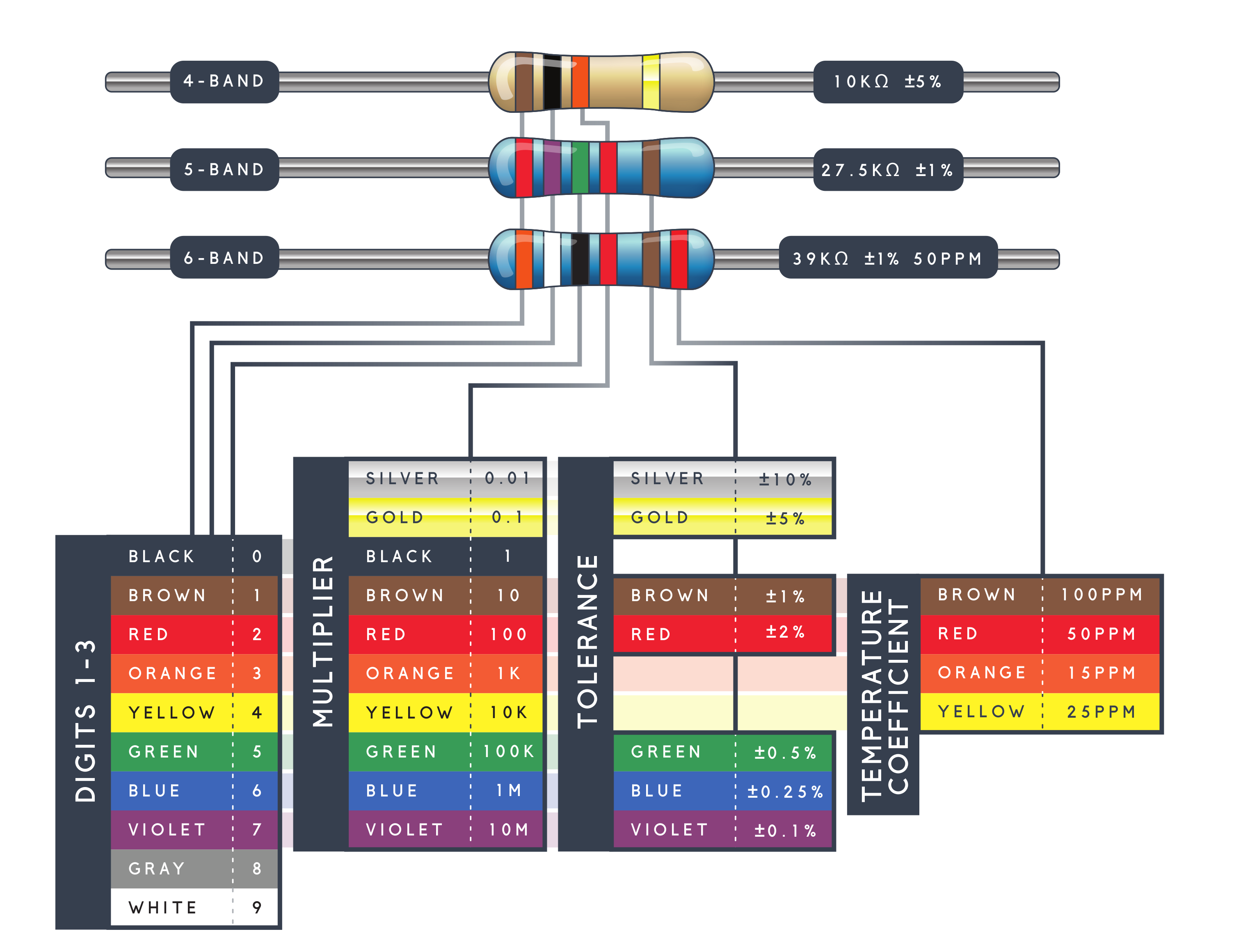
  • memorised the order of resistor band colours and their multipliers. (electronics)
  • remembered all the stuff I’d encoded before like Shakespeare’s plays, GNU Screen commands, etc.

I decided to skip the Korean peg list to do spelling. Korean spelling in very phonetic, so not a lot of return on the investment to learn the peg list. More useful to continue with the thematic city and learn more vocabulary.

My target for next week is:

  • memorise another Robert Frost poem
  • memorise a Korean poem
  • memorise more countries and populations
  • memorise more Korean vocabulary
  • start a personal memory palace and populate it

Wish me luck.

2 Likes

Great targets! good luck!

1 Like

I find the resistor band colors very useful as an auxiliary decoration for numbers.

1 Like

I’m struggling to hit my targets.

memorise another Robert Frost poem
memorise a Korean poem
memorise more countries and populations
memorise more Korean vocabulary
start a personal memory palace and populate it

I only briefly looked at another poem, and not long enough to memorise. So I’ll have to carry this one over. The Korean poem is not done simply because I couldn’t find one. I just need to keep on looking for one. The countries and populations I am still doing, although much slower than I’d though I would. I’ve managed to get 1-35 down, and I’m working on 36-50.

Korean vocabulary is just an ongoing task and I use memory palaces and anki, so I don’t think in future I’ll bother to mention those. If I want to learn the language then I need to learn the words. It might be more useful to try and structure and memorise the grammar rules.

A personal memory palace was one of those things (like remembering every day) that sounded cool, but in fact I’m not really keen on it. Firstly, it requires me to remember X number of things in the first place.

So I’m taking a little step back here and asking myself, what would actually be (or potentially be) useful to me?

The most useful thing I’ve memorised so far has to be the shortcut keys for the GNU Screen program, since I’ve used it the most. I’ve impressed an Italian woman by reciting off all the plays of Shakespeare in order, so while not very useful, it was a nice party trick.

After reviewing the list above, I think the most useful things (to me) I could memorise would be:

  • Times tables up to 20
  • The rust programming language keywords
  • Information related to family members, e.g. phone numbers, license plates, passport numbers, etc.
  • Area and volume of all geometric shapes.
  • Geographic landforms
  • List of cognitive biases.

So rather than set a target which I’m going to miss. I shall change my target to just memorise one or more of the above. For the family member thing, I was trying to gather too much information. I think what I need to do is to try to come up with some kind of “expandable list”.

For example, I have two family members, let’s call them A and B. For A, I know passport number, DOB, and telephone. For B, I only know DOB and telephone number. So I will need some way to insert a passport later when I learn it, also I will need something which is expandable such that if I decide I want to remember everyone’s blood type, then I can insert this into the list somehow. Perhaps a memory palace, with a peg list in each room? Not sure how to organise this sort of thing without it getting all muddled up together. Suggestions are welcome.

1 Like

I am working on this project, along with the squares upto 100.

Mental math is a severe test of working memory and any effort expended on retrieval or decoding can cause other parts to fall out of memory. Acquisition took only a week or so but the rest has been a serious effort. After almost 3 months of regular practice I am only now approaching the stage where it is actually useful in practice.

2 Likes

IMO remember the punch lines - the rest will follow.

Jokes are like magic tricks, they set you up to expect one thing and then surprise you with something unexpected.

What method are you using to remember the times tables? I only know the brute force method I used in school, is there a better way?

I encoded the information using the Major System as triplets of nouns involved in some scene dove & dog = message 18x17=306. Developing the full suite of mnemonics was a significant effort.

I review regularly, first just the mnemonics, then with the numbers, also by calculating and checking with the mnemonics. Sometimes in writing, sometimes verbally or mentally. I use a spreadsheet to generate blocks of 20 random problems and work multiplication problems that use this knowledge. But in the end it’s drill - that hasn’t changed.

2 Likes

Struggled to remember my second Robert Frost poem, and even managed to forget a line of the first one. I didn’t keep up the review because I thought I had it anchored. So I’ve just gone back to reviewing all the stuff I’ve been memorising daily, even the stuff I think is rock-solid.

I started on the 20-times tables, and after reviewing this site and some recommendations on YouTube, I decided to start with skip counting some of the lower digits. I started with 3 and next week I’ll add in 4 to the skip counting. I had previously memorised squares up to 25^2 and that should help. I expect this to take a long time, so I’m not rushing anything.

I have gathered all my information regarding my family which I want to remember, and I was spending a lot of time trying to work out how to create a palace with 15 loci per room. But eventually I worked out it was easier just to use the place where that person lived! Duh. So rather than one big palace everyone just uses their own house, or if they don’t have a house of their own then I borrow a place. This is self-evident, it embarrasses me how long I spent trying to imagine creating some monolithic memory palace.

I’ve managed to compile a list of cognitive biases, from Wikipedia and Psychological journals. A lot of the biases on the Wikipedia site seem a bit too “made up” and so if I couldn’t find a corresponding bias in the psychological journals, I ignored it. This still amounts to 98 biases cross-checked from multiple sources. Plus, I must remember their definitions.

I think I’m going to stop adding new material for a while, since it seems I may have already bitten off more than I can chew. At this point in time, I’ve either committed to memory, or intent to commit to memory, the following information.

  1. Fifteen points of information for each member of my family.
  2. Two Robert Frost Poems
  3. List of Shakespeare’s plays in chronological order.
  4. Commands for the GNU Screen program
  5. Resistor band colours
  6. Chinese zodiac signs
  7. Countries in the UN and their populations as of 2019
  8. The 20-times table
  9. Squares up to 25 (I used to know this, so it is a refresher)
  10. Korean vocabulary (this is just an ongoing thing)

I’m using the Dominic method for numbers, and so the population and some of the information related to my family are reinforcing this.

I think if I can get one or two of these to a reasonable amount of “stickiness” by next week, then I’ll add in the list of cognitive biases. Four of the above are pretty solid, but I am probably risking a bit of burn out if I continue to just add new things in all the time.

Oh cool. I’m working on the same project as well as squares upto 100. I found that if I memorized too much too soon it would all get jumbled up so I’ve been going column by column - I started with the primes 13,17,19. I did skip the lower numbers and then later found that I was weakest in that area. IMO it does take time for knowledge to become secure, not just practice but the passage of time itself. Keep us posted about your progress :+1:

1 Like

Rick, I’ve had good results maintaining the contents of palaces long-term using Spaced Repetition. Have you heard of that?

Learning the list cognitive biases is a great idea. That’s stuff that you can really use in your life.

I’ve learned a couple of languages, so Anki (SRS) has been my constant companion for years. So one of the first things I did was to create a mnemonics deck which would prompt me to review the palaces. One problem I have noticed is that I put an entry in for my countries and populations, but because that palace isn’t actually completed, I shouldn’t have put it into the rotation. So that is something I’ll need to keep in mind in future, I need to be using the SRS on things I know already.

I think the cognitive biases is another one of this massive tasks! But as you say, it is well worth learning, both to keep myself in check, and to see these errors in the thinking of others.

1 Like

I’ve been trying to do weekly updates, but there isn’t much to report. Other than, I seem to be failing behind in my reviews and my motivation is slowly ebbing away. Let me start with the things I’m 100% sure I now know back-to-front.

  • List of Shakespeare’s plays in chronological order.
  • Commands for the GNU Screen program
  • Resistor band colours
  • Chinese zodiac signs

These I know, and I’m not going to bother mentioning them again.

I’ve managed to gather all the family information I need, and I made a good start, but I haven’t been setting aside time to work and review, so although it was a good start this week, it hasn’t really been going well at the end.

I’m struggling with the 2nd Robert Frost poem, but the first is locked into my brain.

Countries and populations are really bloody difficult! And I struggle to want to continue, so motivation to learn this is dwindling. I shall continue just because it helps me practice numbers, but because I really don’t have any use for this information, I’m just not feeling the need. Perhaps I need to think about something else which is useful and number concentric.

This leaves:

  • The 20-times table
  • Squares up to 25 (I used to know this, so it is a refresher)

Which are number concentric, but I’m taking these slow, and I’m only working on skip counting the timetable smaller numbers. I’ve knocked up a small palace for squares up to 25.

I’m feeling some internal pressure to add more stuff, but given my current motivation level, it is probably best to just keep plugging away at the timetables and squares.

1 Like