@Fabiano’s thread (I am learning the Morse code alphabet and numbering system, and I would like to share my experience here) got the idea into my head.
Because I had never done a tree memory palace before, my brain thought it was interesting, so I had to try it out to stop the obsession. (Sometimes you have to scratch the itch)
I encoded the morse code tree in a park. I’m starting from the entrance. At each junction there are two loci: looking left is a dot, looking right is a dash. When the letter is finished, I place the mnemonic/keyword at the loci I arrived at (I took the keywords from wikipedia, didn’t really want to invent a new system).
In the direction morse > letter (= I’m listening to a morse message)
Starting at the entrance, I hear “dot”, turn to the left (here is the “e”), if the letter isn’t finished I go up the stairs to the next junction, where I hear “dot”, turn to the left (here is “i”), then I hear “dash”, turn to the right (here is “u”)… then it stops… so the letter I just heard was “u”.
Left from the entrance (. = e)
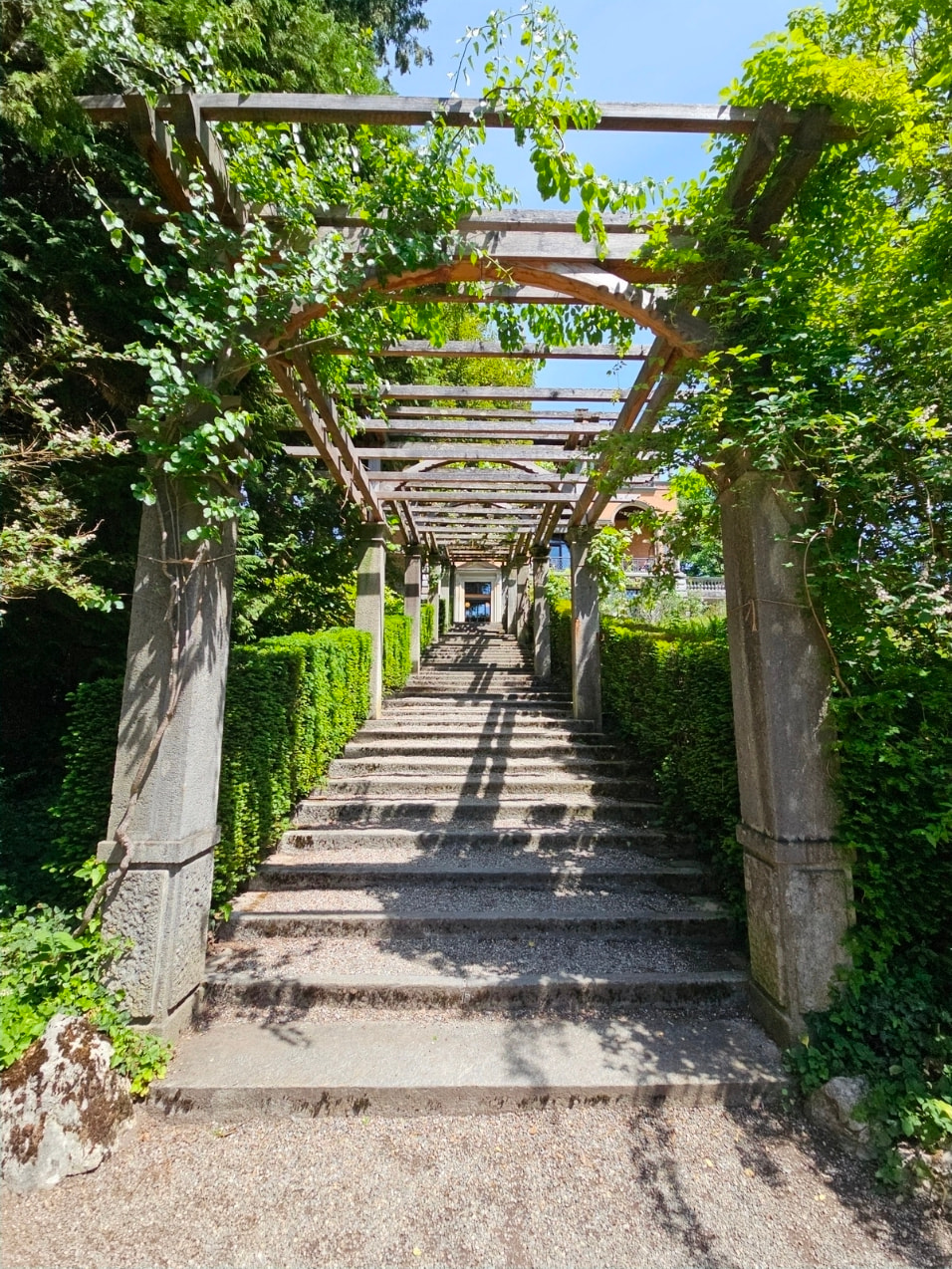
Up the stairs, turning left again (..=i)
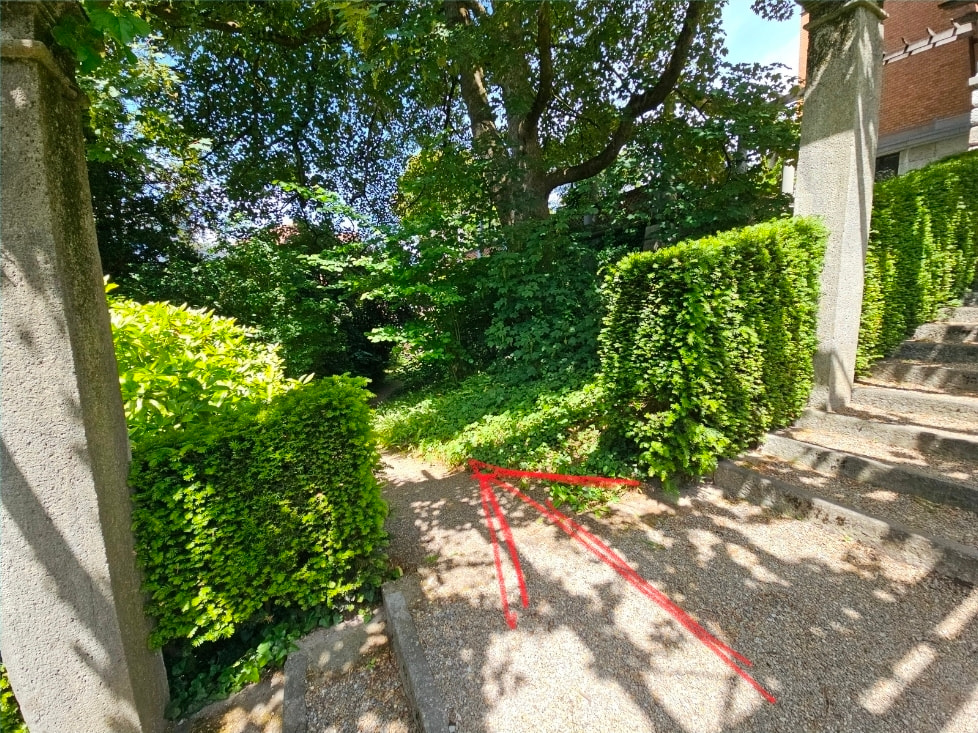
Turning right this time (.._=u)
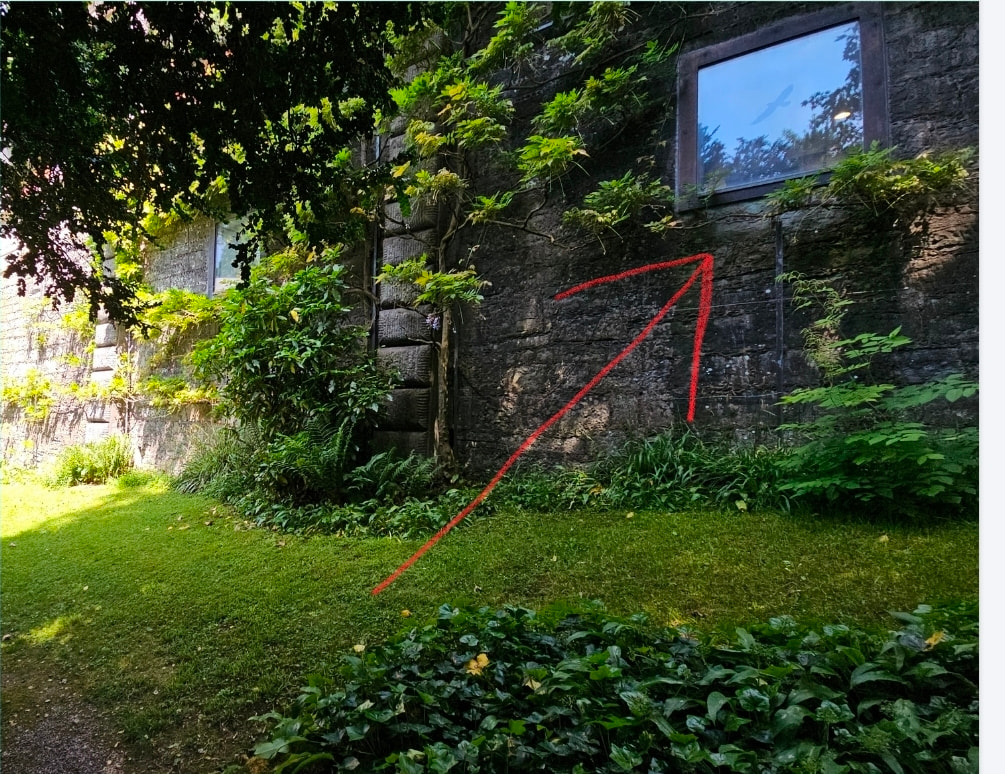
In the direction letter > morse (= I want to send a morse message)
I want to send the letter “n”, keyword is “Noah('s ark)” or “Noël”, I visualise where I put it and walk to reach it: starting at the entrance I turn right (emit a dash), then it is on the left (emit a dot). I just said “n”(dash-dot).
Right from the entrance (_=t)

Then left at the next junction (_.=n)
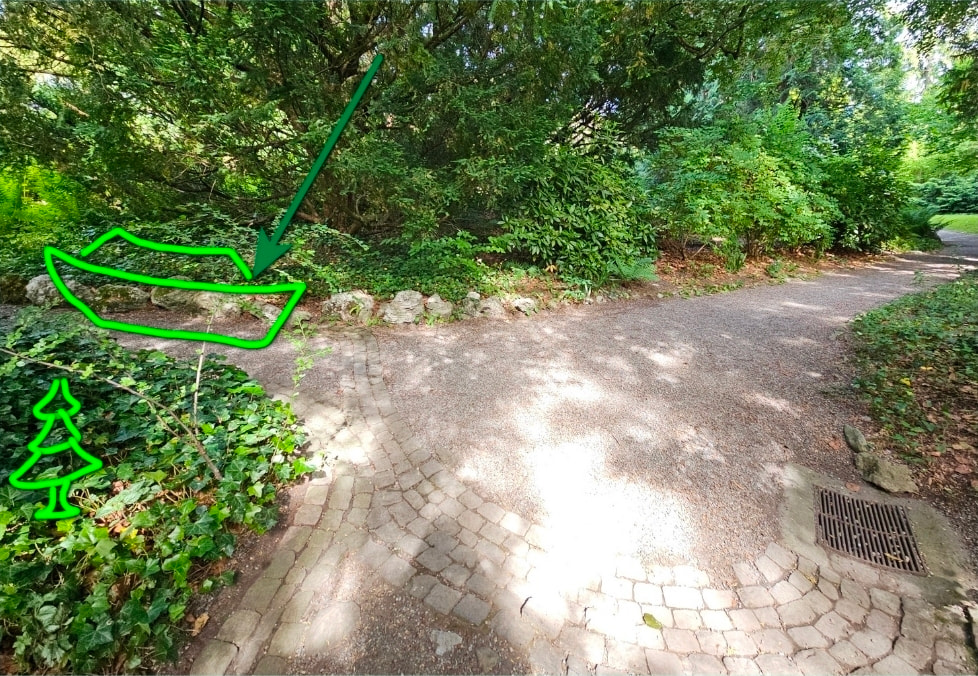
It’s not really a long term project (as in I don’t think I’ll maintain it after finishing learning it), because I don’t actually plan to use morse, it was only an experiment.
Still I built the system and I’m learning all letters (and reviewing). I’ll see if I stay motivated long enough to drill and get enough speed to be usable easily. (Though I don’t see with whom I’d use it to be honest).