Memory Techniques for Gene Nomenclature

Hello everyone,

I’m a neurologist who frequently works with genetic information, and I’m struggling with memorizing gene names accurately. I often mix up the letter/number sequences, which can be problematic in my practice.

Specific Challenge: For example, I need to remember genes like SCAN1A, but I often recall it incorrectly as SCANA1 (transposing the letters and numbers). This type of error happens with multiple gene names, and precision is crucial in my field.

What I’ve Tried: I’ve been using flashcards with some improvement, but I’m still making these sequencing errors more often than I’d like.

Questions:

  1. Are there specific memory techniques that work well for alphanumeric sequences like gene names?
  2. Has anyone dealt with similar challenges in medical/scientific contexts?

Any advice or techniques you could share would be greatly appreciated. Thanks in advance!

Best regards

1 Like

Im very new to memory training but I’m working on making a collection of alphanumeric (case insensitive) combos that correspond to images. From 0-Z and from 00-ZZ. This would allow you to have a specific image that represents “1A” that is distinct from “A1”

2 Likes

I am not sure whether it will work-

Create me a magnifying glass with a real Bun and Apple each shown after 3 seconds in the ratio of Magnifying Glass 2,Bun 3, Apple 3.With the Green material and tint of gene.

For a video generation prompt with the ideas of using tint,material and maybe colour from this forum along with art style.

The green material can encode the correct answer.(That exists).
The red material can encode the wrong answer.(That does not exist).
With Bun comming from the number rhyme system-1 Bun.

Then the Apple represents A and the scanning glass/Scanning Glass represents the word SCAN.

They are given in sequence with timing ratio.

That I thought was enough to distribute the objects in time which creates a spacing effect.

The real life/cartoon art style can be used for differentiation.

These ideas are from two courses on memeory and Art of Memeory forum’s forum posts.

I had tried it and I thought that I only need to learn the first image and the sequence of images that I might not go wrong at as how many times do I forget the sequence of things that I did such as eating and then after that walking(This example might be hypothetical),

I am in a hurry currently and I am ending this post early and it might be incomplete however Google may charge for Veo 2 usage and that may have a free quota and their latest version Veo 3 may not be available in the Google AI Studio while I used to create that video however it able to left instead of right that might had made it less memorable but I still remember SCAN1A and I did that in one shot.

The method can be tested and if it works it could be usable with precautions so that if this method fails work can still be done.I am not sure whether some of the ideas in this paragraph is mine or not but regardless I may not claim that as my own if I don’t remember and I cite the internet as a source and that method can be checked with knowlage on wheter the usage will be charged for a decision before that as I had heard in Reddit that a person was charged for making a video after his free quote had ran out.

That post- https://www.reddit.com/r/Bard/comments/1jvfpmg/googles_veo_2_video_ai_is_accessible_via_api_at/

I had not read the complete post and this comment was not written using AI.

I had added a dash as it was a symbol I could use.

And,

Have a Good Day.
1 Like

Is it SCAN1A or SCN1A? The internets gives me results for SCN1A. Depending on how much information you’re trying to get down you might dedicate a small memory palace just to the gene, so you can make multiple little scenes across various loci. Nab the PDF from the Resources tab up at the top there and learn about the number systems, basics of the MP and such.

I don’t recommend overly complicating things with a huge or intricate system to start with. It’s worth it to make a 0-9 PO and an A-Z to start, but not strictly necessary. All you’re doing is encoding information, decoding it, and reviewing it to make it more permanent.

For something like this I’d have Neo (“the One”) from The Matrix using one of those supermarket item SCaNners on an Anchovies, which then shoots lightning into his temples. While doing this, focus on the meaning of each thing- Neo represents 1, Anchovies is A. Anchovies are full of protein and they’re salty. The electricity is to give a hint that it’s related to voltage and problems can lead to seizures.

That’s what I encoded into several hours ago when I read this post on my phone. You may be able to get away with just creating a mnemonic scene like this and letting it float around in your head, but it’s much more likely to stick if you place it in a memory palace somewhere.

Have fun, and experiment. If some images fail to give the results you’re looking for, try to learn from it and try something else.

1 Like

Hello,

I’m a medical student with some experience with what you’re describing. Here are my top three pieces of advice, ranked from least to most effortful.

First advice: Search for the meaning of the genes because alphanumerical sequences aren’t that intuitive. Gene nomenclature becomes more logical with an understanding of the underlying mechanism and where the name is derived from. For example, the APOE4 gene is associated with an increased risk of developing Alzheimer’s disease. With knowledge of the underlying mechanism and that its name is derived from the protein “Apolipoprotein E4” you’ll have an easier time recalling it and in the right order. Just search the internet for “SCN1A gene etymology” and your brain will form more connections increasing the chance of retrieval. (Sodium channel protein type 1 subunit alpha)

Second advice: Create quick mnemonic devices derived from the letters and numbers in the gene nomenclature. SCN1A could be remembered by picturing or recalling the phrase “Sea Clown Nodding One Apple”. Understandably a nonsensical phrase, it nonetheless serves the function of a mnemonic device since its absurdity aids in memory thanks to the Von Restorff effect. To remember the gene in perfect order you’ll have an easier time recalling a phrase like “Sea Clown Nodding One Apple” instead of what might be perceived as an arbitrary alphanumerical sequence. If one were to use this method on a large scale, it might help differentiate the plethora of nonsensical phrases by relating them to their respective gene function or dysfunction.

Third advice: If you want to put in more time and effort you can create an alphanumerical system that allows you to generate mental pictures and link them to a physical space through a memory palace. This is arguably the most adaptable system, creating the strongest memories and recollections because evolution has selected for our brains to be biased towards pictures and locations. If you want more information regarding such a system, you can find ample information in this forum, and I’ll happily assist or answer any question you might have. However, I understand that this might not be what everyone visiting this forum is searching for.

I hope I could be of assistance.

Best wishes

4 Likes

I’m not sure why simple single letter PAOs don’t get more airplay.

What I mean is:

A-Z characters (say cartoon characters),
A-Z tools,
A-Z objects.

Plus a single digit PAO for 0-9 numbers (if you don’t have a 2 or 3 digit number PAO)

Then you can do groups of 3 letters as a single image.

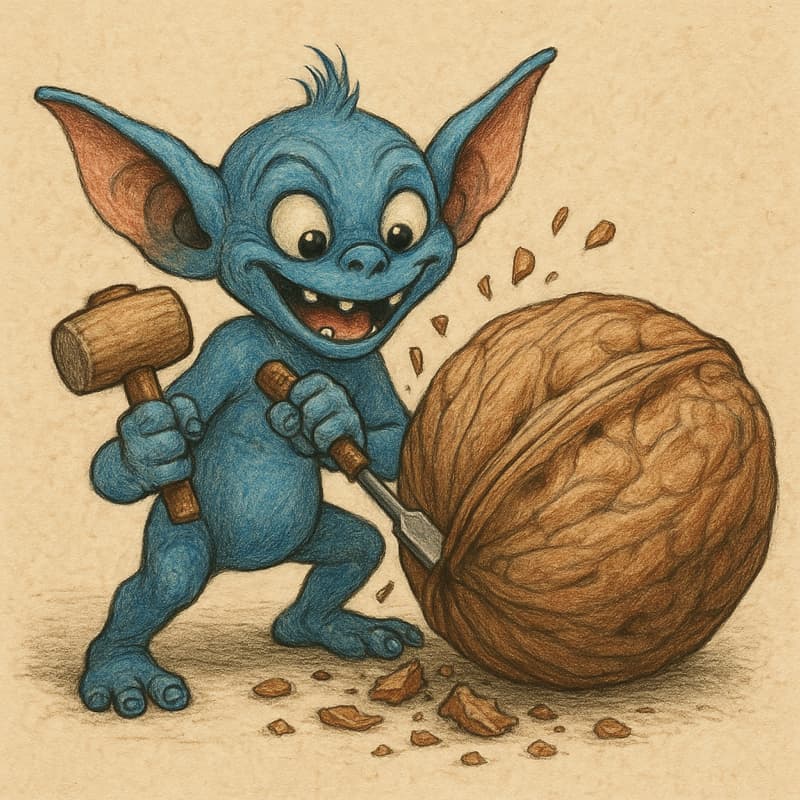
SCN1A would be two scenes:

Stich (from Lilo and stitch)
Using a chisel
On a Nut

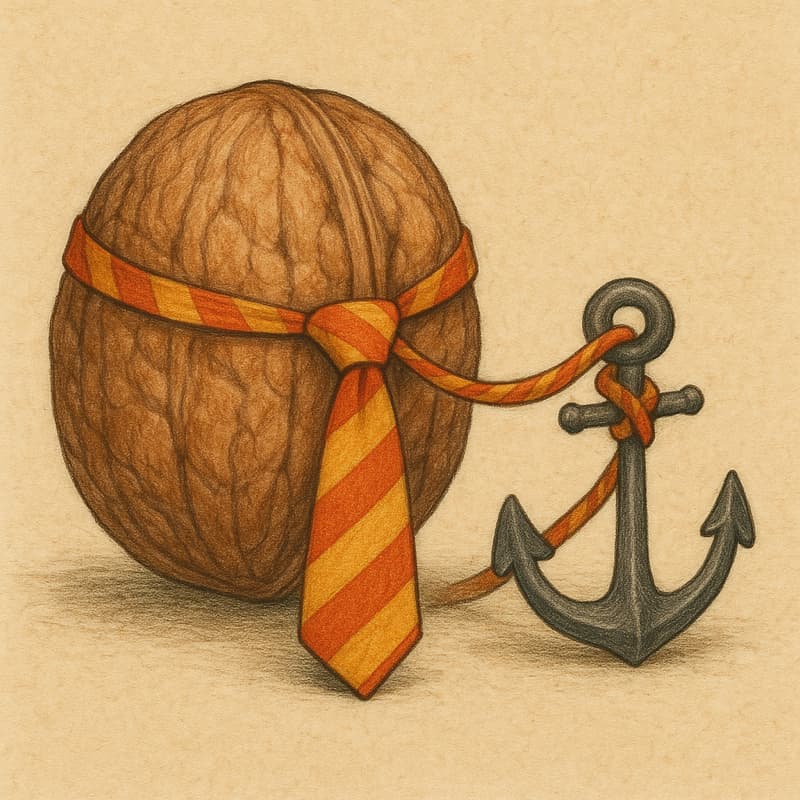
The nut is wearing
a tie,
tied to an anchor.

LLMs are great at themed alphabetic lists, like tools or actors.

1 Like

1 Like